
How can we improve our organic compost?
Started 2y. Edited 2moStarted about 2 years ago. Last edit 2 months ago






Food
In Progress
Natural materials
More Information


%20--%3e%3csvg%20version='1.1'%20id='Layer_1'%20xmlns='http://www.w3.org/2000/svg'%20xmlns:xlink='http://www.w3.org/1999/xlink'%20x='0px'%20y='0px'%20viewBox='0%200%2064%2063'%20style='enable-background:new%200%200%2064%2063;'%20xml:space='preserve'%3e%3cstyle%20type='text/css'%3e%20.st0{fill:%23231F20;}%20%3c/style%3e%3cdesc%3eCreated%20with%20Sketch.%3c/desc%3e%3cg%20id='Page-1'%3e%3cg%20id='OA-Logo-Black-Background'%3e%3cpath%20id='Shape'%20class='st0'%20d='M14.1,30.1c-1.5-0.8-8.6-3.8-14.1-7.8c1.8-3.4,3.1-5.6,5-9.1c2.7,1.1,1.9,0.5,4.6,1.7%20c0.8,0.4,10.1,4.5,13.8,6.2c2.4,1.1,4.7,2.2,7,3.3L43,30.5l8.1,3.9c4,2,7.2,3.5,11.3,5.5c0.5,0.3-3.7,9.4-3.7,9.4%20c-1.7-0.6-3.9-1.8-5.5-2.5c-4.7-2.1-9-3.9-13.7-6c-4-1.8-6.7-2.9-10.8-4.5C25,34.9,17.1,31.6,14.1,30.1z'/%3e%3cpath%20id='Shape_1_'%20class='st0'%20d='M12.1,54.9c-0.8,0.6-1.6,1.2-2.5,1.6c-0.4-0.5-0.9-1-1.3-1.5c-0.3-1.2-2.3-4.9-2.7-6.2%20c-0.1-0.4-0.7-2.2-0.8-2.6c0,0,5-3.4,8.2-5.9c3.2-2.6,6.2-5,9.3-7.5c1.4-1.1,3.9-2.5,5.3-3.5c2.5-1.7,13-9.1,15.6-10.5%20c5.4-3.3,11.1-6.3,16.8-9c1.7,3.5,1.8,3,3.8,6.9c0,0-17.8,13.5-22.7,17.1c-3.8,2.8-7.5,5.7-11.3,8.5c-1.7,1.3-3.5,2.4-5.2,3.7'/%3e%3cpath%20id='Shape_2_'%20class='st0'%20d='M20.8,2.9l-0.2-0.8C25,0,31.2-0.3,31.4,0.2c0.4,1.1,0.9,2.2,1.2,3.4c1.4,4.4,2.7,8.7,4,13.1%20c0.4,1.4,2.8,10,2.9,10.5c0.5,2.8,1.2,5.6,1.6,8.4c0.8,4.7,1.4,8.6,2.3,13.3c0.6,3.1,1.3,6.3,2.3,11.3c0,0-5.8,1.4-7.5,1.8%20c-0.8,0.2-1.5,0.4-2.4,0.6c-0.3-1.1-0.2-1.2-0.5-2.1c-0.9-3.7-1.8-7.3-2.6-11c-1.5-6.4-3-12.9-4.4-19.3%20c-1.2-5.4-2.6-10.7-4.4-15.9c-1-3.1-1.8-6.3-2.7-9.5C21.1,3.8,21,3.8,20.8,2.9z'/%3e%3c/g%3e%3c/g%3e%3c/svg%3e)


1
Current State of the Food Compost
Published 2yPublished about 2 years ago

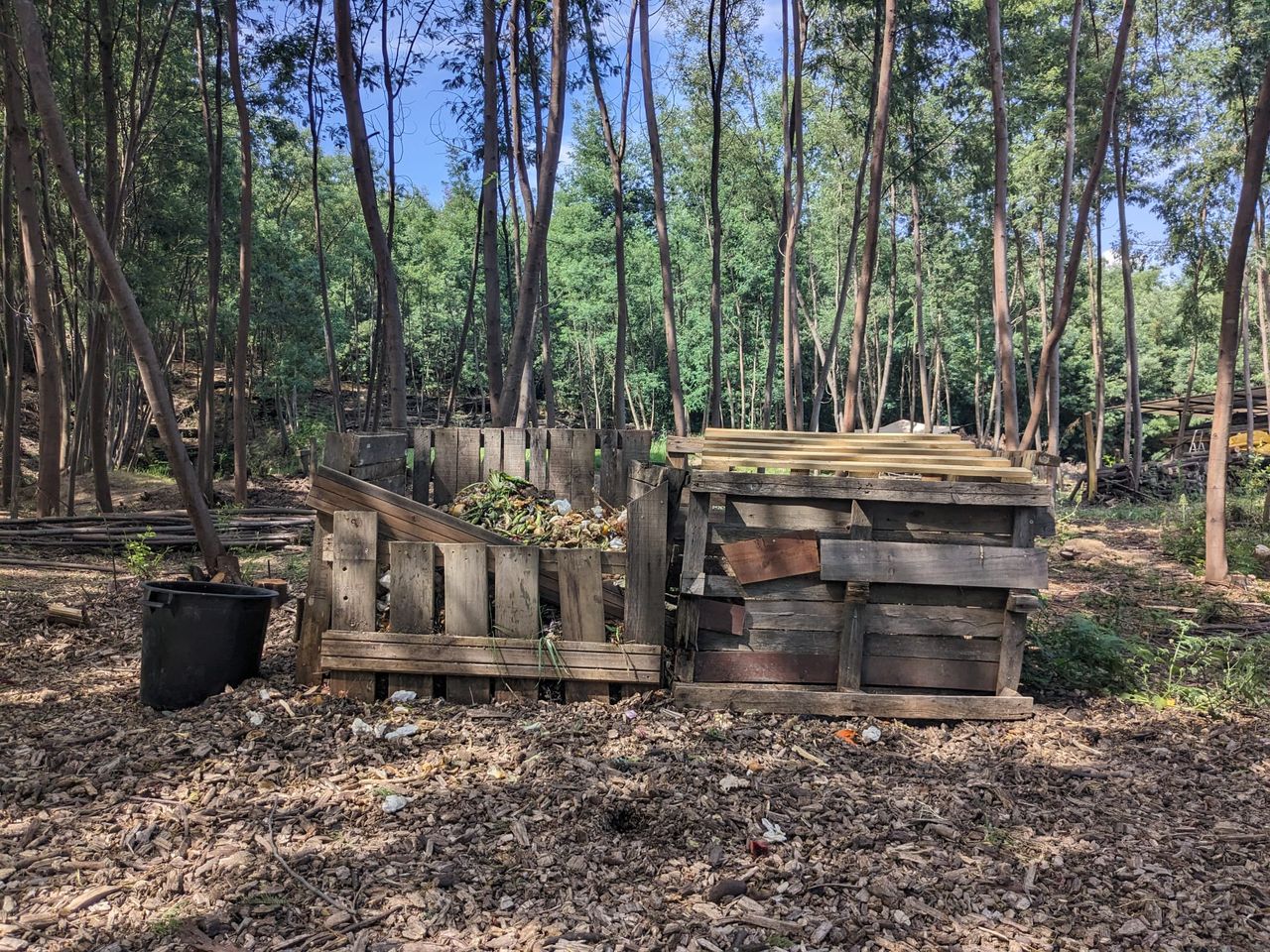
For the last 3 years, we have been using the food compost for gardening projects. Going forward, we would like to address the following challenges.
The structure itself was built on a slope, right next to a heavy pile of woodchips, and is breaking apart.
The compost can be quite unpleasant to look at and be around as it gets smelly, especially during rainy weather
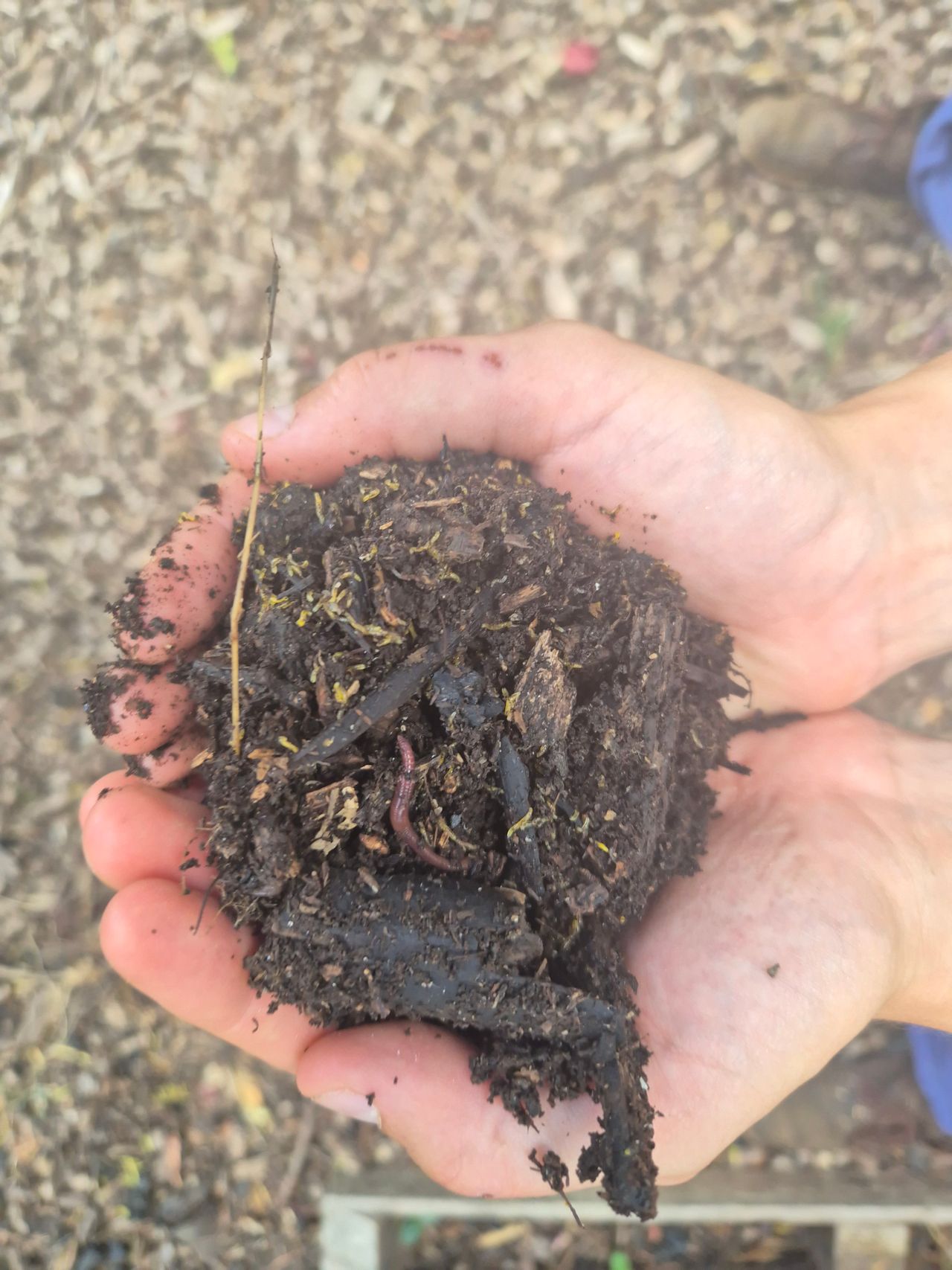
We’re unsure of the quality of the compost and are experimenting with its ingredients to see how we can improve it.
There is currently no fixed system of usage and maintenance
2
What we understood about compost
Published 1yPublished almost 2 years ago
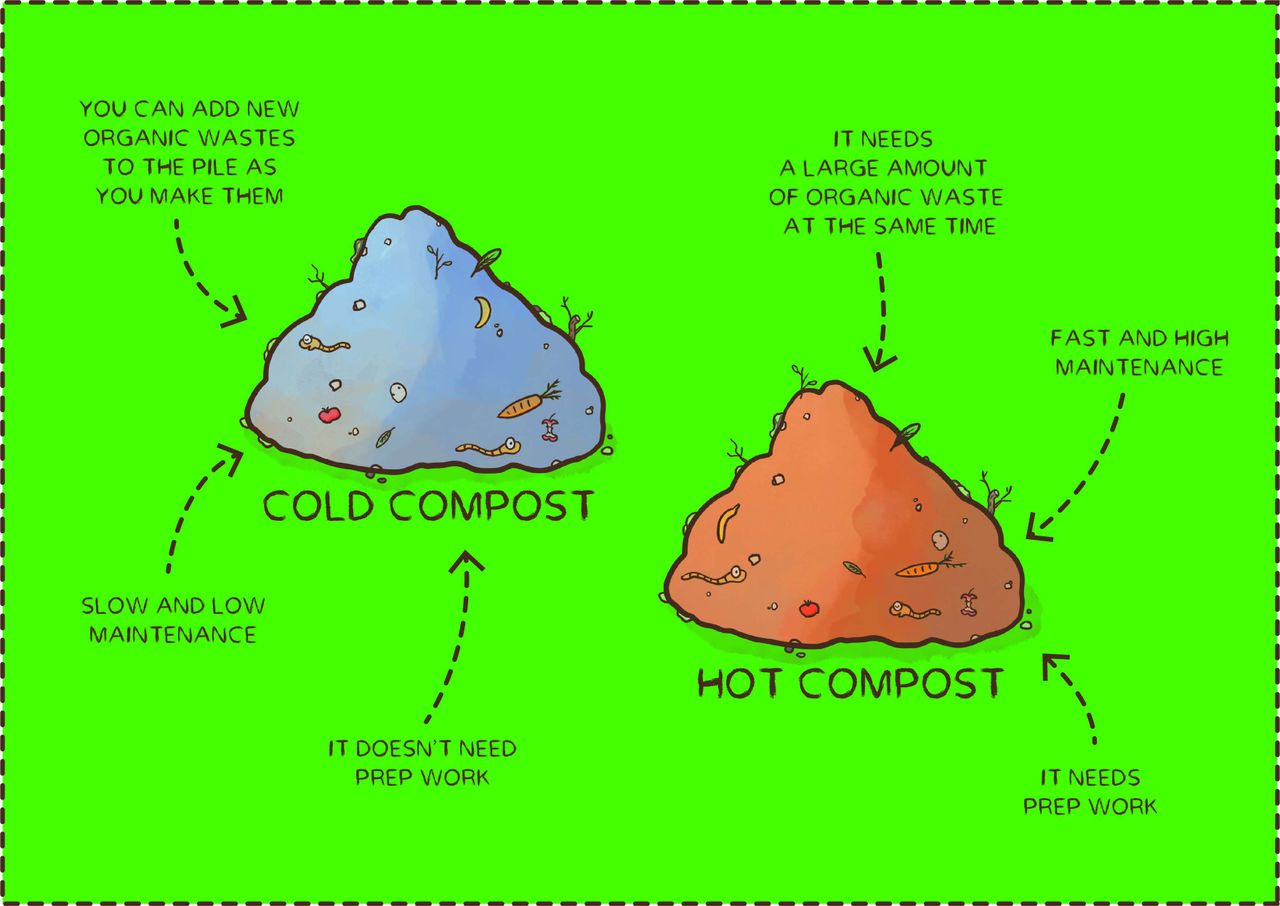
There are many different techniques for composting and a multitude of factors can be taken into account. Here I'll put the focus on the two most common types of compost that are « cold compost » and « hot compost ». The two differ mostly from the proportion of greens and browns that you will use for it, influencing the speed of the decomposition process.
Greens are representing soft, moist and leafy materials that are rich in nitrogen - such as most of our food waste - and browns are representing dry and woody material that are rich in carbon - such as hay, wood chips or sawdust -
For a hot compost, the ratios are : two parts of browns for one part of greens and every ingredient needs to be added at once. Which results in a faster growth of bacteria and fungi decomposing the organic matter in about four to six months.
For a cold compost, the mixture of browns and greens is less important. But to give an order of idea, the ratios have to be 25 to 50 % of greens for 75 to 50 % of browns. According to the mixture the decomposition takes between six months and two years. Be aware that the more browns you add the slower the compost is.
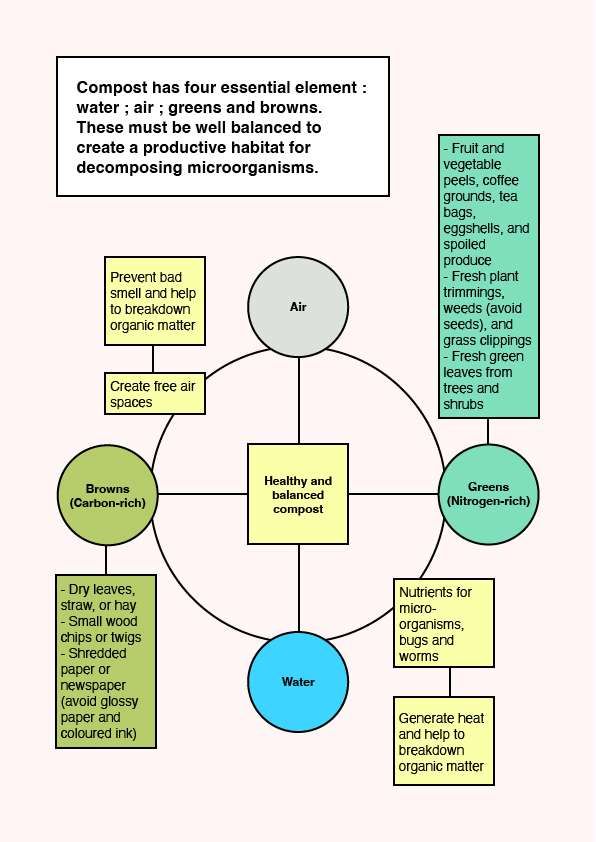
In the end, composting that way is a matter of observing and understanding what the compost needs. Compost has four essential elements : water ; air ; greens and browns. These must be balanced to create a productive habitat for decomposing microorganisms.
3
The type of compost we are going for
Published 1y. Edited 1yPublished almost 2 years ago. Last edit almost 2 years ago
In our case we want to observe how the compost behaves and evolves. In the end, we’d like to find a good balance of browns, greens, moisture and air flow to suit our needs and our time frame. We choose to go for a cold compost because it is much easier to control and maintain collectively. Especially because it needs less precision concerning the ratios of browns and greens, as for the level of moisture. It doesn’t require checking and controlling the temperature and there’s no specific timing for turning the pile. Also one major advantage compared to the hot compost is that waste can be added gradually.
4
The design
Published 1y. Edited 1yPublished almost 2 years ago. Last edit almost 2 years ago
There are plenty of existing models of collective compost bins. We'll take inspiration from these models to create our own from reclaimed pallets and wood. Before we designed, we chose a location close to the kitchen and protected from direct sunlight and rain.
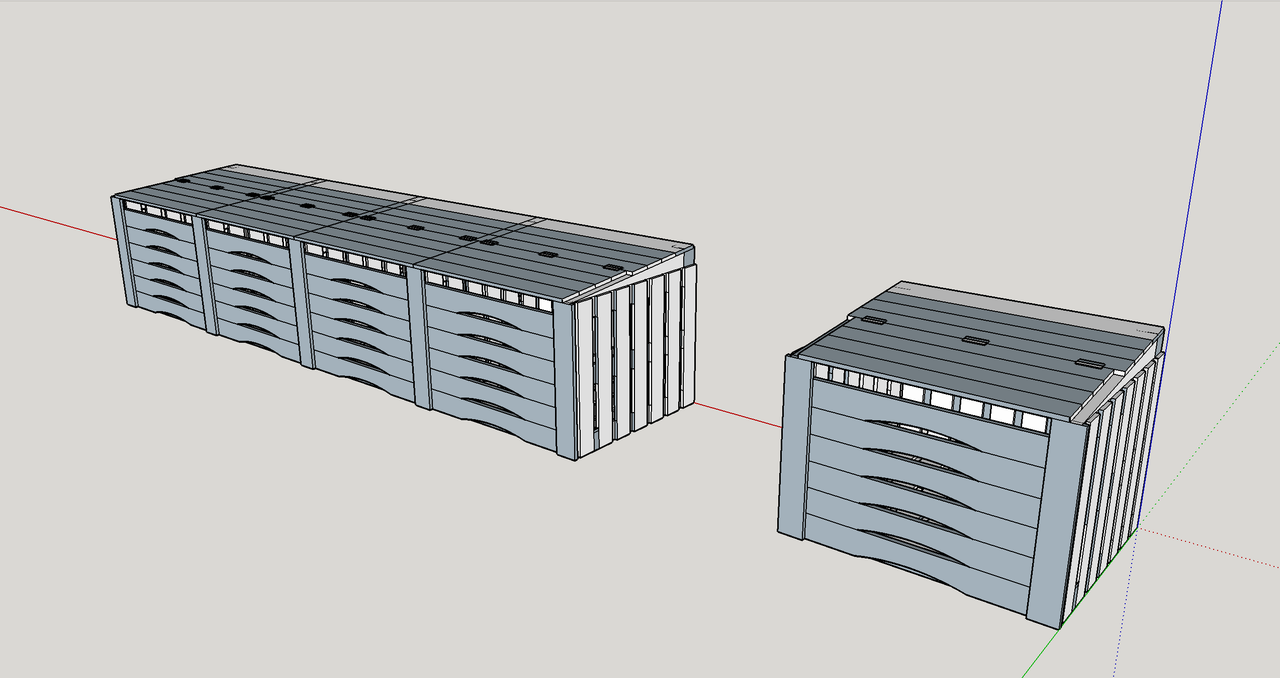
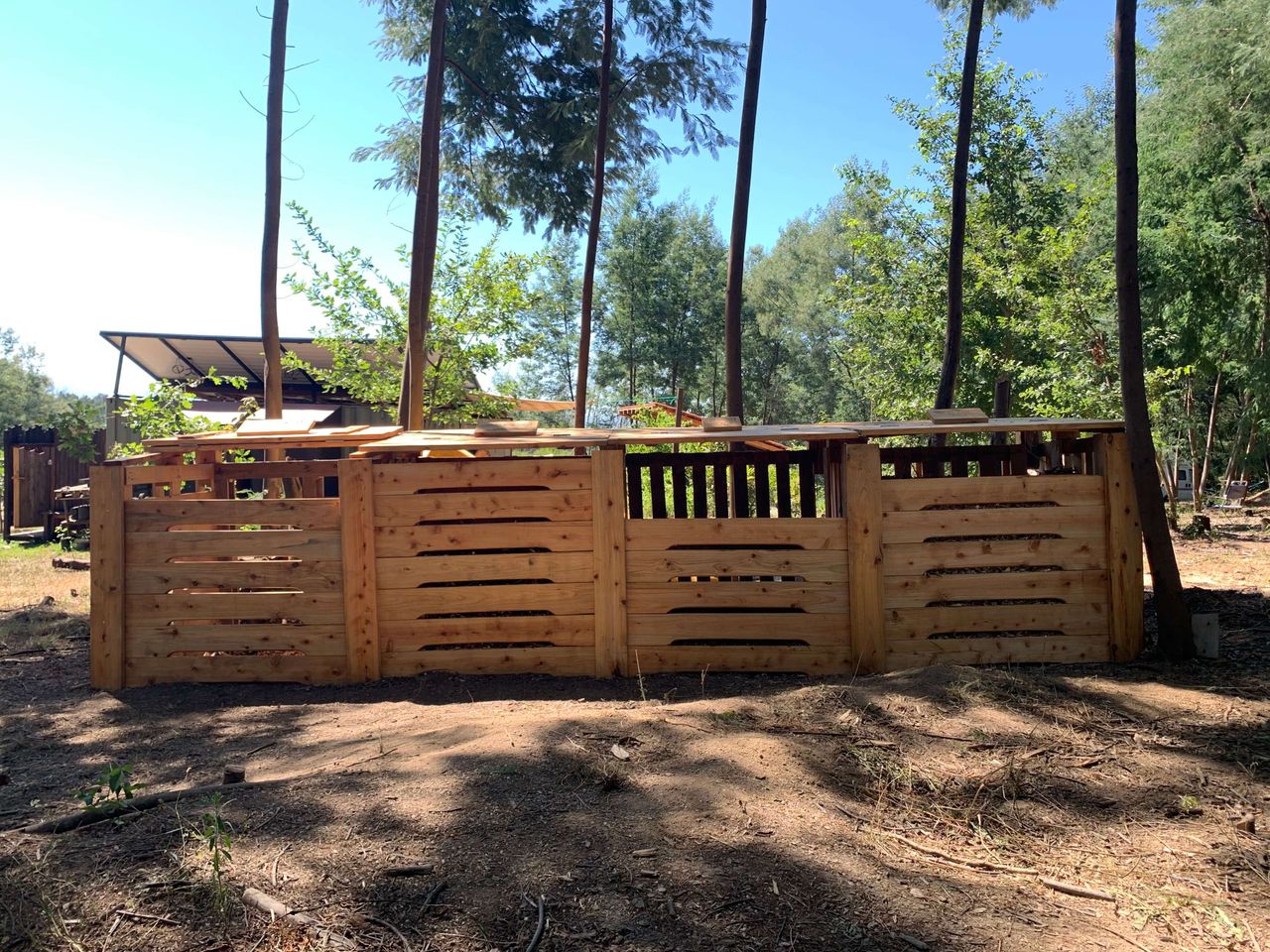
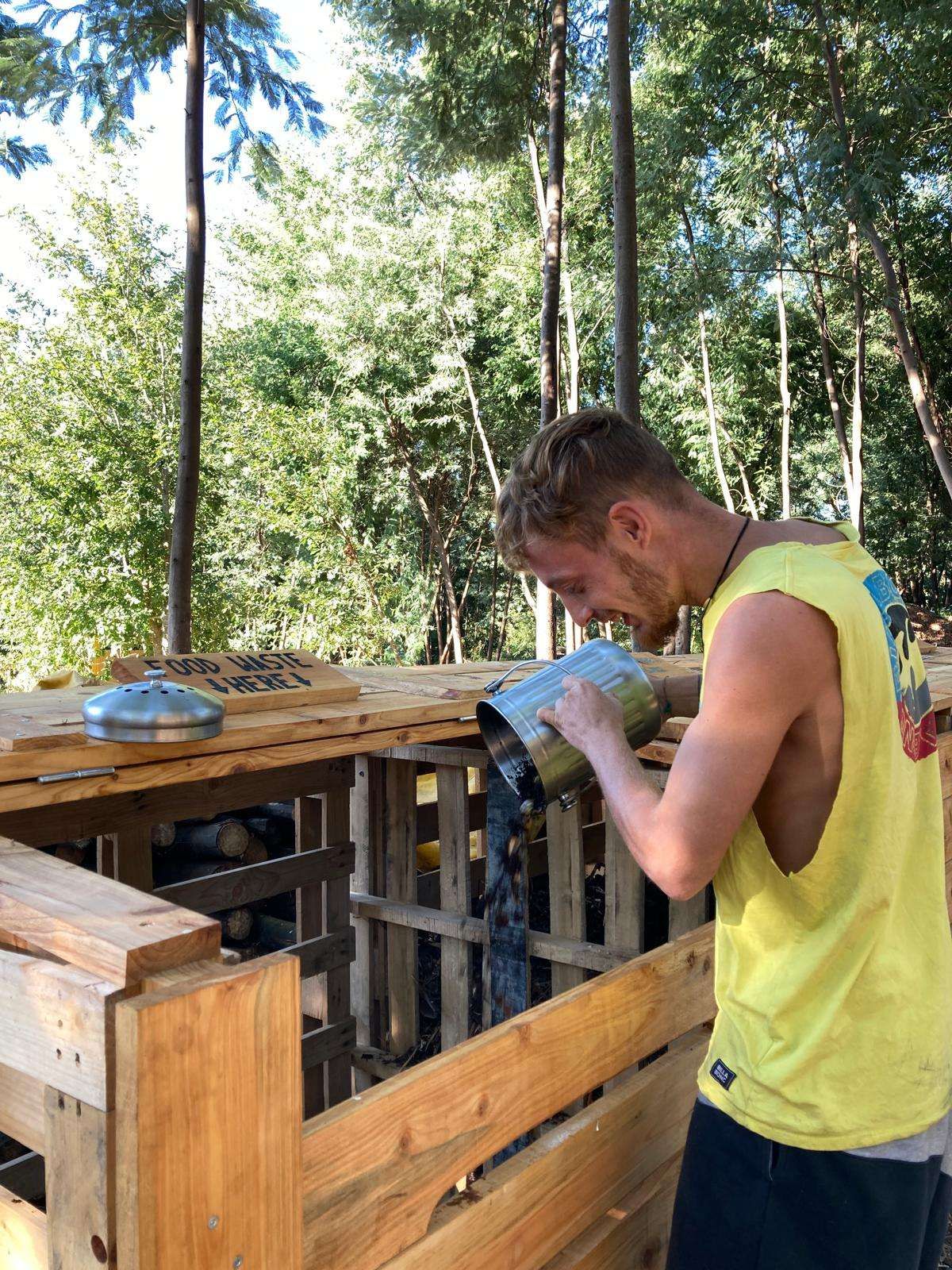
We designed a four bin compost, with a bin to add food waste on a daily basis, a bin for the compost to rest, a bin for the compost that turned into soil and an extra bin to store wood chips. Each bin works as a reproducible module slightly bigger than 1㎥ due to the size of the pallets we found (+/- 1100x1100mm). The idea was that the bins would be easily replicable so we could extend the compost system whenever we would need. For now it should hold on food scraps from 20 to 35 persons for a period of 8 months. We located the compost near the kitchen in a place protected by mimosas to avoid direct light.
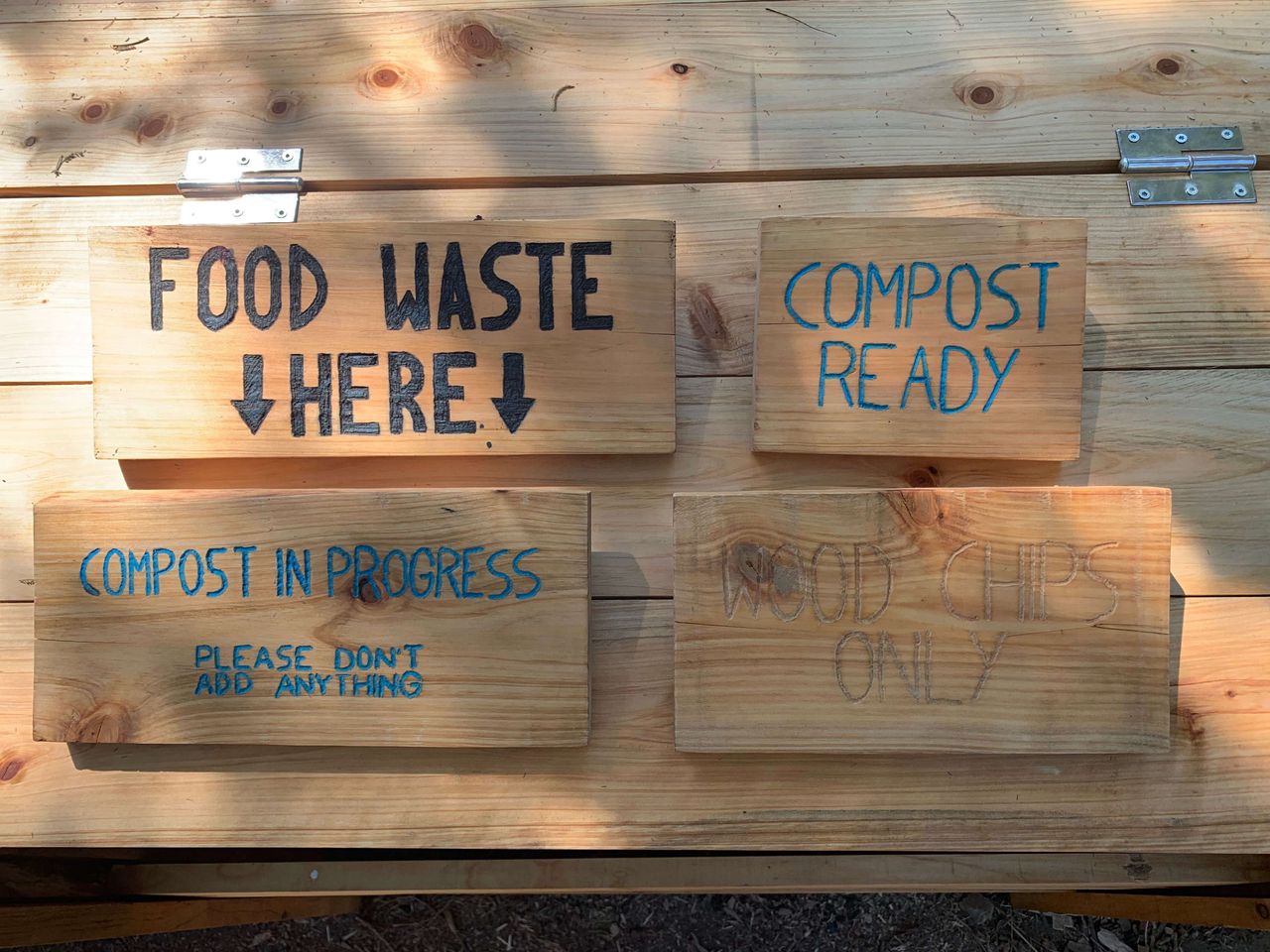
Movable sign boards have been added on each bin to make clear for the collective where to put what. The signboards are not fixed so they can be moved according to the different state of the mixtures.
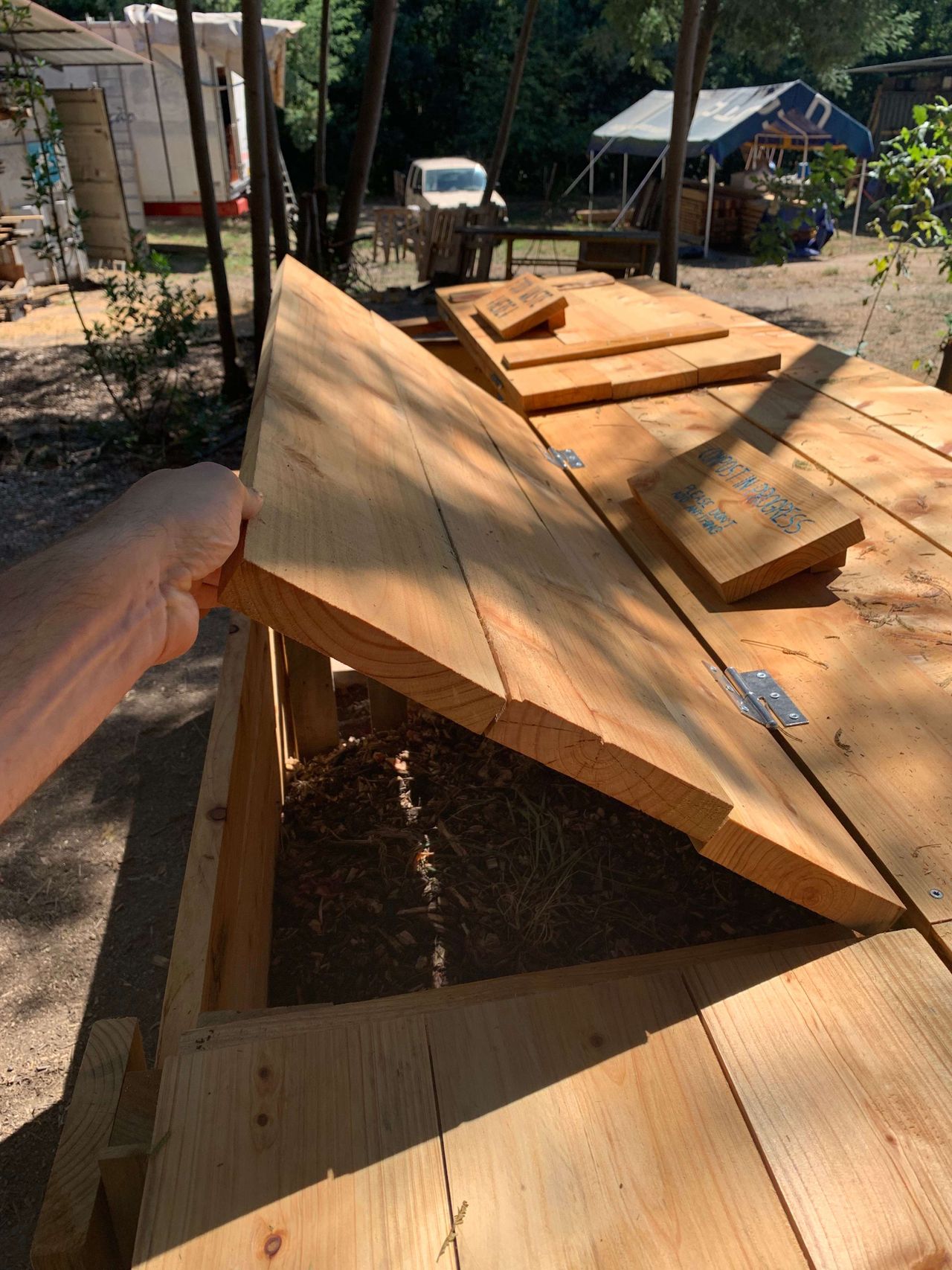
We also designed leads on hinges in order to have control on the level of moisture and to prevent heavy rains to dump the mixture. The leads also have a major structural role by connecting the pallets together making the whole structure sturdier.
We wanted the content of the piles to be easily accessible. So we designed T-slot profiles allowing the front planks to slide, making them completely removable or adaptable to the height of the mixtures.

%20--%3e%3csvg%20version='1.1'%20id='Calque_1'%20xmlns='http://www.w3.org/2000/svg'%20xmlns:xlink='http://www.w3.org/1999/xlink'%20x='0px'%20y='0px'%20viewBox='0%200%2027.2%2027.8'%20style='enable-background:new%200%200%2027.2%2027.8;'%20xml:space='preserve'%3e%3ctitle%3eicon%20redirect%20new%3c/title%3e%3cg%3e%3cpath%20d='M27.2,26.5c-0.1-5-0.3-10-0.4-15c0-0.7-0.6-1.2-1.2-1.2s-1.2,0.6-1.2,1.2c0.1,4.6,0.3,9.1,0.4,13.7%20c-3.9-0.2-7.7-0.6-11.6-0.4c-3.3,0.2-6.7,0.5-10,0.4C2.8,19.5,2.7,13.7,2.5,8c2.9-0.1,5.8-0.8,8.6-0.7c1.6,0.1,1.6-2.4,0-2.5%20C7.8,4.6,4.5,5.7,1.2,5.5c-0.6,0-1,0.3-1.1,0.7C0,6.3,0,6.4,0,6.6c0,0,0,0.1,0,0.1c0,0,0,0,0,0.1c0.2,6.6,0.4,13.2,0.5,19.7%20c0,0.6,0.4,1.3,1.2,1.4c3.8,0.1,7.5-0.2,11.3-0.4c4.4-0.3,8.6,0.2,12.9,0.4c0.6,0,1-0.3,1.1-0.7C27.1,26.9,27.2,26.7,27.2,26.5z'/%3e%3cpath%20d='M12,12.6c-0.2,0.7,0.2,1.4,0.9,1.5c0.7,0.2,1.4-0.2,1.5-0.9v0c0.6-2.2,1.4-4.5,3.1-6c1.3-1.2,3-1.9,4.7-2.7%20c-0.4,1.3-0.8,2.6-1.4,3.8c-0.6,1.5,1.8,2.1,2.4,0.7c0.8-1.9,1.5-3.9,2-5.9c0-0.1,0-0.2,0-0.3c0.3-0.6,0.1-1.5-0.7-1.8%20C22.3,0.4,20,0,17.7,0c-0.7,0-1.2,0.6-1.2,1.2s0.6,1.2,1.2,1.2c0.9,0,1.7,0.1,2.6,0.2c-1.7,0.8-3.4,1.7-4.8,3%20C13.6,7.6,12.7,10.1,12,12.6z'/%3e%3c/g%3e%3c/svg%3e)
5
Usage and maintenance
Published 1y. Edited 1yPublished almost 2 years ago. Last edit almost 2 years ago
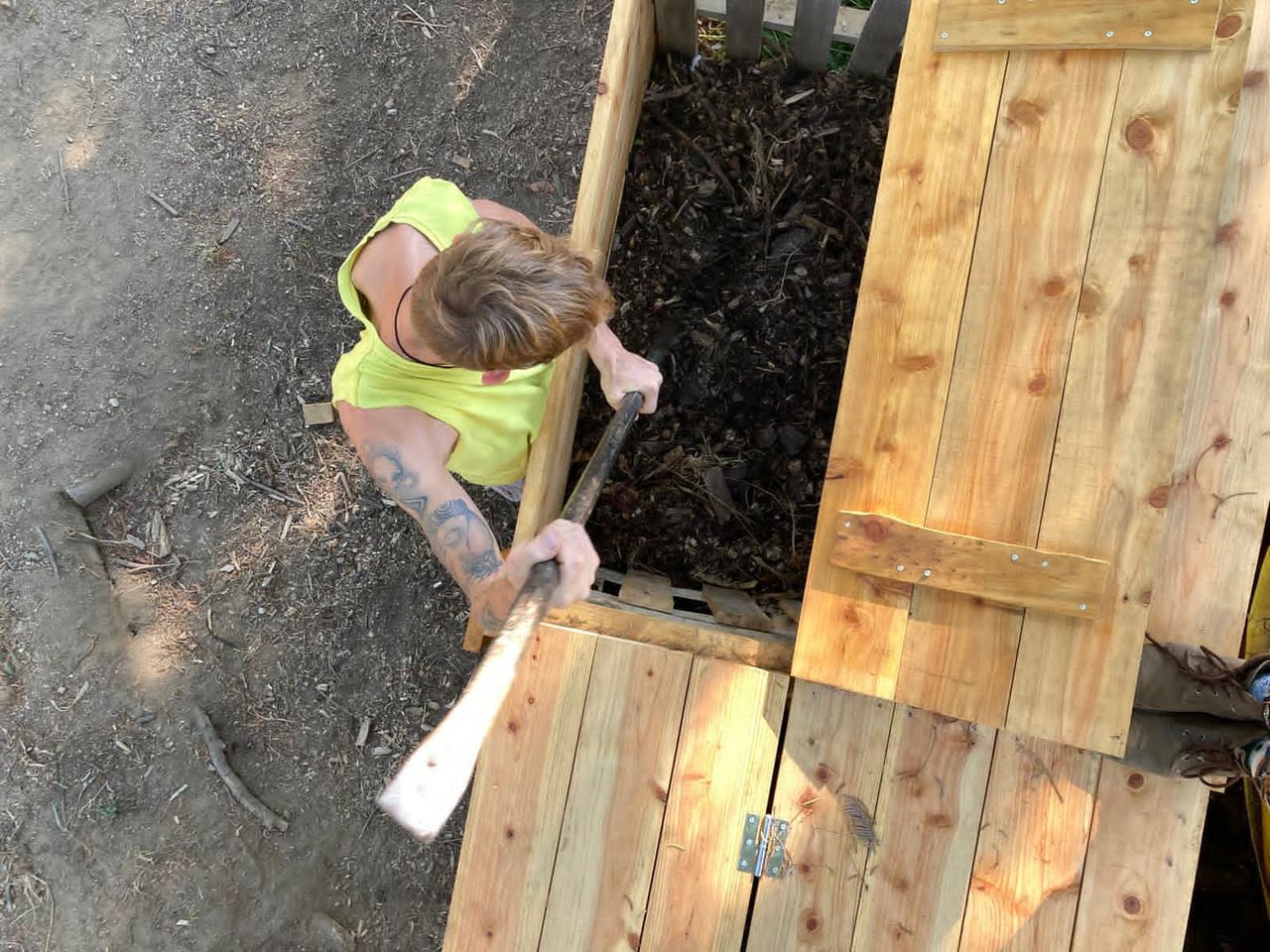
Usually in a cold compost the amount of brown matter should be superior to the amount of green matter. But because we want to speed up the process a bit, we are gonna try to go for 50% of brown matter for 50% of green matter. It means that we are gonna make sure to compensate for our amount of daily food waste with the same amount of wood chips. By doing so, we would like to keep the compost slightly warm and develop a comfortable environment for microorganism, worms and bugs (in that sense the compost will not exactly be a cold compost). In order to keep this heat constant we want to try not to turn the mixture too often. Instead we’ll try to use the long crowbar to make holes in the compost. Hopefully it will increase the airflow without losing the heat. We’ll repeat this operation every week. Another important factor is to keep the mixture moist. If the weather is too dry it could be helpful to water the compost to make it feel like « a slightly damp sponge ».
Be aware that this method is something that we want to experiment with and that we are not exactly sure how it’s gonna go. We’ll keep you updated on the results or if we make any changes.
6
Open questions
Published 1yPublished almost 2 years ago
Now that the basic structure is standing and we are taking it into use we will see how the compost is going to evolve. We do still have some open questions like:
- Can we put weeds in the compost ?
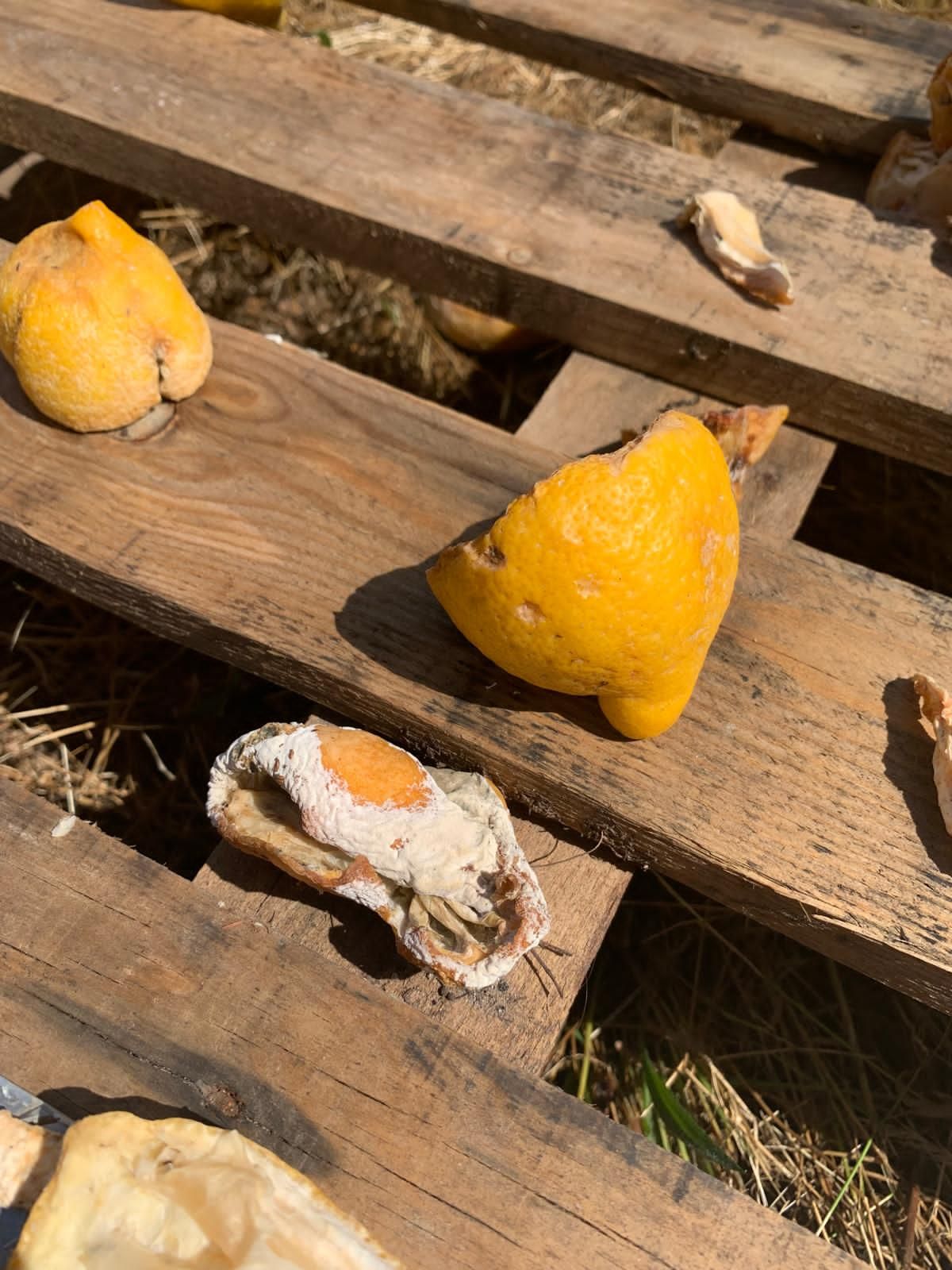
- Can we put Citrus peels in the compost ?
- Can we put toilet tissues to the compost ?
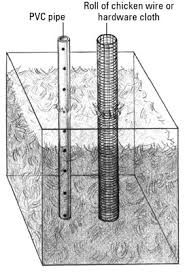
- Can we reduce the need for maintenance by adding a drilled PVC pipe in the center of the pile ?
The way we are doing it currently is that we prefer to keep weeds apart of the compost, because the heat of the compost won’t be enough to kill the seeds and we don’t want to spread weeds in our garden beds.
Also the toilet tissues we keep out and only throw them in the pooppalace.
The citrus waste goes into the compost. We know it is supposed to slow down the process of decomposition but it didn’t seem to be such a problem in our previous compost.
And so far there is no need for a pipe to be added yet
Some things that we will keep an eye on.
7
Compost monitoring
Published 1y. Edited 1yPublished almost 2 years ago. Last edit over 1 year ago

Looking ahead to the new season starting soon, we wanted to do an update on what we did to monitor our compost at the end of Season 4. For 7 weeks, in September and October 2024, we monitored the compost to start understanding how it functioned in the new system and how we could influence it in the future. We monitored two compost boxes, the "Current Usage” one and the "Compost In Progress" one. We took the same information for both, except for the pH in the Current Usage box, which we left blank because it was not decomposed enough for a good reading.
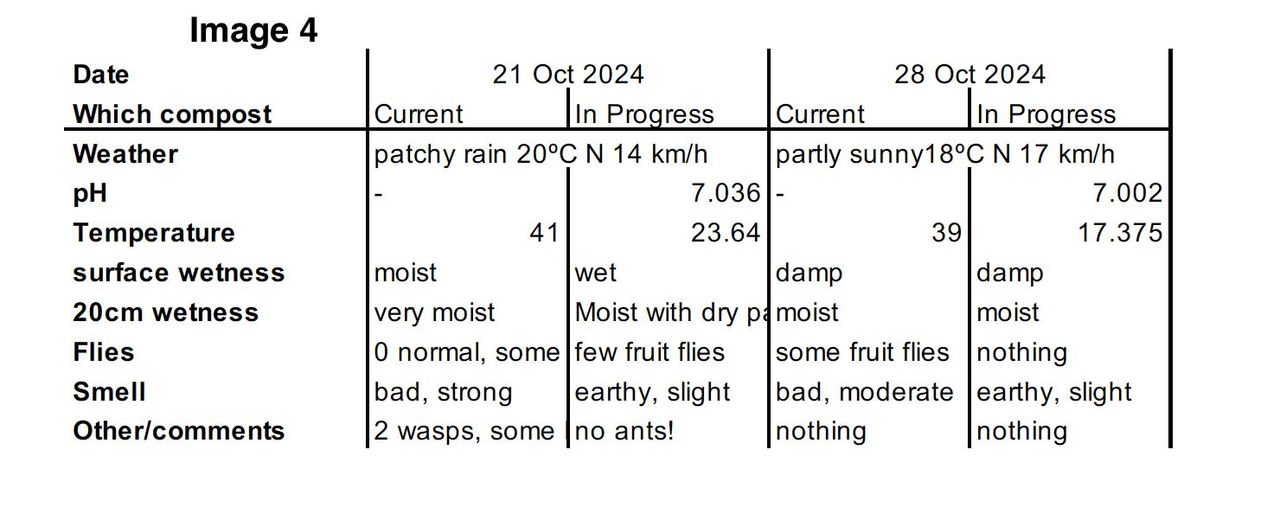
We did this every monday after lunch and we recorded, in a spreadsheet (Image 4), the following:
- Weather
- pH
- Temperature
- Surface wetness
- 20cm wetness
- Flies
- Smell
- Any other comments
The weather, surface wetness, smell and flies (how many landed on the compost in 10 seconds) we recorded by observing only. The 20cm wetness, temperature and pH we checked inside the compost box in the following steps:
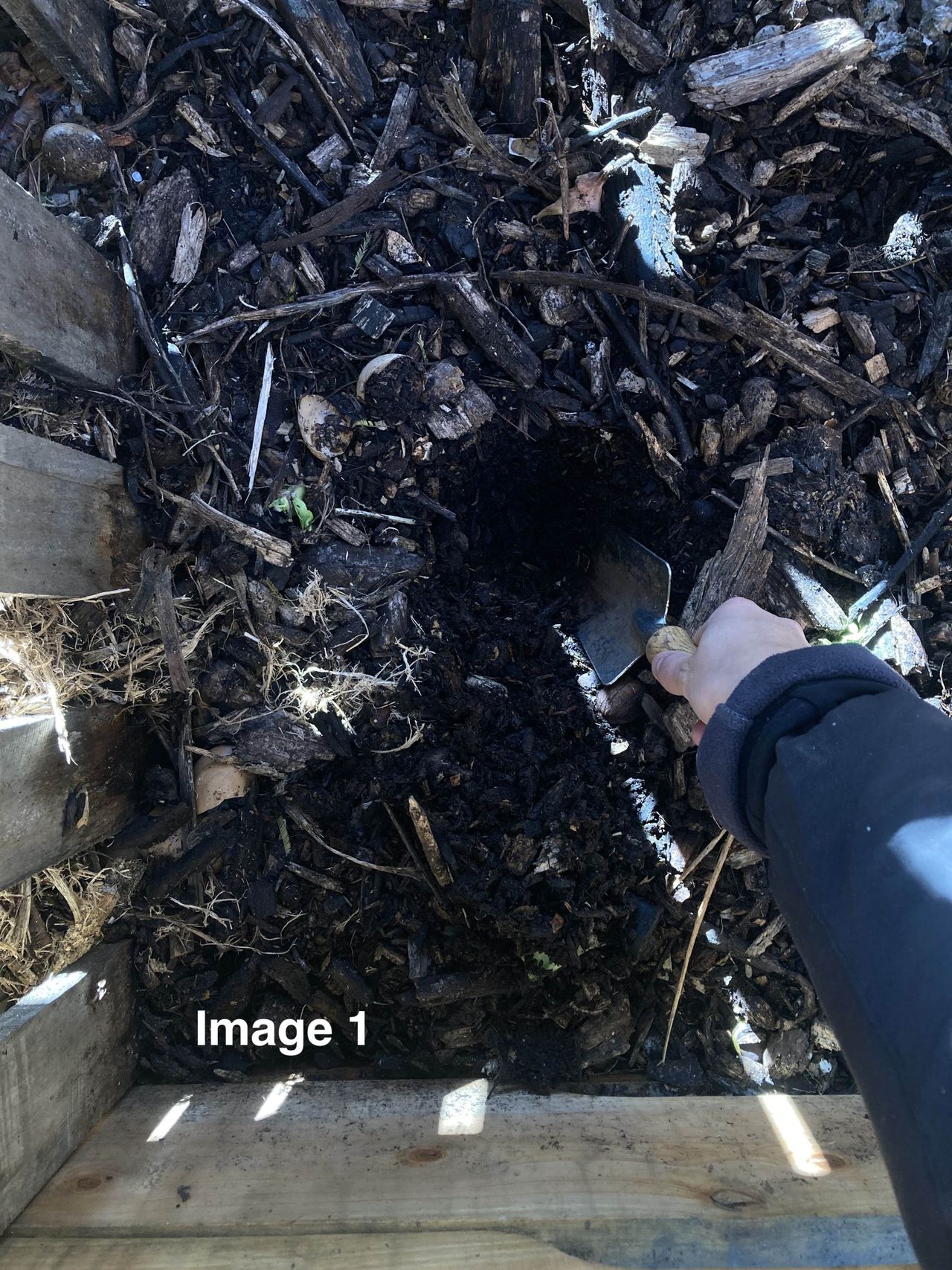
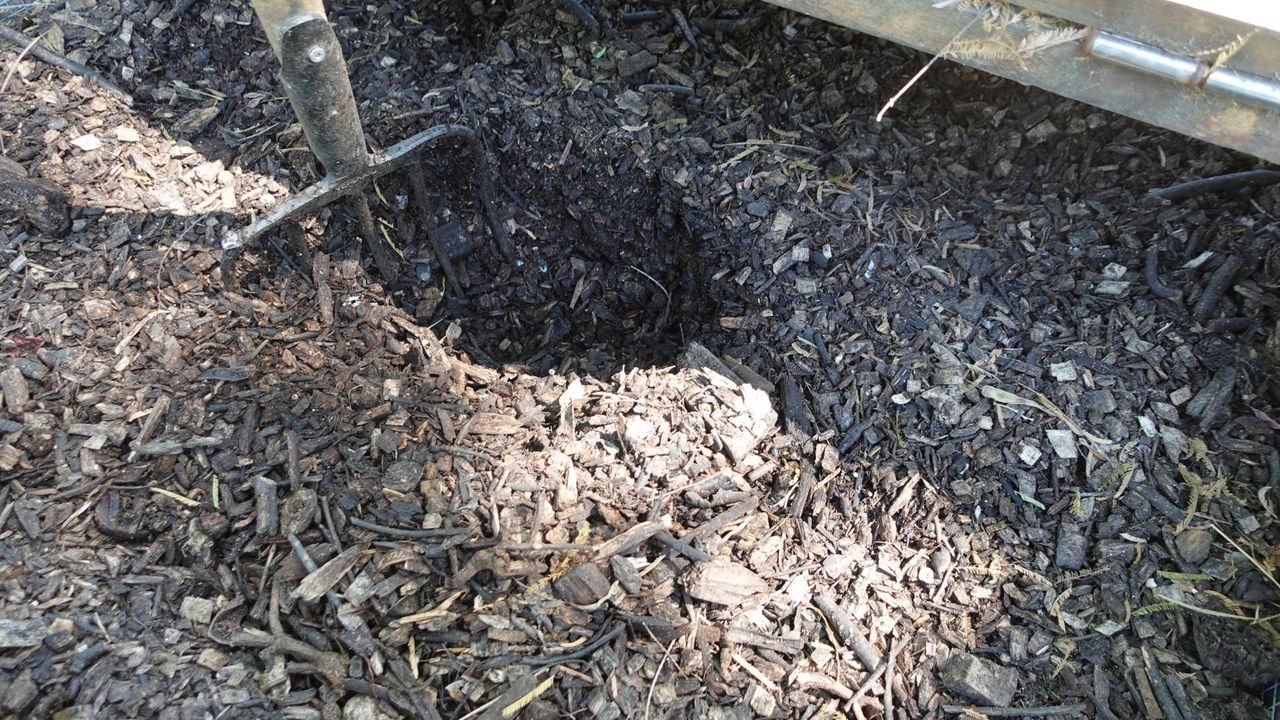
1. With a small shovel, dig down 20 cm into the compost bin you are checking (Image 1).
2. Fill up a jar with the matter at the bottom of the hole.
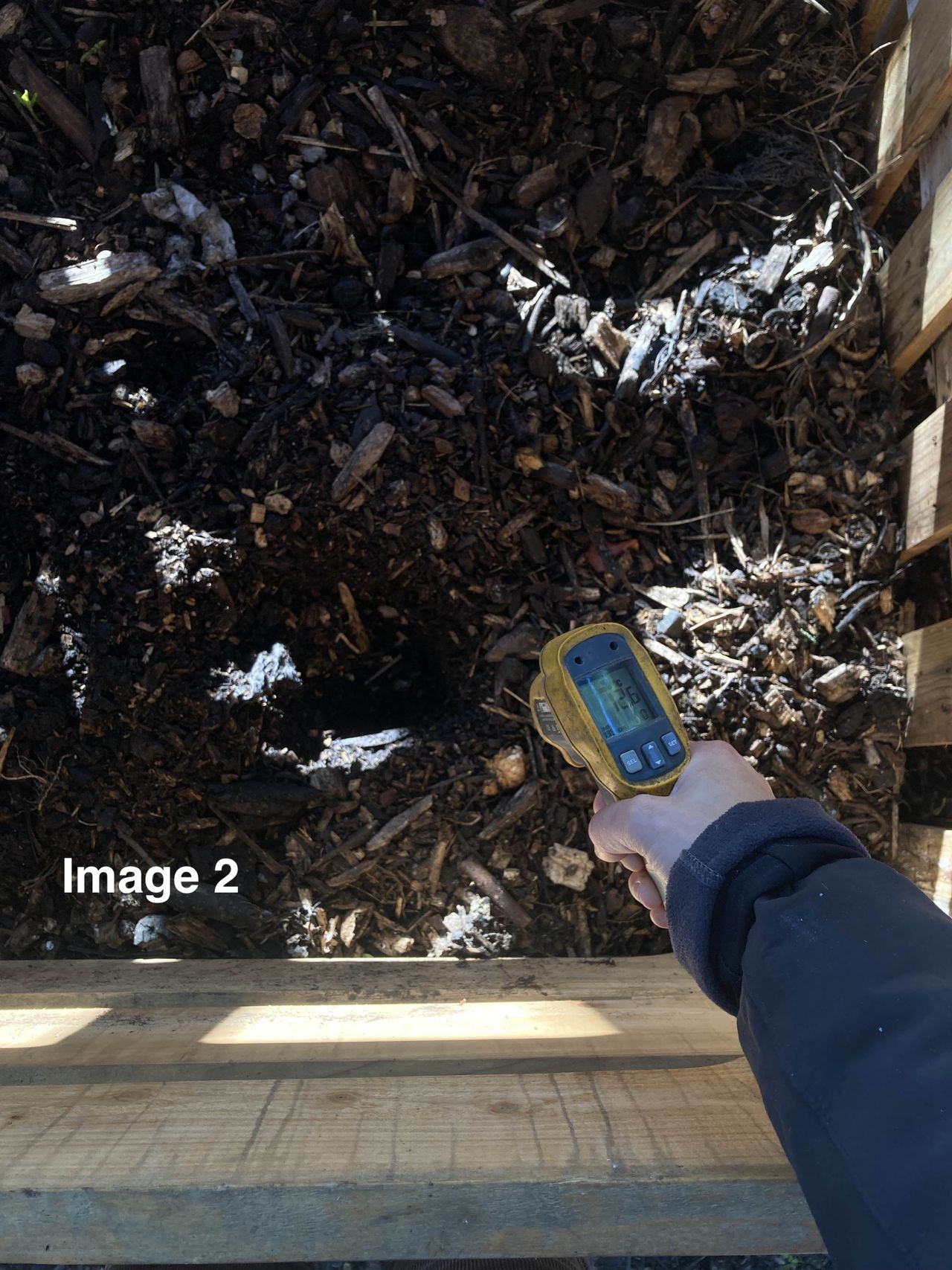
3. Measure the temperature at the bottom of the hole (Image 2).
4. And look at the wetness.
5. Write the temperature and wetness down (later, when all the holes are done, do average and record it in the spreadsheet).
6. Cover the hole back up again.
7. Repeat 5 times with different jars and holes in the same compost bin.
8. Now you must do the pH test using the jars of compost from step 2:
a. From each jar, remove the biggest wood chips, to make the material as smooth as possible, leaving at least two finger-widths of compost.
b. Add a couple of teaspoons of distilled water to each jar. You want the mix to come together, sticking to itself, but not swimming!
c. Now you need a pH monitor. We used a digital pH monitor.
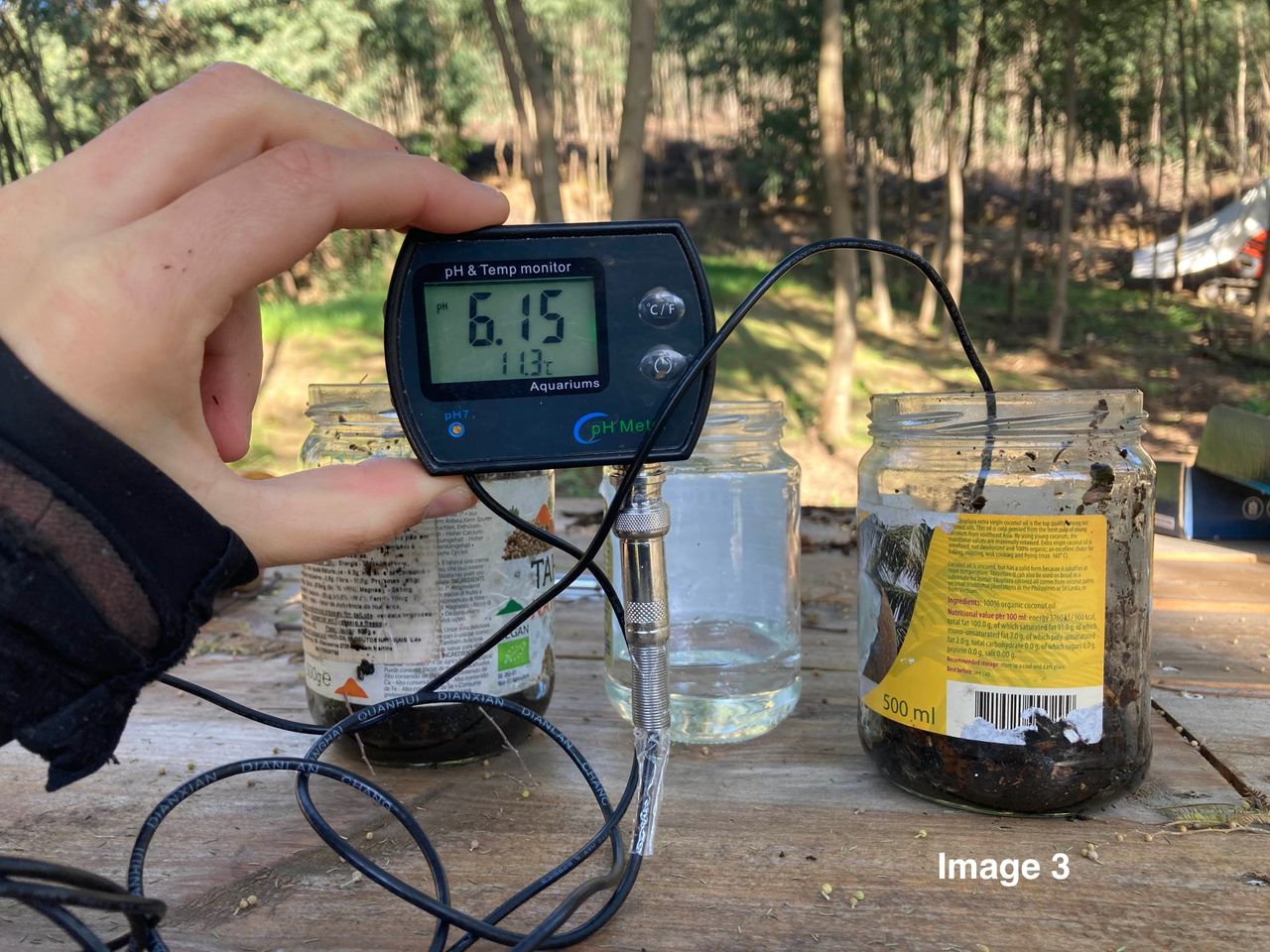
d. Wait for a bit and stick the pH monitor into the jar. Wiggle it, then take a couple of readings of the pH (Image 3).
e. Write down an approximate average (again, we did an average for the spreadsheet after).
f. Repeat this with all the jars.
g. At the end, throw the samples from the jars back in the compost bin and rinse the jars and pH monitor.
After this, we took the average temperature and pH of the 5 holes and wrote this into the spreadsheet. The 20cm wetness is just an observation so we wrote what felt accurate into the spreadsheet as well (example of the last two weeks in Image 4).
If you have any thoughts on our way of monitoring the compost so far, or suggestions to improve its quality, share them down here in the comments. We’ll be gathering ideas for the new season!
8
Compost monitoring continued - Season 5
Published 2mo. Edited 2moPublished 3 months ago. Last edit 2 months ago

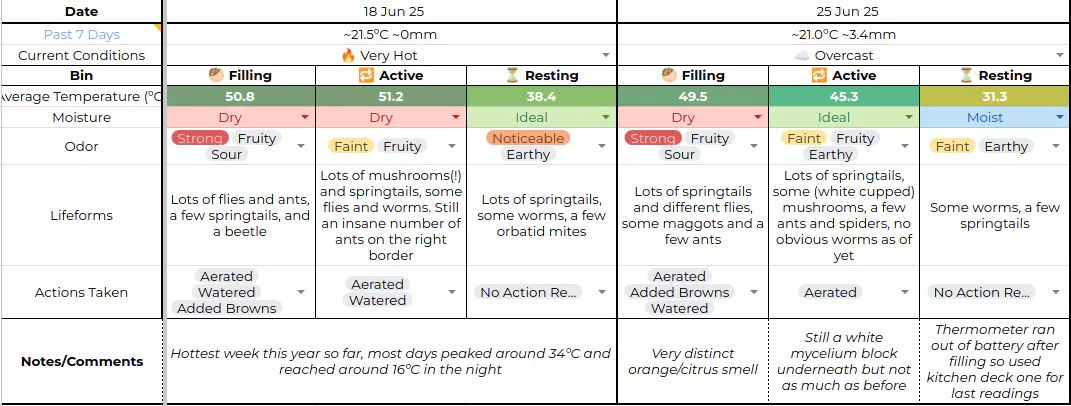
Throughout Season 5, we continued to monitor the compost and gather data about how things changed and progressed from week to week. For 27 weeks, every Wednesday afternoon, we spent 20 minutes following the same procedure as outlined in the previous update, but with several refinements:
- We combined the aeration of the pile with the measuring of temperature and moisture, using a pitchfork to open a hole, a temperature probe to obtain a core temperature reading, and using the squeeze test to determine moisture (it should hold its shape but not leak water when squeezed).
- We observed all lifeforms in the piles, not just flies, and this gave many good indicators of the state of each pile.
- We updated the spreadsheet to make it more user-accessible (you can download a copy of this sheet below to see our results)
- We couldn’t get the pH meter to work so this step was skipped, and we didn’t feel this was much of a loss.
- We turned each pile once every four weeks to see if it made a significant difference to the quality of the final compost.
We found that checking in once a week gave us a good insight into the state of our compost and allowed us to make small adjustments earlier before any problems became more serious.
Some learnings from the past year:
- In the drier parts of the year, the compost pile can dry out quickly, especially when using woodchips, and ideally would have been intentionally watered more often. We saw that this dryness lowered the temperature of the compost (even in the hottest parts of the year) and was an indicator of reduced biological activity.
- Turning was very labour intensive for us and took a lot of extra time and energy to do.
- We add food scraps to our piles every day, and it takes around two months to fill, so they are already over 40 degrees and composting well for more than a month before they are left to compost. We found that with everything running well, it was actually more effort to aim for a cold compost than to embrace the hot composting.
In addition, to provide some answers to our open questions from update 6:
- We put our weeds and toilet tissues into our humanure compost piles as this is not used for gardening and can allow for seeds to spread
- We do incorporate citrus peels in our food scrap compost and the piles have continued to compost well
- We did not install a pvc pipe, as there was no extra effort in aerating the pile at the same time as taking temperature readings etc
Overall, we were able to turn our food scraps for approximately 20-25 people into several batches of good compost to use on the land! At the same time, there were several issues we faced which we will address in the following updates…
9
Rat Issue
Published 2mo. Edited 2moPublished 3 months ago. Last edit 3 months ago
Context:
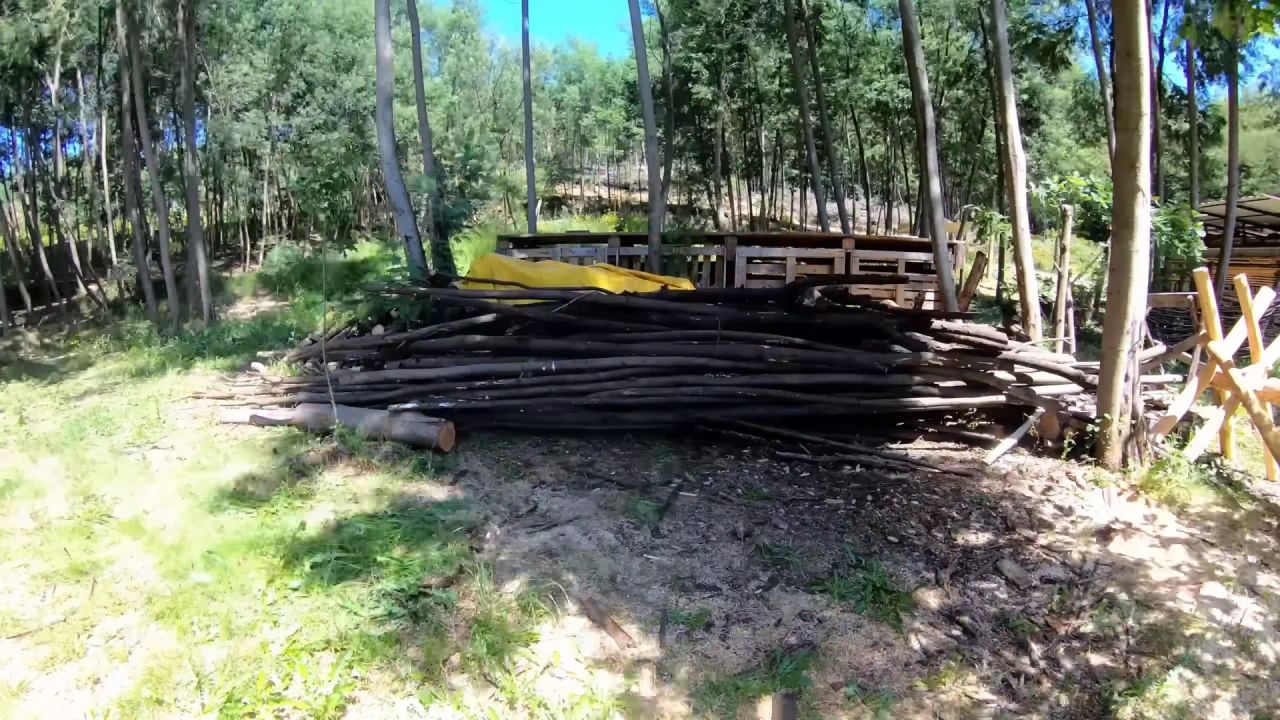
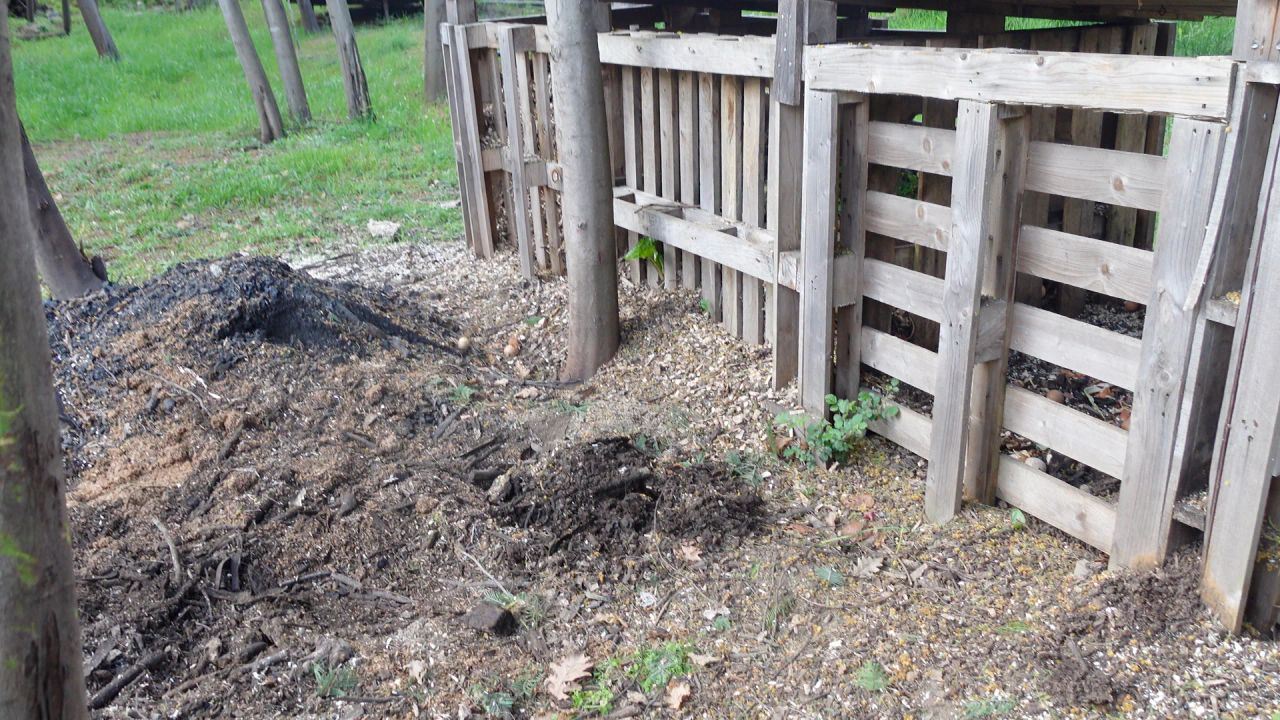
In the last year, we noticed more and more the presence of rats around and inside our compost bins. The bins were built beside a large pile of logs (Fig. 1) which the rats were able to use as their home, making a nest underground and inside the compost piles. Due to the large gaps in the pallets, they could enter the bins and eat any food scraps from within. Once we realised this, we cleared the big pile of wood, storing only a few items in its place, and covered it with a tarp to keep dry for the winter months. However, it did not take long for the rats to rebuild their home over winter with the remaining materials (video below).
Solution:
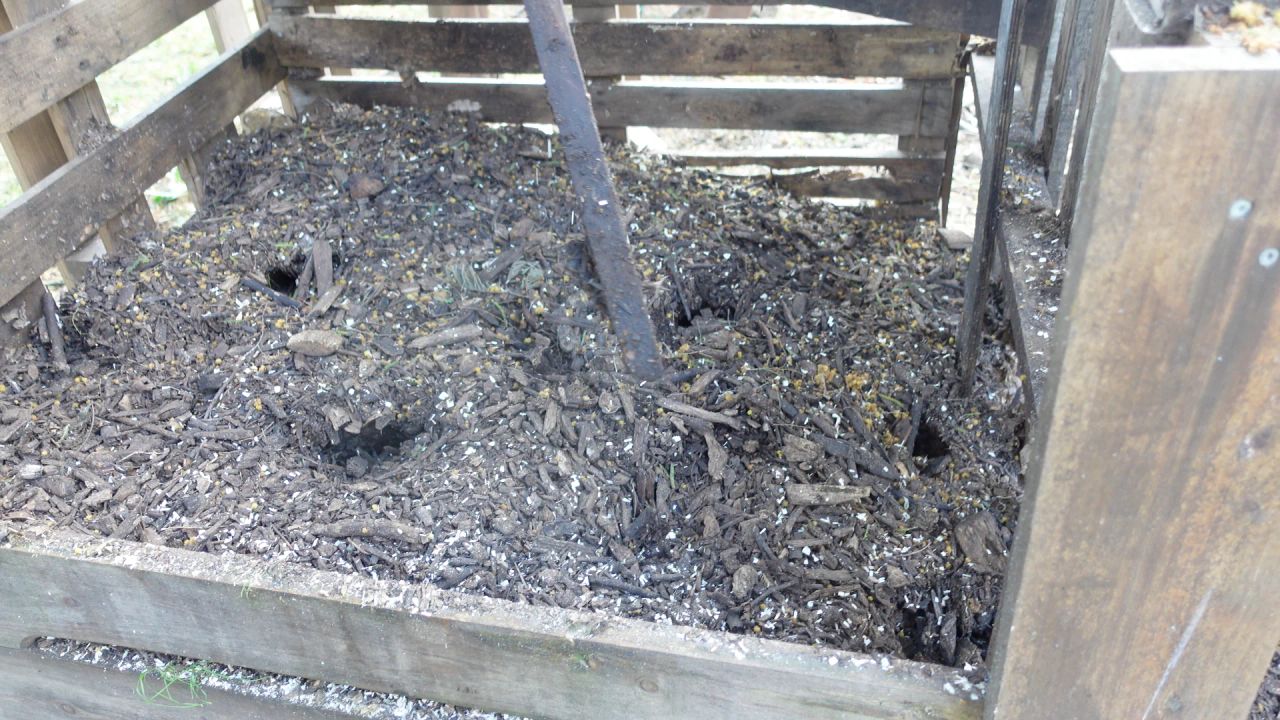
At the start of this season, to take the problem seriously and be more thorough with our measures, we cleared everything from the area, leaving no structure for the rats to build a nest, although we noticed much of their nest appeared to burrow underground. (Fig 2.) The finished compost had many tunnels as they seemed to be sleeping inside there too (Fig. 3). And there were many traces of food scraps being dragged out of the newest piles. To prevent any other rats (or rodents) from entering the bins and remove this as a food source for them, we took several steps to rat-proof it:
- We removed the contents of each bin, leveling the ground to install a wire mesh
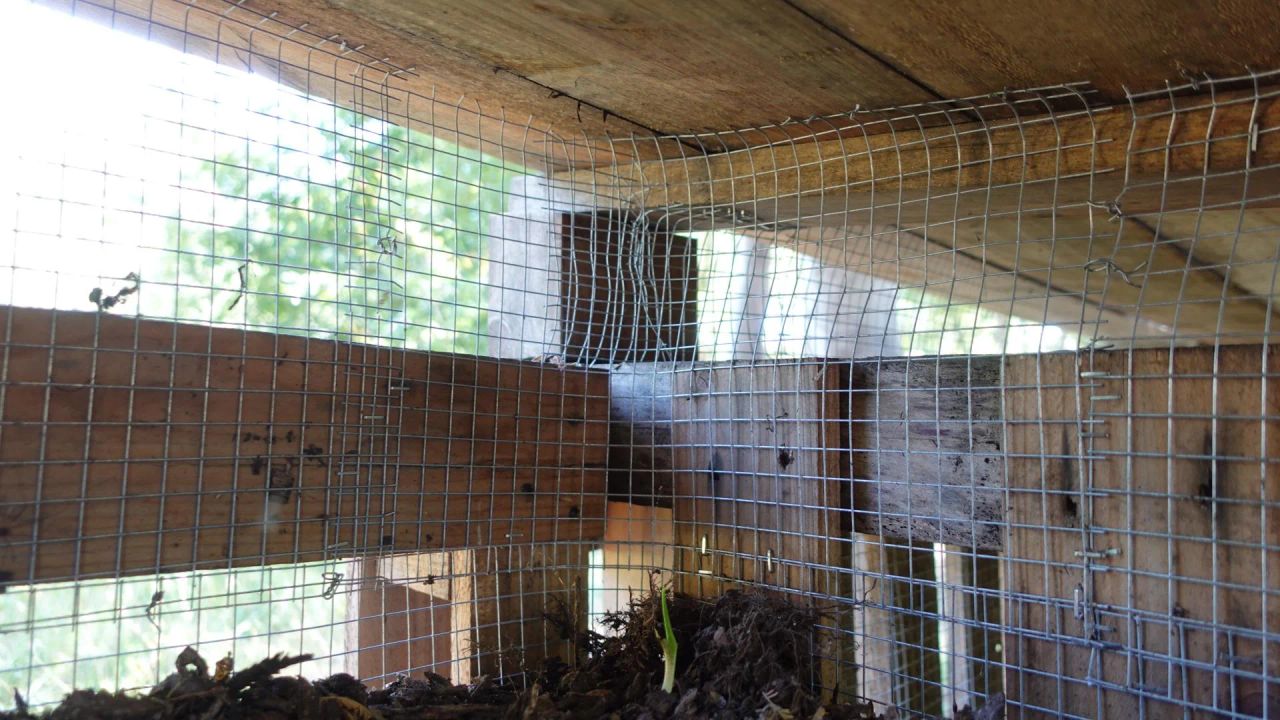
- We fitted a wire mesh to the floor and inside walls of the 3 bins which we use for composting (Fig. 4). This was not necessary in the fourth as it is only for cover material storage, and is not a source of food.
- We fixed the front panels together, making 2 big sliding parts per bin instead of 7 individual, and covered the gaps with strips of wire mesh
- We tightened any loose planks or screws in the structure to close any new gaps which had opened up
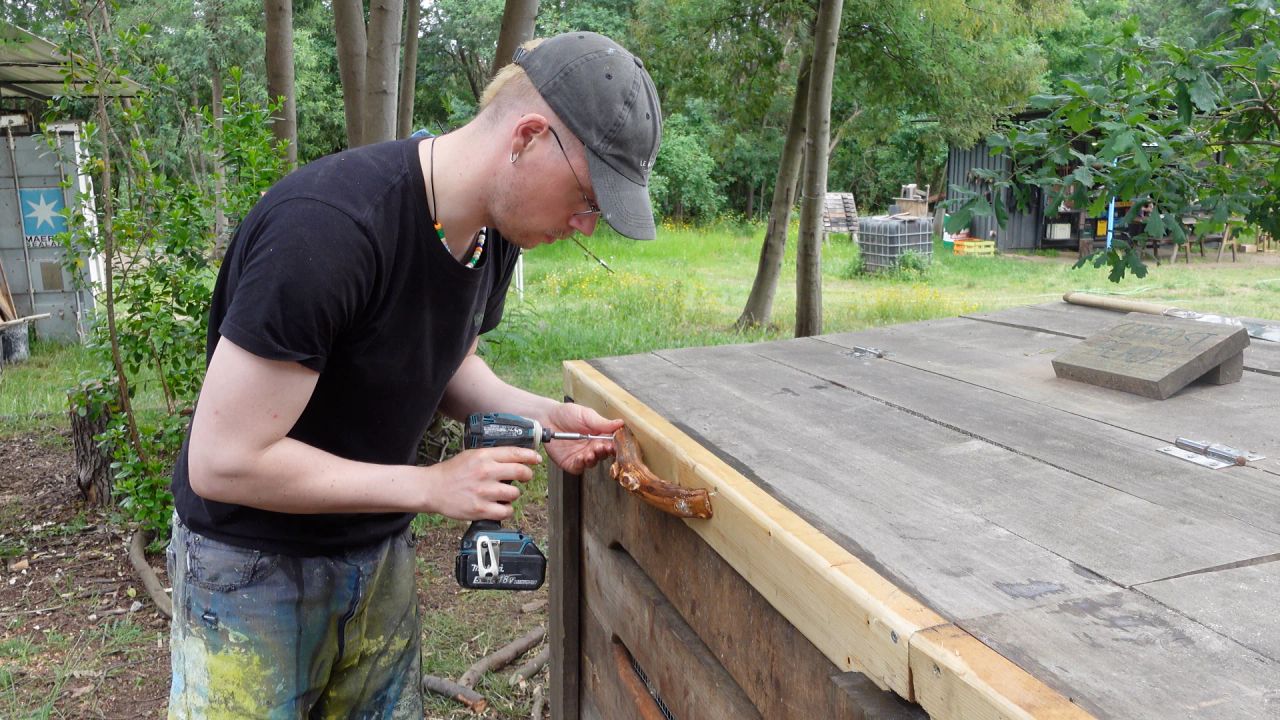
- Finally, we added an extra panel of wood to each lid and attached a handle, to ensure there were no more access points for the rats (Fig 5)
The end result is 3 compost bins inaccessible to rats, yet still breathable and accessible to worms, insects, and (most importantly) us kampers using it. Since the rat-proofing, we have not experienced any rats inside the bins and have caught many more in rat trap cages as they start to look elsewhere for their food source. If you would like to see a video update of this process, here is the link: https://www.youtube.com/watch?v=tmjQ2nLd1Fk
10
Switching woodchips for hay
Published 2mo. Edited 2moPublished 3 months ago. Last edit 3 months ago
After using wood chips for the past few years as a cover material for our food scrap compost, we wanted to use Season 6 as a comparison for how hay functions in this role. Now that we have six months of monitoring data from Season 5, when we used only wood chips, we have changed our system to now use hay and will continue to monitor it in the same way.
Although wood chips have functioned relatively well up until now, there are several issues we find:
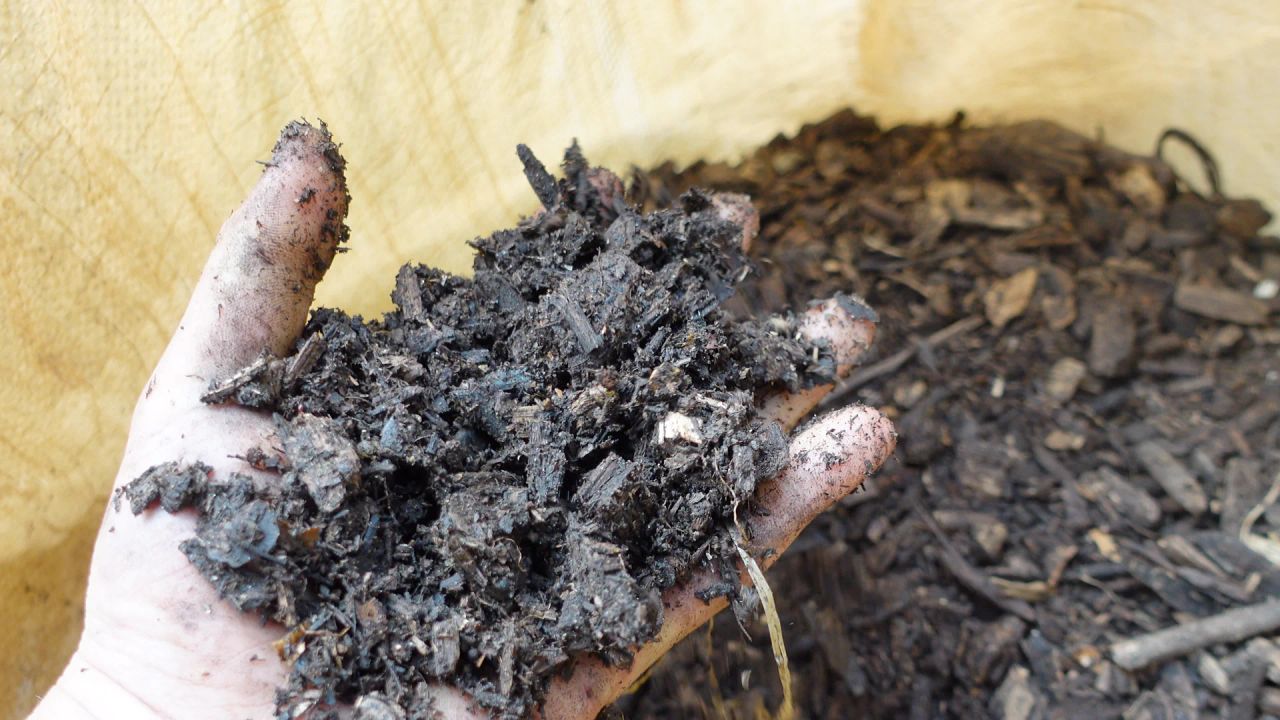
- The wood chips take much longer to decompose compared to the food scraps. This leaves us with “finished” compost after 6-12 months which still contains large chunks of wood, almost the same as before they were added to the compost. (Fig. 2) This requires much effort to then screen all of the chips out before we can use the compost.
- The chips do not give much structural integrity to the pile and often they would spill out of the gaps between the pallet boards. However, this has recently been improved with our wire mesh installation.
- The chips do not hold water so well, and the compost piles are prone to drying out more quickly in the summer months.
- The chips don’t cover the decomposing matter properly without adding heavy amounts (which leads to too many browns in the piles) and so there are often strong smells escaping and many flies.
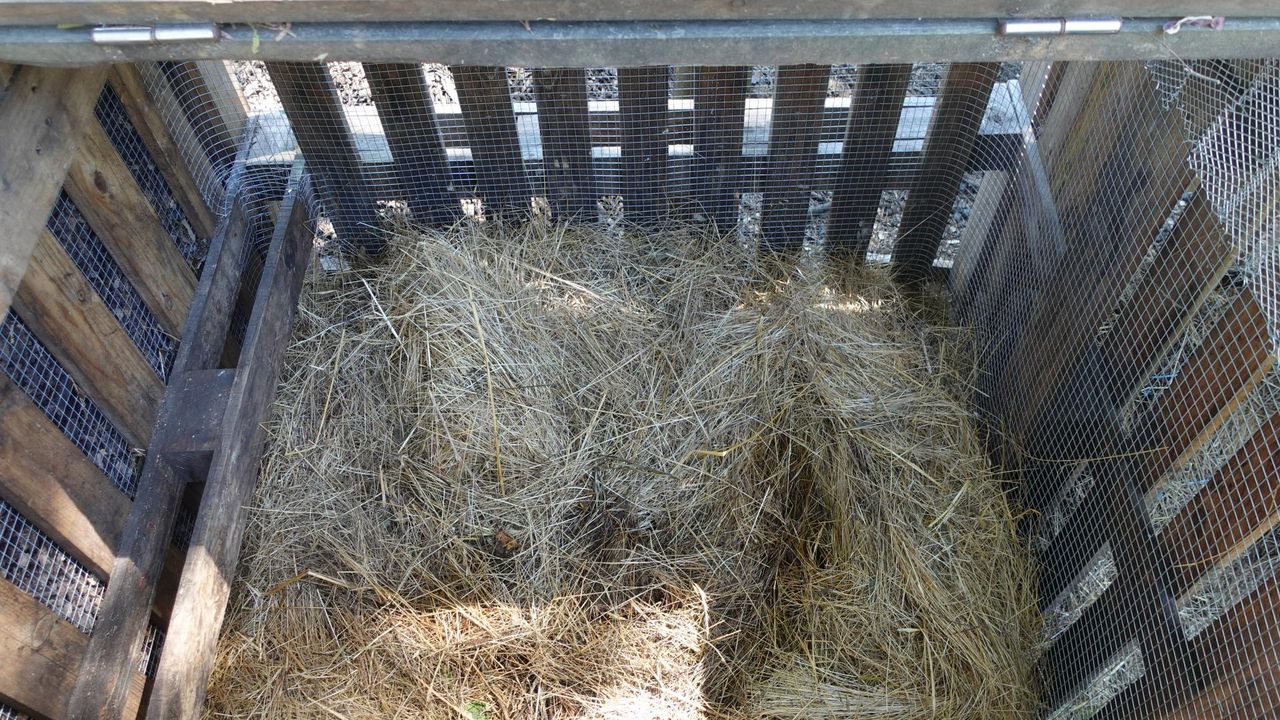
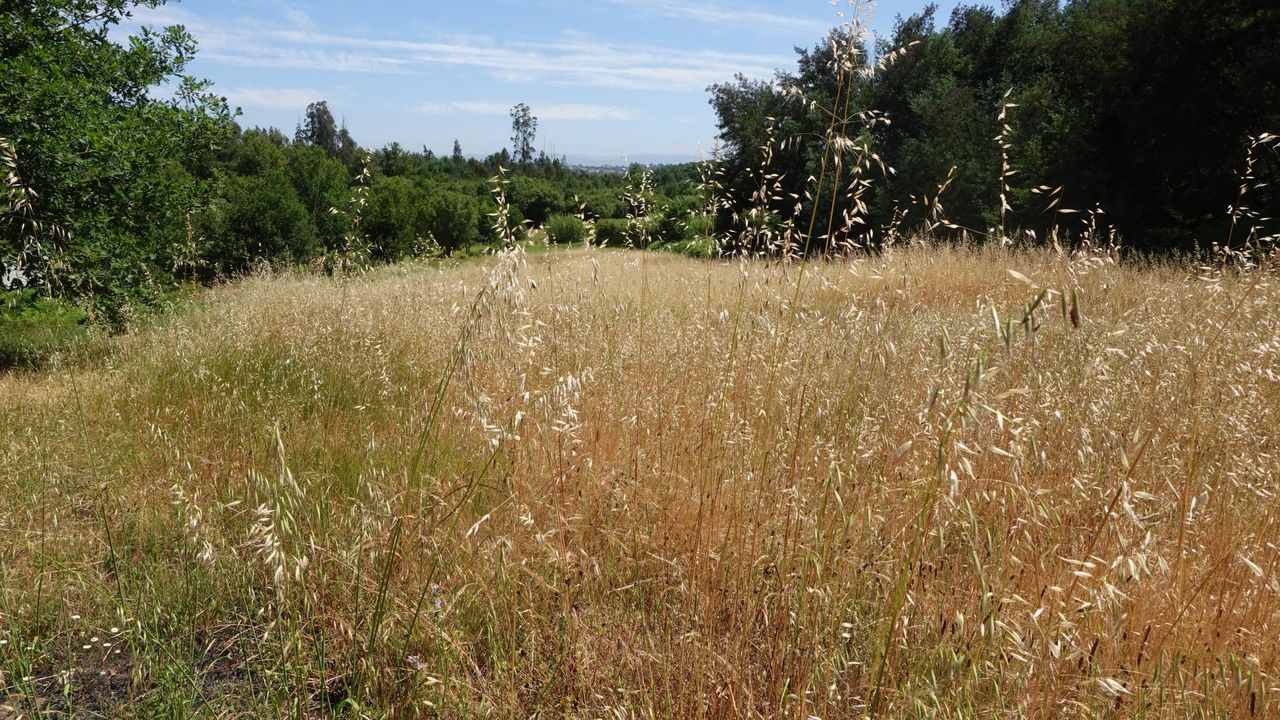
- Sourcing wood chips means we are dependent on a wood chipper being available, which is not always the case. We know we have a steady supply of hay every year when our neighbour comes to cut the grass in our fields. (Fig. 3)
We hope that these issues may be resolved by using hay. We already use hay when composting our humanure in the poop palace, and it works very well, so we are curious if this will also apply similarly to our food scraps. We will continue to monitor and document the state of the piles over the course of Season 6, with a comparison next year.