Find good methods for an (off grid) ecological sewage system

WaterNatural materials
More Information


%20--%3e%3csvg%20version='1.1'%20id='Layer_1'%20xmlns='http://www.w3.org/2000/svg'%20xmlns:xlink='http://www.w3.org/1999/xlink'%20x='0px'%20y='0px'%20viewBox='0%200%2064%2063'%20style='enable-background:new%200%200%2064%2063;'%20xml:space='preserve'%3e%3cstyle%20type='text/css'%3e%20.st0{fill:%23231F20;}%20%3c/style%3e%3cdesc%3eCreated%20with%20Sketch.%3c/desc%3e%3cg%20id='Page-1'%3e%3cg%20id='OA-Logo-Black-Background'%3e%3cpath%20id='Shape'%20class='st0'%20d='M14.1,30.1c-1.5-0.8-8.6-3.8-14.1-7.8c1.8-3.4,3.1-5.6,5-9.1c2.7,1.1,1.9,0.5,4.6,1.7%20c0.8,0.4,10.1,4.5,13.8,6.2c2.4,1.1,4.7,2.2,7,3.3L43,30.5l8.1,3.9c4,2,7.2,3.5,11.3,5.5c0.5,0.3-3.7,9.4-3.7,9.4%20c-1.7-0.6-3.9-1.8-5.5-2.5c-4.7-2.1-9-3.9-13.7-6c-4-1.8-6.7-2.9-10.8-4.5C25,34.9,17.1,31.6,14.1,30.1z'/%3e%3cpath%20id='Shape_1_'%20class='st0'%20d='M12.1,54.9c-0.8,0.6-1.6,1.2-2.5,1.6c-0.4-0.5-0.9-1-1.3-1.5c-0.3-1.2-2.3-4.9-2.7-6.2%20c-0.1-0.4-0.7-2.2-0.8-2.6c0,0,5-3.4,8.2-5.9c3.2-2.6,6.2-5,9.3-7.5c1.4-1.1,3.9-2.5,5.3-3.5c2.5-1.7,13-9.1,15.6-10.5%20c5.4-3.3,11.1-6.3,16.8-9c1.7,3.5,1.8,3,3.8,6.9c0,0-17.8,13.5-22.7,17.1c-3.8,2.8-7.5,5.7-11.3,8.5c-1.7,1.3-3.5,2.4-5.2,3.7'/%3e%3cpath%20id='Shape_2_'%20class='st0'%20d='M20.8,2.9l-0.2-0.8C25,0,31.2-0.3,31.4,0.2c0.4,1.1,0.9,2.2,1.2,3.4c1.4,4.4,2.7,8.7,4,13.1%20c0.4,1.4,2.8,10,2.9,10.5c0.5,2.8,1.2,5.6,1.6,8.4c0.8,4.7,1.4,8.6,2.3,13.3c0.6,3.1,1.3,6.3,2.3,11.3c0,0-5.8,1.4-7.5,1.8%20c-0.8,0.2-1.5,0.4-2.4,0.6c-0.3-1.1-0.2-1.2-0.5-2.1c-0.9-3.7-1.8-7.3-2.6-11c-1.5-6.4-3-12.9-4.4-19.3%20c-1.2-5.4-2.6-10.7-4.4-15.9c-1-3.1-1.8-6.3-2.7-9.5C21.1,3.8,21,3.8,20.8,2.9z'/%3e%3c/g%3e%3c/g%3e%3c/svg%3e)


1
Gathering input of existing methods


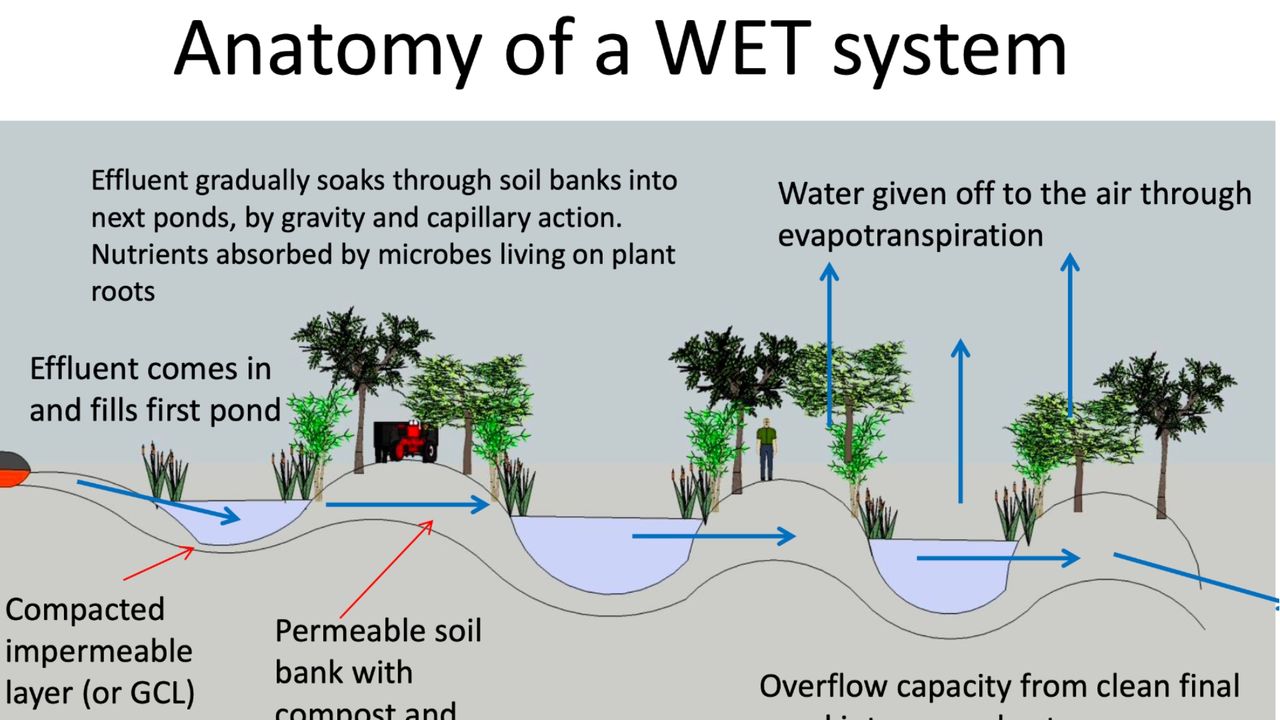
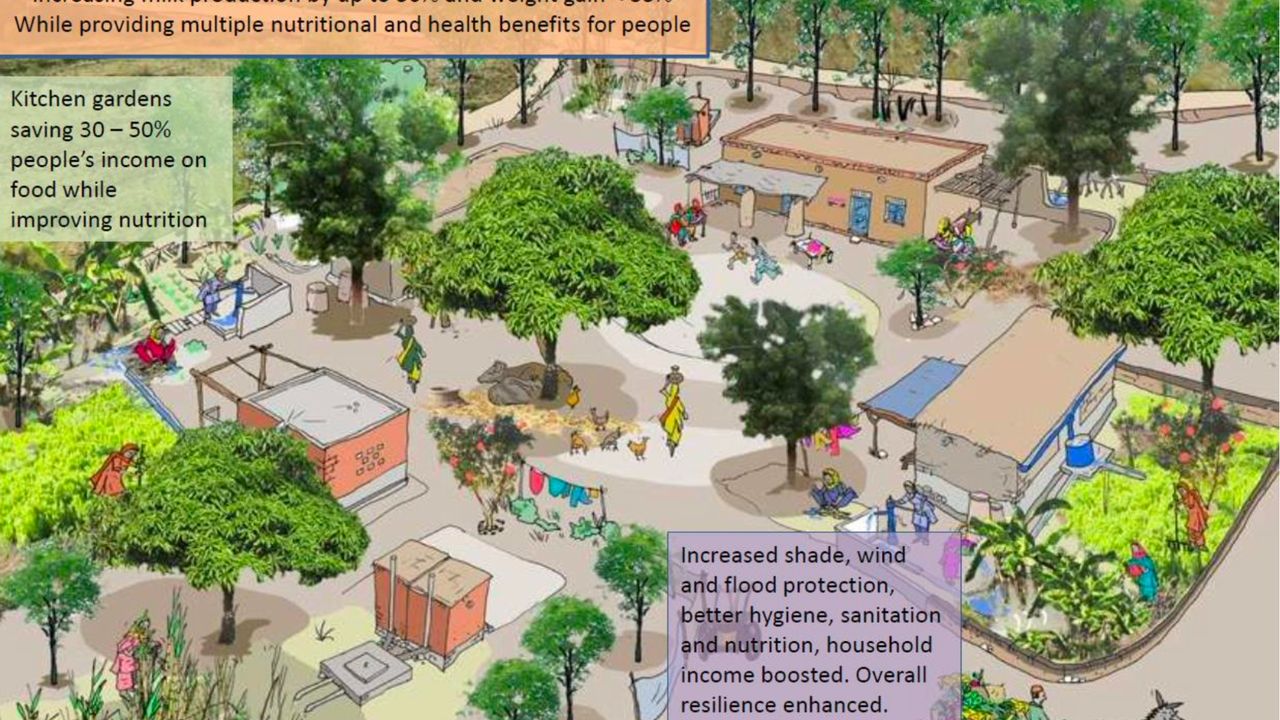
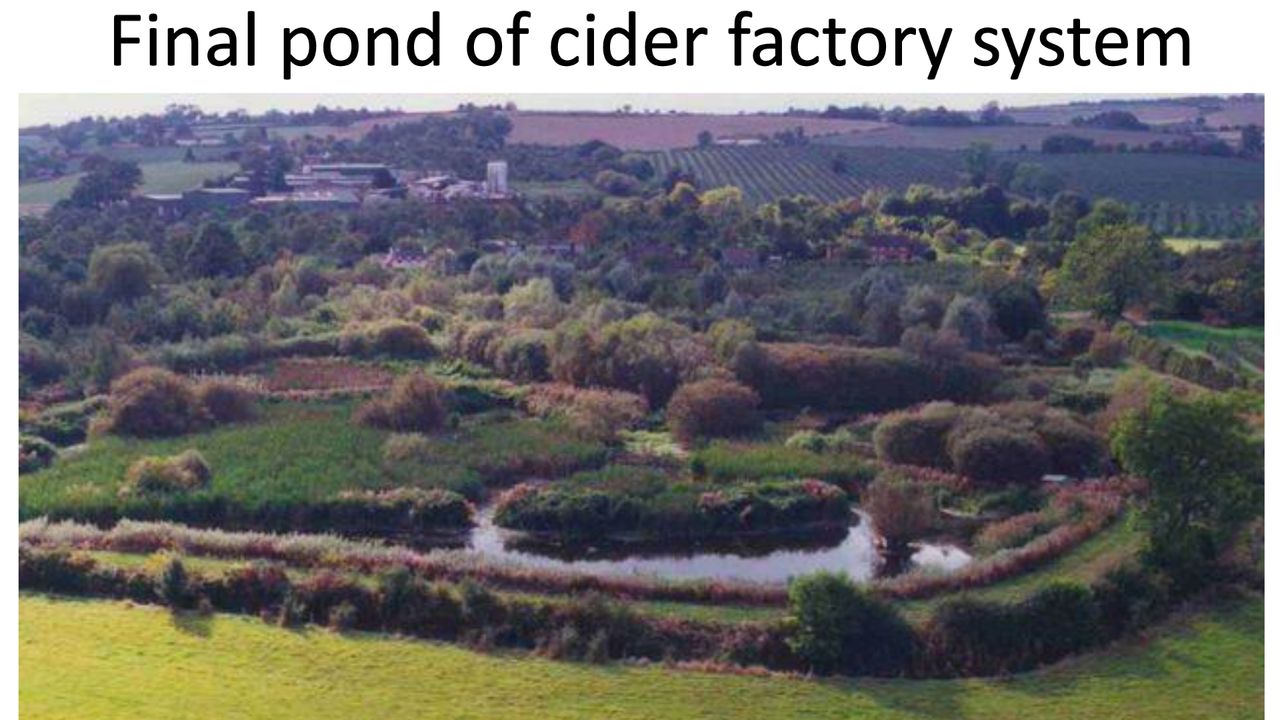
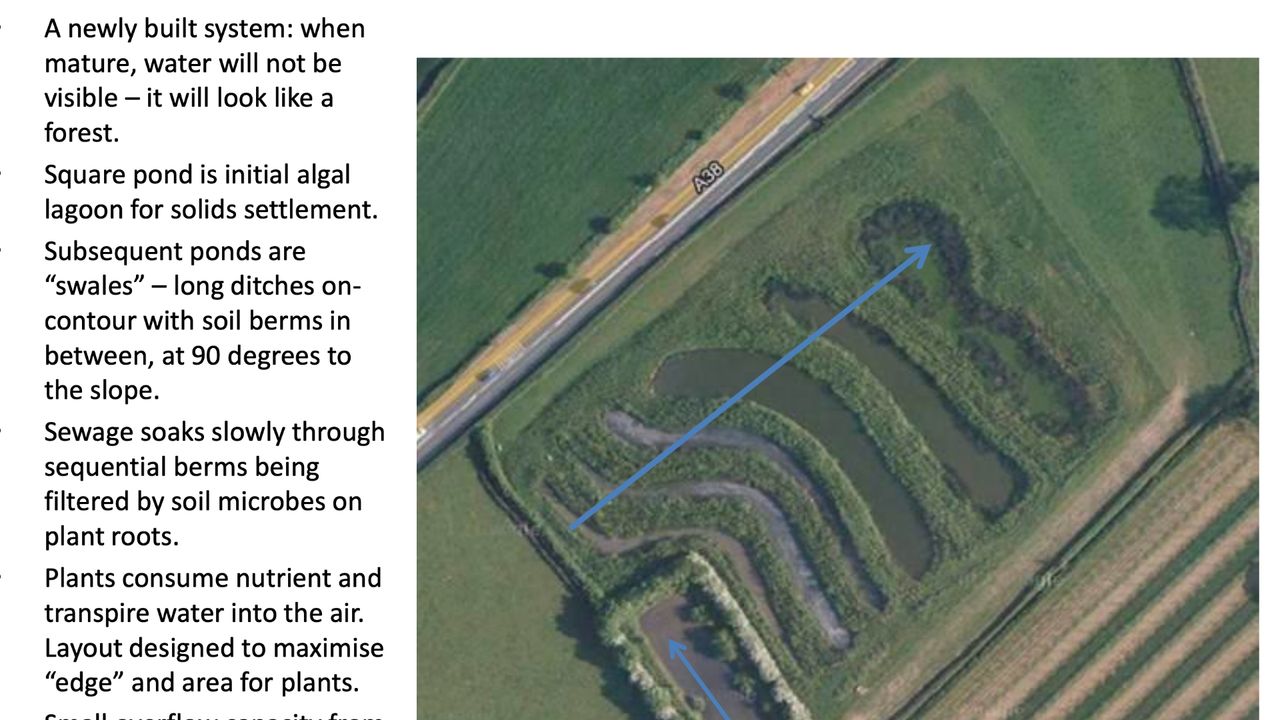
Someone send me this document a while back. Completely forgot who, but thanks! It’s been quite interesting to have an overview on a system with some examples. I’ll share a few images to get a glimpse of the document but you can download the full one below.
Let me know if you have good videos, pdf or information about this topic in the thread below 👇
%20--%3e%3csvg%20version='1.1'%20id='Calque_1'%20xmlns='http://www.w3.org/2000/svg'%20xmlns:xlink='http://www.w3.org/1999/xlink'%20x='0px'%20y='0px'%20viewBox='0%200%2027.2%2027.8'%20style='enable-background:new%200%200%2027.2%2027.8;'%20xml:space='preserve'%3e%3ctitle%3eicon%20redirect%20new%3c/title%3e%3cg%3e%3cpath%20d='M27.2,26.5c-0.1-5-0.3-10-0.4-15c0-0.7-0.6-1.2-1.2-1.2s-1.2,0.6-1.2,1.2c0.1,4.6,0.3,9.1,0.4,13.7%20c-3.9-0.2-7.7-0.6-11.6-0.4c-3.3,0.2-6.7,0.5-10,0.4C2.8,19.5,2.7,13.7,2.5,8c2.9-0.1,5.8-0.8,8.6-0.7c1.6,0.1,1.6-2.4,0-2.5%20C7.8,4.6,4.5,5.7,1.2,5.5c-0.6,0-1,0.3-1.1,0.7C0,6.3,0,6.4,0,6.6c0,0,0,0.1,0,0.1c0,0,0,0,0,0.1c0.2,6.6,0.4,13.2,0.5,19.7%20c0,0.6,0.4,1.3,1.2,1.4c3.8,0.1,7.5-0.2,11.3-0.4c4.4-0.3,8.6,0.2,12.9,0.4c0.6,0,1-0.3,1.1-0.7C27.1,26.9,27.2,26.7,27.2,26.5z'/%3e%3cpath%20d='M12,12.6c-0.2,0.7,0.2,1.4,0.9,1.5c0.7,0.2,1.4-0.2,1.5-0.9v0c0.6-2.2,1.4-4.5,3.1-6c1.3-1.2,3-1.9,4.7-2.7%20c-0.4,1.3-0.8,2.6-1.4,3.8c-0.6,1.5,1.8,2.1,2.4,0.7c0.8-1.9,1.5-3.9,2-5.9c0-0.1,0-0.2,0-0.3c0.3-0.6,0.1-1.5-0.7-1.8%20C22.3,0.4,20,0,17.7,0c-0.7,0-1.2,0.6-1.2,1.2s0.6,1.2,1.2,1.2c0.9,0,1.7,0.1,2.6,0.2c-1.7,0.8-3.4,1.7-4.8,3%20C13.6,7.6,12.7,10.1,12,12.6z'/%3e%3c/g%3e%3c/svg%3e)
2
Prototype a system in our Basekamp

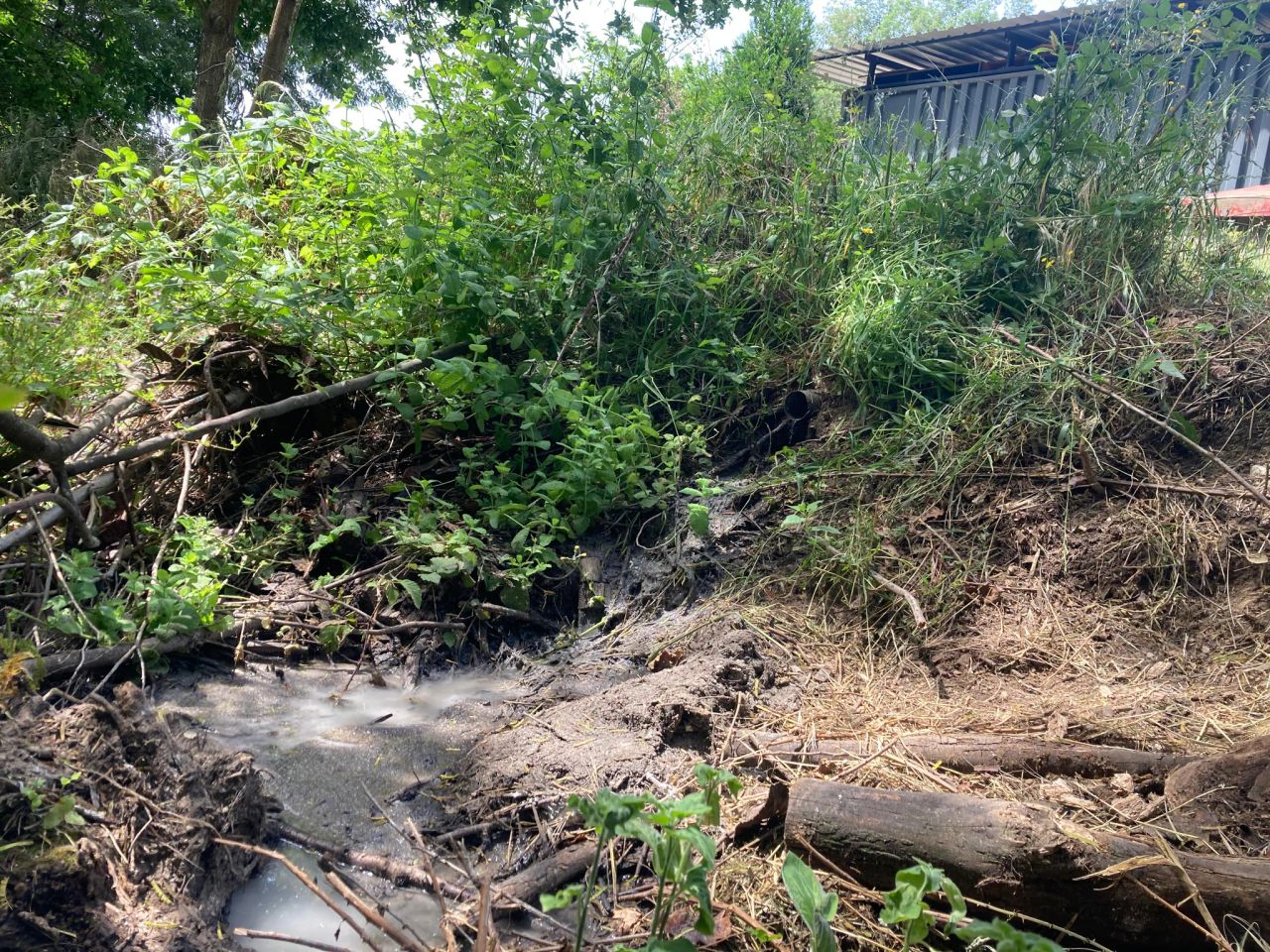
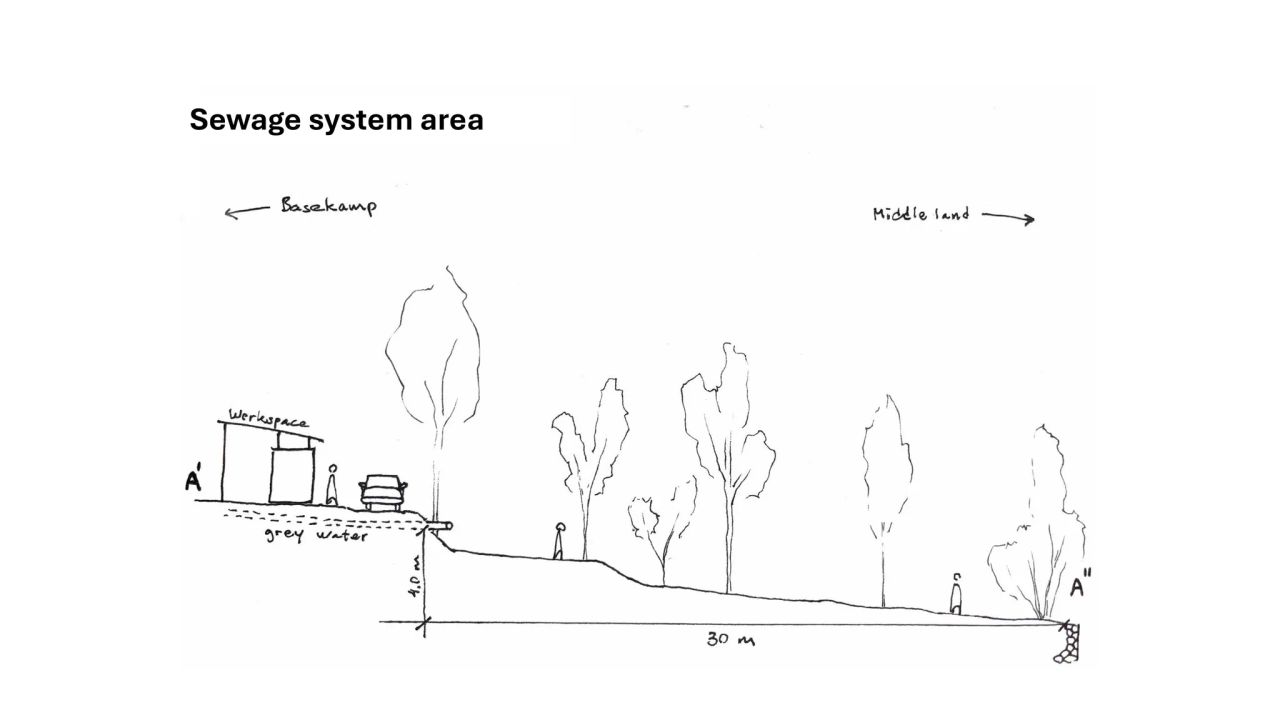
Right now, there is no sewage system at the Basekamp. We put a tube into the ground at the start of Kamp. This worked well for a long time, but now we can slowly start to work on improving our infrastructure so we want to try and find a way to filter the water before we put it back into our land. Our grey water is released into the land (see the picture). This sometimes causes a small amount of a smelly smell to spread. We know we can do better, so now we want to deal with our grey water in a more environmentally friendly way. To do so we have a plot of land between basekamp and middleland, which is layered with a few subtle terraces (see the drawing).
We want to use this sewage system for two things: to deal with our current greywater, and to try it out so that we can learn a couple of things. In an ideal world, we would then make it bigger for the community centre in the future.
Here are three solutions we have come up with. Each has its own advantages and disadvantages and all three are different from each other.
We can only build one of them.
Facts:
-During the season grey water is +/- 1000 L/day, peak usage 2000 L/day (once the Community Center is built that might change)
-In winter the system is not in use
-Our grey water comes from a kitchen sink, shower and washing machine (Food Waste, Oil, Natural Cleaning Products, Detergents)
3
Natural Landscape

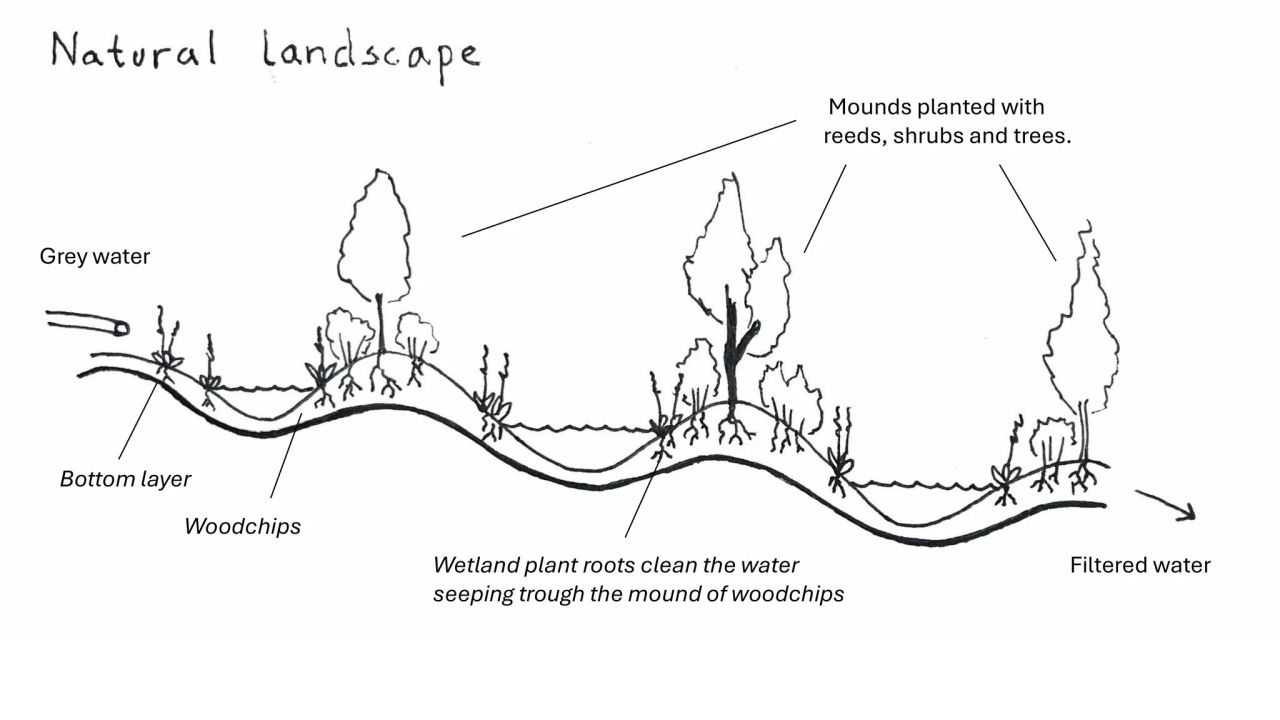
This proposal suggests creating a natural landscape by using lagooning as a treatment process. Lagooning is based on the biological balance of a set of artificial basins, the waste water is passed very slowly by gravity from one basin to another, it should stay approximately two weeks in each basins.
In our case, we want to create three basins by excavating and compacting our land. For the separation of the pond, we will use the soil excavated and woodchips. Like this the mounds that separate the basins are very suitable to welcome plants and trees and a natural ecosystem will take place around and in the basins.
The cleaning process is happening with an anaerobic (degradation occurs in the absence of oxygen) first pond, an aerobic second and third pond. The first pond needs to be at least 2.5m deep and then the other ponds can be only 1.5m deep. On top of that, this ecosystem of wetland plants, reeds and trees will be using a part of these water to grow and create ressources.
Pros :
- Good ecological impact on our land and once it works
- Low maintenance
- Clean all type of grey water
- Nature based solution
Cons :
- Need digger work to create
- Not sure that our soil is suitable to seal the ponds by compacting, so we will probably need a liner
- The first pond can create smells and insects (like mosquitos)
Questions for you :
- Do you think it’s a system adapted to our needs ?
- How can we seal the basins in the most natural way ?
- What size do we need for our basins ?
- Is the mix of excavating soil and woodchips good for the basins’s separation ?
- What plants, reeds and trees are suitable to start this ecosystem ?
- What can we do with the clean water at the end ?
- Do you know people or organisations that have this type of sewage system ?
4
Semi open horizontal reed bed

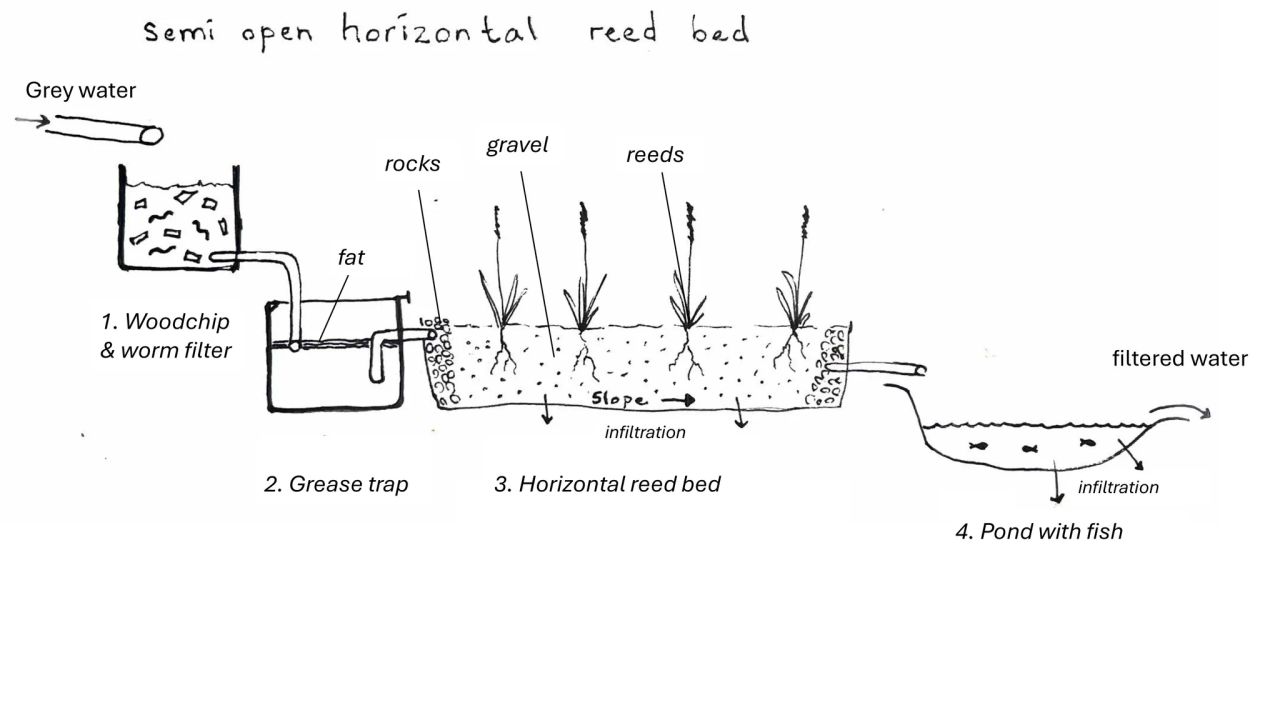
This proposal suggests cleaning our grey water in four steps before final infiltration or potential reuse. The first two steps are meant to be sealed from the surrounding by some kind of container. The third step we think could be semi-open allowing some infiltration. Although it would be nice to reuse the water in the future - we decided that at the fourth step the water can partly infiltrate into the ground, since we’re at this point not in need of water.
1. Woodchips & worm filter
Bigger waste particles like foodscraps from the kitchen will be filtered out. Worms can feast on the leftover food.
2. Grease trap
Fat and oils from the kitchen will settle on top of the water and will be removed systematically.
3.Horizontal reed bed
Water filters through a gravel bed planted with reeds. Microorganisms around the roots of the wetland plant cleans the water.
4. Pond
Here we let nature establish its own ecosystem. Pond water can in the future be used to water fruit trees or be for frogs and fish to enjoy.
- Comment
In theory, this system will remove any big particles, fat and oils and also let plant roots work their magic on the grey water. We think it's a good enough system since we’re only using biodegradable products.
However, we thought about constructing the reed bed (step 3) with our digger and just pack the bottom soil as a ”sealing” to minimize infiltration. But, since our soil is rich with sand we wonder if that’s good enough? Our preliminary soil samples suggest most water will get lost to infiltration before reaching the 4th step.
To be sure that water reaches the pond we probably need some kind of liner in step 3. Therefore, we are looking for a natural liner.
Same goes for step 4 if we want to keep the pond wet all year round.
- Questions:
What natural liner could we use to minimize infiltration in step 3?
Which size/capacity should each step have?
Is a woodchipfilter combined with a greasetrap logical?
Do we want to add more than one gravel bed (step 3) so that it is a series of gravel beds? Or is one big one the way to go?
5
Closed vertical and horizontal filtration
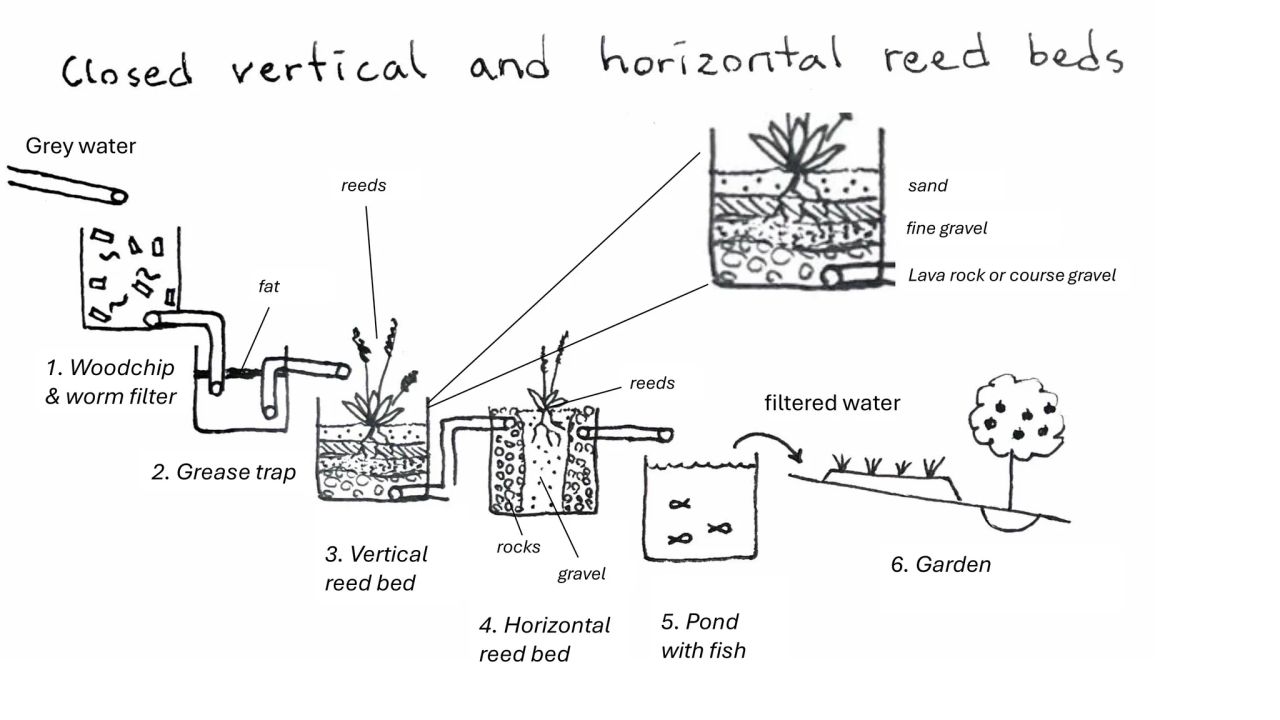
This proposal suggests cleaning our grey water in five consecutive steps. It is a fully closed system, meaning the water is guided through each step without infiltration into the soil. This means at the end the clean water can be reused, for example to water the gardens. We have not yet had water-shortage issues from our well in summer, but perhaps in the future that might prove to be worthwhile. The five steps are:
1. Woodchips & worm filter
Bigger waste particles like foodscraps from the kitchen will be filtered out. Worms can feast on the leftover food.
2. Grease trap
Fat and oils from the kitchen will settle on top of the water and will be removed periodically.
3. Vertical reed bed
Reeds will be planted in a vertical soil filter in a sealed container, for example an IBC. The filter has three layers a). sand b). fine gravel c). lava rock or coarse gravel.
4. Horizontal reed bed
Water filters through a gravel bed planted with reeds. Microorganisms around the roots of the wetland plant cleans the water.
5. Pond
Pond with fish and frogs that eat mosquito eggs.
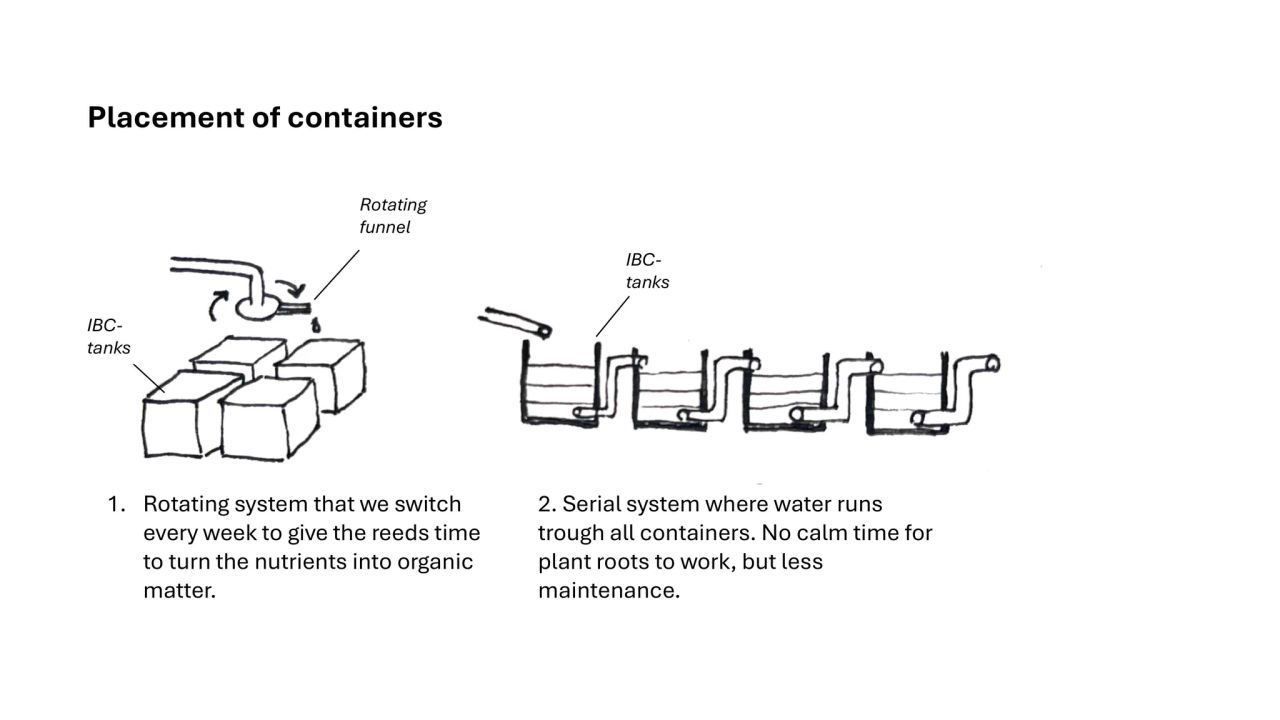
See the drawing below for a schematic of the proposal. The plants in step 3 need to have sufficient filtration power, so the vertical biofilter will probably have to be at least 4 IBCs. We thought of two different ways to place them, which can be seen in the second schematic below.
Comments:
We like that the system is not dependent on the layout of the land, which makes the design easily scalable for the community centre and applicable globally. The system uses significantly less space, allowing for other designations of the area. And we avoid potentially littering the soil with a liner.
However, the system has a lot of tubing, making it susceptible to congestion. This means the system needs much more frequent maintenance than for example the natural landscape, and still a tank might flood from time to time. On top, with this design using some kind of unnatural material seems unavoidable.
Questions:
- Does the combination and order of the steps make sense?
- Which size/capacity per step?
- How to design step 3?
- Can we use material from our land in the filters? E.g. sand from creek.
- Ideas for what kind of container?
6
Constructed Wetland System
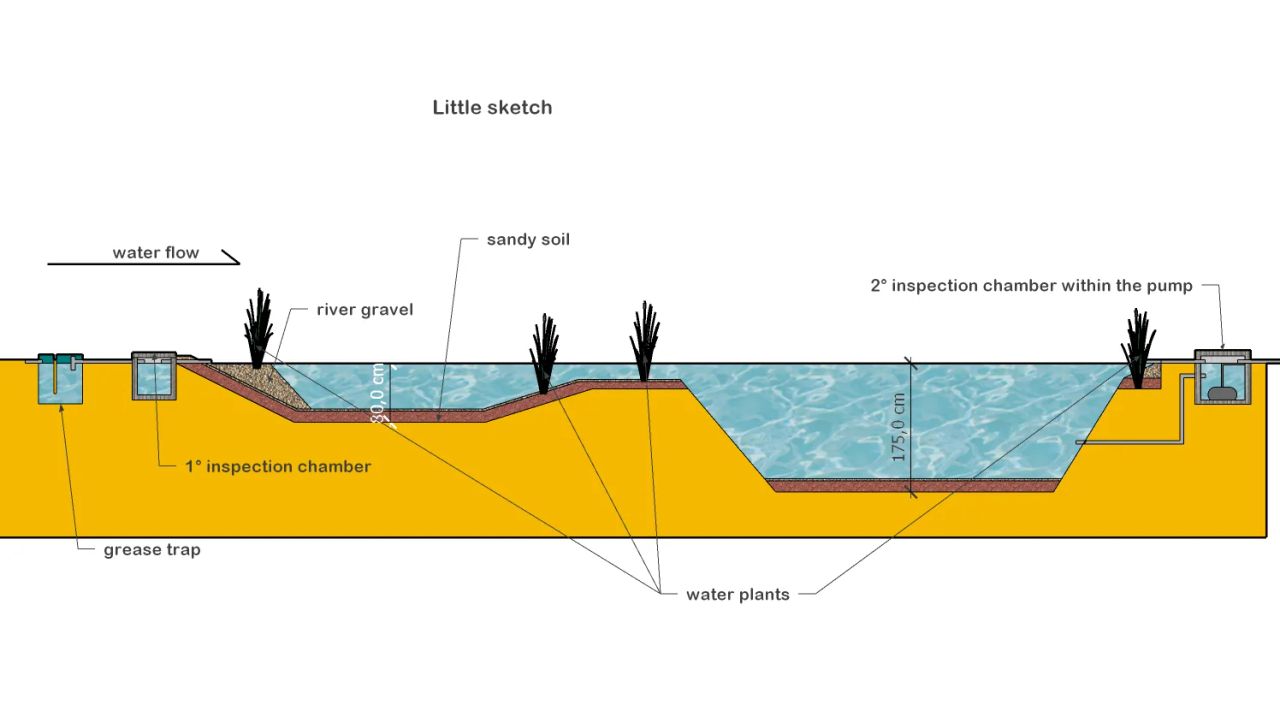
This proposal from Andrea Mattei suggests cleaning our grey water with a two stages constructed wetland system.
First a grease trap that will stop the solid particular matter.
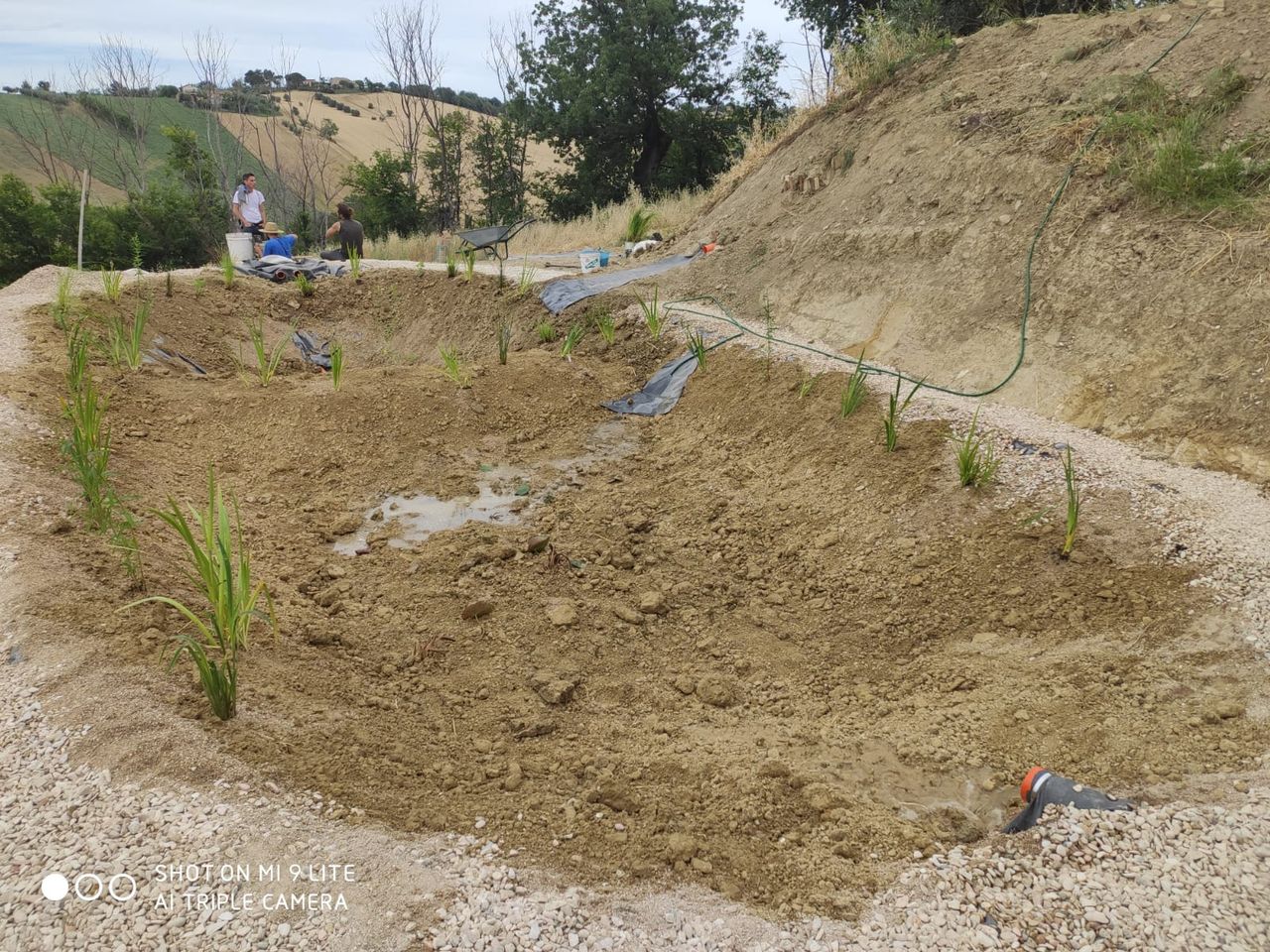
The second stage of treatment is a type of phytodepuration system using the properties of marshalands and of the microorganisms in water plants roots to clean our grey water.
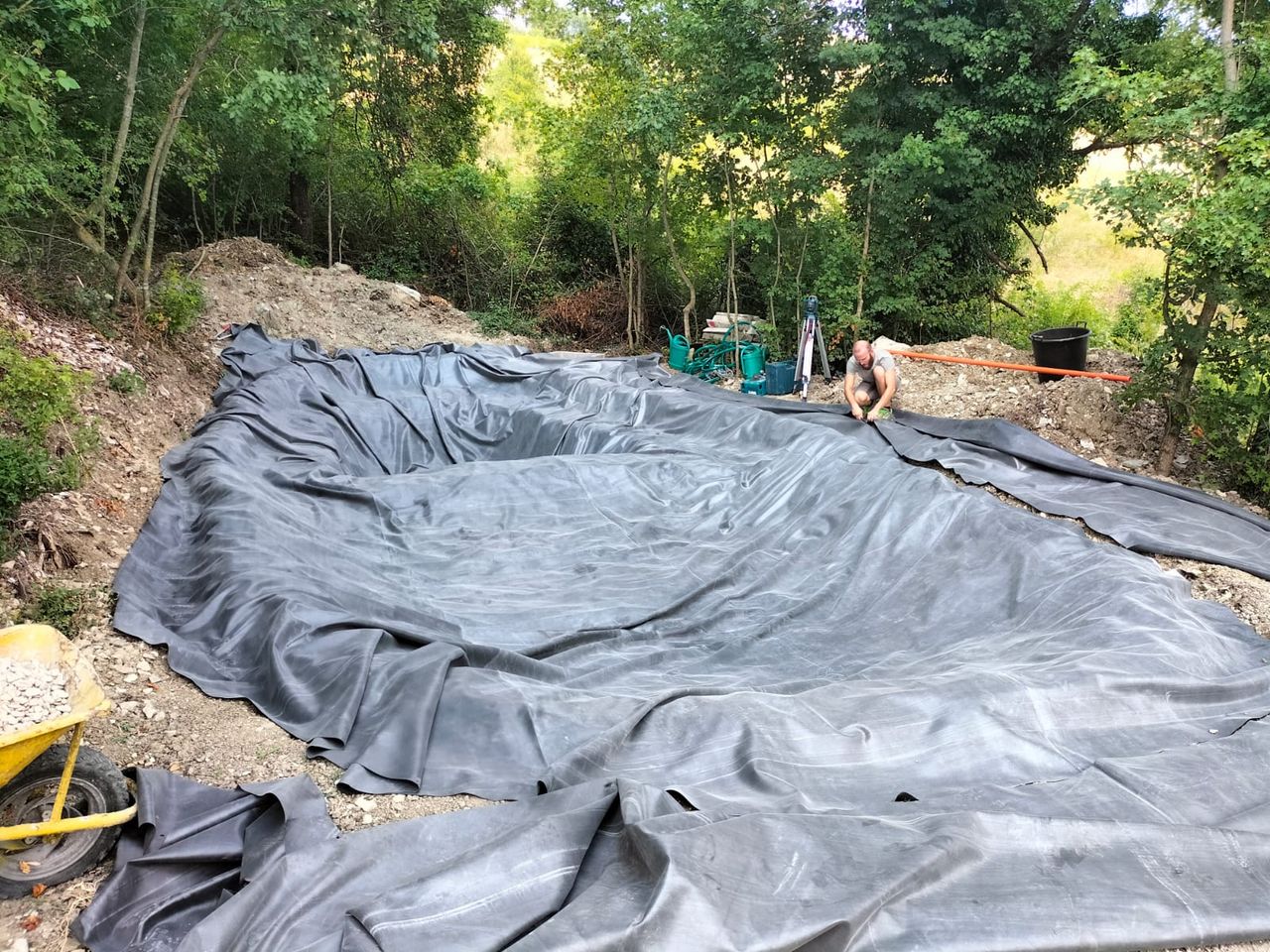
This system consists in creating two waterproof ponds with different depths in order to purify water in two different ways, create the substrate and implant water plants. The 2nd pond needs to have different species, as local as possible. In our case, we would need a 65 square meter surface.
We can put two inspection chambers to have the possibility to check and analyse the inflow and outflow water. The second one acts as a spillway for the next place where we want the water to go (down or up with a pump).
For the maintenance of this system, we need to periodically check the aquatic plant’s growth and add covering material to protect the plastic waterproof layer.
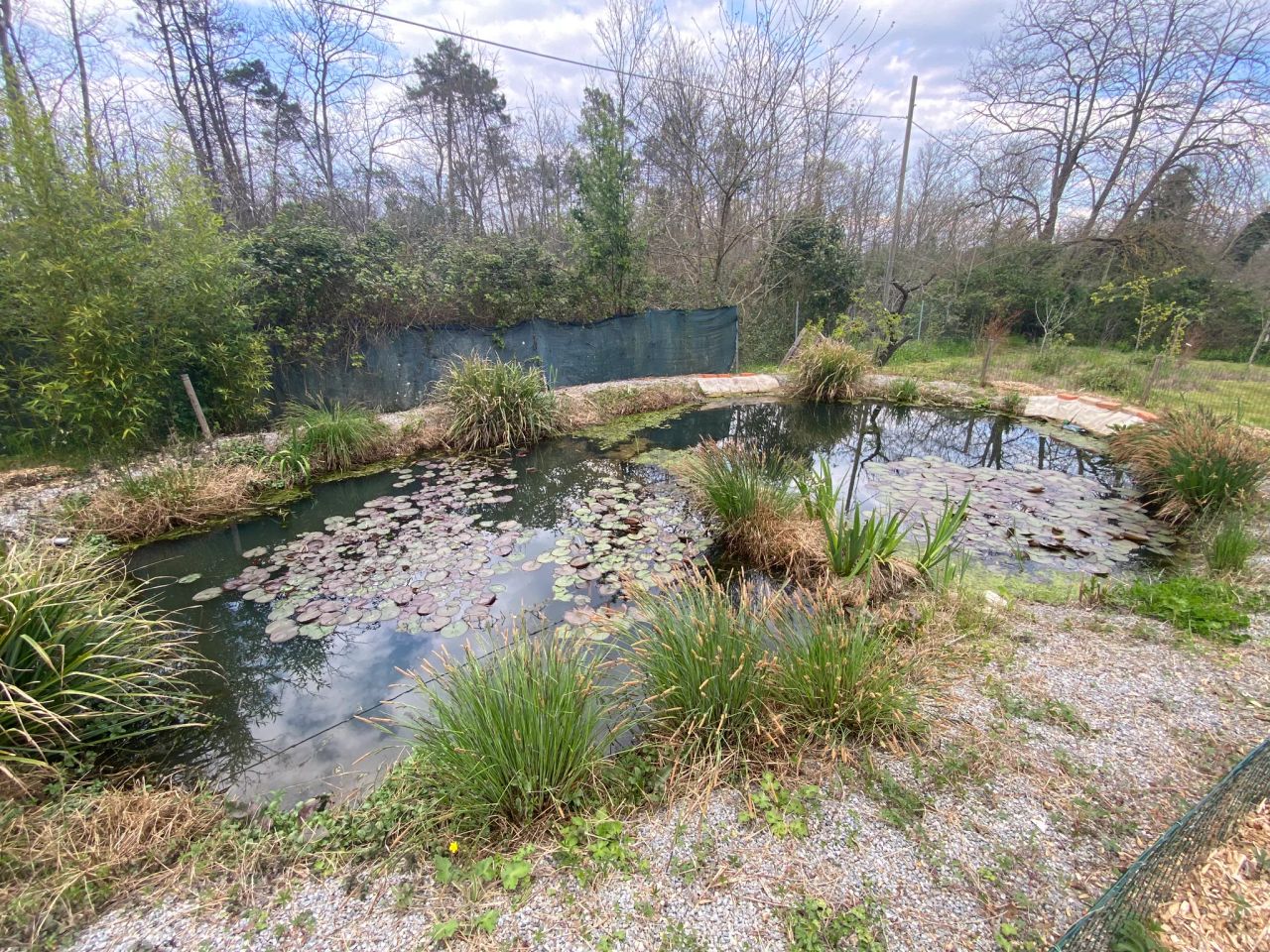
This design is resilient, self-sufficient and near to be a stable ecosystem. It needs more space than others but it can handle different flows of grey and rain water during the year, which is perfect for us. It’s a system odorless and full of biodiversity, insects and amphibians (that eat mosquitoes and their eggs).
Questions for you :
- What do you think about this system ?
- Do you know what native water plants we can use in this case ?
And thanks to Andrea for sharing his expertise :)