

Can we make the land more resilient to fire? 🔥
Started 4y. Edited 1yStarted about 4 years ago. Last edit about 1 year ago



Landscape
In Progress
More Information


%20--%3e%3csvg%20version='1.1'%20id='Layer_1'%20xmlns='http://www.w3.org/2000/svg'%20xmlns:xlink='http://www.w3.org/1999/xlink'%20x='0px'%20y='0px'%20viewBox='0%200%2064%2063'%20style='enable-background:new%200%200%2064%2063;'%20xml:space='preserve'%3e%3cstyle%20type='text/css'%3e%20.st0{fill:%23231F20;}%20%3c/style%3e%3cdesc%3eCreated%20with%20Sketch.%3c/desc%3e%3cg%20id='Page-1'%3e%3cg%20id='OA-Logo-Black-Background'%3e%3cpath%20id='Shape'%20class='st0'%20d='M14.1,30.1c-1.5-0.8-8.6-3.8-14.1-7.8c1.8-3.4,3.1-5.6,5-9.1c2.7,1.1,1.9,0.5,4.6,1.7%20c0.8,0.4,10.1,4.5,13.8,6.2c2.4,1.1,4.7,2.2,7,3.3L43,30.5l8.1,3.9c4,2,7.2,3.5,11.3,5.5c0.5,0.3-3.7,9.4-3.7,9.4%20c-1.7-0.6-3.9-1.8-5.5-2.5c-4.7-2.1-9-3.9-13.7-6c-4-1.8-6.7-2.9-10.8-4.5C25,34.9,17.1,31.6,14.1,30.1z'/%3e%3cpath%20id='Shape_1_'%20class='st0'%20d='M12.1,54.9c-0.8,0.6-1.6,1.2-2.5,1.6c-0.4-0.5-0.9-1-1.3-1.5c-0.3-1.2-2.3-4.9-2.7-6.2%20c-0.1-0.4-0.7-2.2-0.8-2.6c0,0,5-3.4,8.2-5.9c3.2-2.6,6.2-5,9.3-7.5c1.4-1.1,3.9-2.5,5.3-3.5c2.5-1.7,13-9.1,15.6-10.5%20c5.4-3.3,11.1-6.3,16.8-9c1.7,3.5,1.8,3,3.8,6.9c0,0-17.8,13.5-22.7,17.1c-3.8,2.8-7.5,5.7-11.3,8.5c-1.7,1.3-3.5,2.4-5.2,3.7'/%3e%3cpath%20id='Shape_2_'%20class='st0'%20d='M20.8,2.9l-0.2-0.8C25,0,31.2-0.3,31.4,0.2c0.4,1.1,0.9,2.2,1.2,3.4c1.4,4.4,2.7,8.7,4,13.1%20c0.4,1.4,2.8,10,2.9,10.5c0.5,2.8,1.2,5.6,1.6,8.4c0.8,4.7,1.4,8.6,2.3,13.3c0.6,3.1,1.3,6.3,2.3,11.3c0,0-5.8,1.4-7.5,1.8%20c-0.8,0.2-1.5,0.4-2.4,0.6c-0.3-1.1-0.2-1.2-0.5-2.1c-0.9-3.7-1.8-7.3-2.6-11c-1.5-6.4-3-12.9-4.4-19.3%20c-1.2-5.4-2.6-10.7-4.4-15.9c-1-3.1-1.8-6.3-2.7-9.5C21.1,3.8,21,3.8,20.8,2.9z'/%3e%3c/g%3e%3c/g%3e%3c/svg%3e)


1
What is the problem?
Published 4y. Edited 2yPublished about 4 years ago. Last edit almost 3 years ago
Below are the main challenges identified when it comes to fire risk.
🔁 1 - Fire Loop
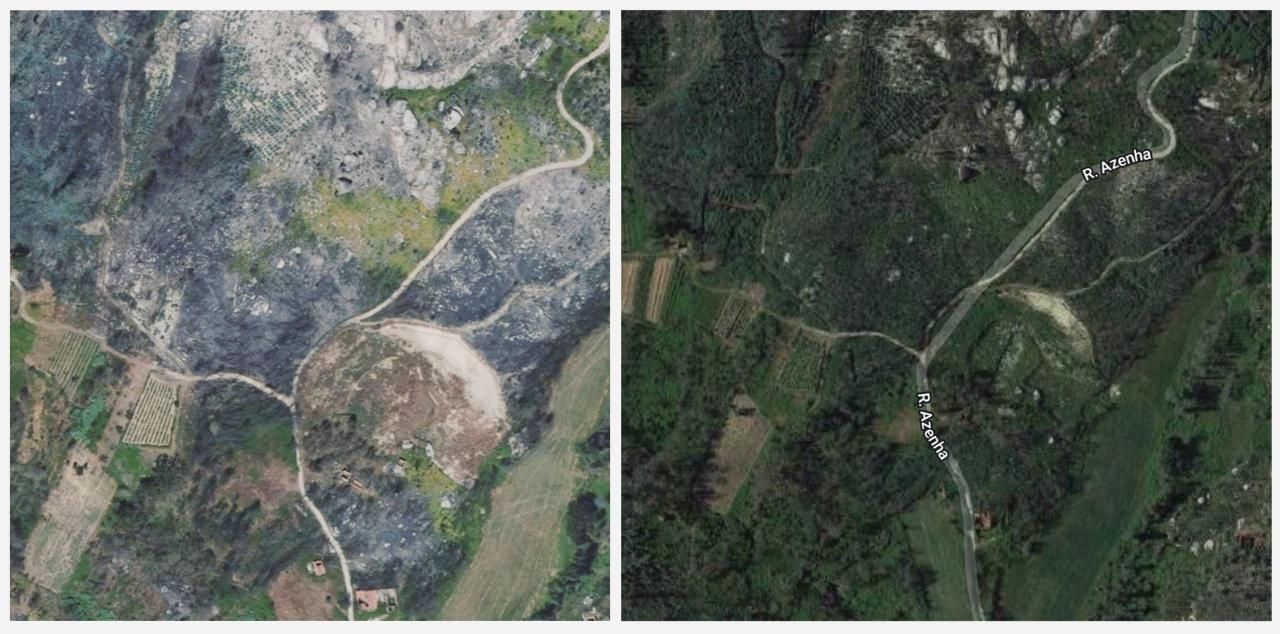
There have been two big fires on this land in 2005 and 2017, and the risk of another is very high.
🌎 2 - Climate change
In the last decade, the size, scale, and temperature of bushfires in the Mediterranean have increased. This is due partially to climate change making summers hotter, dryer, and longer.
🌳 3 - Flammable trees
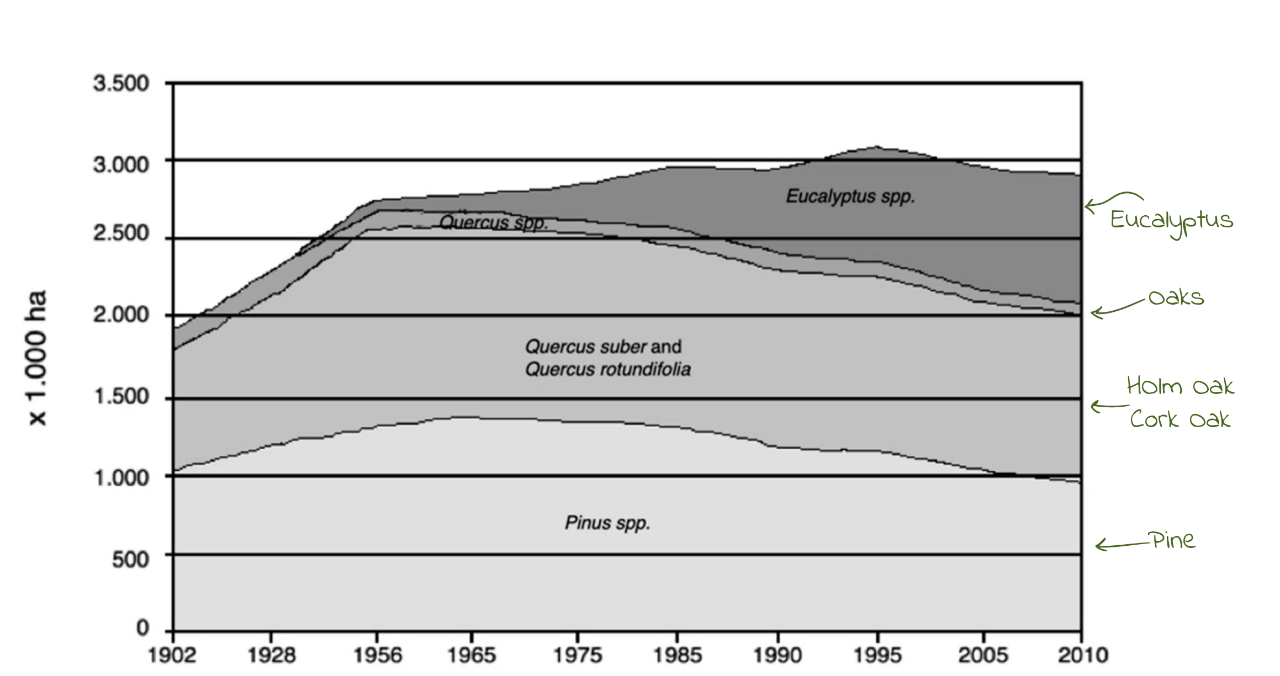
Much of the fire-resistant native tree population has been replaced with the profitable yet flammable eucalyptus. Eucalyptus burns at a high temperature and fires easily reach the canopy creating “megafires”. The second image below shows the tree population in Portugal over time, and highlights the increase of eucalyptus.
🌿 4 - Too many mimosas
Mimosas, although serving a purpose, grow and spread incredibly fast. They are highly flammable and overshadow all other native plants, slowing their growth.
2
What can we do?
Published 3y. Edited 2yPublished almost 4 years ago. Last edit almost 3 years ago

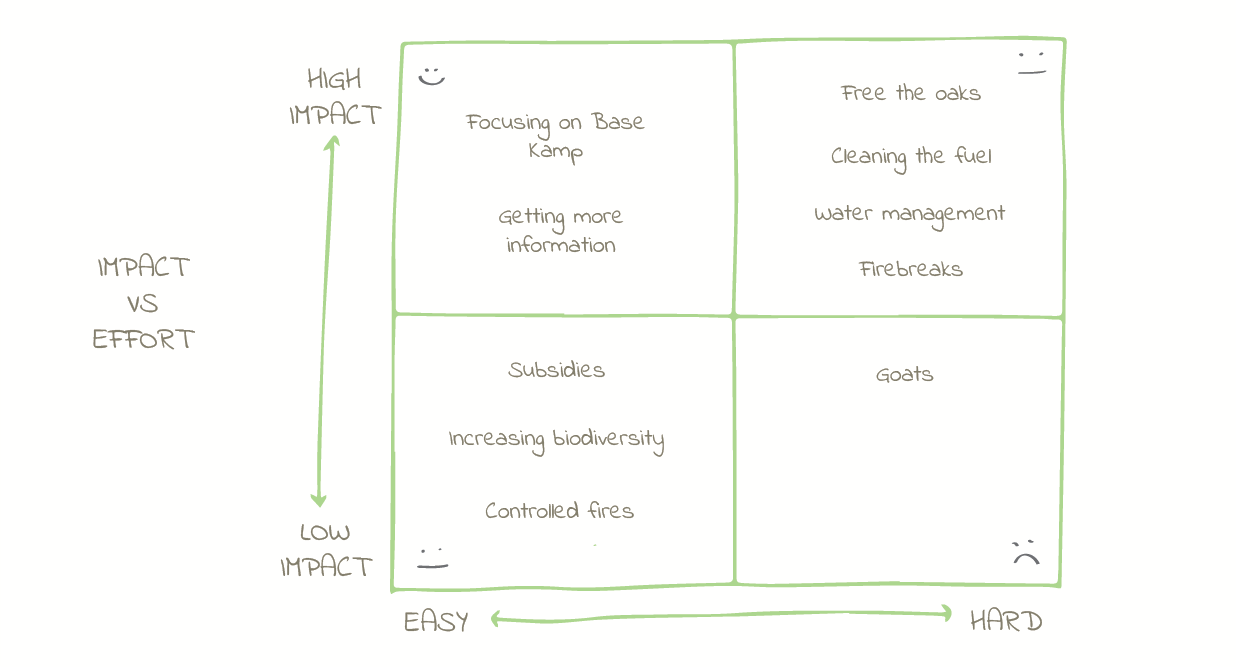
🌳 Free Oaks
Cut mimosas to help the native tree population regenerate.
🪚 Process Cuttings
Should dead trees be left to decompose or can they be used?
🌀 Safety Focus
Keep Base Kamp free of flammable plants.
ℹ️ Get Informed
We plan to speak with the fire department, neighbors, and professionals to help us prepare.
♒ Water Management
Having different bodies of water on the land will keep the soil moist during the dry season.
🔥 Firebreaks
These can ensure fires don’t spread from neighboring lands, like the eucalyptus farm on our border.
🌱 Biodiversity
Can we increase biodiversity to aid the land’s regeneration? Should we introduce new species?
🐐 Animals
While goats can be helpful, animal care requires year-round work.
📃 Government Subsidies
We can take advantage of subsidies intended for recently burnt land and cork oaks.
🔥 Controlled Fire
These can be helpful but should not be used on brambles as they quickly grow back and the mimosas around are highly flammable.
3
Freeing the oak (Implementation)
Published 3y. Edited 2yPublished almost 4 years ago. Last edit almost 3 years ago
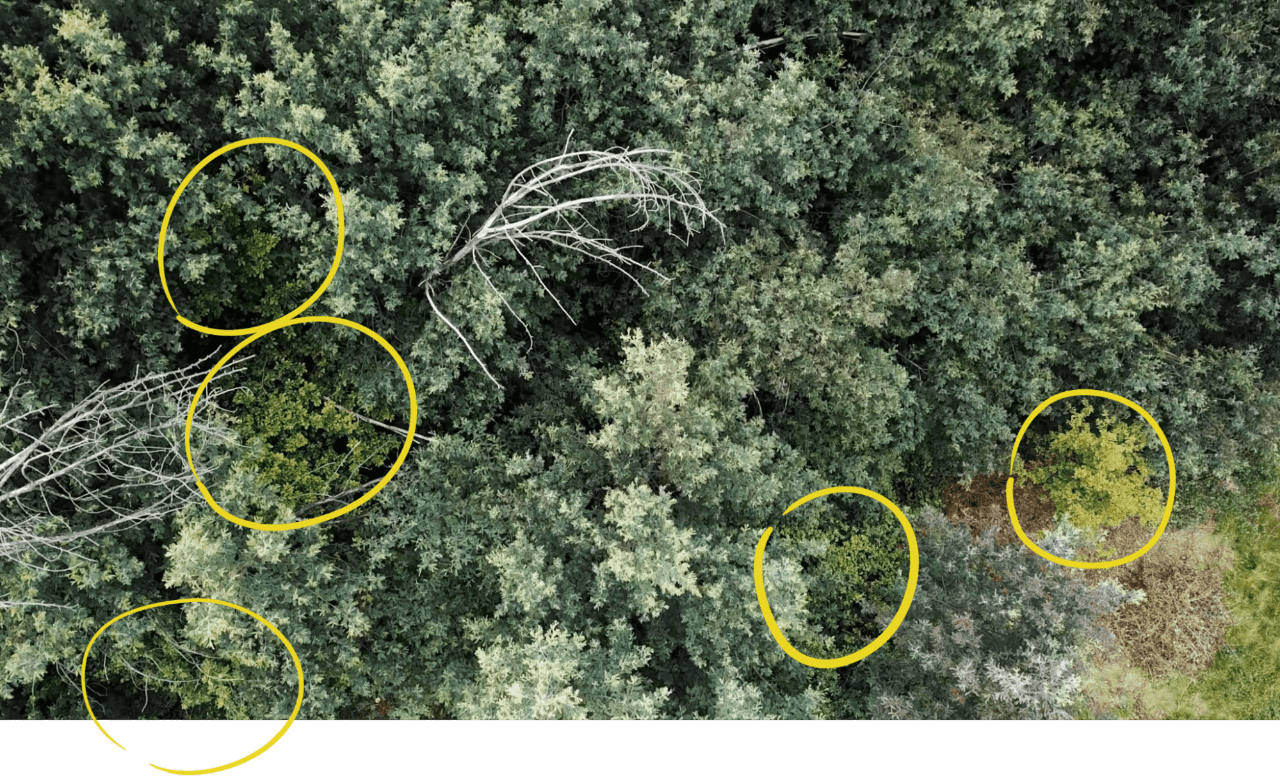
We have been planting native and fire-resistant trees like oaks around our land. We also chopped down the invasive mimosa around the existing native trees, giving them space to grow. However, the size of the land makes this hard to maintain, especially without a tractor. So this project is proceeding very slowly.
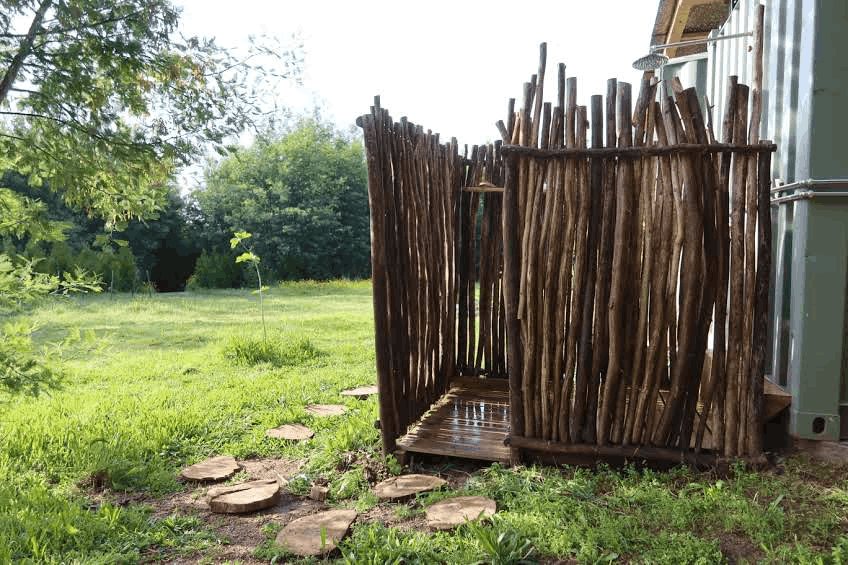
We are still searching for a proper solution for managing the chopped down mimosas and the dead wood left over from the previous fire. The wood from mimosas is great fuel for the pizza oven and we also looked into using them as raw building material and integrated them in the shower area and other small projects around the base. Whenever we can, we also get a wood chipper and use the product to make more comfortable trails and paths.
Other methods like hügelkultur or biochar could make this abundant material more useful. For now, we continue to experiment in order to find a low-effort solution.
4
We Interviewed the Fire Department Chief
Published 3y. Edited 2yPublished almost 4 years ago. Last edit almost 3 years ago
After a discussion with the chief of a local fire department, we came away with a few notes:
The main causes of fires are negligence and crime. Professional arsonists, pyromaniacs, family disagreements, discarded cigarettes, and campfires, for example.
While the number of fires is decreasing, their size and scale is increasing. This is due to the abandonment of rural land and an increase in unmanaged fuel.
According to the chief, Portugal burns more than the rest of Europe due to policy. Land owners get fined if they do not clear their land. Since this is not a profitable activity, the land is often sold to paper companies.
Naturally, it is not possible to know where a fire will come from. Rather, it is better to focus on determining areas of risk.
He notes that previous efforts to combat fire have failed, and all that is left are the firefighters themselves. A tear was shed for those who have been lost in combat.
We received a recommendation to create an evacuation plan.

5
Interview with a Professor
Published 3y. Edited 2yPublished almost 4 years ago. Last edit almost 3 years ago
There is no consensus on whether forest fires should be suppressed or not. While not all fires are bad, humanity has interfered with forest ecosystems for thousands of years and as such they may happen more frequently.
Fire-adaptive plants such as acacia and eucalyptus also contribute as both increase a fire’s size and frequency.
He points to land abandonment as a leading cause. The national strategy of cleaning up the land is not economically or ecologically sustainable, and broadleaf forests (oak) take more time to establish.
Controlled fires are not good for mimosas as they sprout too fast afterwards. He suggests peeling their bark or using herbicide. Having lakes is helpful as the fire is less likely to burn around them and they act as a good reservoir.
He recommended connecting with nearby landowners who are a few steps ahead in their fire-resilience process. This should provide good empirical knowledge for us. Most importantly, we should have a proper fire evacuation plan.
6
The Evacuation Plan
Published 3y. Edited 2yPublished almost 4 years ago. Last edit almost 3 years ago
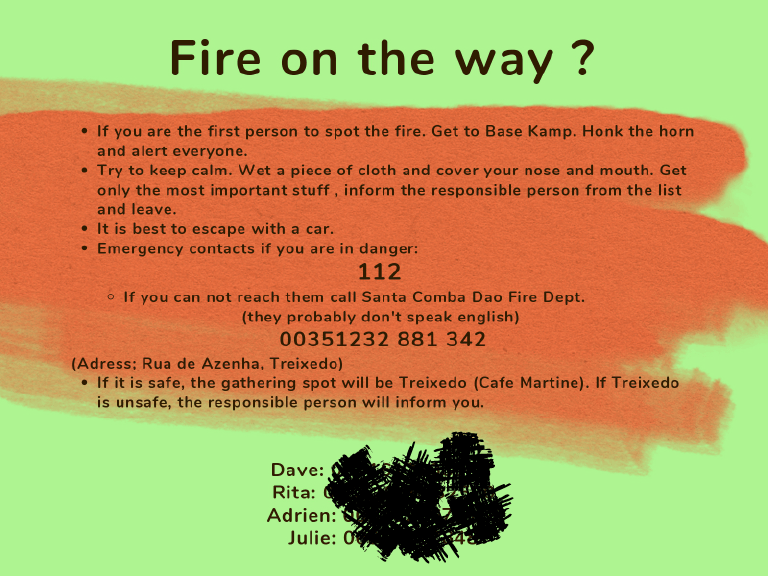
The Fire Department Chief and the Professor both strongly recommended that we make a fire evacuation plan. So we made one.
We wanted to keep it short and to the point. Is there something that we should correct or add?
https://docs.google.com/document/d/1unwFtplePMDwFdofEj1prlyZ3kugmx-CDhz_0TIN5_k/edit?usp=sharing
7
Firebreak (Implementation)
Published 2y. Edited 2yPublished almost 3 years ago. Last edit almost 3 years ago
Some weeks ago, we decided to create a firebreak between Base Kamp and the sketchy ruin.
After the initial cut of the big mimosa patch, excluding a few of the bigger trees intended for shade, we made a couple of important observations.
1) The small number of trees left uncut in order to provide shade did not make a significant impact. It is clear that mimosa shade is best provided by clusters of trees rather than the individual.
2) At the canopy level, these trees could still act as a fire bridge between the mimosa patch by the road and the debarked cluster near the toilets.
3) The proportion between the width of the cut patch and the height of the nearby trees corresponds with the recommendations for a proper firebreak. This calculation is a width that is two to three times the height of the trees on either side.
Due to the above, we took the opportunity to cut down the remaining trees. The stumps seen in the image below are part of our experiments on dealing with mimosas.
-2-189deda8cdc.jpg?width=1280&resize=contain)
8
Upgrading the fire extinguisher system
Published 1y. Edited 1yPublished almost 2 years ago. Last edit almost 2 years ago

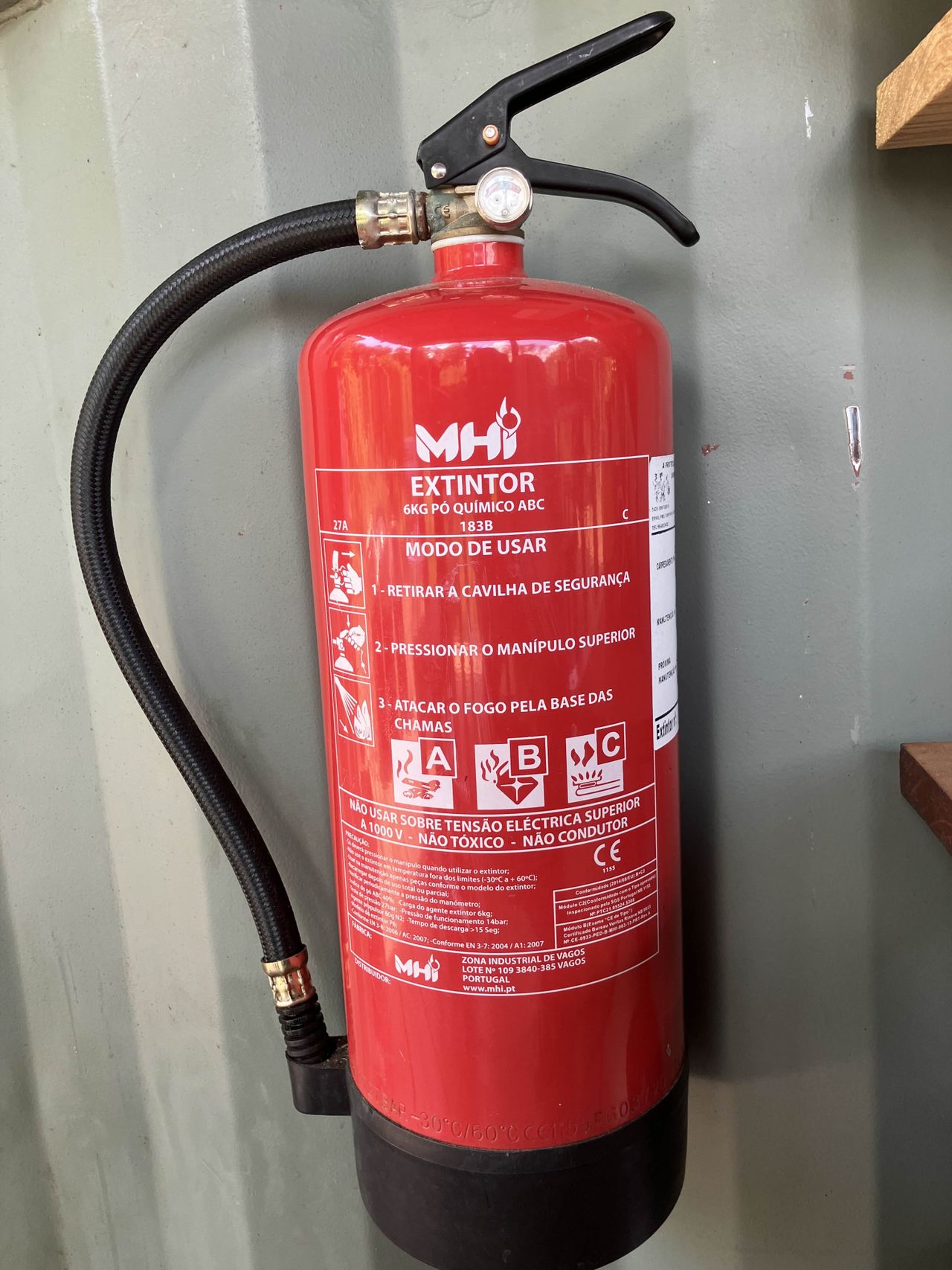
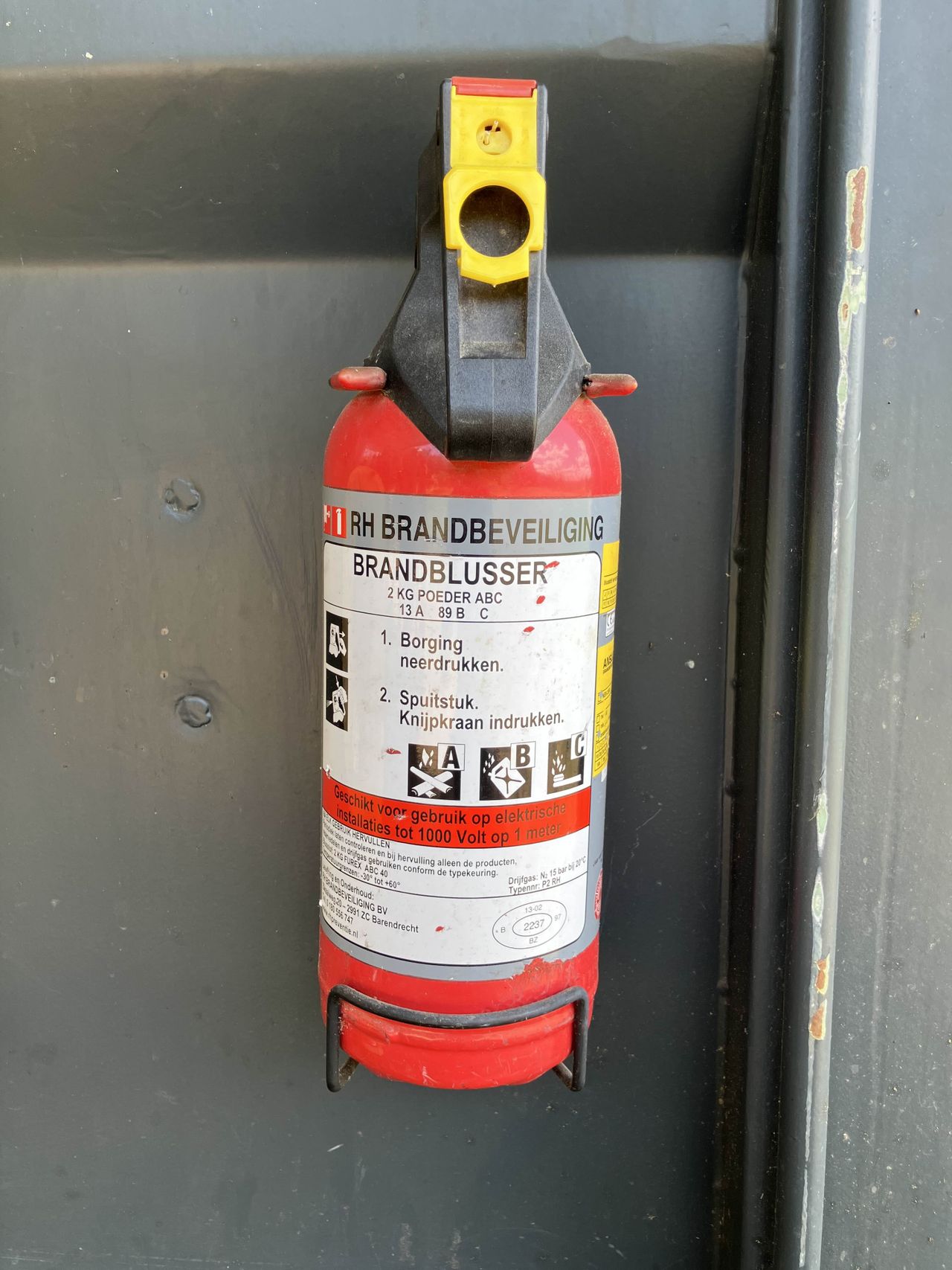
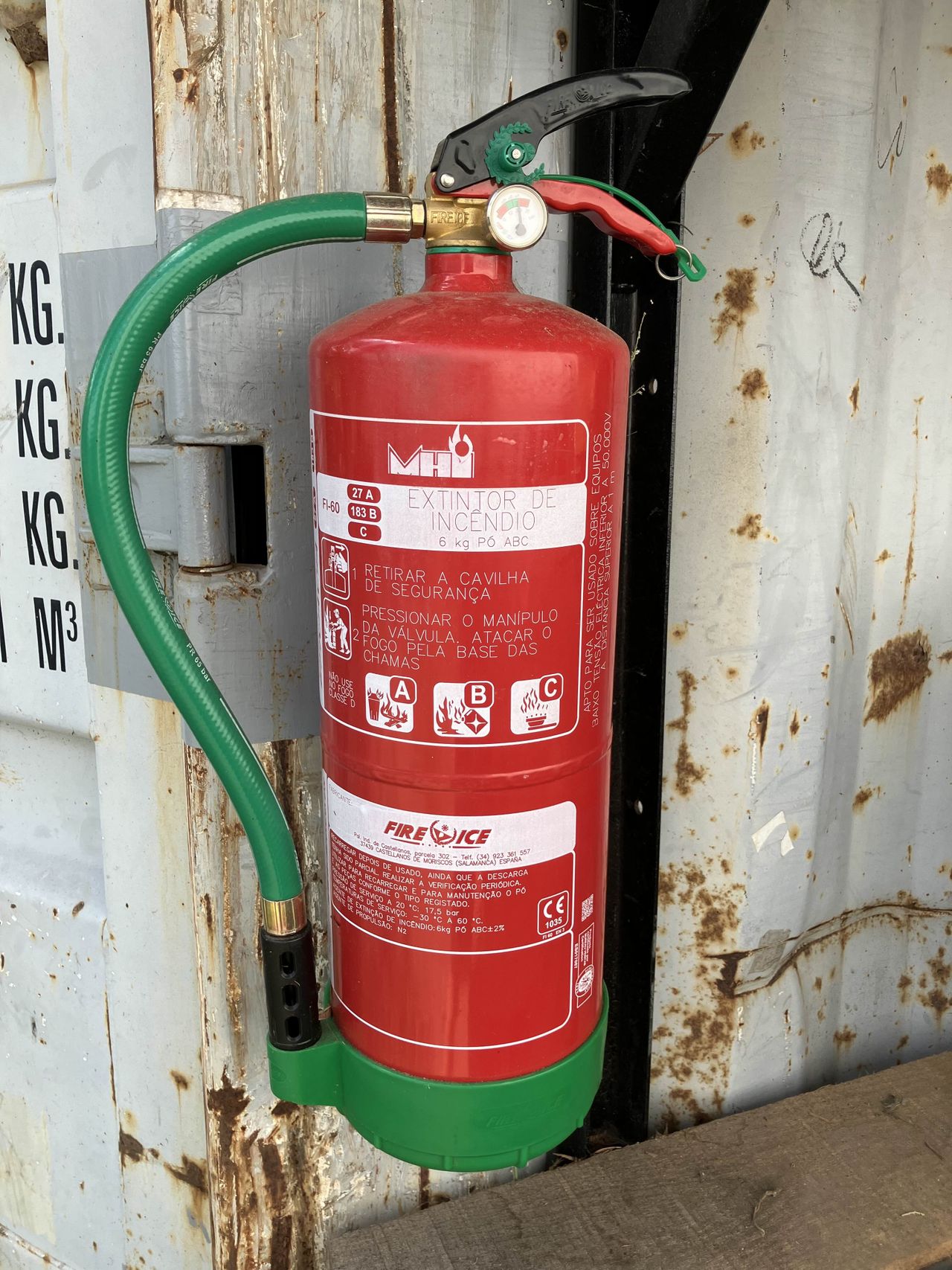
To make Kamp more fireproof and safe, we are upgrading the existing system of fire extinguishers.
Deploying new extinguishers
Kamp is growing, we have more people, more projects and this means more fire risks. By adding 2 new devices we cover more space - now we have 7 of them spread out on the land.
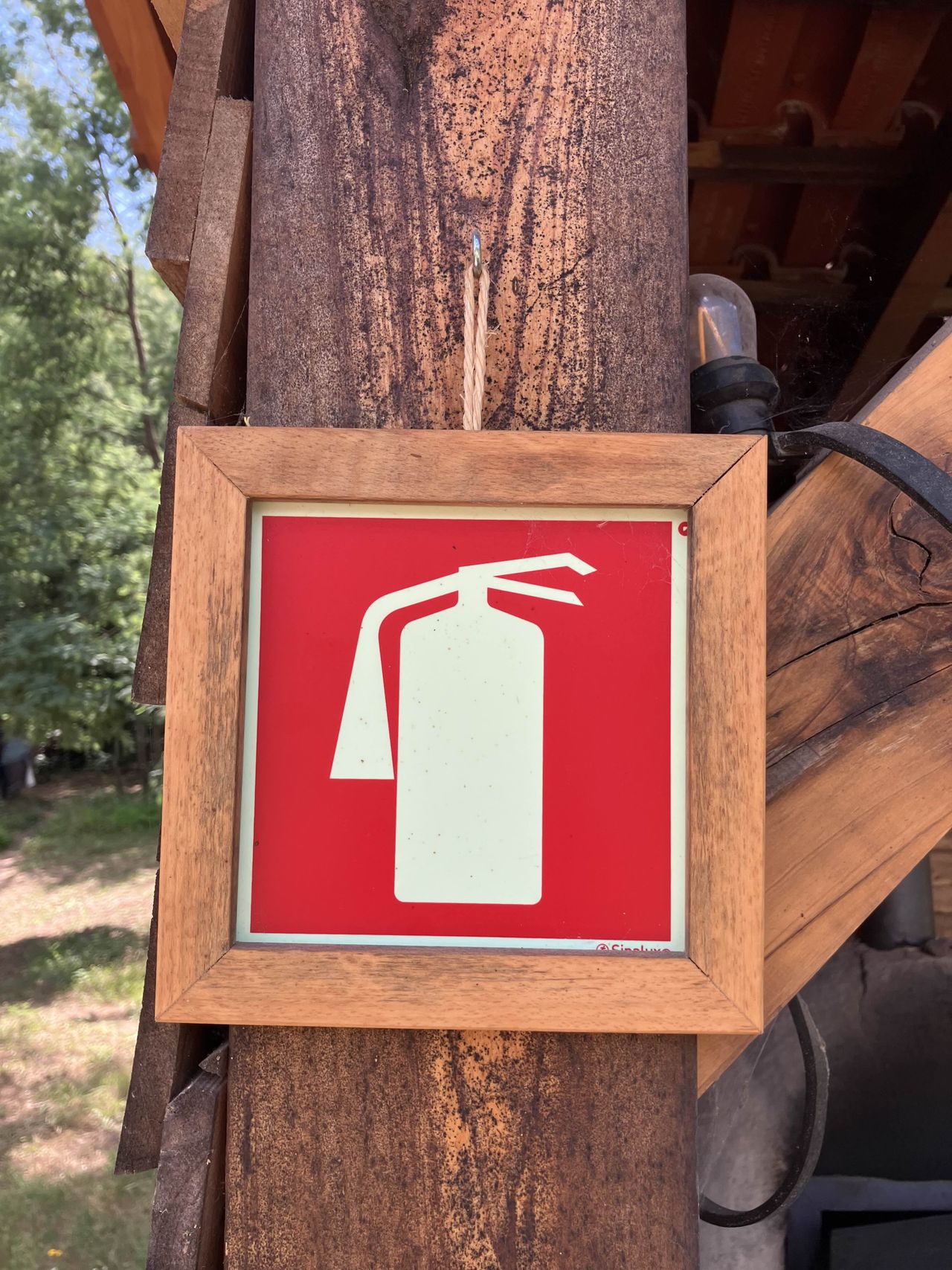
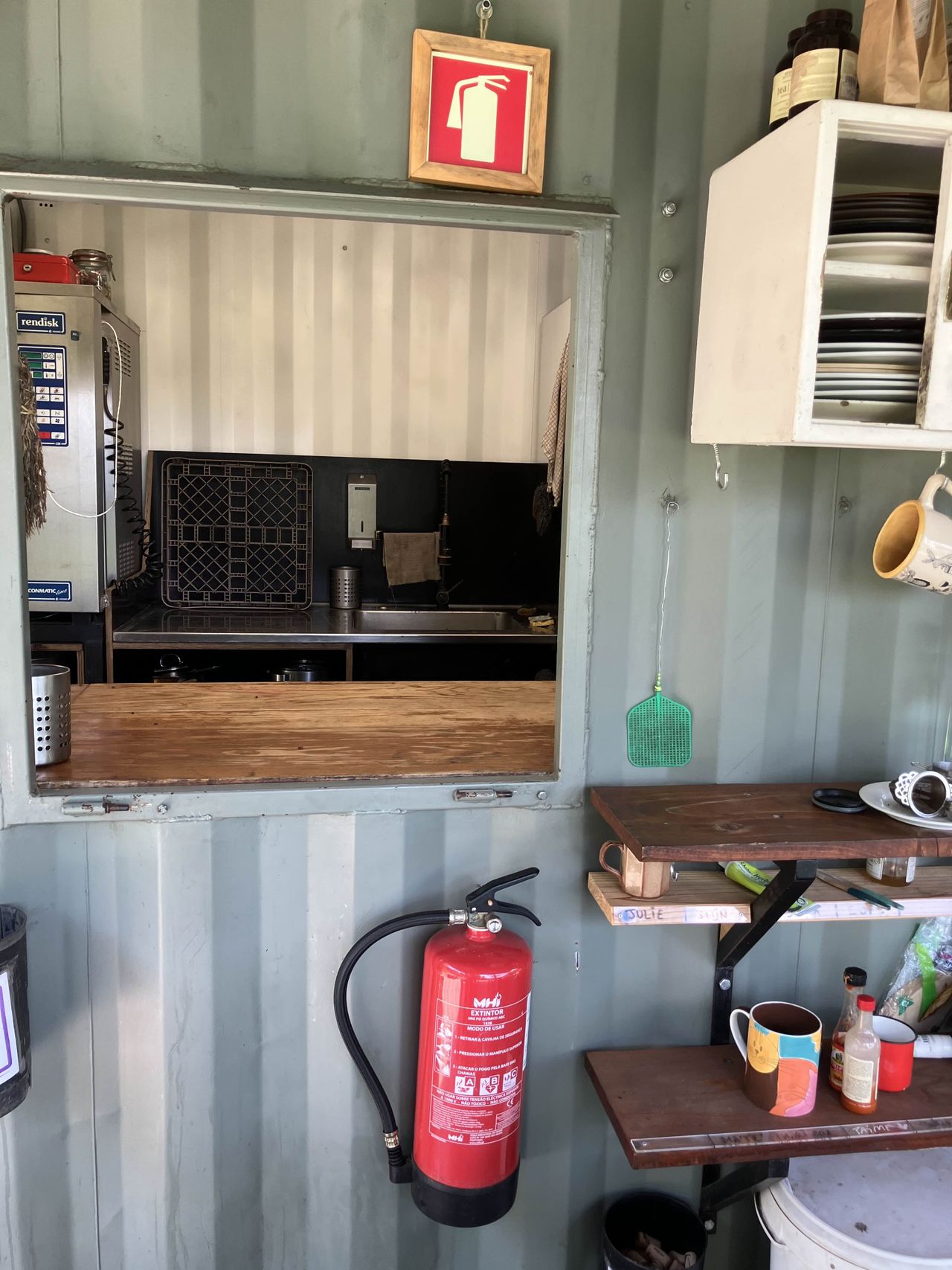
Making the extinguishers more notable and visible
We decided that we would use signs, much like the ones companies would use in their buildings or work sites. This is a solution we are not too happy about, because this could make our living space feel less comfy, having these official signs hanging around. To make it easier on ourselves, we went ahead and put frames around the signs, making them nicer and less hard on the eyes (hopefully), without losing its purpose.
Making people on site aware
We held a meeting on the signs and the placement of all the extinguishers.
%20--%3e%3csvg%20version='1.1'%20id='Layer_1'%20xmlns='http://www.w3.org/2000/svg'%20xmlns:xlink='http://www.w3.org/1999/xlink'%20x='0px'%20y='0px'%20viewBox='0%200%2064%2063'%20style='enable-background:new%200%200%2064%2063;'%20xml:space='preserve'%3e%3cstyle%20type='text/css'%3e%20.st0{fill:%2320B7EB;}%20.st1{fill:%23E9475A;}%20.st2{fill:%23FECE4E;}%20%3c/style%3e%3cdesc%3eCreated%20with%20Sketch.%3c/desc%3e%3cg%20id='Page-1'%3e%3cg%20id='OA-Logo-Black-Background'%3e%3cpath%20id='Shape'%20class='st0'%20d='M14.1,30.1c-1.5-0.8-8.6-3.8-14.1-7.8c1.8-3.4,3.1-5.6,5-9.1c2.7,1.1,1.9,0.5,4.6,1.7%20c0.8,0.4,10.1,4.5,13.8,6.2c2.4,1.1,4.7,2.2,7,3.3L43,30.5l8.1,3.9c4,2,7.2,3.5,11.3,5.5c0.5,0.3-3.7,9.4-3.7,9.4%20c-1.7-0.6-3.9-1.8-5.5-2.5c-4.7-2.1-9-3.9-13.7-6c-4-1.8-6.7-2.9-10.8-4.5C25,34.9,17.1,31.6,14.1,30.1z'/%3e%3cpath%20id='Shape_1_'%20class='st1'%20d='M12.1,54.9c-0.8,0.6-1.6,1.2-2.5,1.6c-0.4-0.5-0.9-1-1.3-1.5c-0.3-1.2-2.3-4.9-2.7-6.2%20c-0.1-0.4-0.7-2.2-0.8-2.6c0,0,5-3.4,8.2-5.9c3.2-2.6,6.2-5,9.3-7.5c1.4-1.1,3.9-2.5,5.3-3.5c2.5-1.7,13-9.1,15.6-10.5%20c5.4-3.3,11.1-6.3,16.8-9c1.7,3.5,1.8,3,3.8,6.9c0,0-17.8,13.5-22.7,17.1c-3.8,2.8-7.5,5.7-11.3,8.5c-1.7,1.3-3.5,2.4-5.2,3.7'/%3e%3cpath%20id='Shape_2_'%20class='st2'%20d='M20.8,2.9l-0.2-0.8C25,0,31.2-0.3,31.4,0.2c0.4,1.1,0.9,2.2,1.2,3.4c1.4,4.4,2.7,8.7,4,13.1%20c0.4,1.4,2.8,10,2.9,10.5c0.5,2.8,1.2,5.6,1.6,8.4c0.8,4.7,1.4,8.6,2.3,13.3c0.6,3.1,1.3,6.3,2.3,11.3c0,0-5.8,1.4-7.5,1.8%20c-0.8,0.2-1.5,0.4-2.4,0.6c-0.3-1.1-0.2-1.2-0.5-2.1c-0.9-3.7-1.8-7.3-2.6-11c-1.5-6.4-3-12.9-4.4-19.3%20c-1.2-5.4-2.6-10.7-4.4-15.9c-1-3.1-1.8-6.3-2.7-9.5C21.1,3.8,21,3.8,20.8,2.9z'/%3e%3c/g%3e%3c/g%3e%3c/svg%3e)