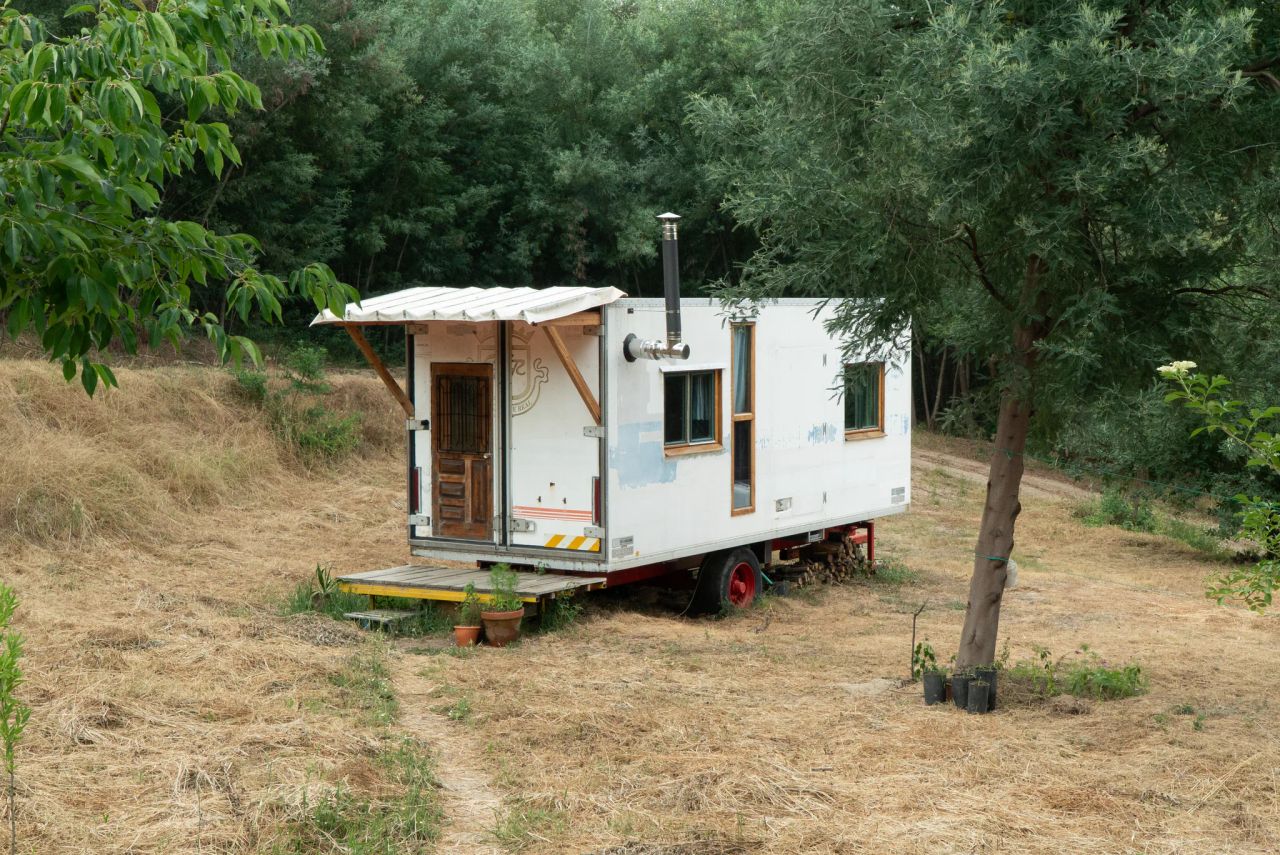

Building a house in an old fridge box

RenovationBuildingRecycled
More Information


%20--%3e%3csvg%20version='1.1'%20id='Layer_1'%20xmlns='http://www.w3.org/2000/svg'%20xmlns:xlink='http://www.w3.org/1999/xlink'%20x='0px'%20y='0px'%20viewBox='0%200%2064%2063'%20style='enable-background:new%200%200%2064%2063;'%20xml:space='preserve'%3e%3cstyle%20type='text/css'%3e%20.st0{fill:%23231F20;}%20%3c/style%3e%3cdesc%3eCreated%20with%20Sketch.%3c/desc%3e%3cg%20id='Page-1'%3e%3cg%20id='OA-Logo-Black-Background'%3e%3cpath%20id='Shape'%20class='st0'%20d='M14.1,30.1c-1.5-0.8-8.6-3.8-14.1-7.8c1.8-3.4,3.1-5.6,5-9.1c2.7,1.1,1.9,0.5,4.6,1.7%20c0.8,0.4,10.1,4.5,13.8,6.2c2.4,1.1,4.7,2.2,7,3.3L43,30.5l8.1,3.9c4,2,7.2,3.5,11.3,5.5c0.5,0.3-3.7,9.4-3.7,9.4%20c-1.7-0.6-3.9-1.8-5.5-2.5c-4.7-2.1-9-3.9-13.7-6c-4-1.8-6.7-2.9-10.8-4.5C25,34.9,17.1,31.6,14.1,30.1z'/%3e%3cpath%20id='Shape_1_'%20class='st0'%20d='M12.1,54.9c-0.8,0.6-1.6,1.2-2.5,1.6c-0.4-0.5-0.9-1-1.3-1.5c-0.3-1.2-2.3-4.9-2.7-6.2%20c-0.1-0.4-0.7-2.2-0.8-2.6c0,0,5-3.4,8.2-5.9c3.2-2.6,6.2-5,9.3-7.5c1.4-1.1,3.9-2.5,5.3-3.5c2.5-1.7,13-9.1,15.6-10.5%20c5.4-3.3,11.1-6.3,16.8-9c1.7,3.5,1.8,3,3.8,6.9c0,0-17.8,13.5-22.7,17.1c-3.8,2.8-7.5,5.7-11.3,8.5c-1.7,1.3-3.5,2.4-5.2,3.7'/%3e%3cpath%20id='Shape_2_'%20class='st0'%20d='M20.8,2.9l-0.2-0.8C25,0,31.2-0.3,31.4,0.2c0.4,1.1,0.9,2.2,1.2,3.4c1.4,4.4,2.7,8.7,4,13.1%20c0.4,1.4,2.8,10,2.9,10.5c0.5,2.8,1.2,5.6,1.6,8.4c0.8,4.7,1.4,8.6,2.3,13.3c0.6,3.1,1.3,6.3,2.3,11.3c0,0-5.8,1.4-7.5,1.8%20c-0.8,0.2-1.5,0.4-2.4,0.6c-0.3-1.1-0.2-1.2-0.5-2.1c-0.9-3.7-1.8-7.3-2.6-11c-1.5-6.4-3-12.9-4.4-19.3%20c-1.2-5.4-2.6-10.7-4.4-15.9c-1-3.1-1.8-6.3-2.7-9.5C21.1,3.8,21,3.8,20.8,2.9z'/%3e%3c/g%3e%3c/g%3e%3c/svg%3e)


1
Looking for a base
Edited 2yPublished over 2 years ago. Last edit over 2 years ago


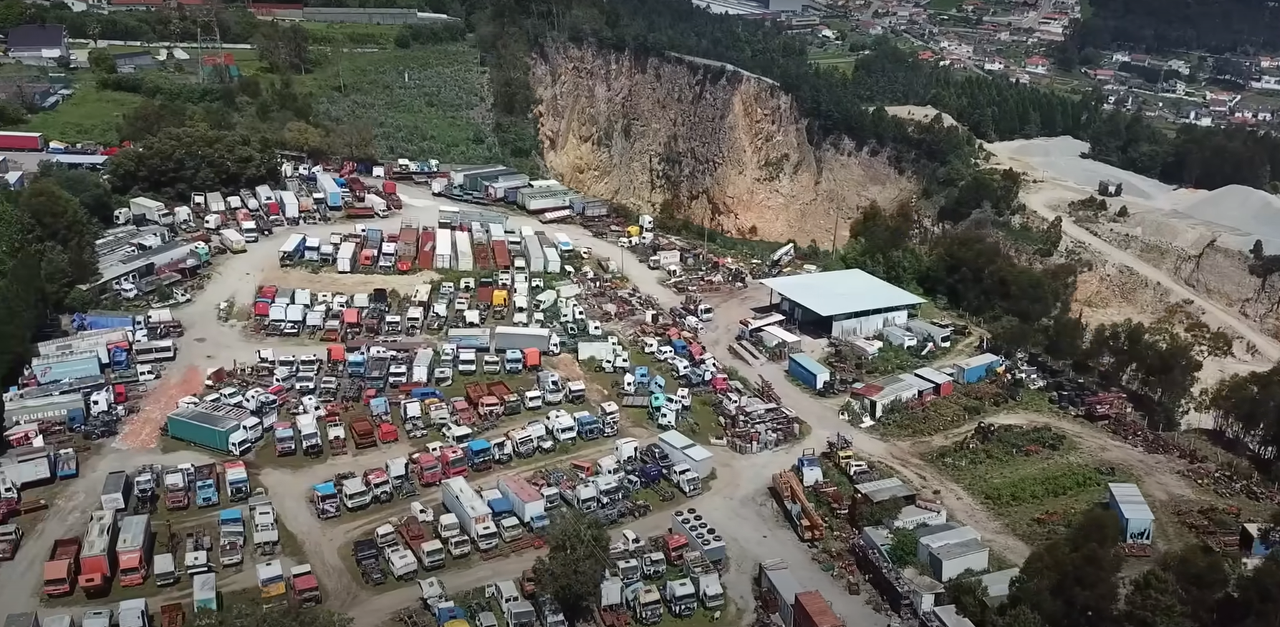
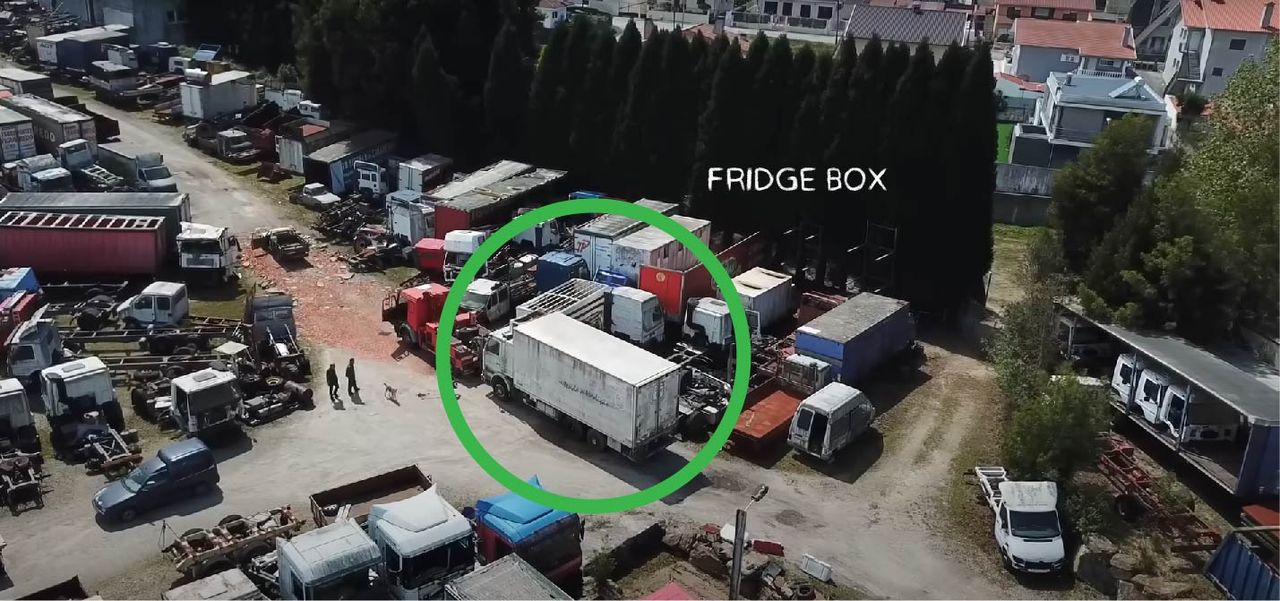
We went back to the scrapyard to look for a good base for our new house. This time we have already more knowledge than with the Pig Trailer so we kind of had an idea of what we were looking for, but anyway we still wanted to explore different options. This scrapyard is full of treasures but we ended up with the fridge box we didn´t got one year before. This kind of trailers have some upsides and downsides.
Upsides:
- Isolated
- Sturdy
- Square
- Waterproof
Downsides:
- Not breathable
- Not natural materials, so difficult to work in a natural environment
- Industrial look
- Hard to work with the mix of different materials
They are also barely recycled, standard and spread all over the world, so we thought we can create a good example for others. Also will save a lot of work and materials that it is already a box isolated. So this time we made the choice in one go. Just went there, choose and buy our new fridge box
2
Preparing the box in the scrapyard
Edited 2yPublished over 2 years ago. Last edit over 2 years ago
In this step the useless elements for a house got removed from the box and we clean it in the scrapyard garage.
Cleaning is quite important here since afterwards in the land will be way more difficult for us to take care of all the residues leftover from the clean up.
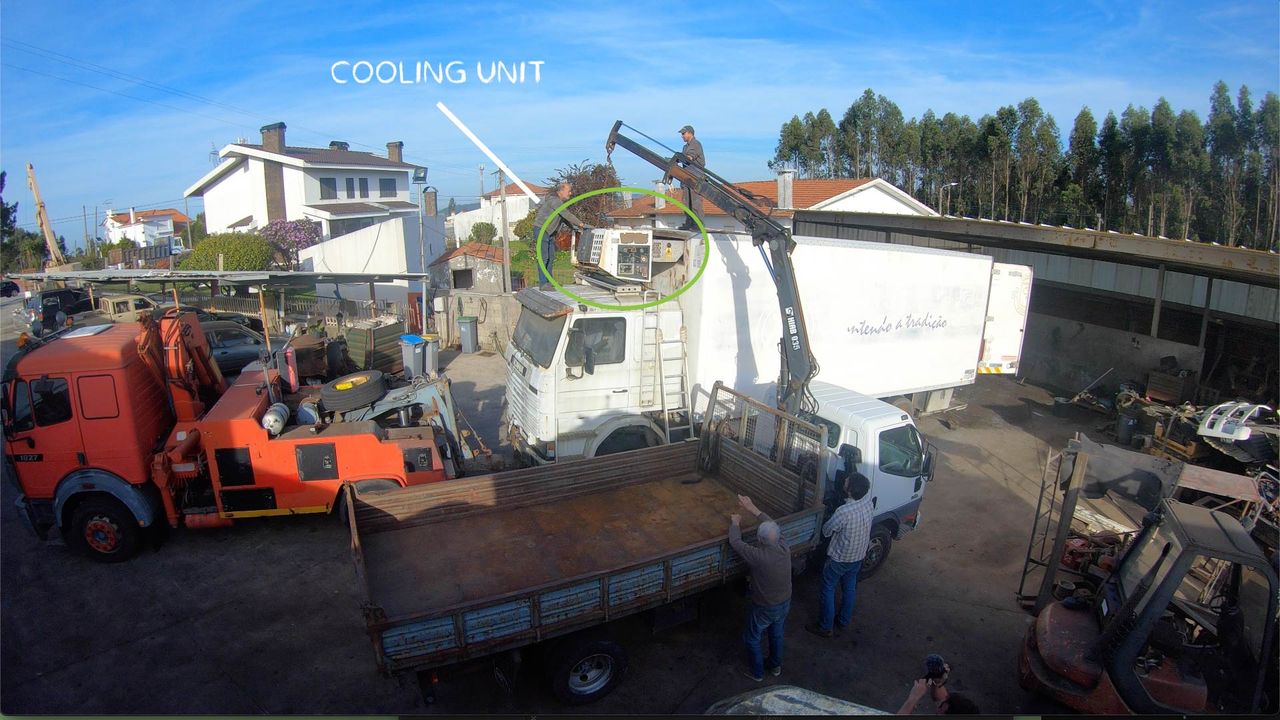
This box used to be a meat transport unit so it has some elements specifically to make this job.
- Hanging rails:
They use to be there to hang the meat pieces for transport. This meat pieces are very heavy so the box might have a framing system inside the isolation to be able to bolt this rails.
- Cooling unit:
Meat is transported refrigerated so it needs a motor to cool down inside the box.


3
Building the chassis
Edited 2yPublished over 2 years ago. Last edit over 2 years ago
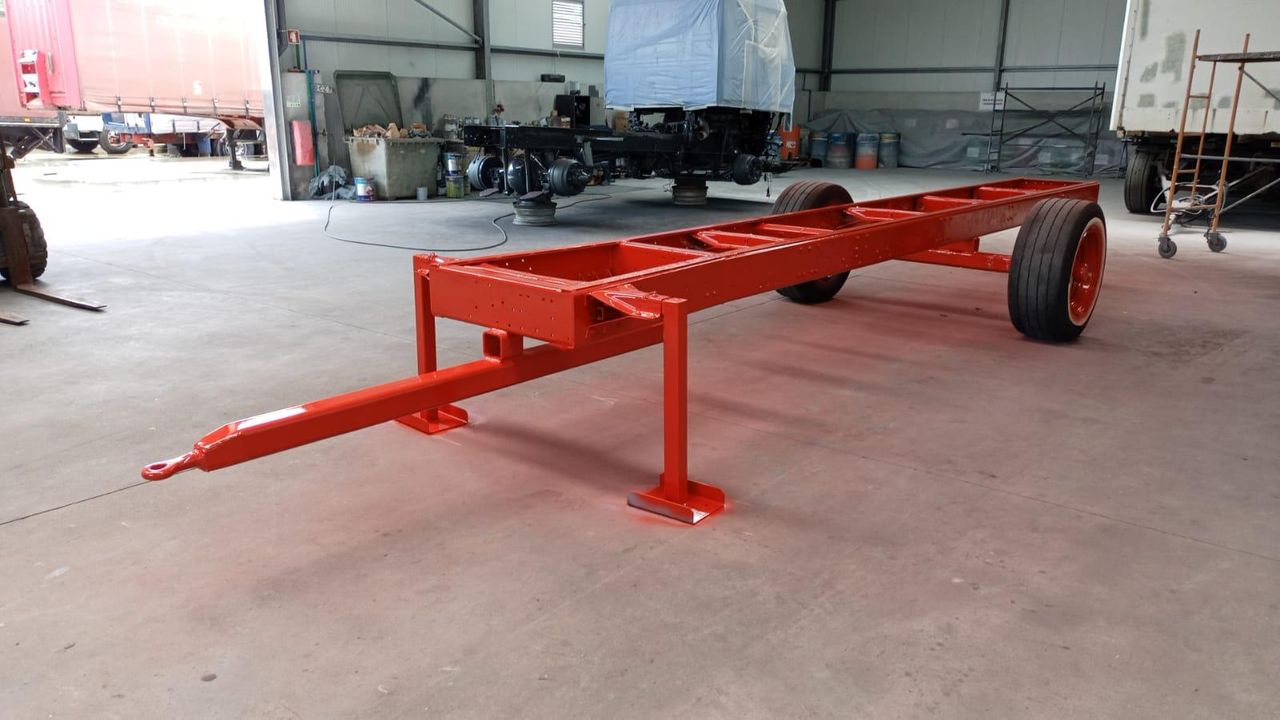
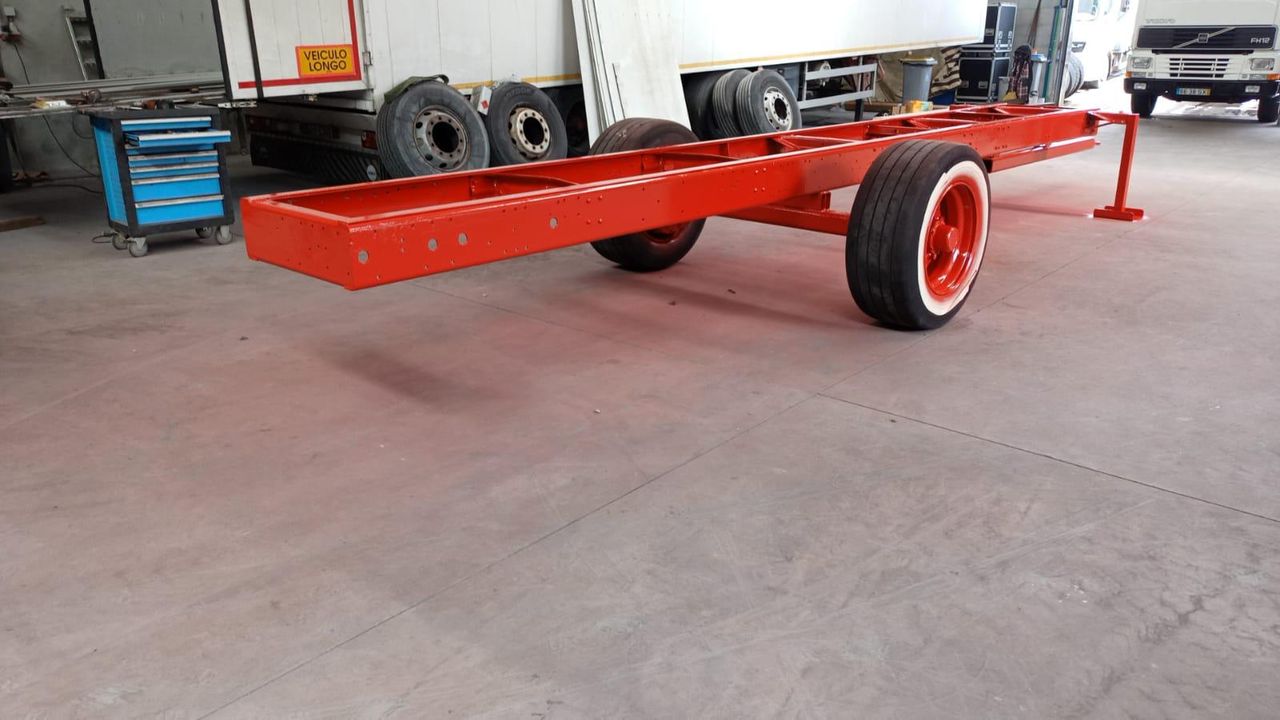
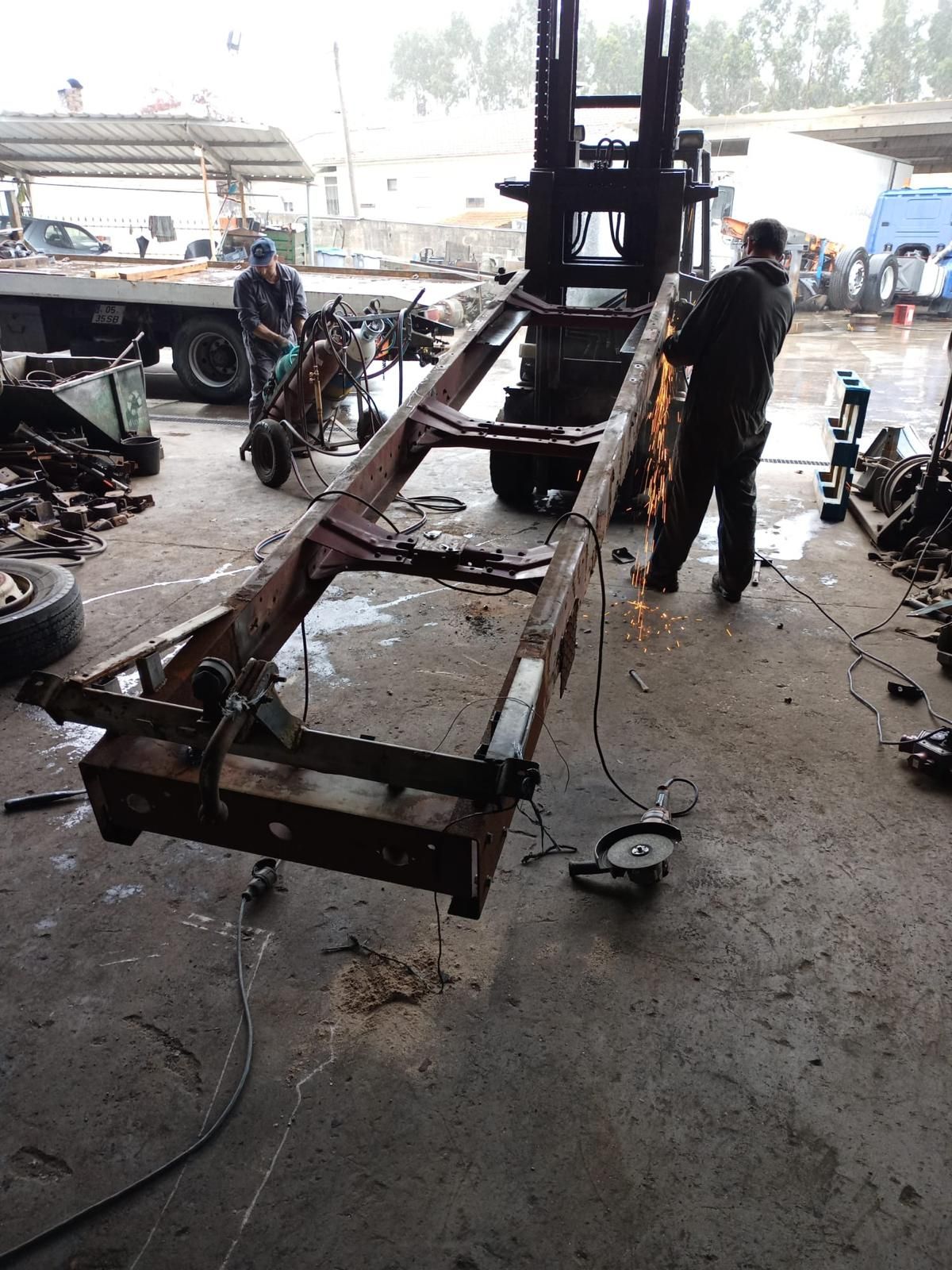
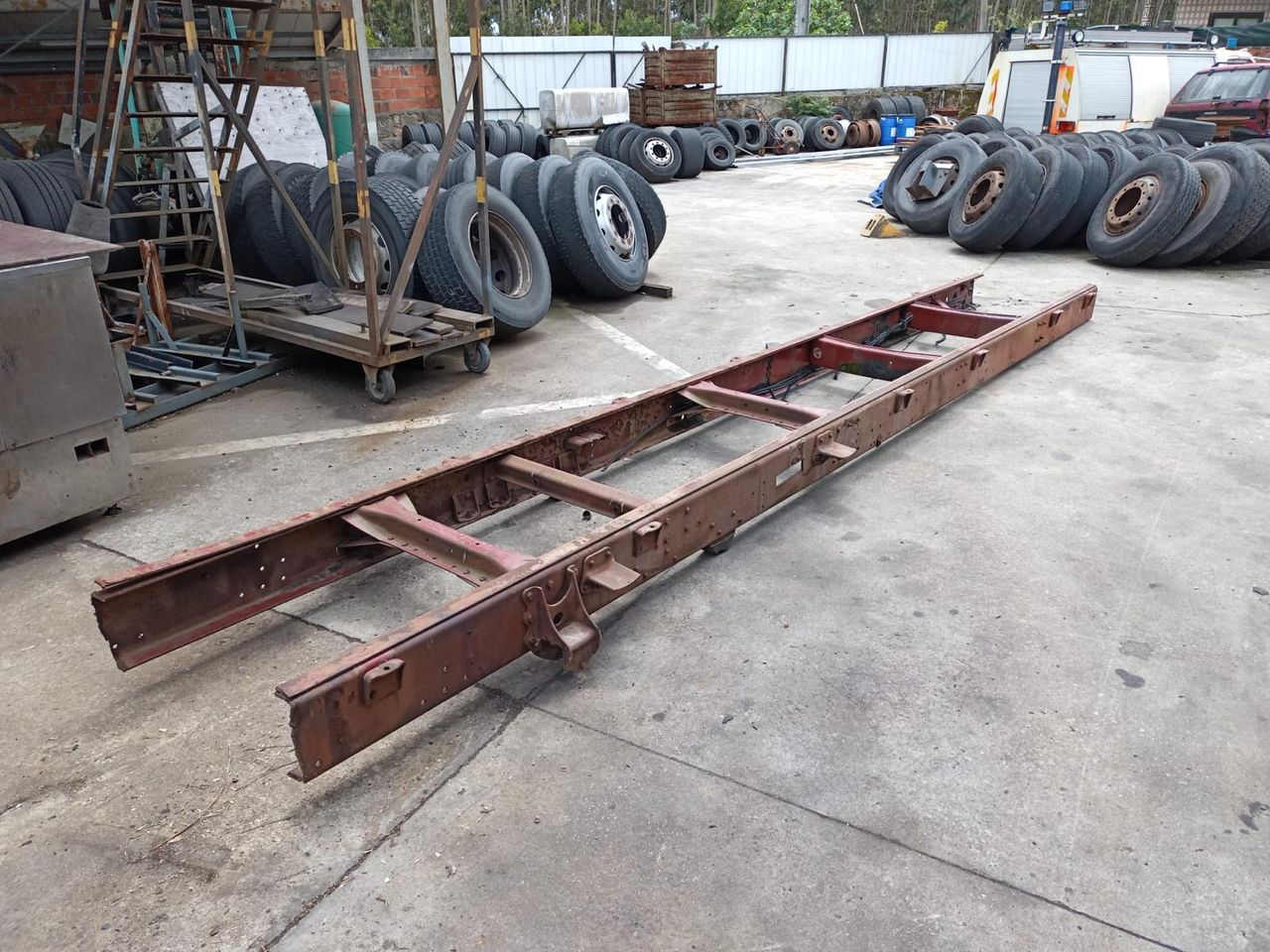
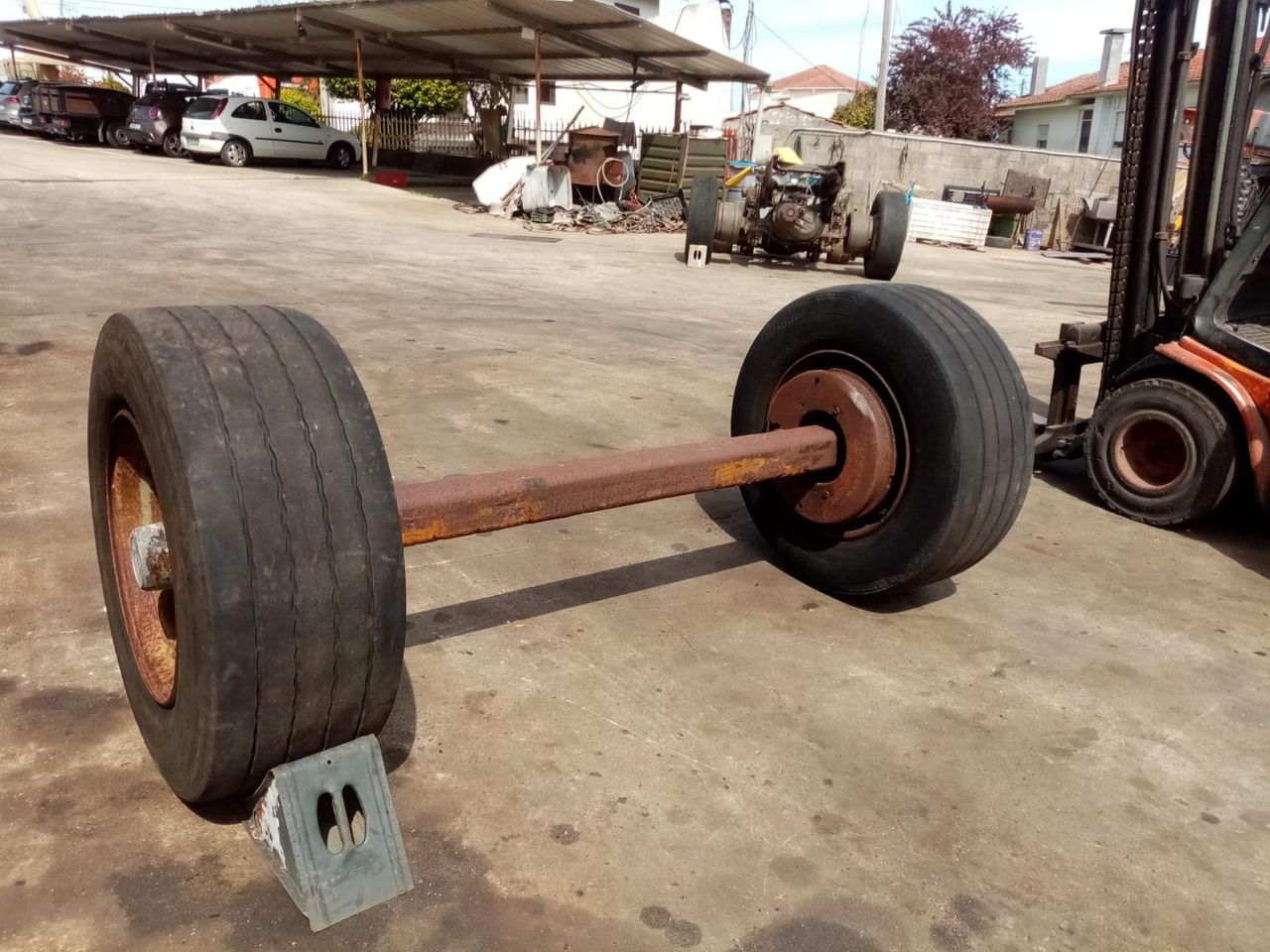
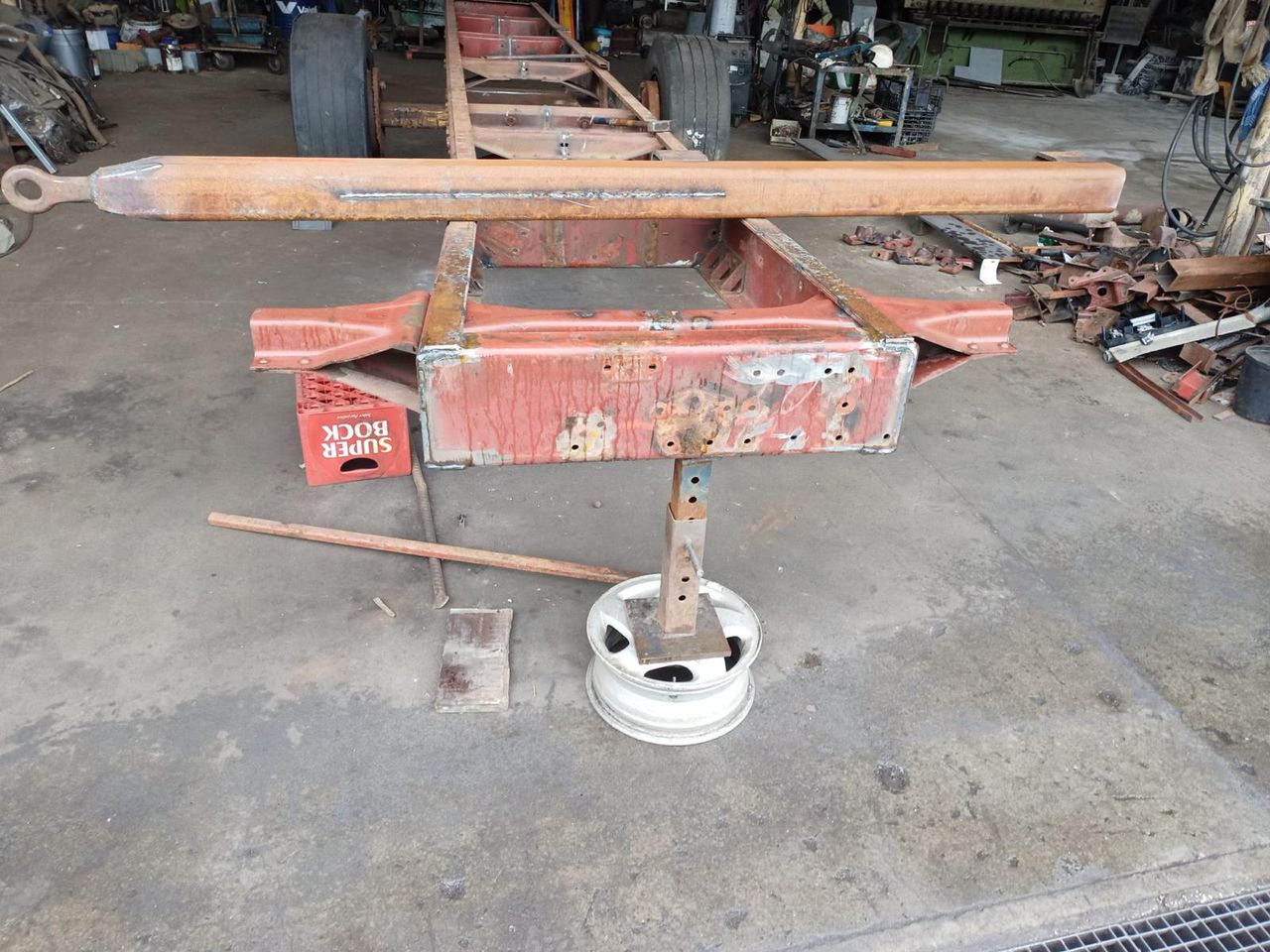
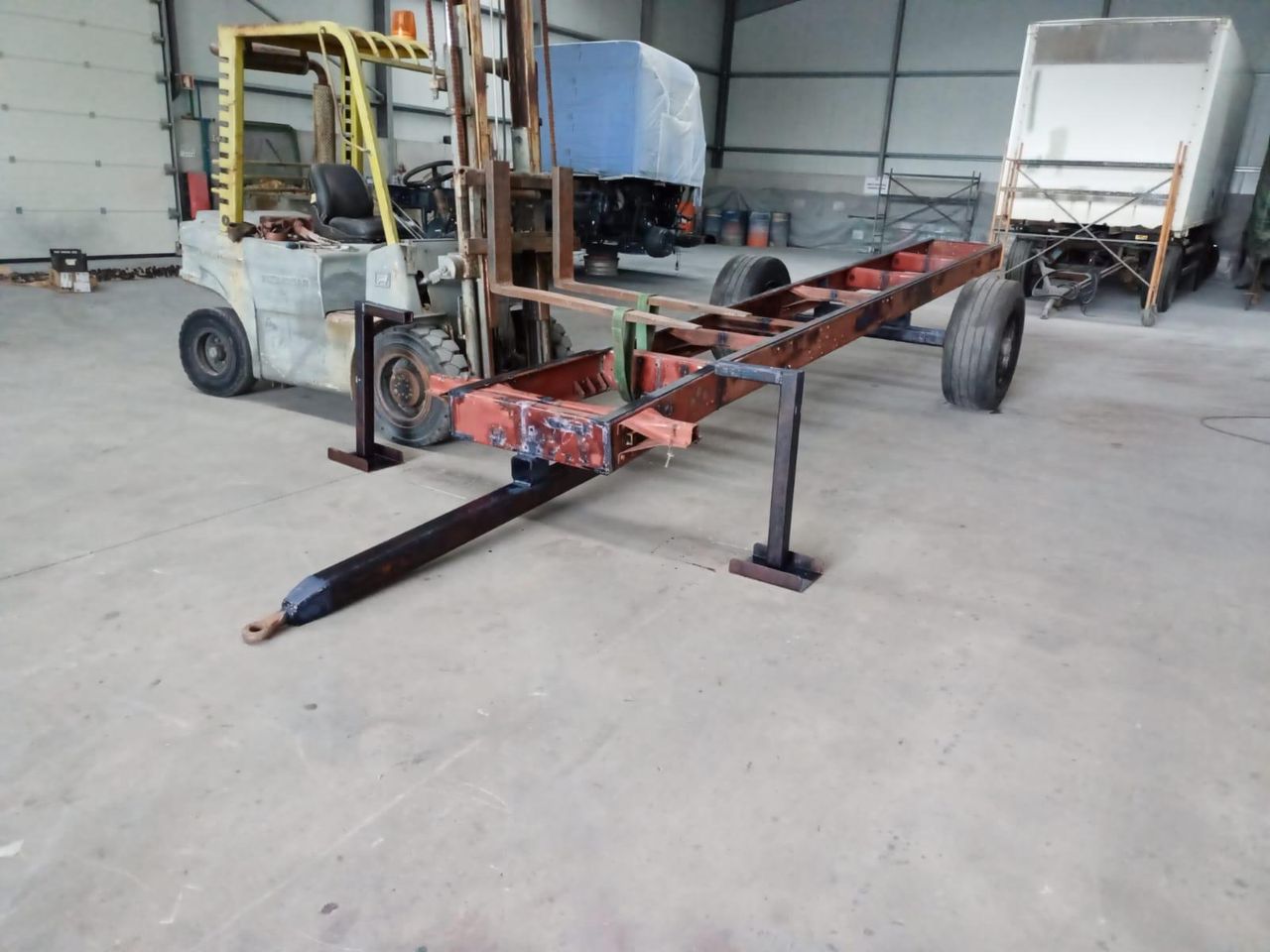
For this project they have prepared an specific chassis for us in the scrapyard.
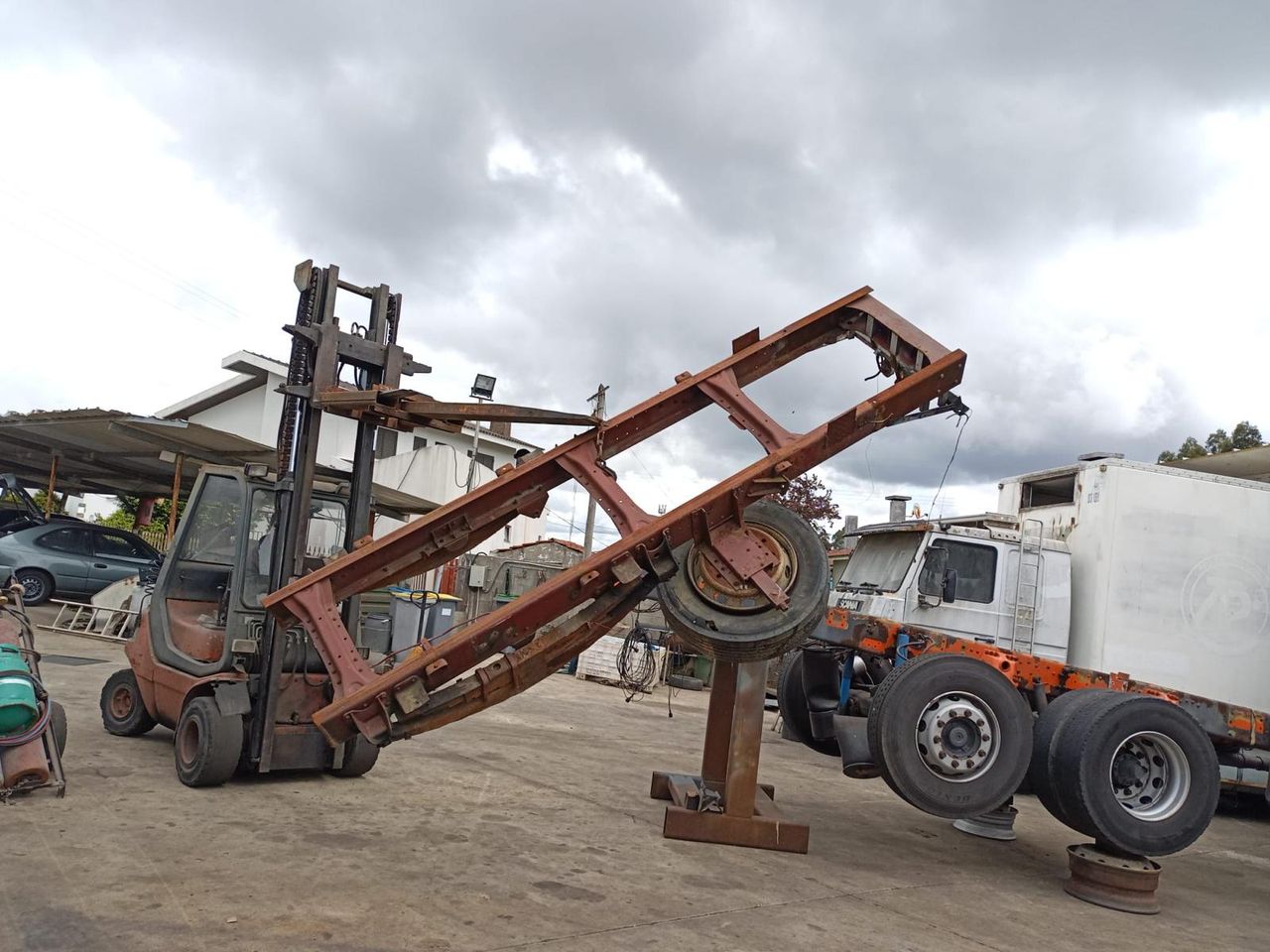
They have used different old elements from other trucks and weld them together to create our chassis. Since we are not gonna go in the road again they had simplify all the elements to the max.
No breaks, no hidraulics, no lights, no cables, no movable parts besides the wheels. It is just a big metal piece with a shaft and wheels that can be towed.
A bit of a Frankenstein piece but with a shiny red color
4
Trailer and box together on the land
Edited 1yPublished over 2 years ago. Last edit almost 2 years ago
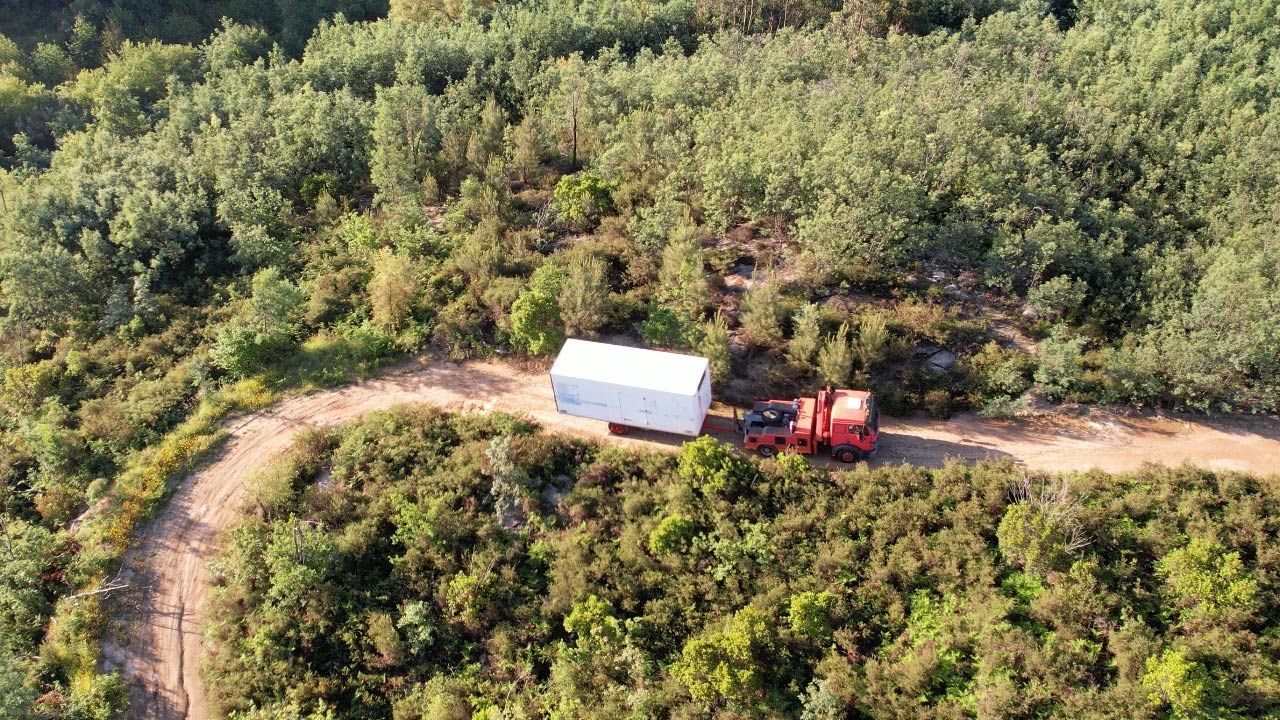
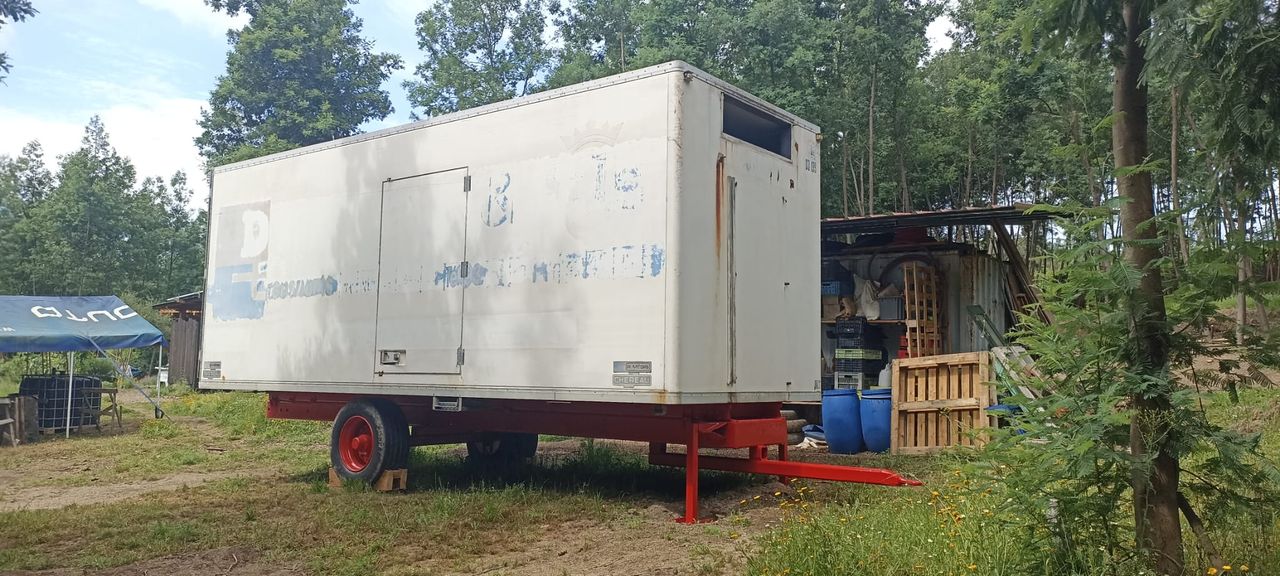
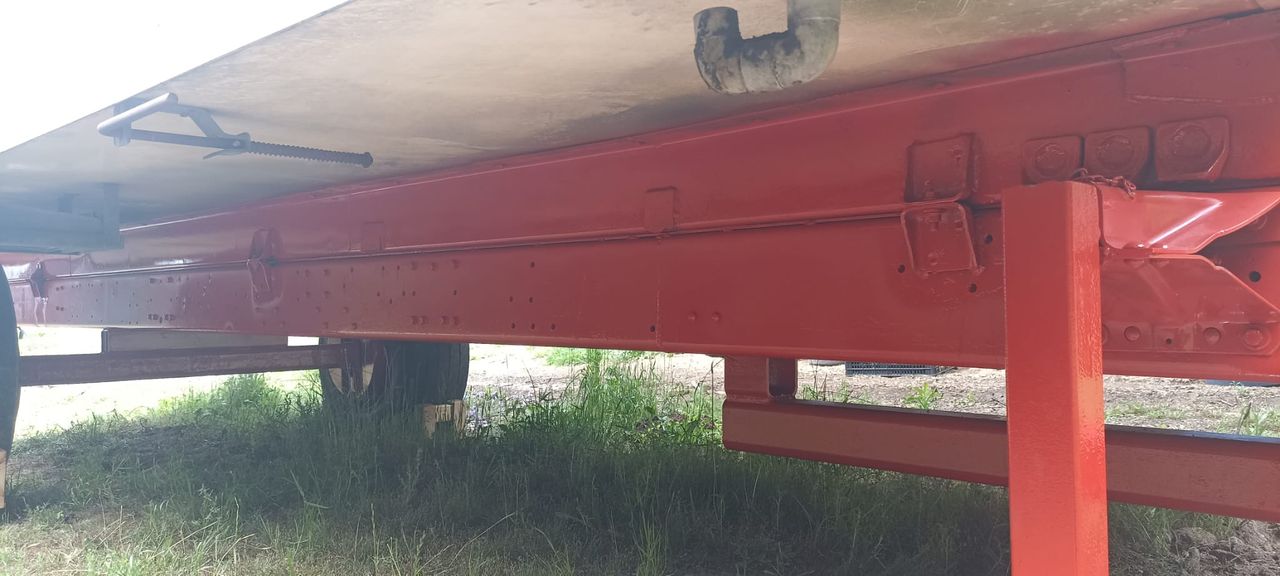
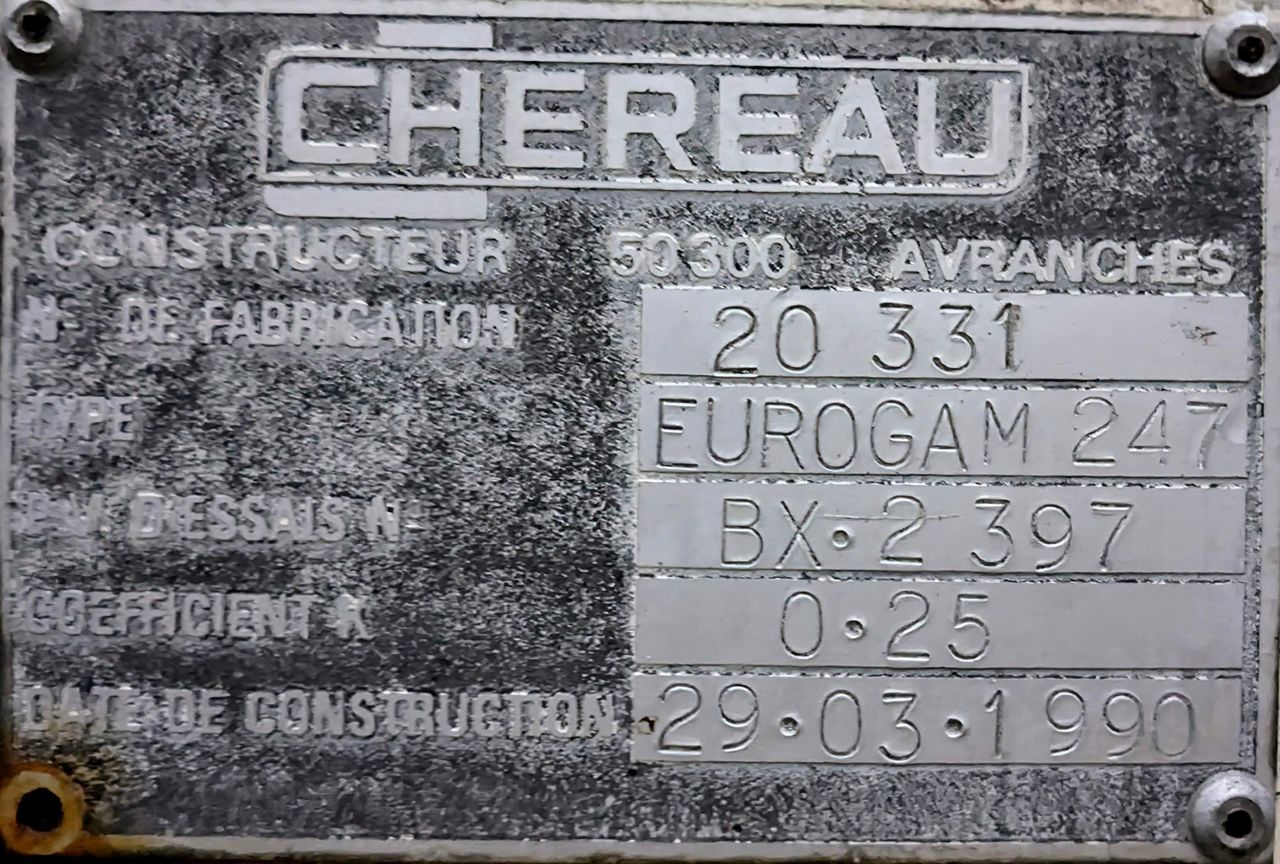
Finally the box has been attached to the chassis. The fridge box is from the brand Chereau, model Eurogam 247 made in the 90's (technical plate in the picture). Have been towed to the land and it is ready to start the design work.

5
Preparations on side and measurements
Published 2yPublished over 2 years ago


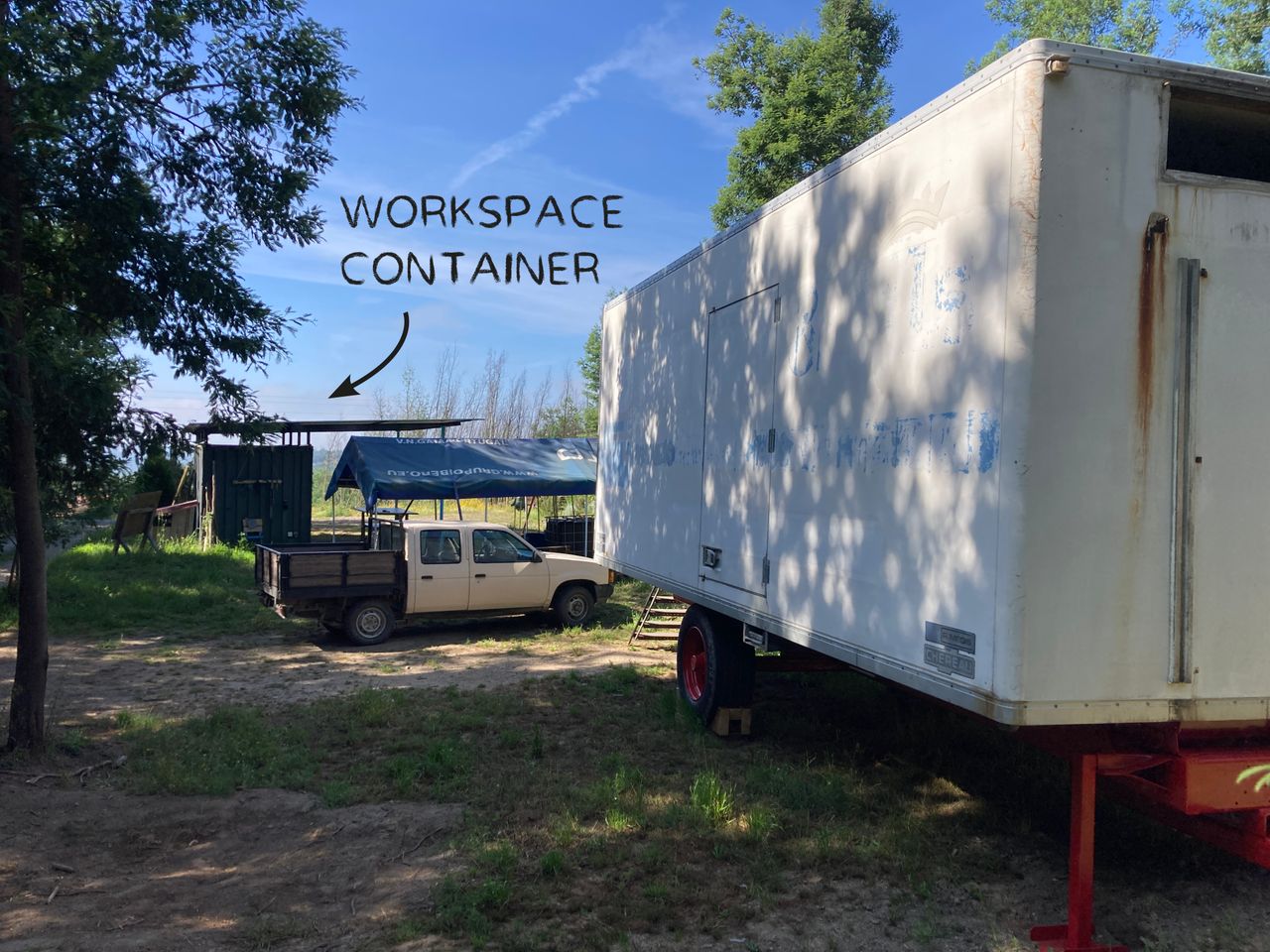
The trailer and Fridge Box have been placed as close as possible to our workspace container. This makes it easier for us to work on the Fridge Box without having to walk long distances. After the work is finished and the Fridge Box is transformed, it will be moved to its final position in the middle land.
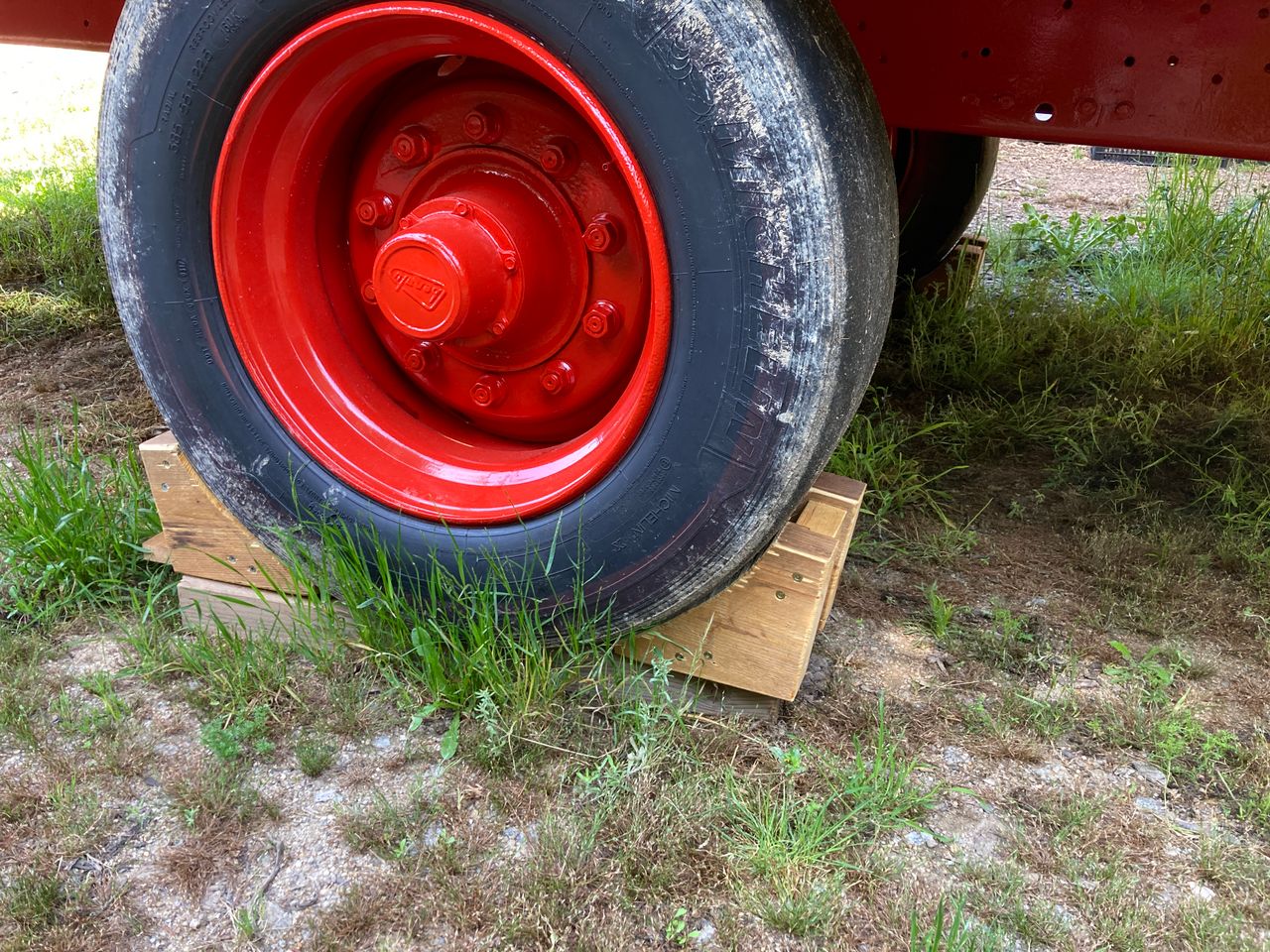
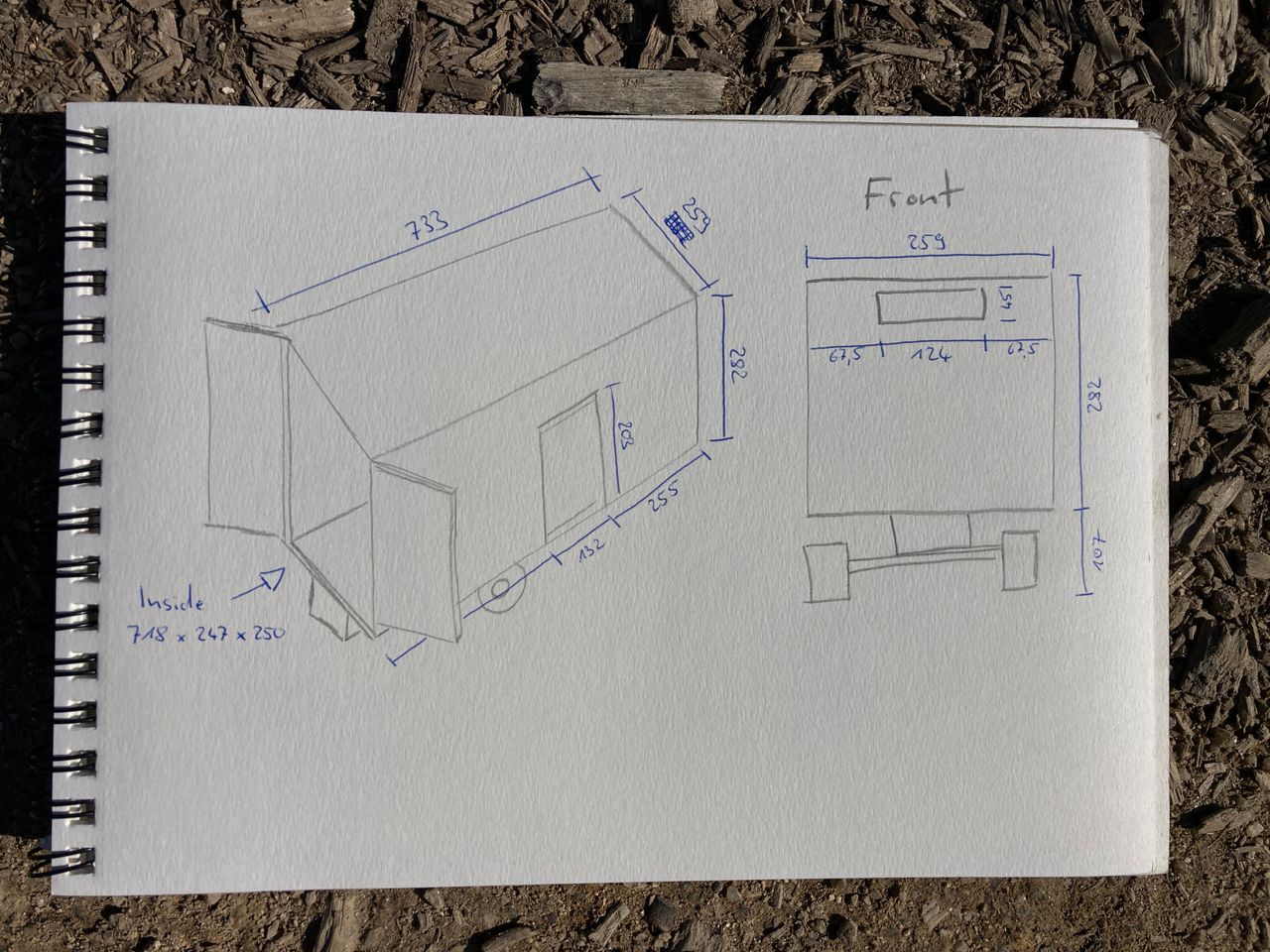
Before we could start with the design work, we had to get the trailer level, fix the wheels so we can safely work in it (trailer has no brakes) and take all the necessary measurements.
6
First ideas for the layout of the furniture and rooms
Edited 2yPublished over 2 years ago. Last edit over 2 years ago
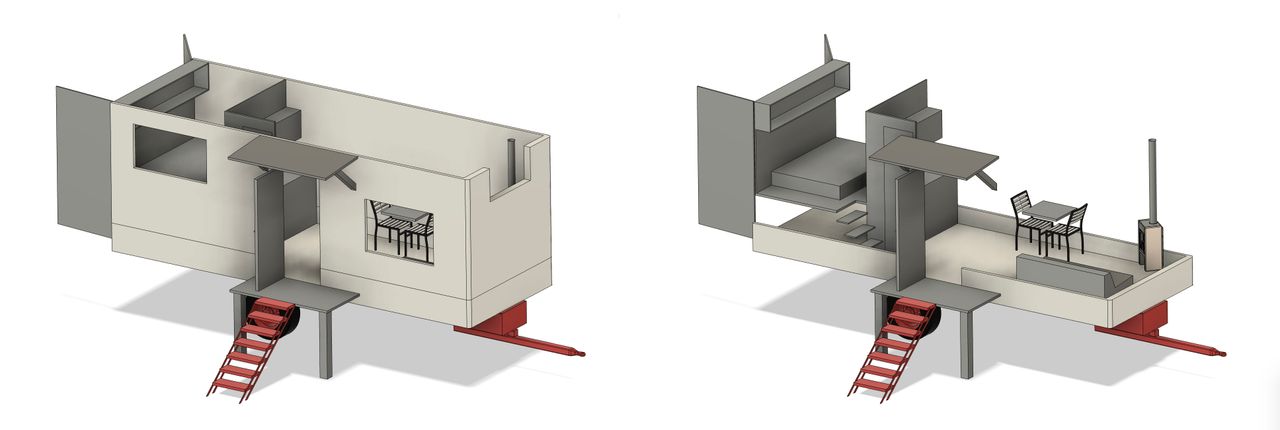
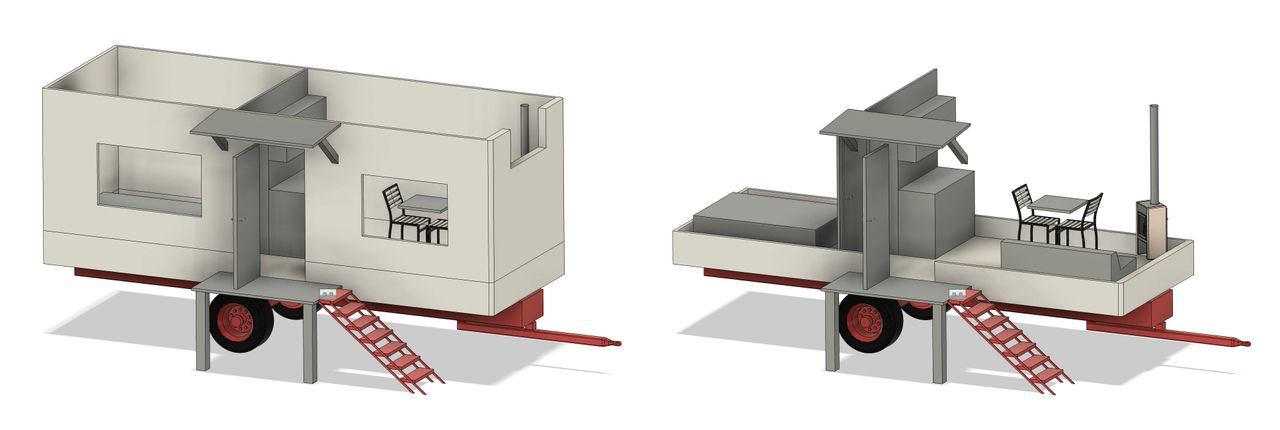
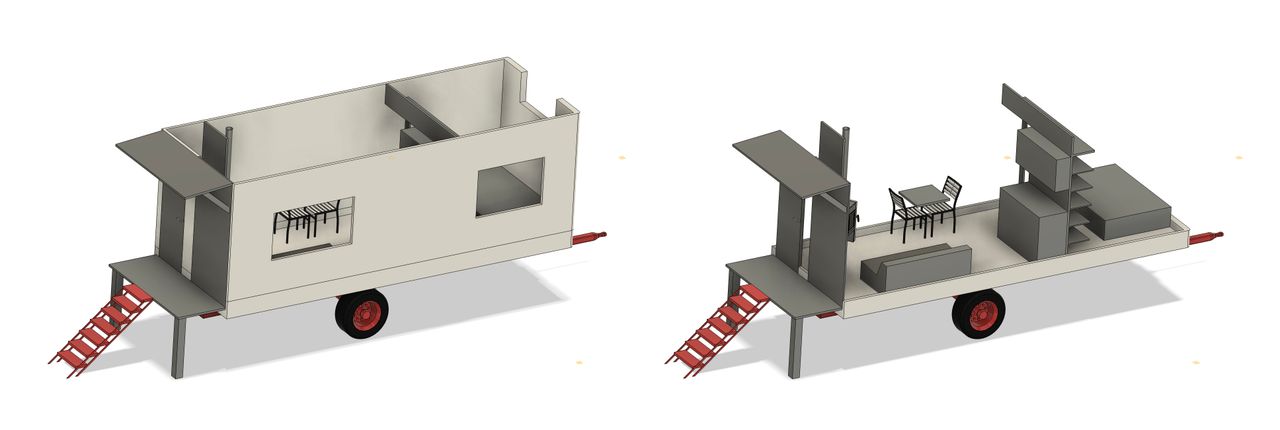
The aim is to create two rooms: A separate bedroom and a living space for two people including space for eating/drinking, storage and a place to relax.
The Fridge Box already has four features that we are trying to utilise in our design.
1: the cutout of the former cooling unit
2: the side door
3: the rear doors
4: the stair in the back
The following three designs were developed and all have their own pros (+) and cons (-).
Design 1:
+ Utilises all 4 features of the fridge box
- Raised bed doesn't feel like a real room of its own
Design 2:
+ Two well-separated rooms
- Canopy and terrace on the side make it harder to move the trailer
Design 3:
+ Canopy and terrace in the rear makes it easy to move
+ A high window in the bedroom (old cooling unit) is useful for hot summer days
- Side door is locked and not used
Design 3 convinced us the most. The next step is to fine-tune the exact layout of the furniture and partition wall as well as the positioning of the windows.
7
Stripping and moisture problems
Edited 2yPublished over 2 years ago. Last edit over 2 years ago
Before we can start building the Fridge Box, it must be prepared.
In our case
- Remove bolts and old lamps
- Fill the 4 holes in the floor that were used as drains
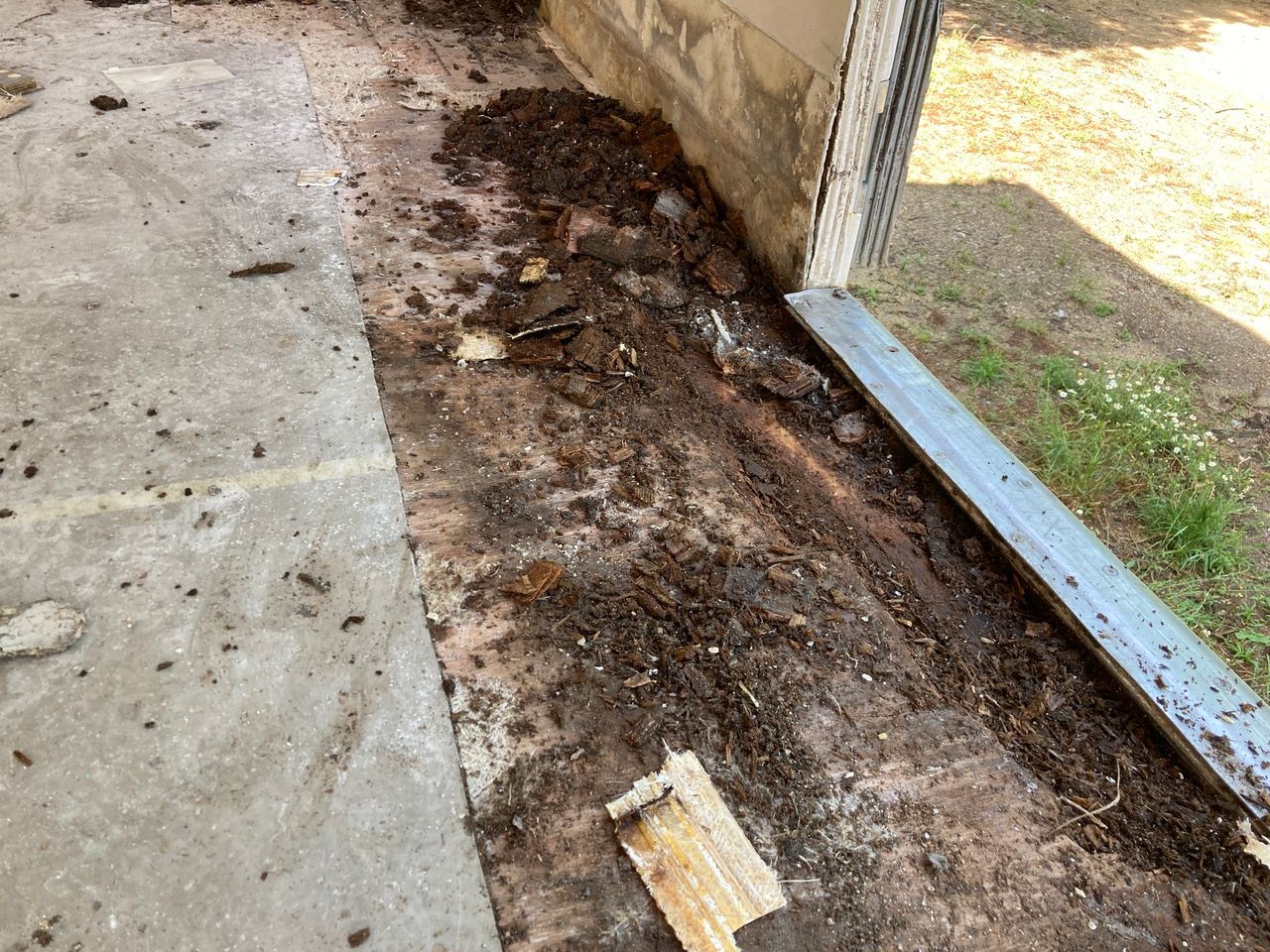
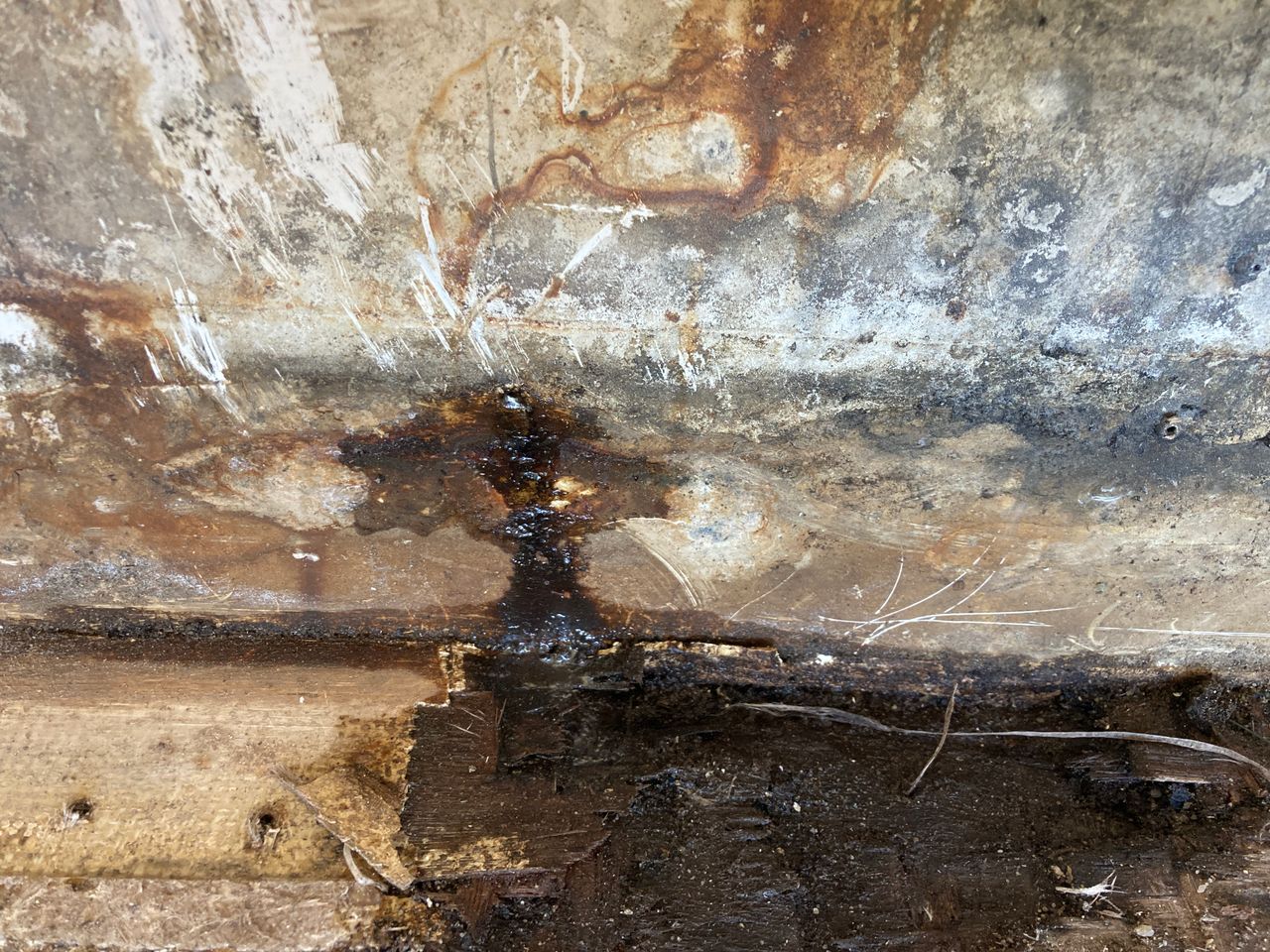
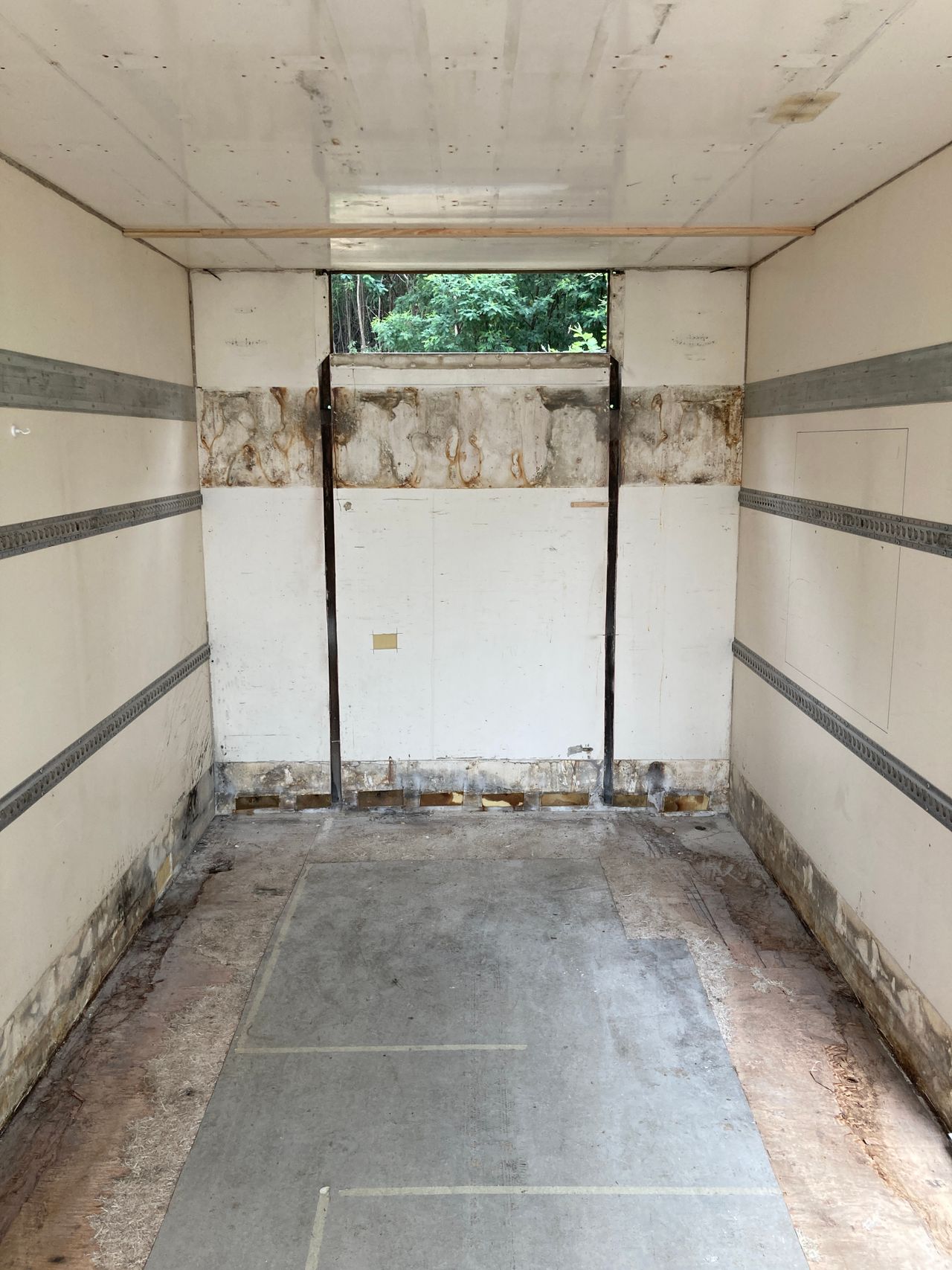
On closer inspection of the 4 holes, however, we noticed that the plywood was wet and rotten both on the top and partly on the underside.
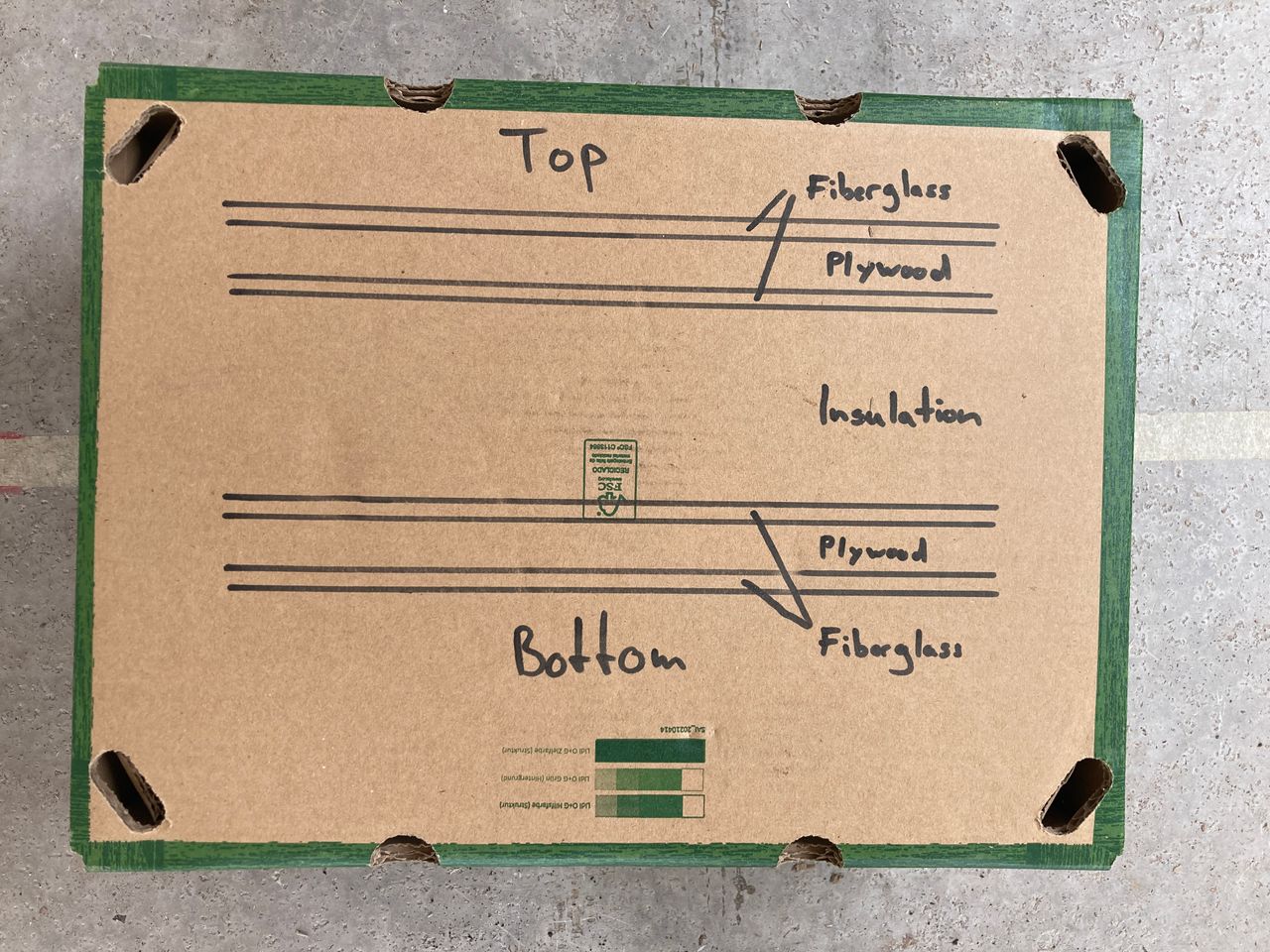
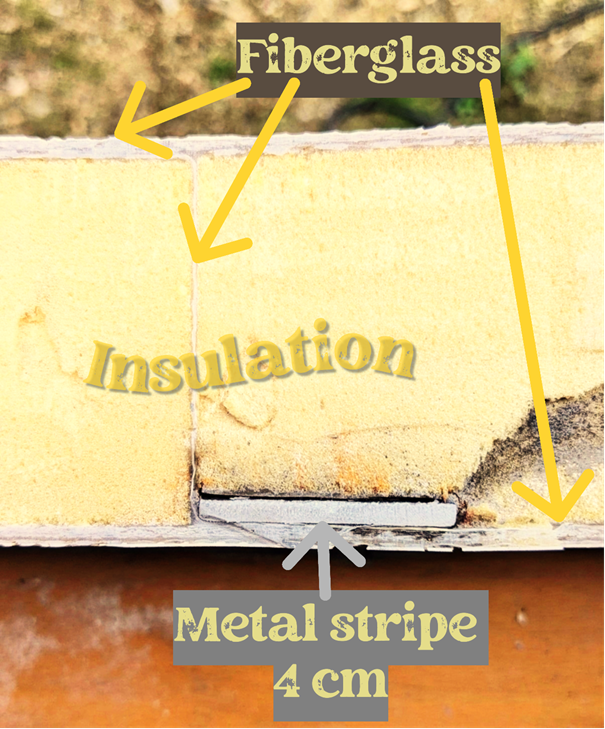
Most floors of Fridge Boxes are constructed in a sandwitch process (see photo). Any water that makes it through the first (normally waterproof) layer of fibreglass remains trapped there forever.
As our floor is slightly curved, the water flows to the two sides and therefore was trapped there.
On top of that, the insulation on the lower part of the front wall is wet as well.
Our solution:
- Remove the fibreglass around the walls and allow the floor to dry
- Saw small holes in the lower parts of the walls to check whether the insulation is wet
If you have any ideas on how to speed up the drying process besides opening all three doors, please write them in the comments.
8
Finding materials
Published 2yPublished about 2 years ago
Because the trailer is recycled we also want to use as many recycled materials for the construction as possible.
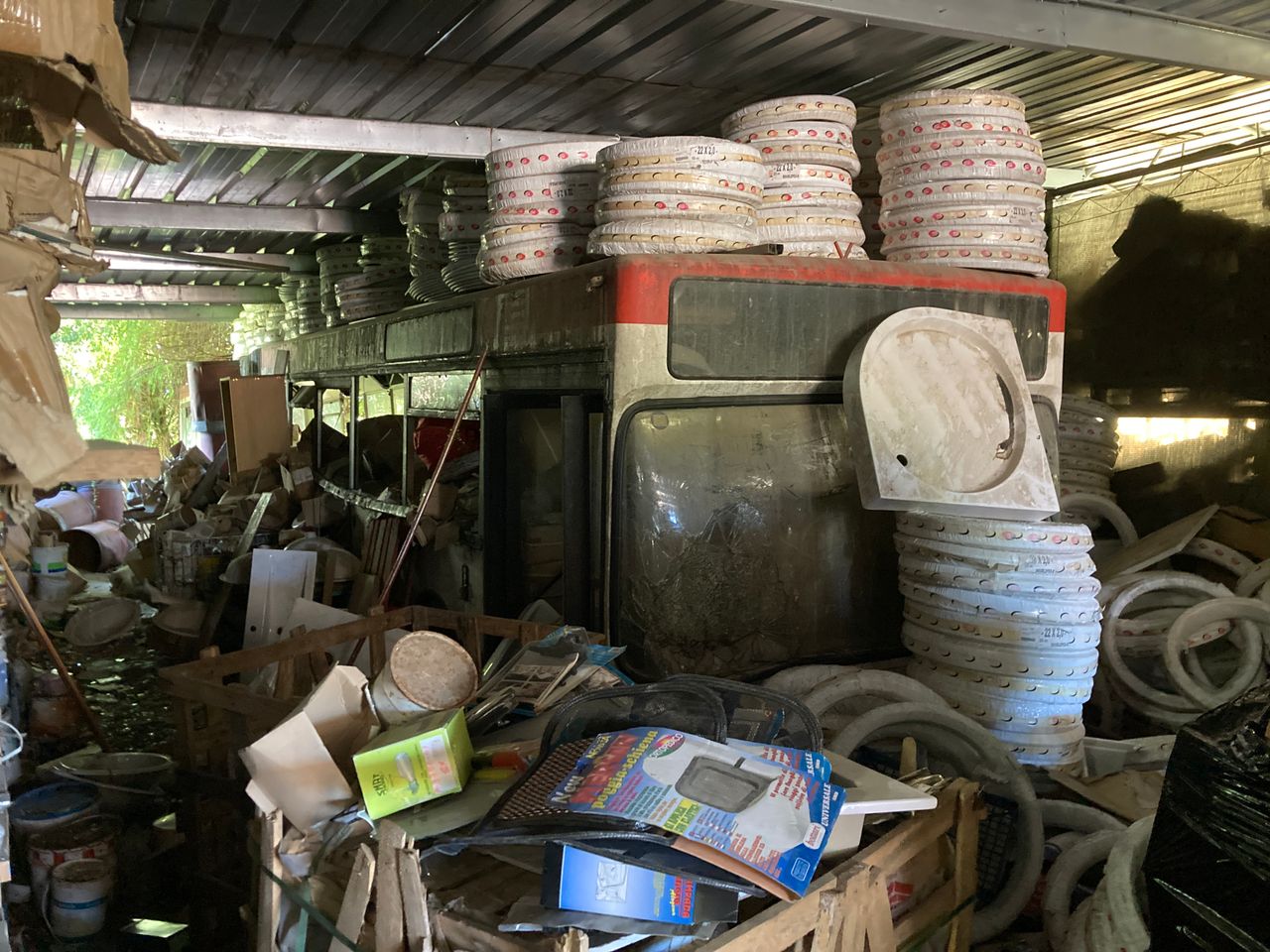
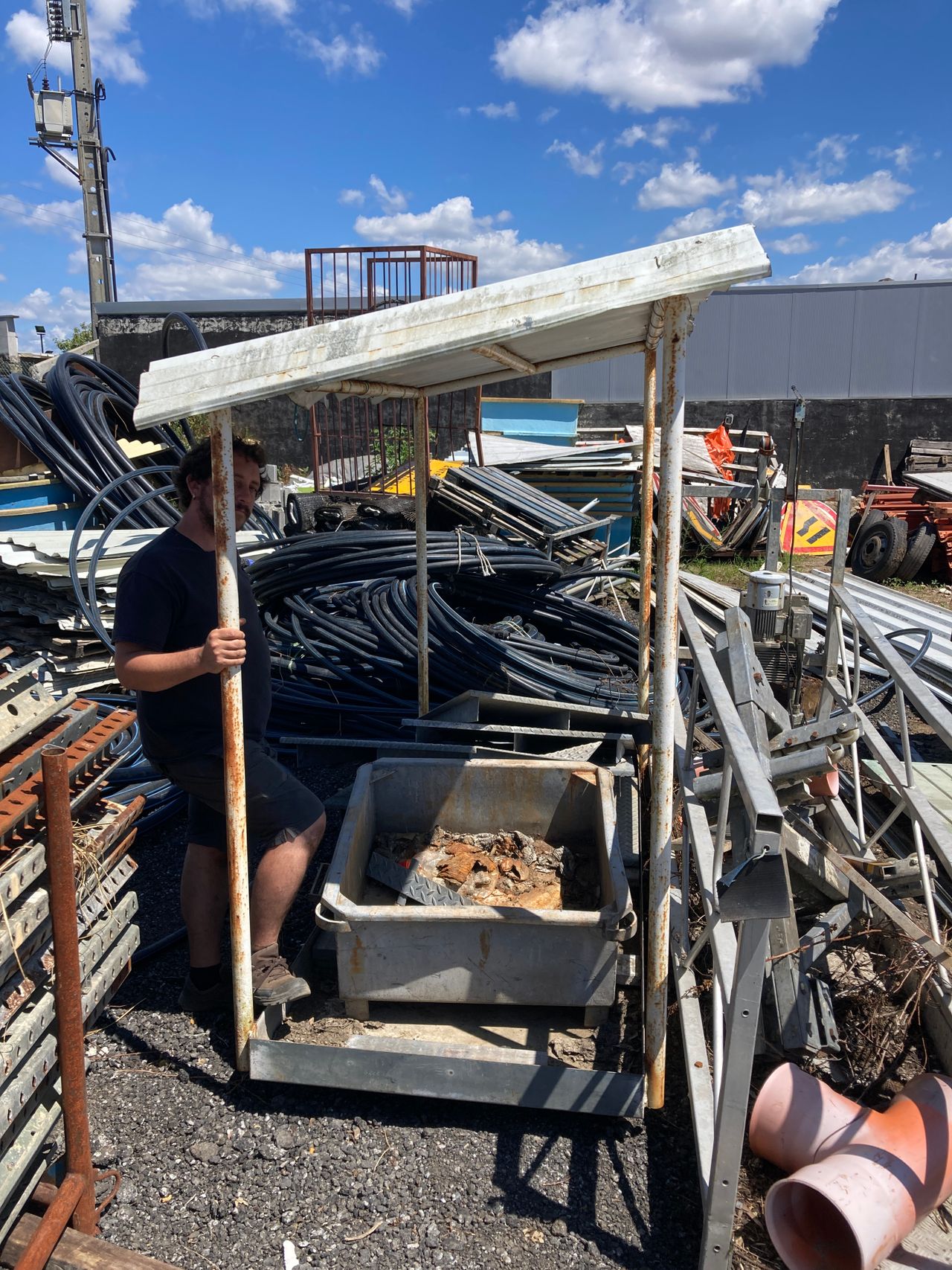
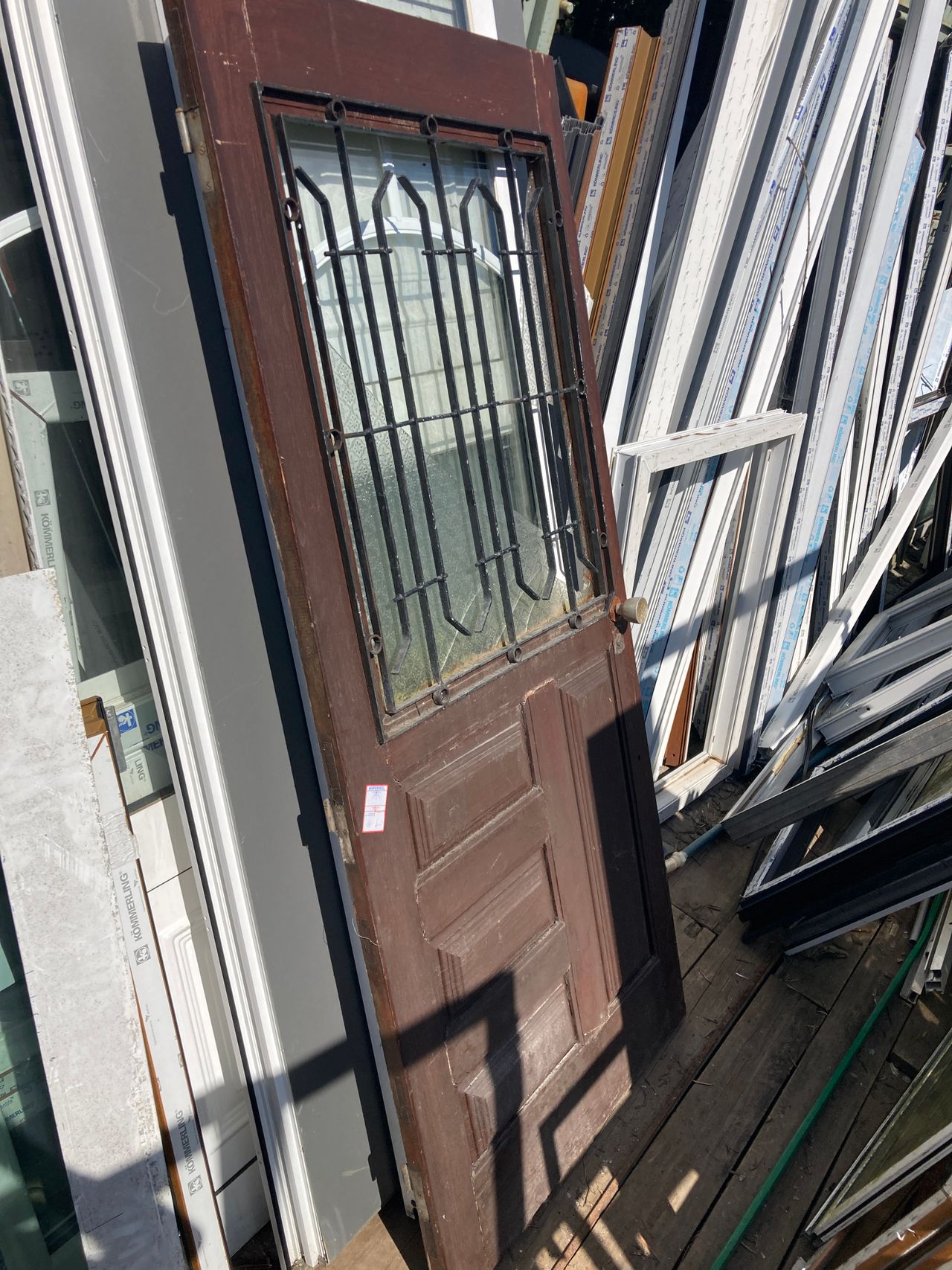
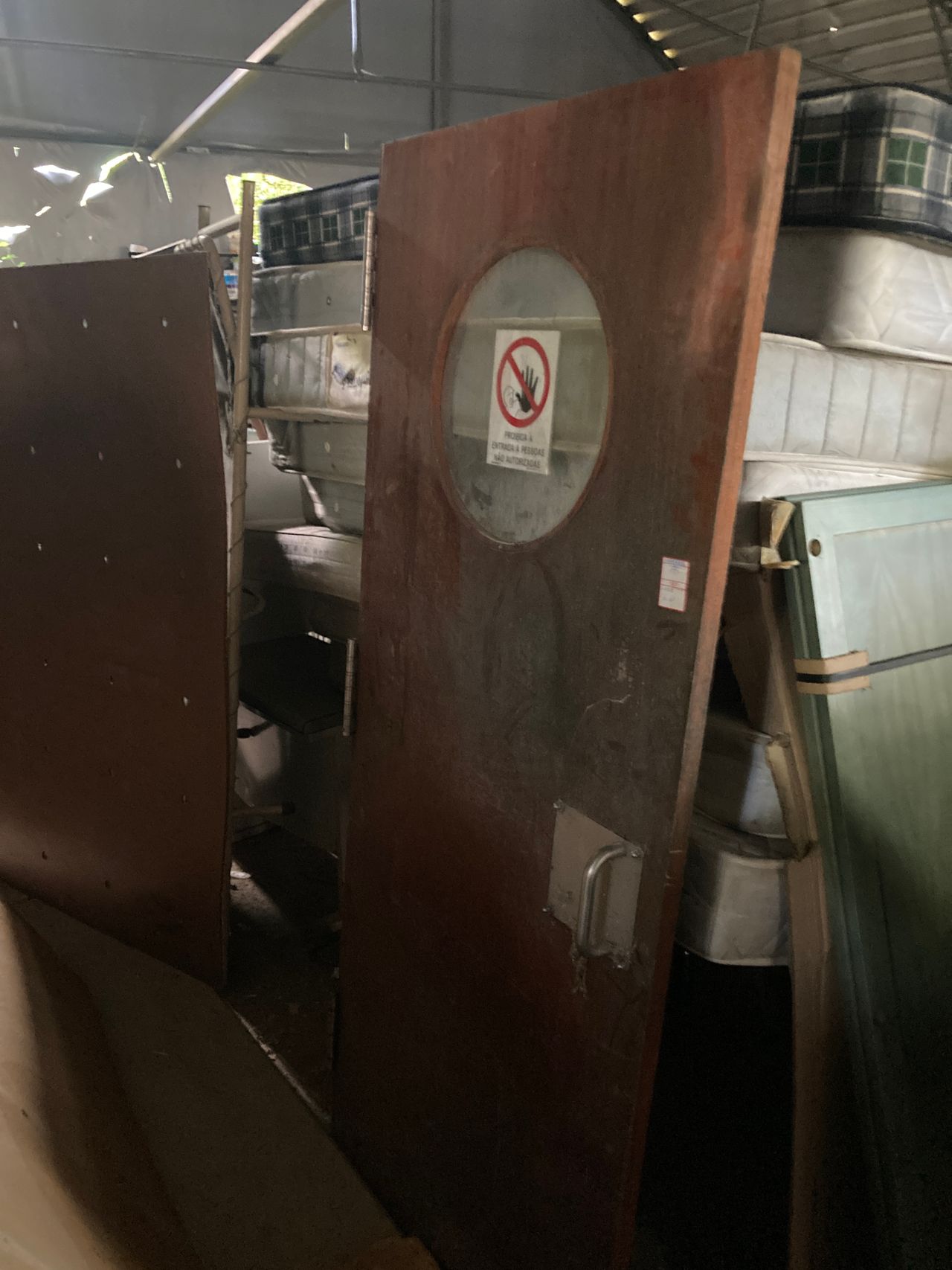
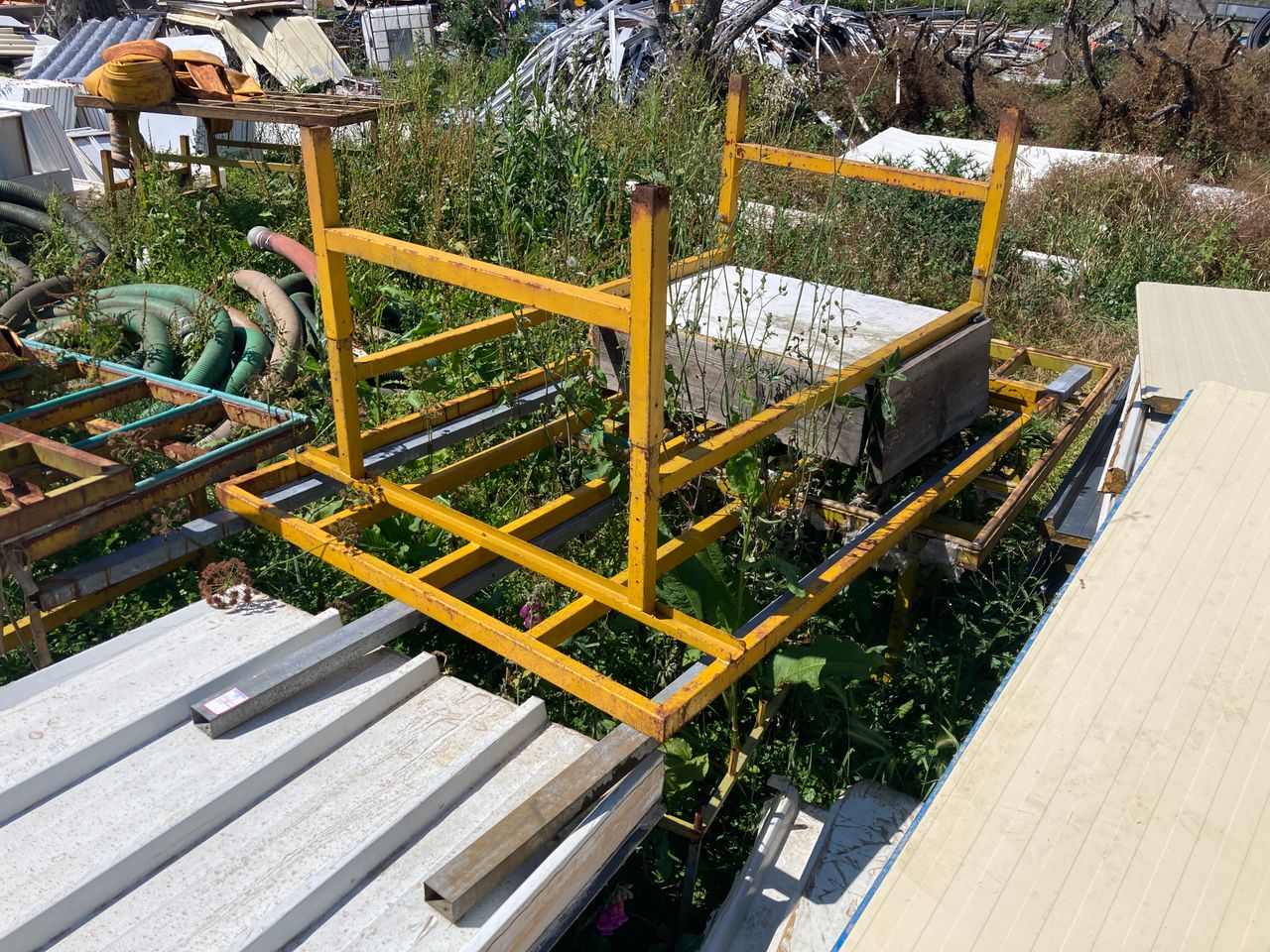
For this reason, we took a day and travelled to one of the largest scrap yards/second hand shops in Portugal.
Here you can find everything from individual screws to entire structures.
What we found:
- Outer door
- Interior door
- Substructure for the terrace
- Wood for the panelling
In addition, we decided to use the old basketball floor already used in the Pig Trailer in this project as well. We obtained this from our local sawmill.
All parts need some love and preparation, but in the end the Fridge Box is a unique composition of recycled materials.
9
Floor, ceiling and partition wall construction
Published 2yPublished about 2 years ago
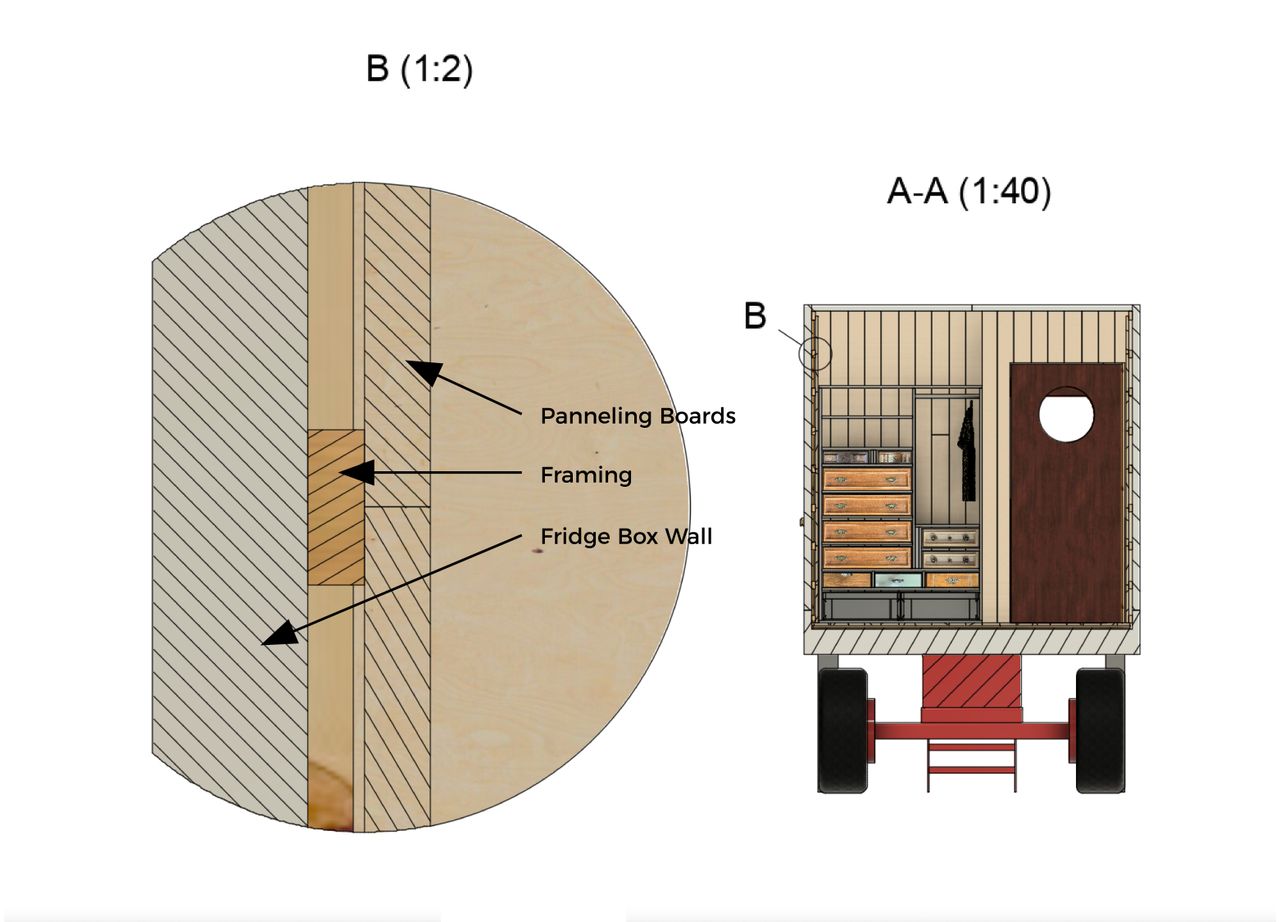
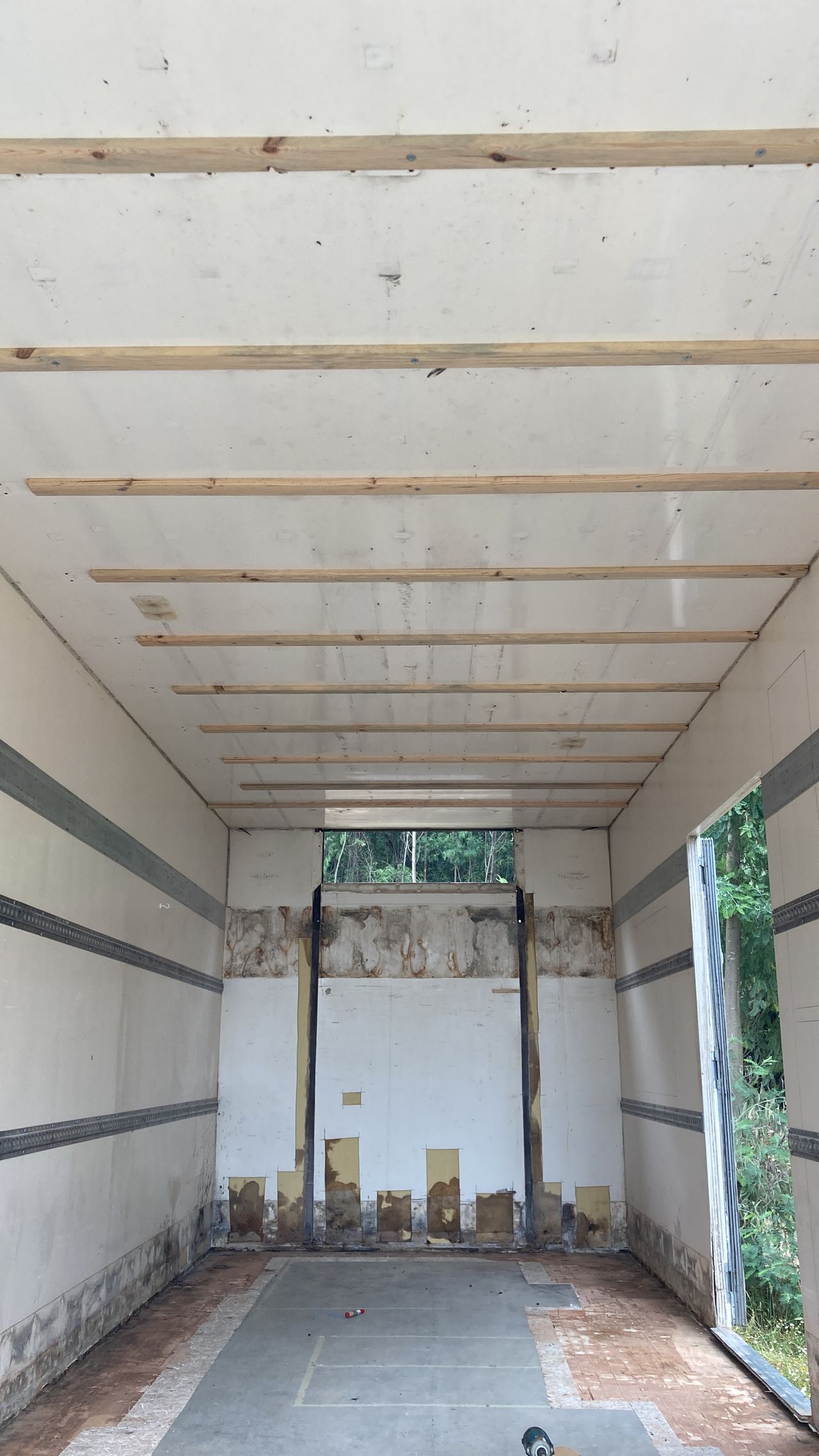
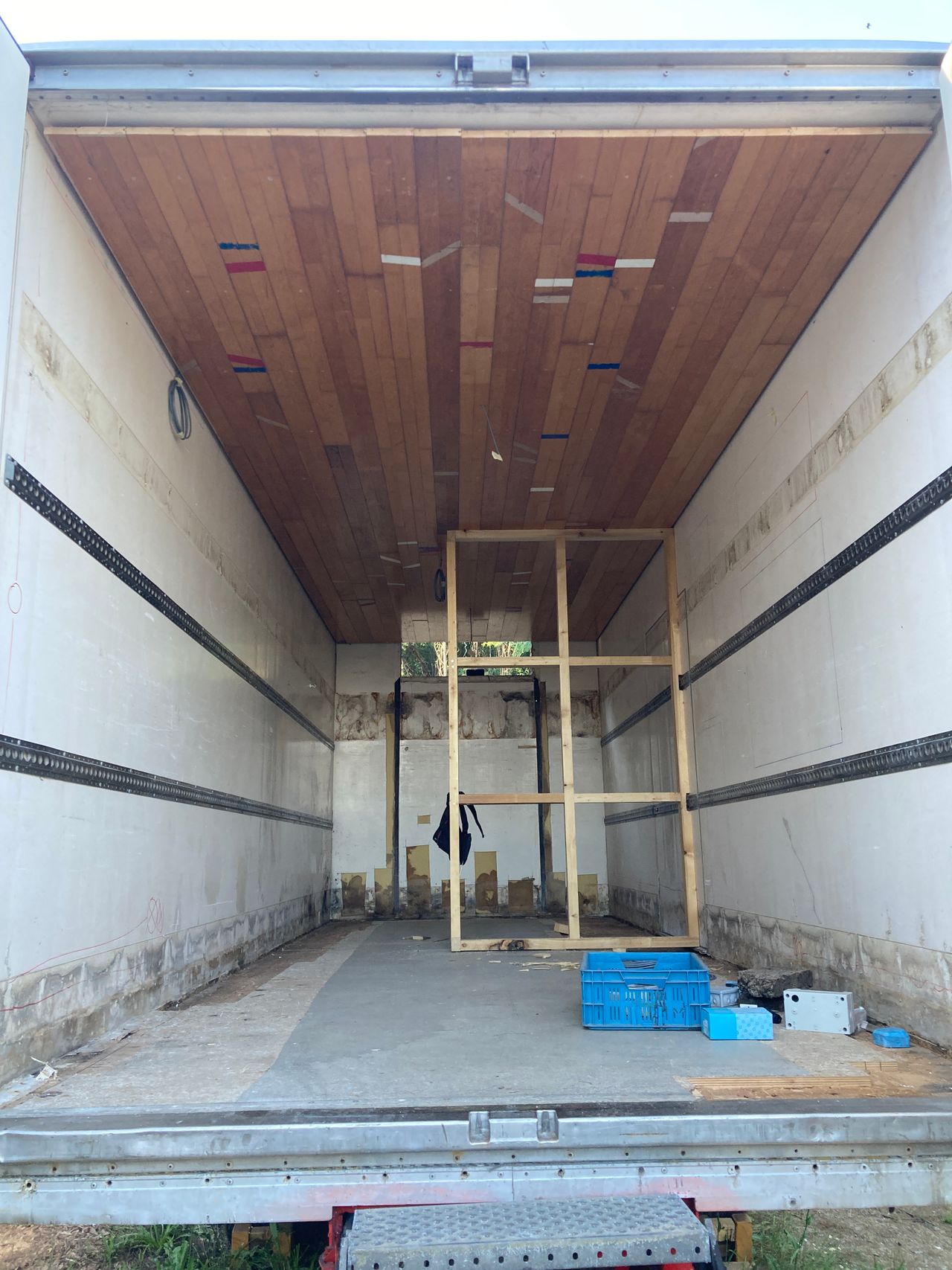
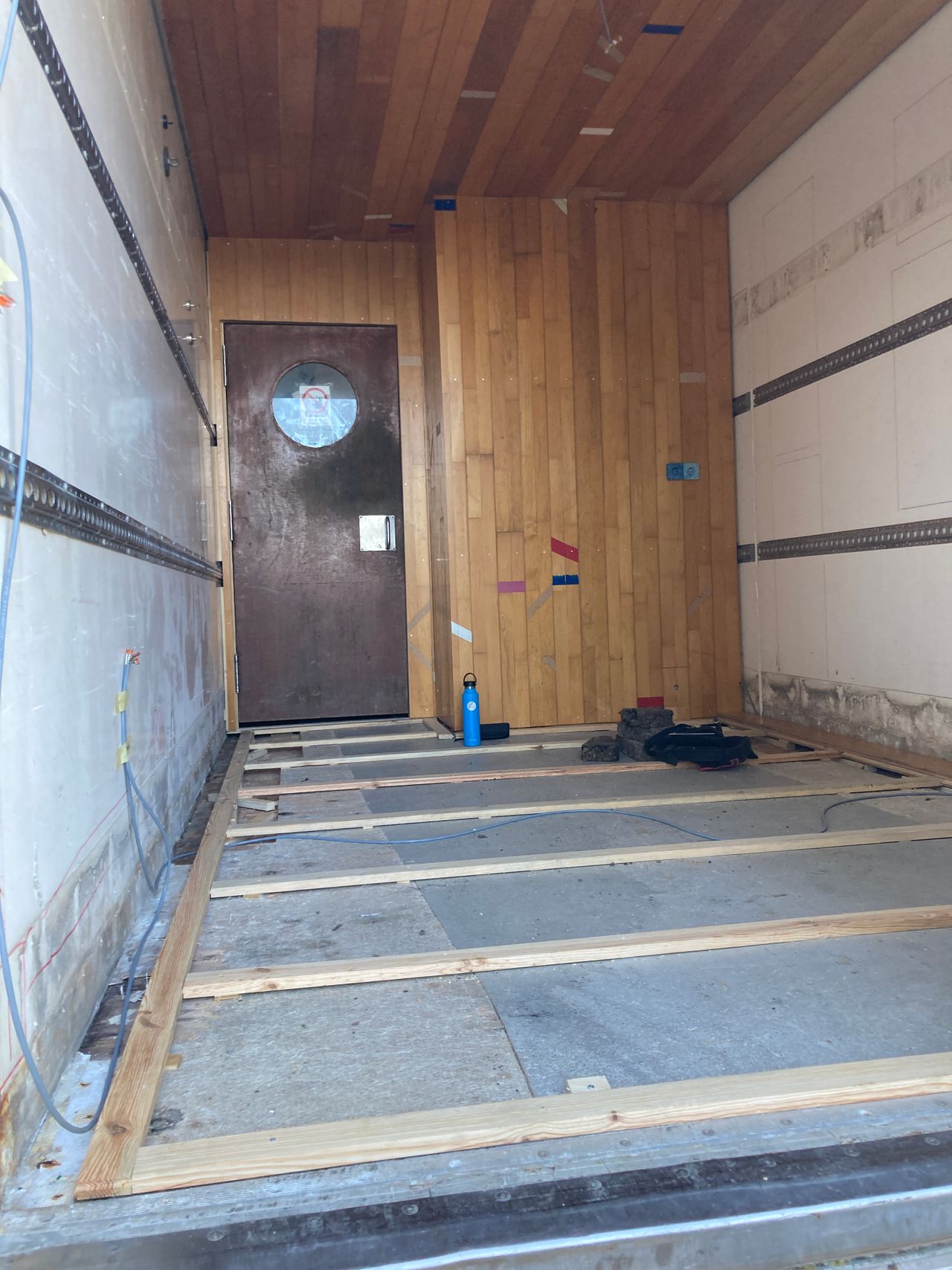
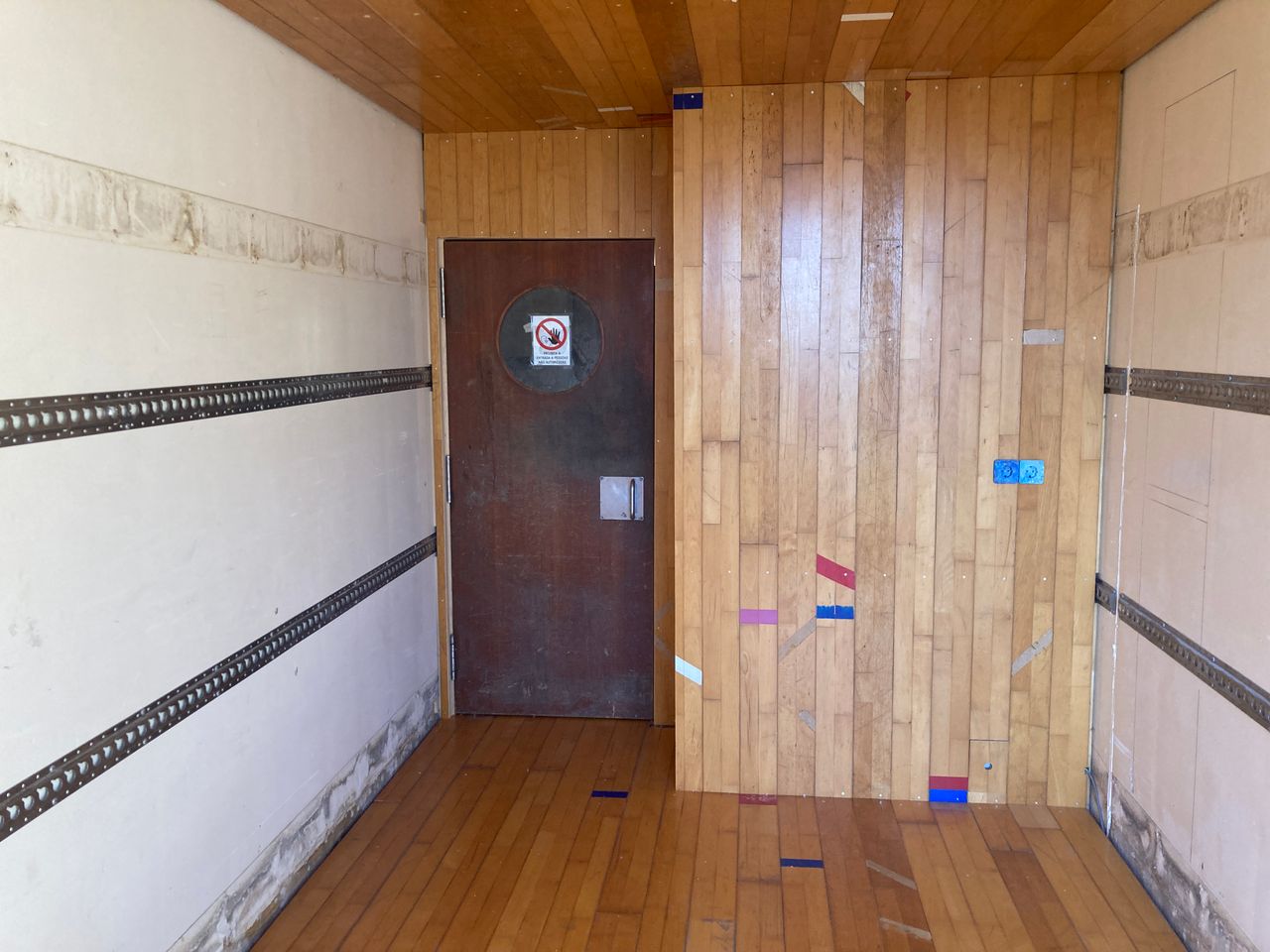
As the Fridge Box is already insulated, the walls, ceiling and floor do not require a thick substructure before the walls are paneled.
The structure therefore consists of a thin 22 mm thick framing material onto which the panels are screwed.
We use recycled basketball flooring for the floor, ceiling and dividing wall.
For the walls, we use the multiplex panels found in the second-hand/scrapyard.
Installing the framing slats is very easy thanks to the Fridge Boxes construction:
- Ceiling: There are already holes in the ceiling with an M8 thread from the old rail system.
- Floor: There is a 28 mm multiplex board under the 5 mm fibreglass layer.
- Walls: There is a metal strip about every 30 cm vertically behind the fibreglass layer. This can also be simply screwed in with self-tapping screws.
10
Making a hole in a fridge box wall
Edited 1yPublished almost 2 years ago. Last edit over 1 year ago
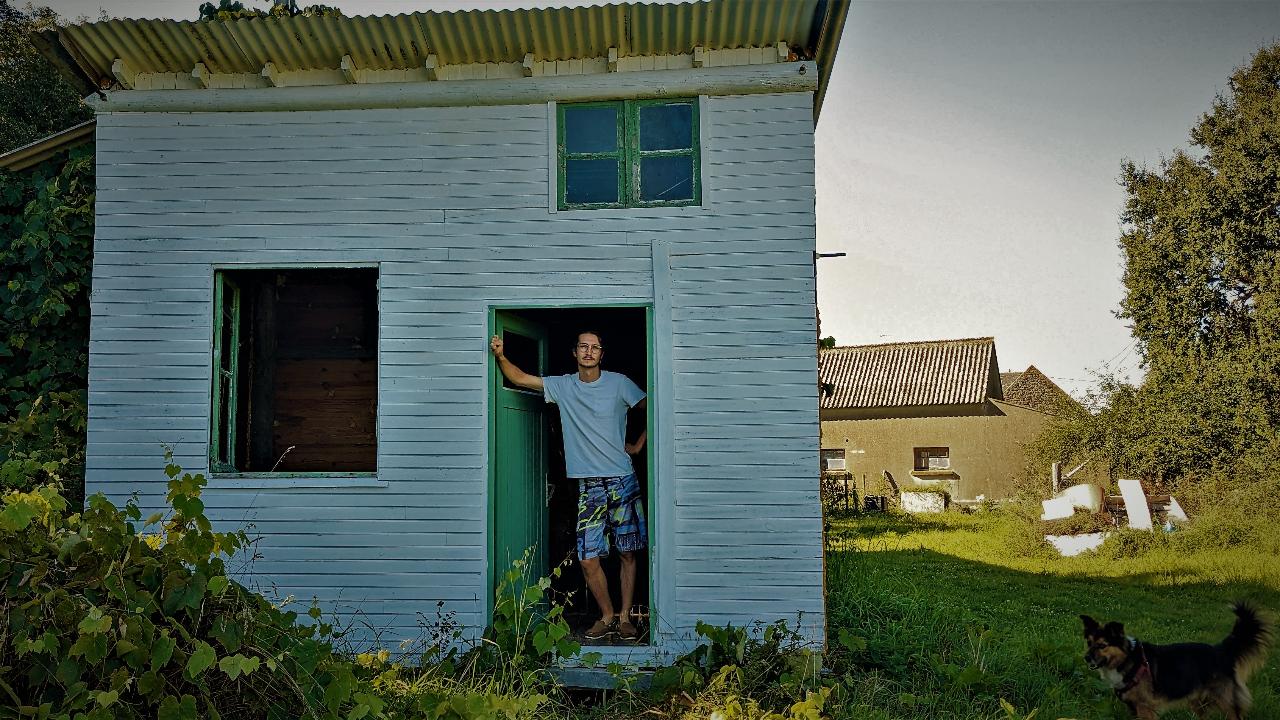

In the last update, we see how the paneling was screwed to the fiberglass.
I realize after the self-tapping screw can be screw only on the fiberglass and tight really well the battens so I can avoid every long and hard screwing in the vertical metal stripes.
The next challenge was to cut some pieces of wall for the window.
I first try with the angle grinder, it’s easy to cut with but has lot bad side, create lot of small particles of fiberglass and insulation, hard to cut perpendicular, the machine is really heavy if I want to cut through the wall and cause of the circular blade not cut properly each corners
So I decided to use the jigsaw with a long blade special for sandwiches panel, I need to prepare the cut by cutting the metal stripes with the angles grinder before. (Update 133, timecode 25:10 to 26:10)
/!\Be careful it create lot of sparkle who can put fire in the insulation /!\
I discover later for every metal stripes there is a thin layer of fiberglass who connect each side of the wall.
Which makes it more resistant but also harder to cut a hole properly in one piece.
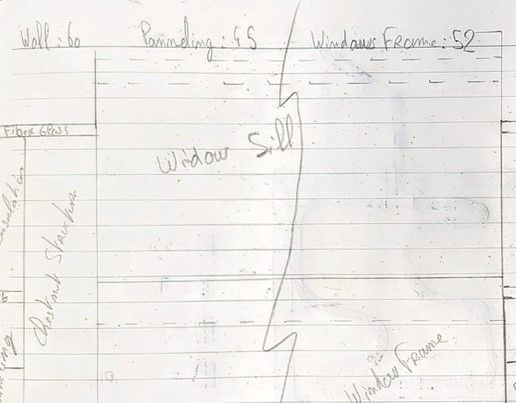
Then I cut the inside layer of fiberglass and insulation it going to leave a space for the chestnut structure who can be glue against the outside layer of fiberglass and screw in the side to the battens. (Update 133, timecode 28:10 to 29:45)
When all the structure is installed it is possible to screw it the windows frame.
It is almost done, only need to seal with silicone the junction between the fiberglass and the structure.
%20--%3e%3csvg%20version='1.1'%20id='Calque_1'%20xmlns='http://www.w3.org/2000/svg'%20xmlns:xlink='http://www.w3.org/1999/xlink'%20x='0px'%20y='0px'%20viewBox='0%200%2027.2%2027.8'%20style='enable-background:new%200%200%2027.2%2027.8;'%20xml:space='preserve'%3e%3ctitle%3eicon%20redirect%20new%3c/title%3e%3cg%3e%3cpath%20d='M27.2,26.5c-0.1-5-0.3-10-0.4-15c0-0.7-0.6-1.2-1.2-1.2s-1.2,0.6-1.2,1.2c0.1,4.6,0.3,9.1,0.4,13.7%20c-3.9-0.2-7.7-0.6-11.6-0.4c-3.3,0.2-6.7,0.5-10,0.4C2.8,19.5,2.7,13.7,2.5,8c2.9-0.1,5.8-0.8,8.6-0.7c1.6,0.1,1.6-2.4,0-2.5%20C7.8,4.6,4.5,5.7,1.2,5.5c-0.6,0-1,0.3-1.1,0.7C0,6.3,0,6.4,0,6.6c0,0,0,0.1,0,0.1c0,0,0,0,0,0.1c0.2,6.6,0.4,13.2,0.5,19.7%20c0,0.6,0.4,1.3,1.2,1.4c3.8,0.1,7.5-0.2,11.3-0.4c4.4-0.3,8.6,0.2,12.9,0.4c0.6,0,1-0.3,1.1-0.7C27.1,26.9,27.2,26.7,27.2,26.5z'/%3e%3cpath%20d='M12,12.6c-0.2,0.7,0.2,1.4,0.9,1.5c0.7,0.2,1.4-0.2,1.5-0.9v0c0.6-2.2,1.4-4.5,3.1-6c1.3-1.2,3-1.9,4.7-2.7%20c-0.4,1.3-0.8,2.6-1.4,3.8c-0.6,1.5,1.8,2.1,2.4,0.7c0.8-1.9,1.5-3.9,2-5.9c0-0.1,0-0.2,0-0.3c0.3-0.6,0.1-1.5-0.7-1.8%20C22.3,0.4,20,0,17.7,0c-0.7,0-1.2,0.6-1.2,1.2s0.6,1.2,1.2,1.2c0.9,0,1.7,0.1,2.6,0.2c-1.7,0.8-3.4,1.7-4.8,3%20C13.6,7.6,12.7,10.1,12,12.6z'/%3e%3c/g%3e%3c/svg%3e)
11
Making a proper window frame with minimum of tools
Edited 1yPublished over 1 year ago. Last edit about 1 year ago
When the holes were open, it was time to build three window frames fitting with reclaimed windows.
After examining the windows, which come from the same batch, I realized the profile were the same, only the measurement of the glass changes. (Timecode 0:46)
There are two main ways to make a windows frame. The first is with a big router under a table and specific router bit, the other way is with a thickness planer to make laminated wood and glue them together in a way to copy the profile.
I decided to use the planer technic, because this tool is much less specific than the router and going to be much more useful for all the coming projects, especially for reusing old wood!
For preparing this project I needed to make some detailed plan (you can find it below) because of the complexity of the drawings and need for precision. For this I used Fusion 360 and used the parameter variable feature, so that this plan can be easily modifiable for future window frames (we have a big batch of the same kind of windows!)
Now that I know how much wood I need, we went to the sawmill and chose to use chestnut because it’s a wood that copes well outside, is resistant to the bugs and it’s grown locally (also because they have a lot at the sawmill of every thickness).
Next came the classic woodwork, which is:
1. Sort wood to avoid knots and cracks
2. Cut the raw board in width and length (+3cm)
3. Plane them at the right precise thickness
4. Cut one edge with the saw, to make it perpendicular or with 45° angle
5. Hand plane this edge (hardly doable with the planer)
6. Cut the in between piece of wood to the right length
7. Put all the pieces from one side in the right position
8. Drill through all these pieces to put dowels and avoid any movement during gluing (Timecode 5:27)
9. Glue (polyurethane D4) the pieces together
10. Repeat step 4 to 9 for each side of the frame (4 times in total)
11. Make a 4mm groove for the seal on each side with a template and the track saw (Timecode 6:36)
12. Glue each side together (be careful with keeping the frame square)
13. Cut the raw outside edge at the dimension of the hole
14. Carve to fit the hinges
15. Sanding
16. Finishing (Bondex), 2 or 3 layers with a smooth sanding between
17. Install the hinges and adjust the window to the frame
18. Screw the frame to the structure previously installed on the hole
19. Put the rubber seal in the groove
That’s it, the window frame is finally installed, now you just need to seal the frame with silicone to the structure.
12
Making a fixed window from double glazed sheets
Edited 1yPublished over 1 year ago. Last edit about 1 year ago
Compared to the last update, this one is going to show you how I made a long fix window from scratch. I make it much easier, quick and fun to do! (Timecode 21:39 to 27:54)
1. Just take the measurement of the double glass sheet
2. Design the window (I add 1mm gap between the frame and the glass sheet because I used a 2mm thick compression seal)
3. During the design consider the water drainage and make sure no drops are going to go inside or stay stuck somewhere, that
is why I did all this 45° edge, it’s look nice and make the window ready to fight the rain drops (you can find bellow the detailed plan)
4. Take a coffee (optional)
5. Make the frame (same steps than the previous update) and glue it (take care of keeping the right space for fitting the glass sheet)
6. I used the offcut of the 45° edge to make the glazing bead
7. Sanding + finishing
8. Install the frame with glue and seal it to the fiber glass with silicone
9. Clean the double glass sheets (optional but better to do)
10. Put the sheets in the frame
11. Fix them with the glazing bead nailed to the frame (it is going to apply pressure to the compression seal)
The fridge is completely close now and this fix window allows plenty of light to enter while giving an original and stylish look!
13
Restoring the roof
Published 11moPublished 12 months ago
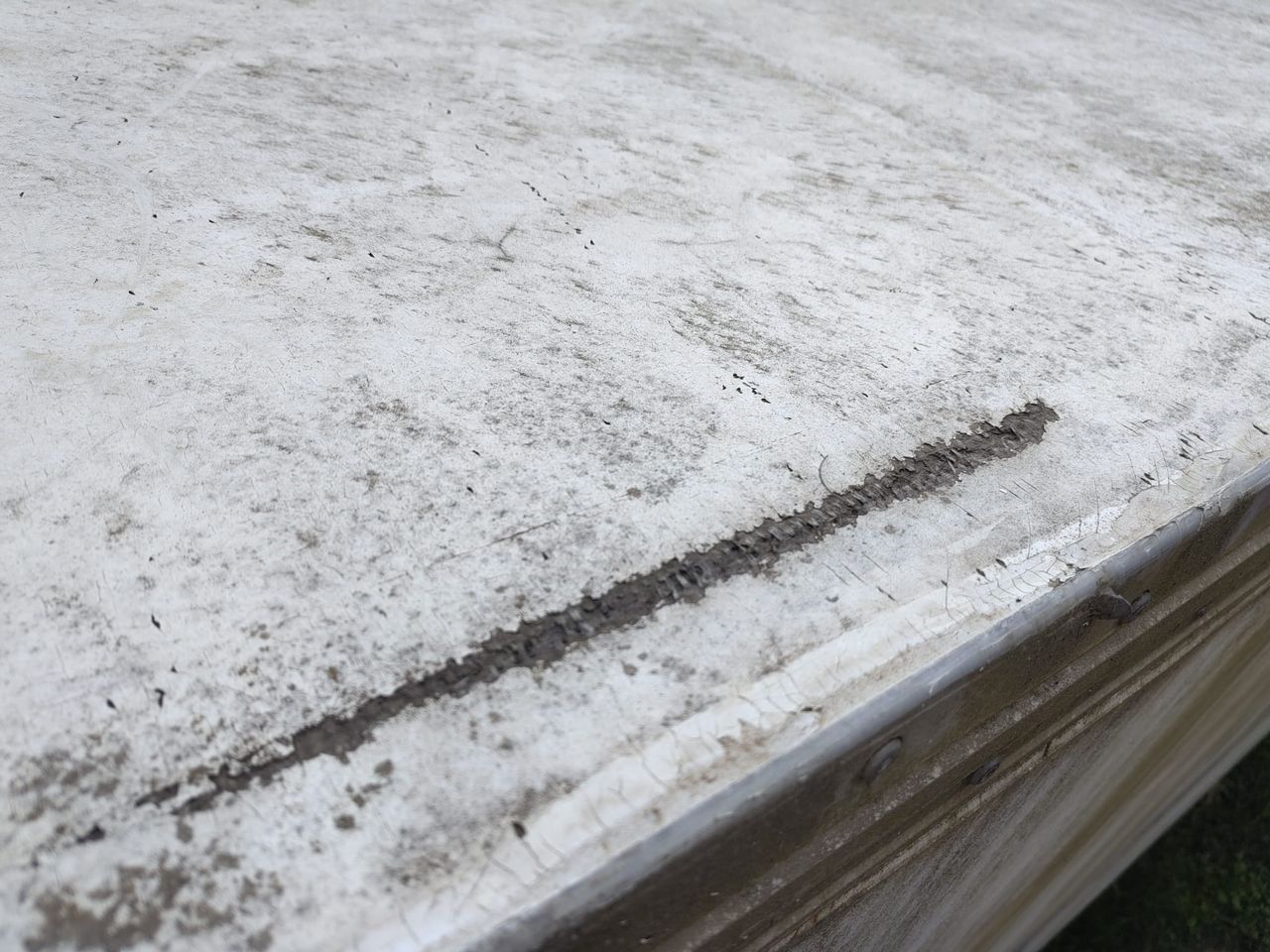
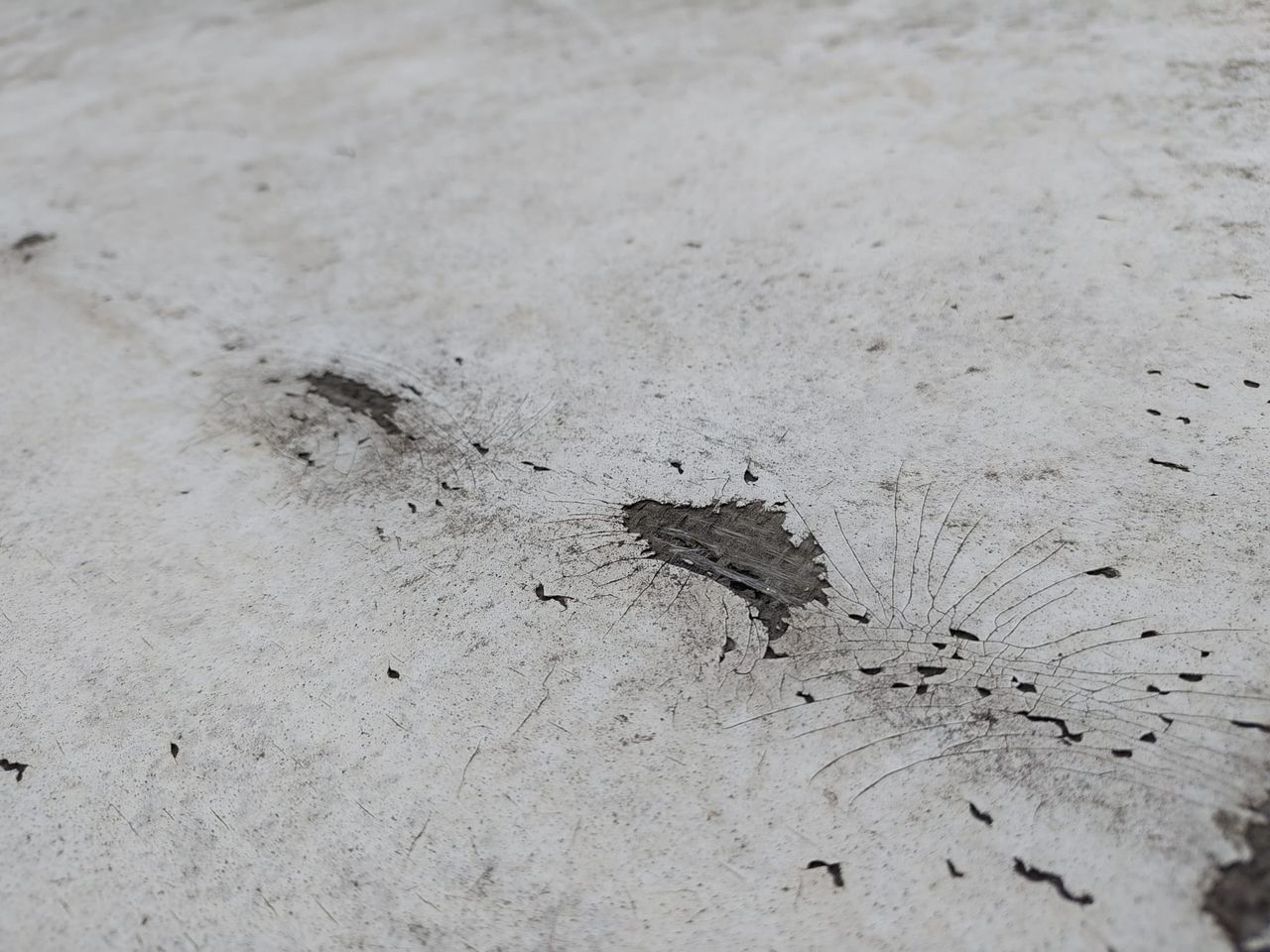
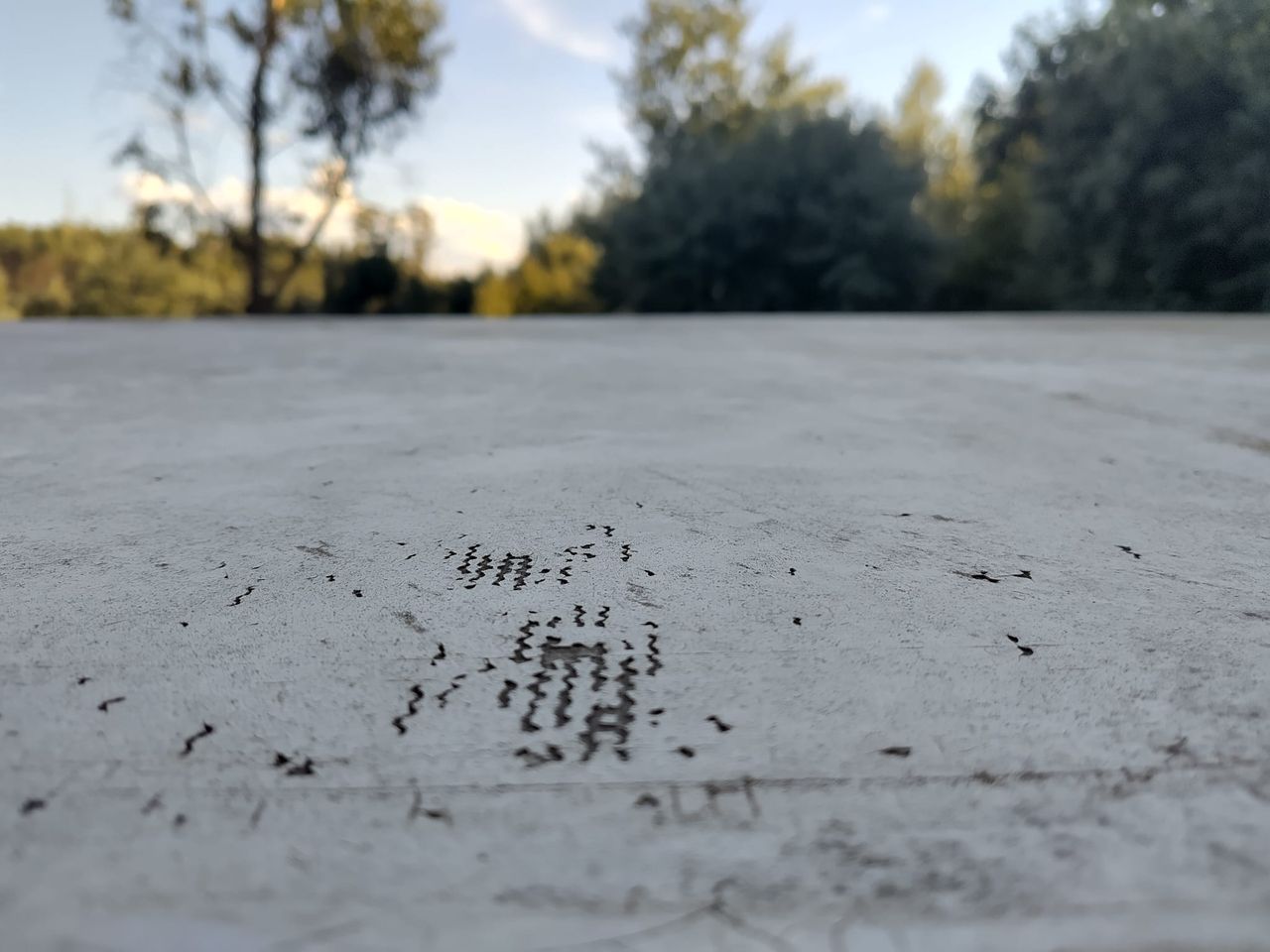
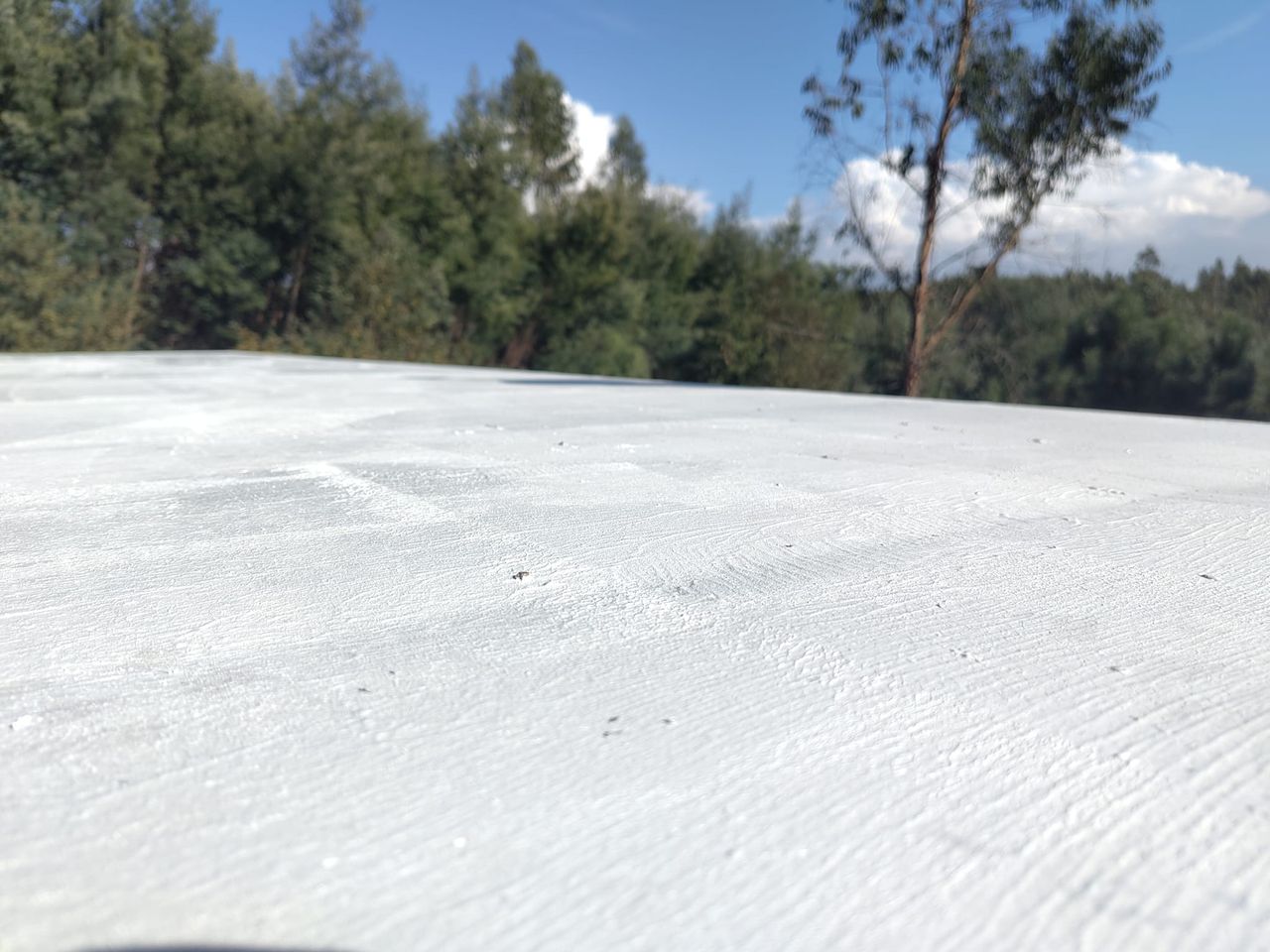
The box has several layers as we have seen before like PU insulation, fiber glass and a last layer of paint and other components that makes it waterproof. This last layer is specially important in the roof since the fridge box stands balance and the roof is flat, water tends to acumulate on it. This can easily lead to future water leakages and rotening of the roof as soon as the water starts to penetrate the fiberglass and the next layers. In the photos can be appreciated how this last layer starts to wear out leaving the fiberglass exposed.
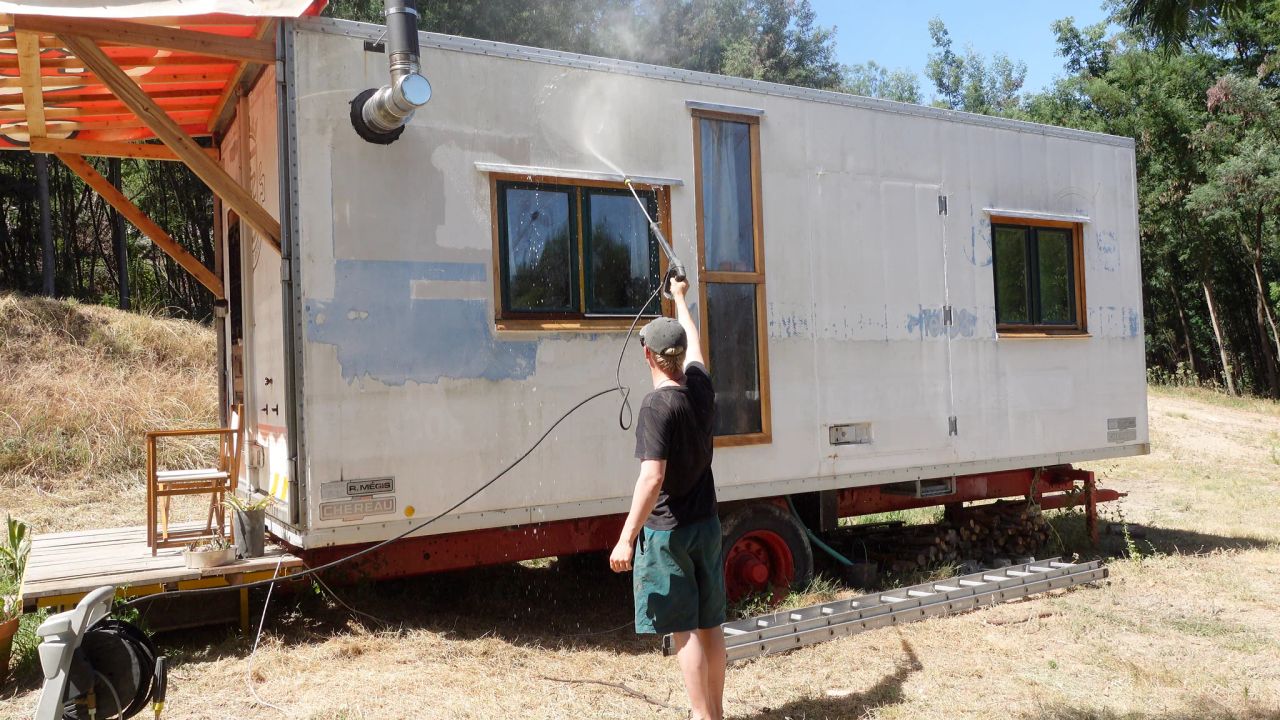
We have decided to give it a good clean with a pressure washer before painting, after almost 2 years of the last clean up in the scrapyard it was already very very dirty.
Next we let it dry for a day in the sun
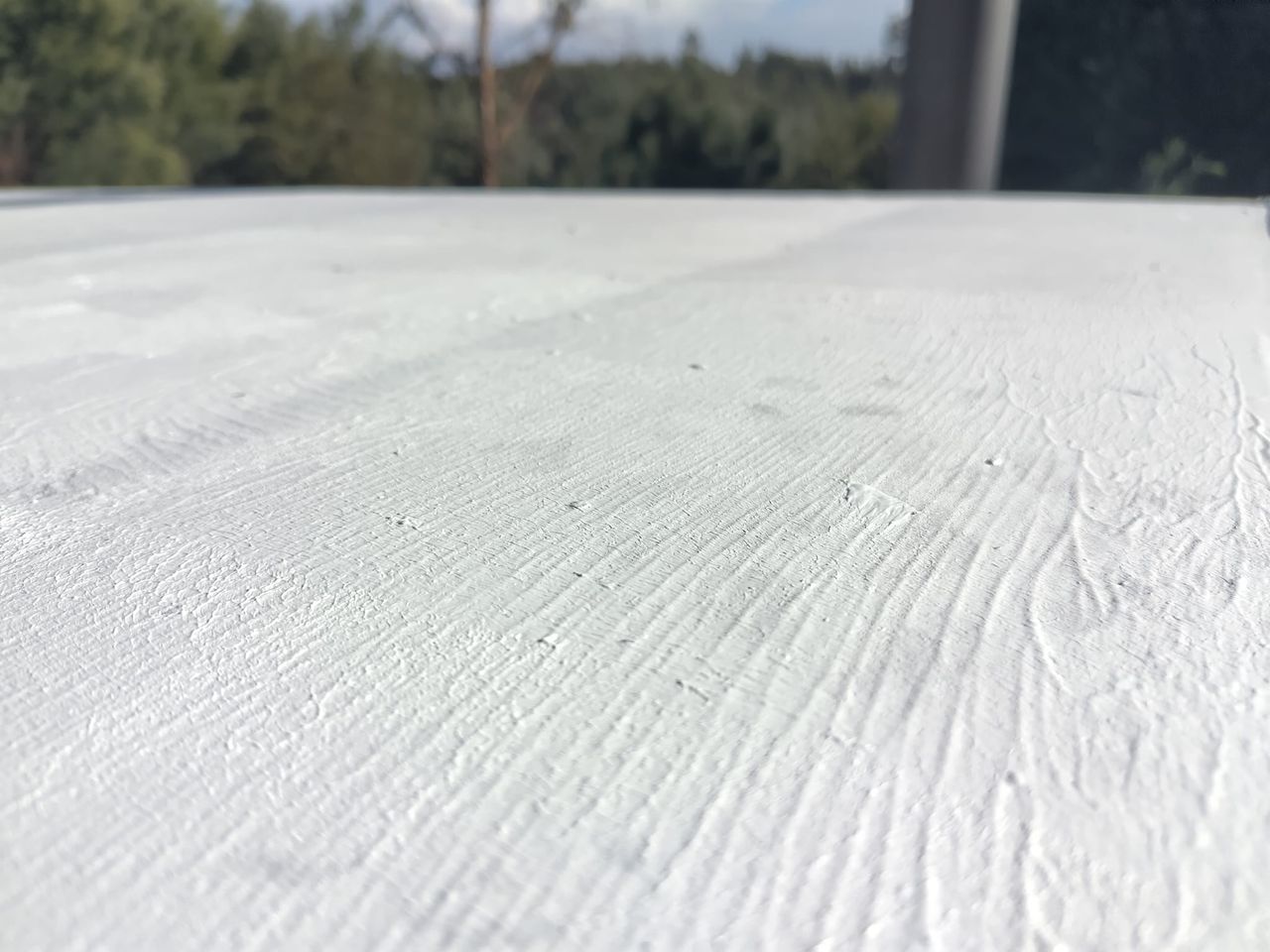
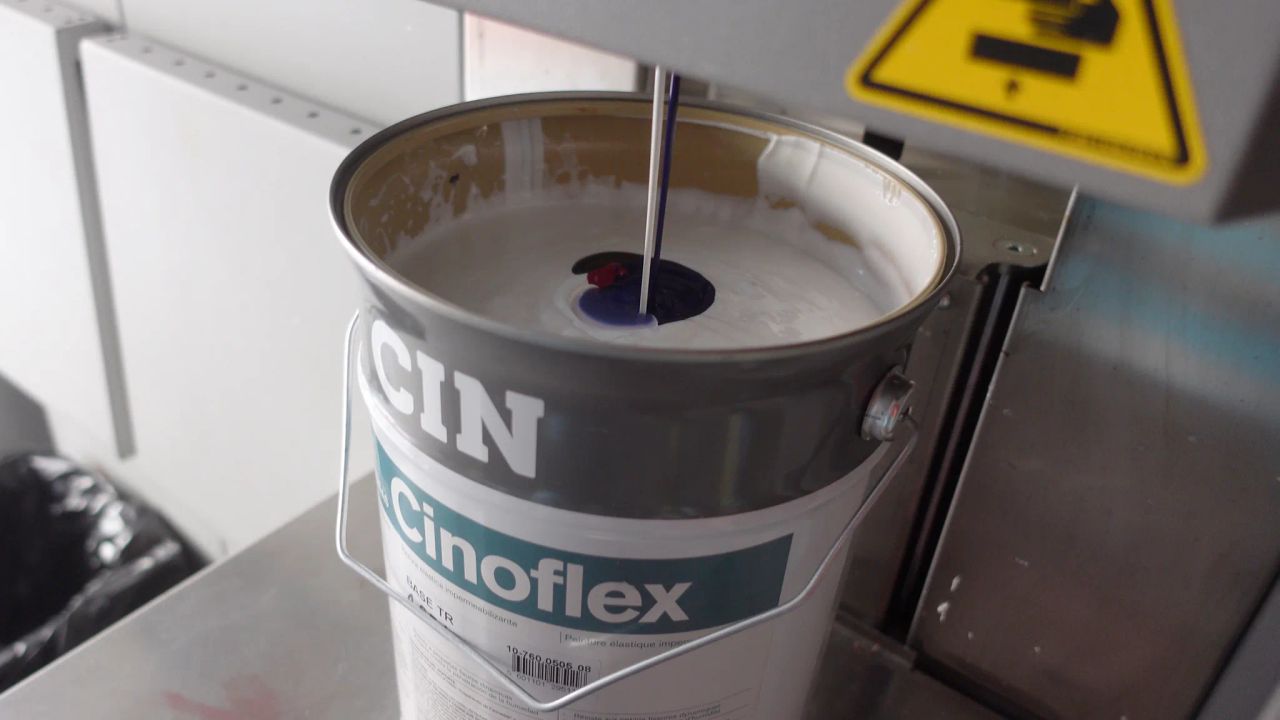
After we paint it. We have gone for a rubber waterproof wait paint. This paints is slightly elastic and made to waterproof rooftop terraces. The elasticity helps in such a structure that still moves every now and then. We applied to coats of this paint, one in each direction to maximize the waterproof qualities of the product.
14
Adding Roofs and Fixing Leaky Windows
Edited 3moPublished 4 months ago. Last edit 4 months ago


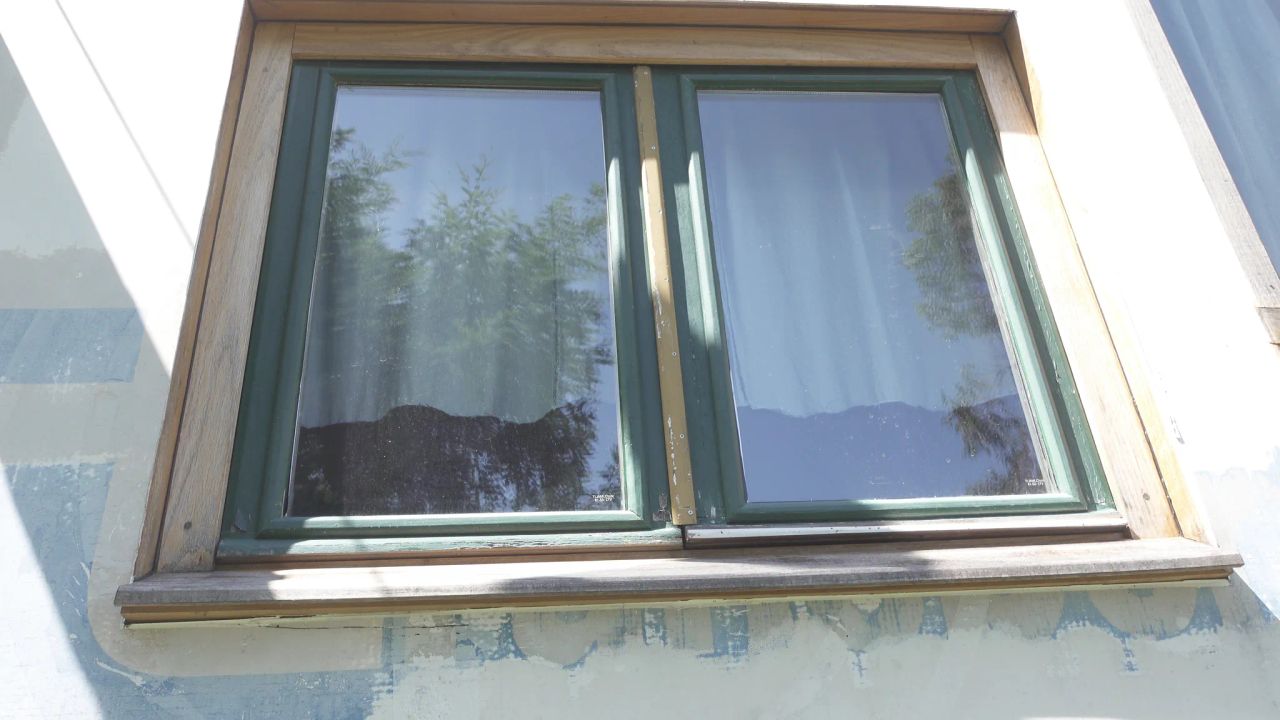
The problems with the windows were:
1. The wooden window frames, especially the lower boards, move when they get wet.
This created large gaps where water could enter.
The frames got wet because water running down from the fridge box roof soaked the windows.
2. The old windows were starting to rot.
3. The windows were not closing properly or sealing tightly.
4. The wood treatment was not sufficient.
To solve these problems:
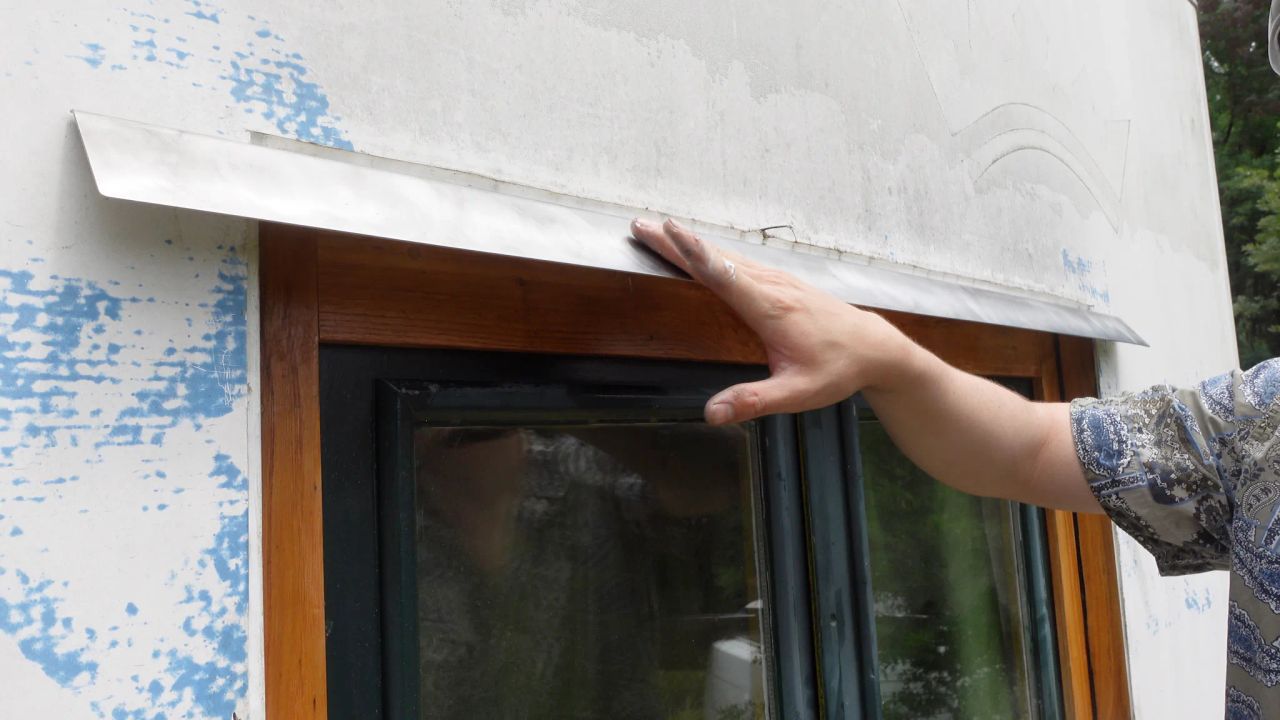
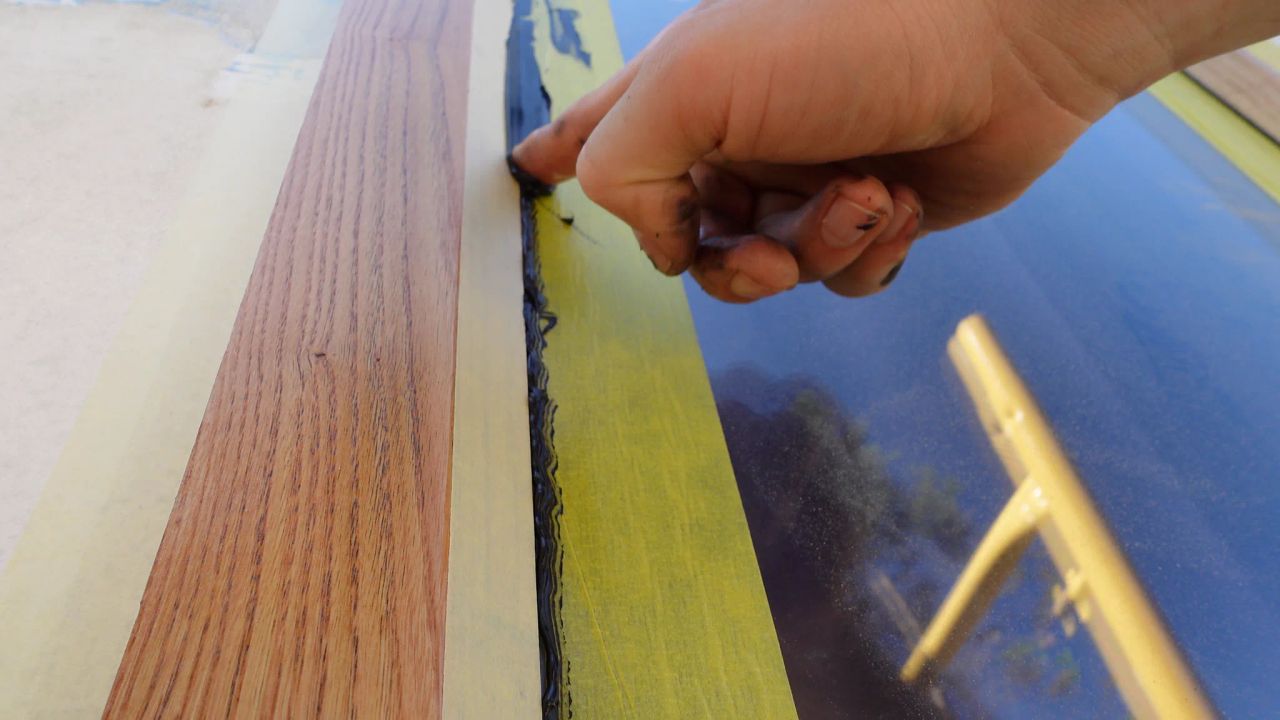
1. We added roofs above the windows and sealed the previous gaps with silicone.
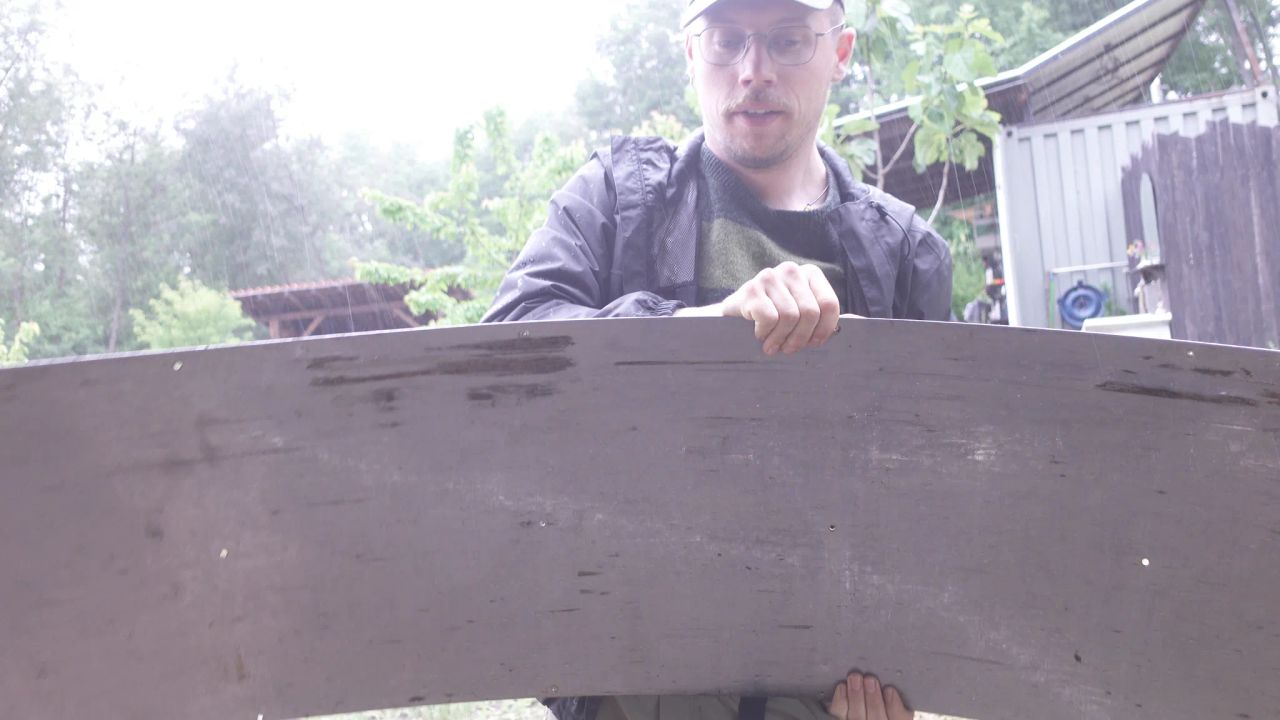
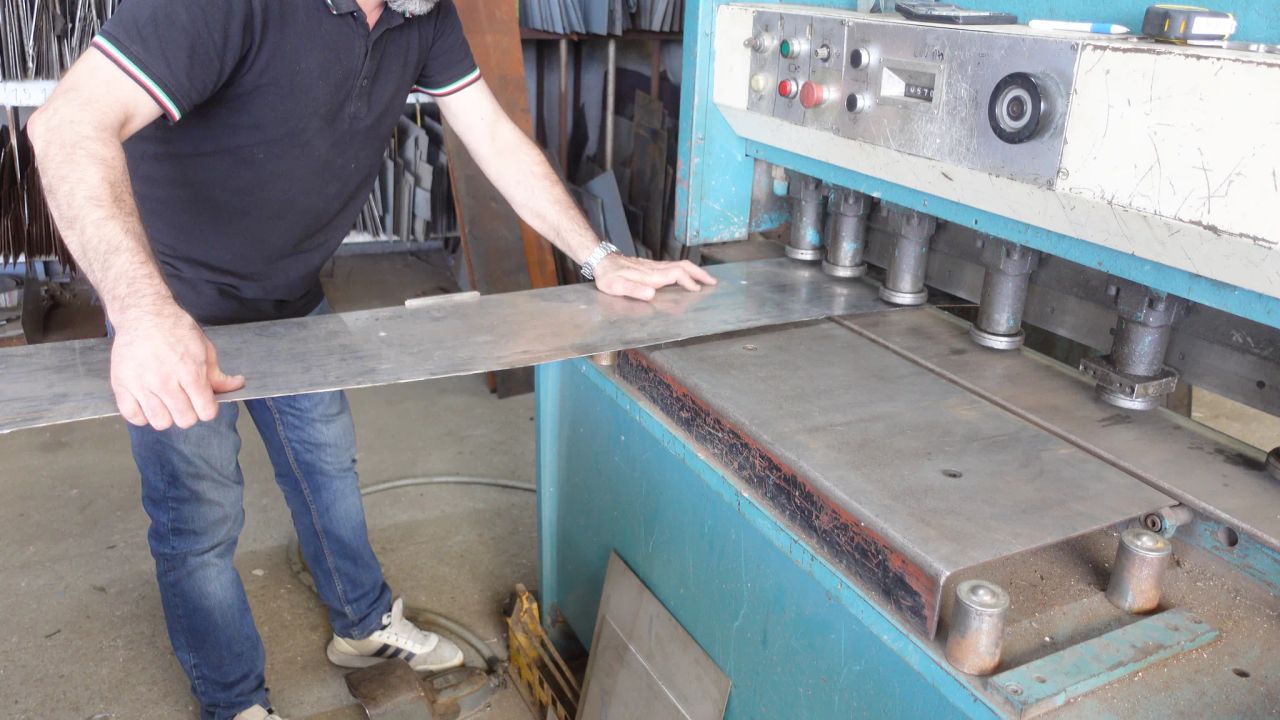
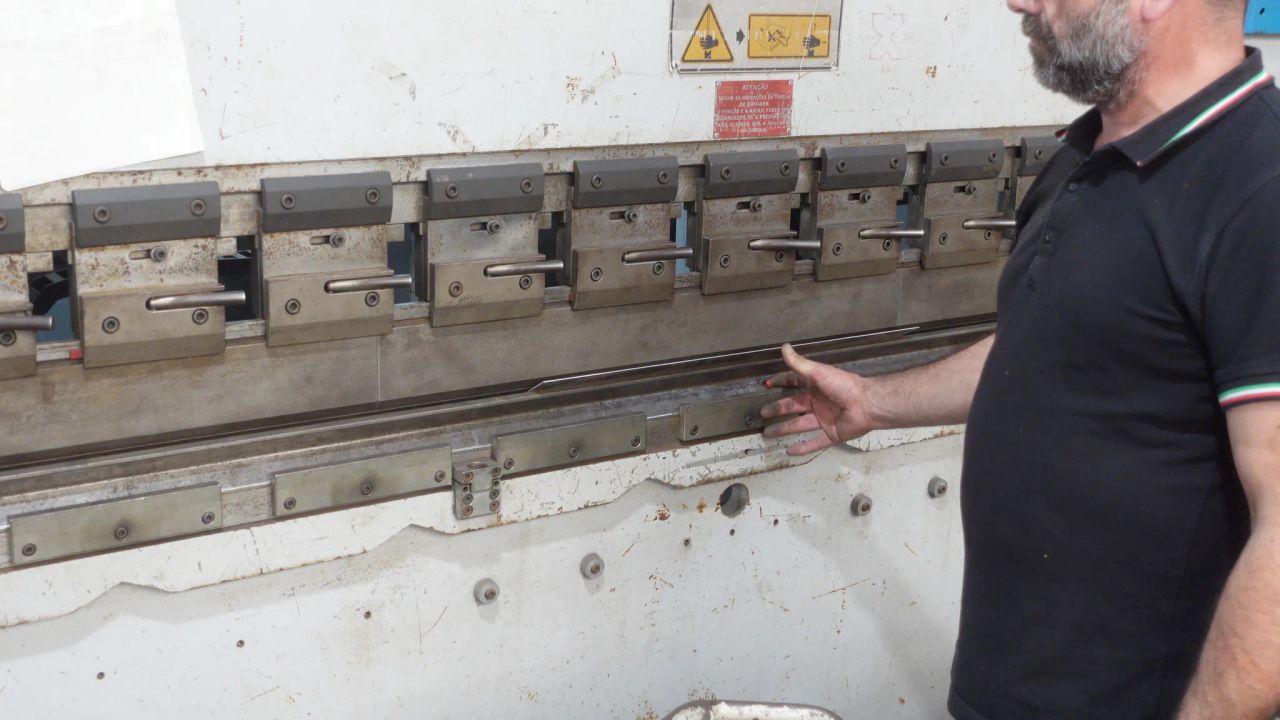
For this, we took an old 1 mm sheet of stainless steel and went to the metal shop to cut and bend it.
(The roofs are standing around 9 cm over the edge and follow a 55-degree angle) - which in hindsight is a bit too short, the angle could have been more like 40 degrees.
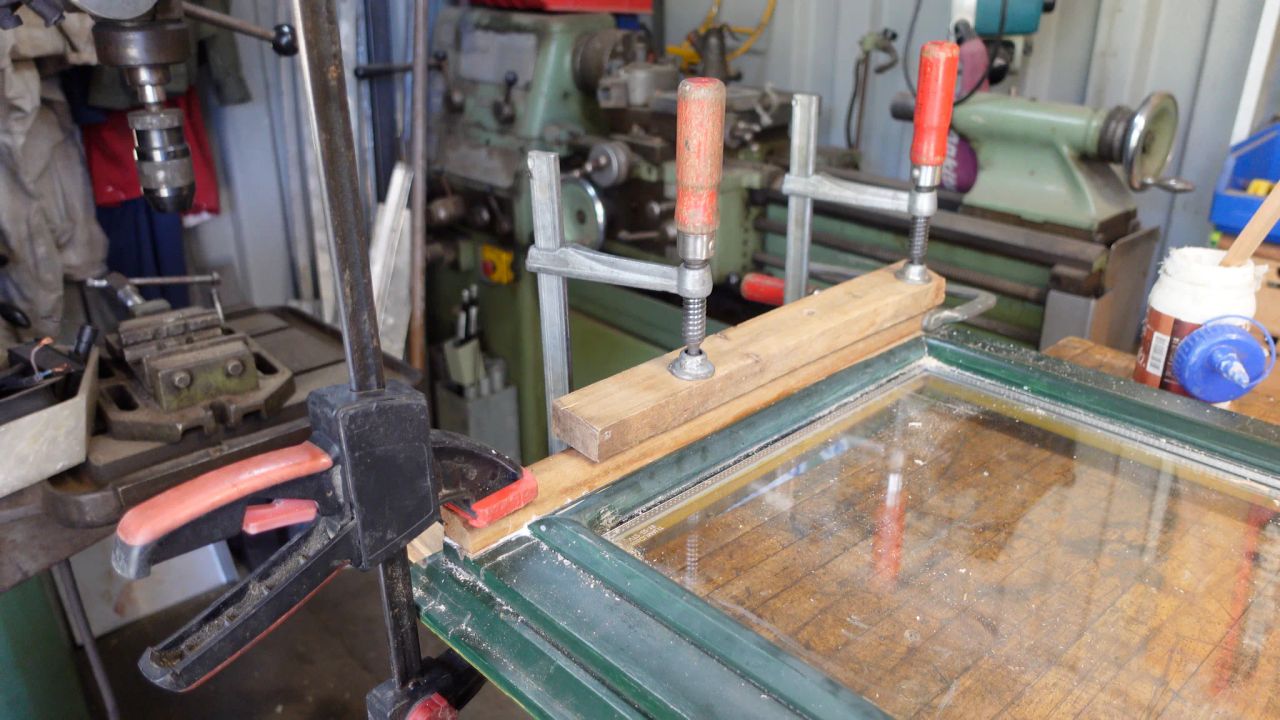
2. We added new wooden drip edges to the windows.
Since the wooden window sill and the drip edge are made out of a single piece of wood, we had to chisel away the old drip edge and glue a new one on. (The new one was made by a local carpenter.)
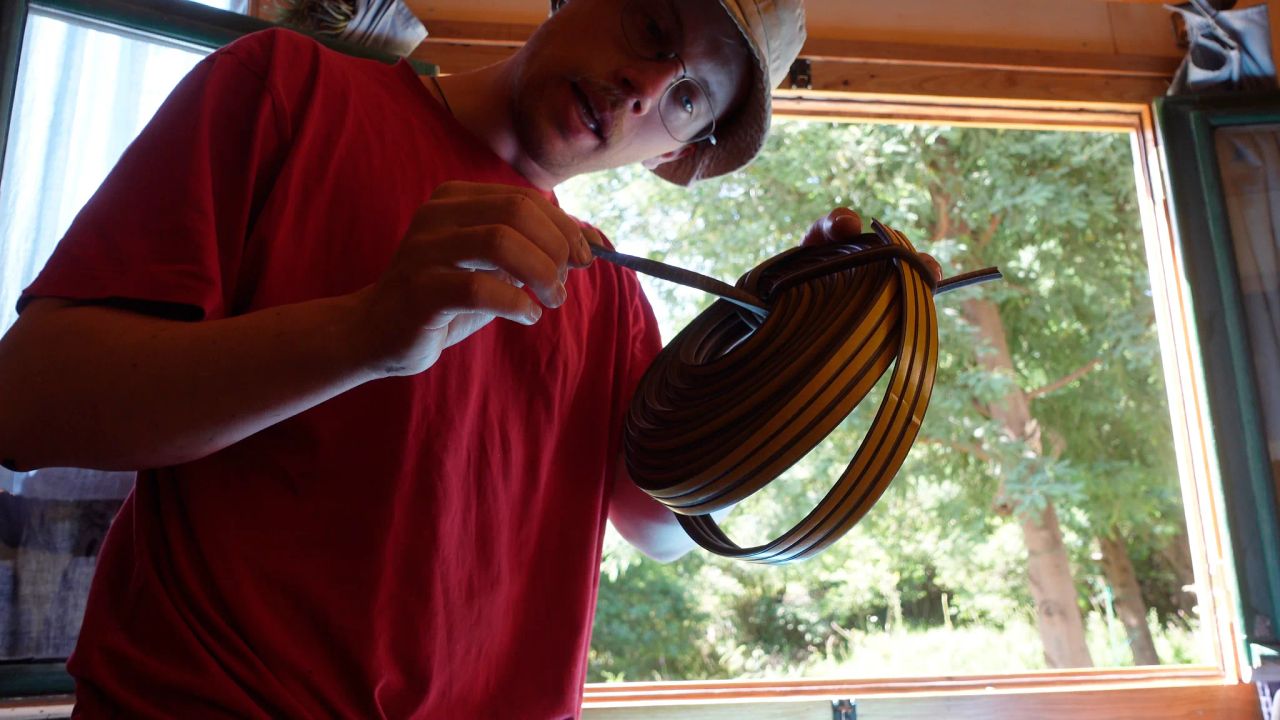
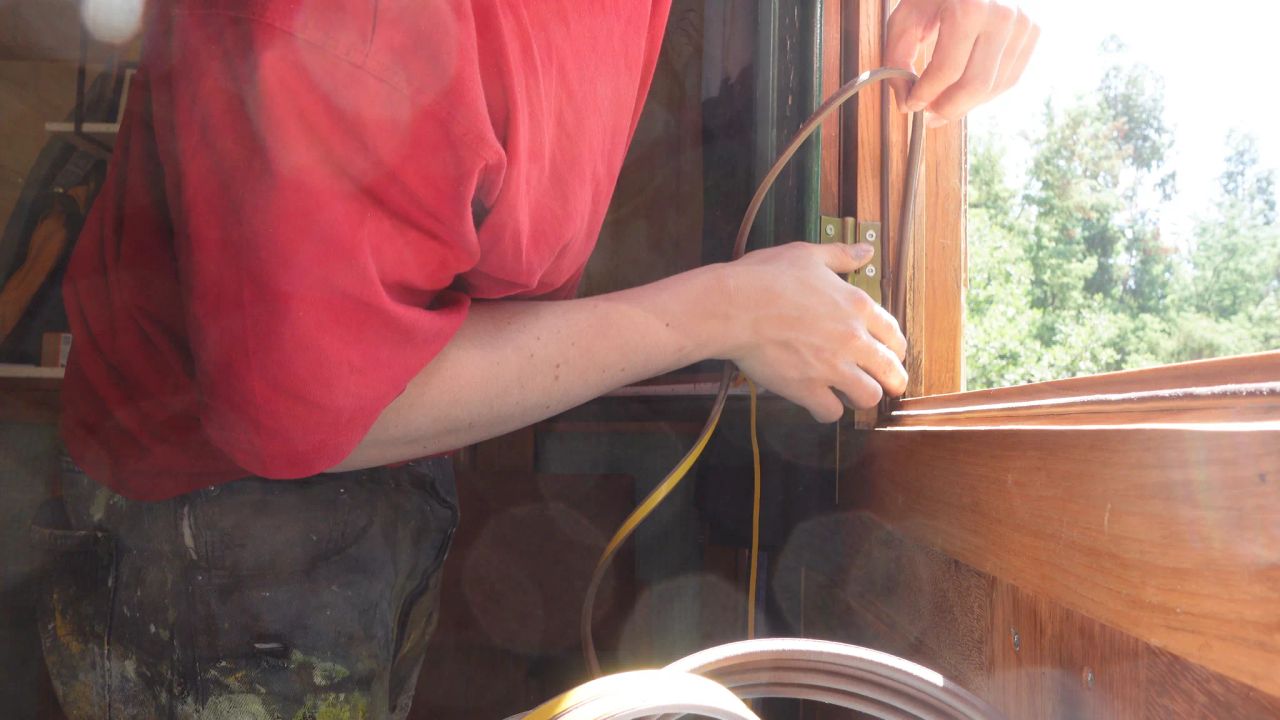
3. We installed new rubber window seals and adjusted the window closing mechanism.
A lot of water damage came from the back window not having the full assembly of the closing mechanism, so we found some old pieces from other windows and installed them. Further, we added multiple thicker (9 mm) rubber window seals all around.
4. We treated all wood surfaces with two coats of UV OSMO.
5. We built and added custom mosquito nets for every window.
15
Adding a Canopy Over The Front Door and Veranda
Edited 3moPublished 4 months ago. Last edit 4 months ago
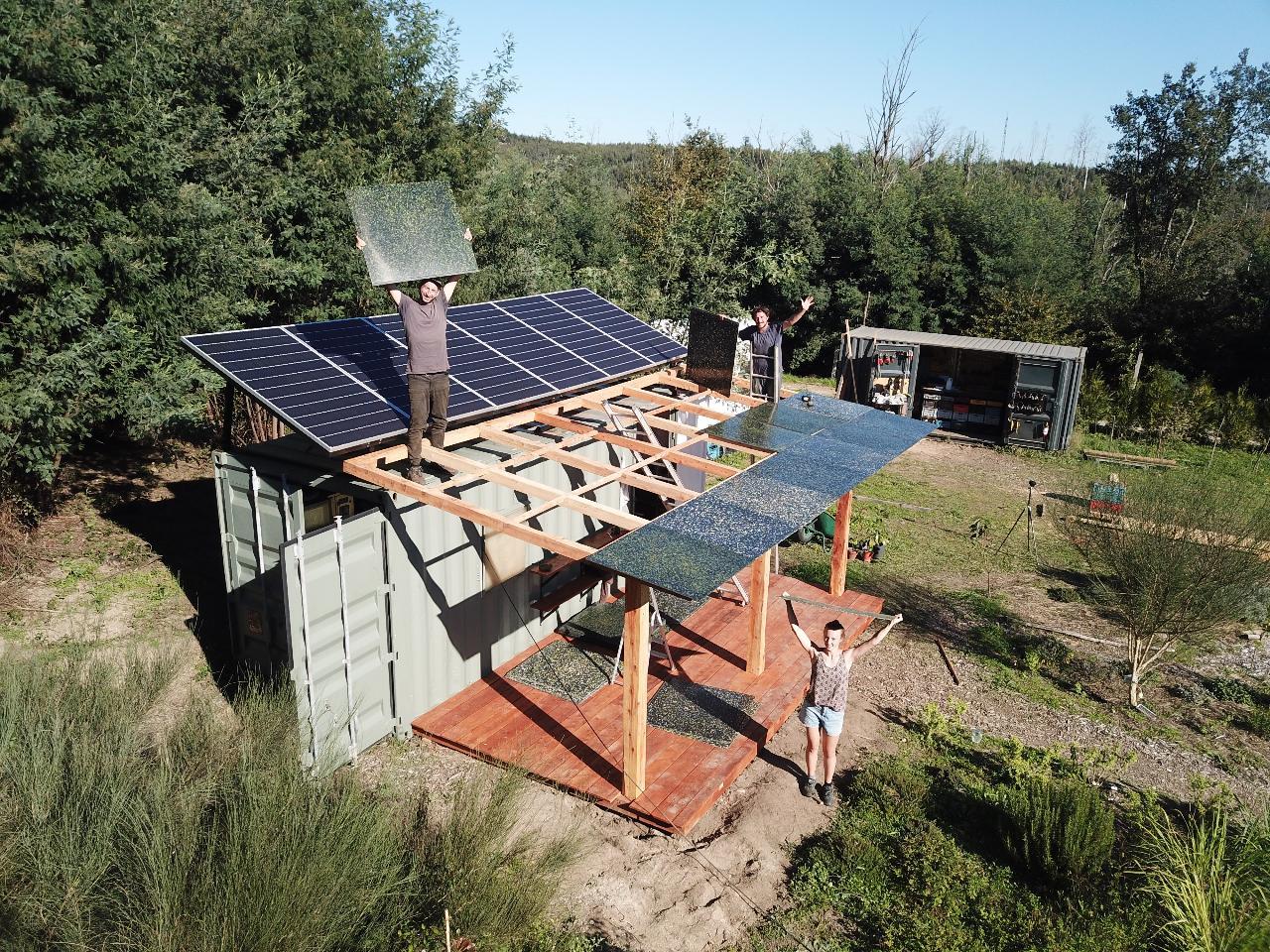
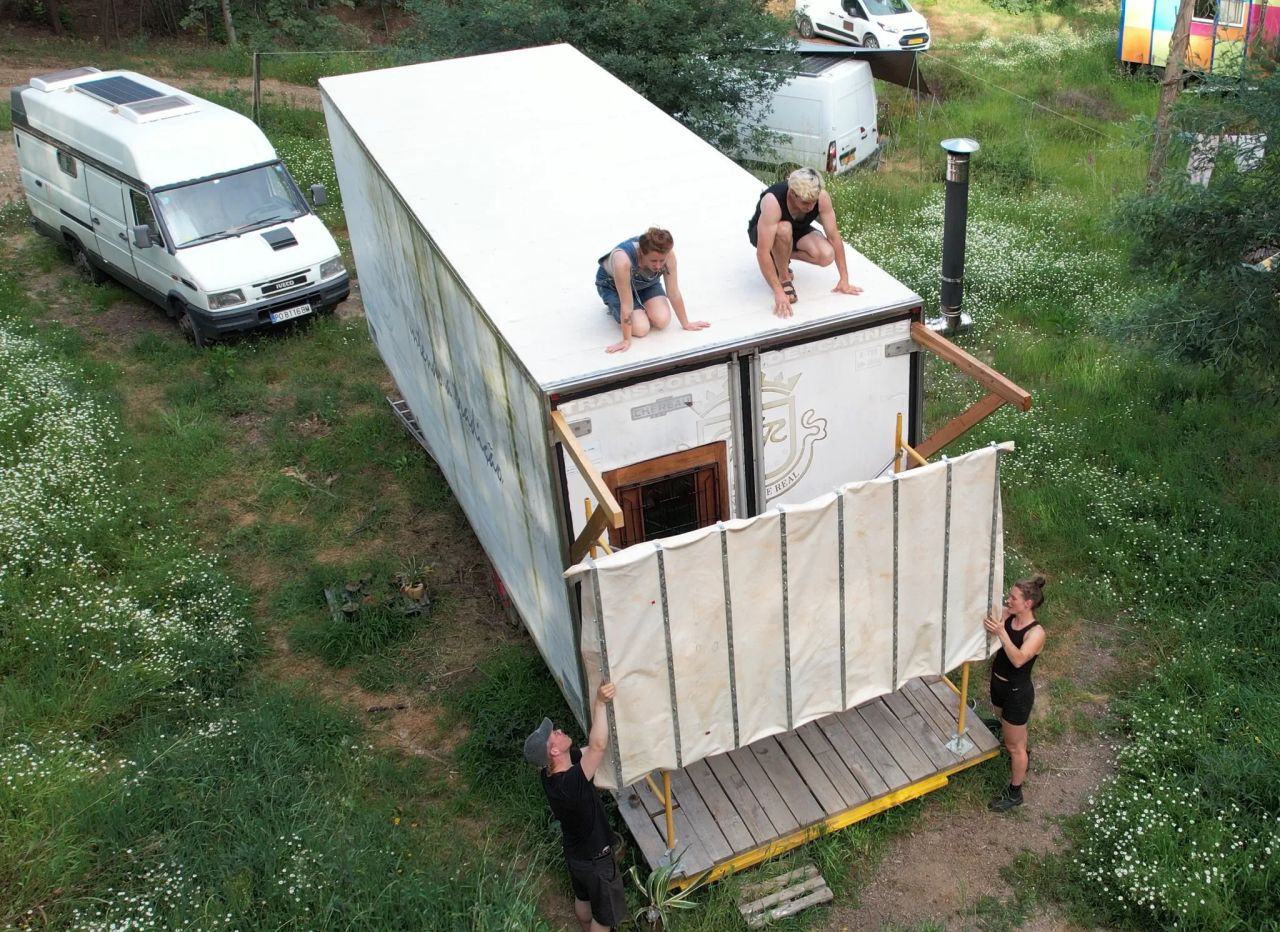
The door and veranda were very exposed to the weather. Water damage and direct sunlight heating up the trailer were the problems we wanted to tackle, so we decided to build a canopy that creates a cozy, little shaded space infront of the trailer.
The canopy was designed around several constraints. The first was the trailer itself: a fiberglass box that is far from perfectly straight, and we wanted to avoid drilling into the fiberglass, as additional holes could create future leaks.
The second key constraint was using reclaimed materials. At the same time, this project was intended as a further development of the a tarp concept we had previously explored.
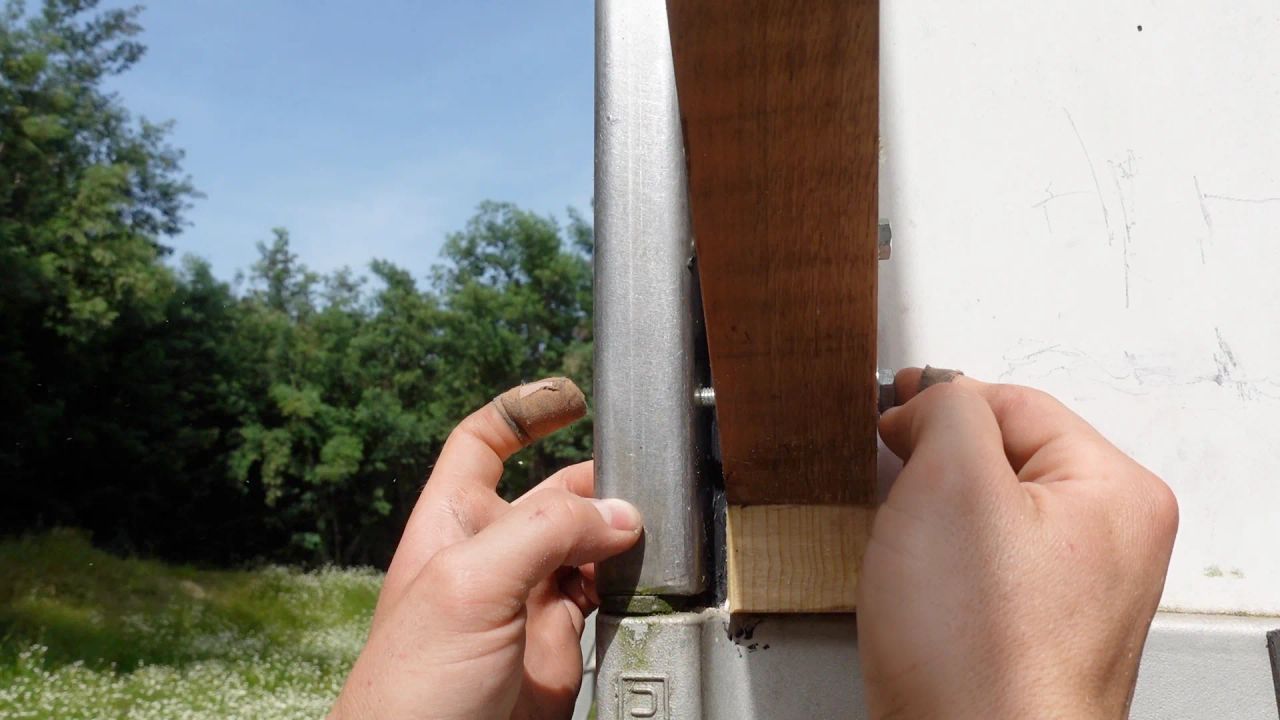
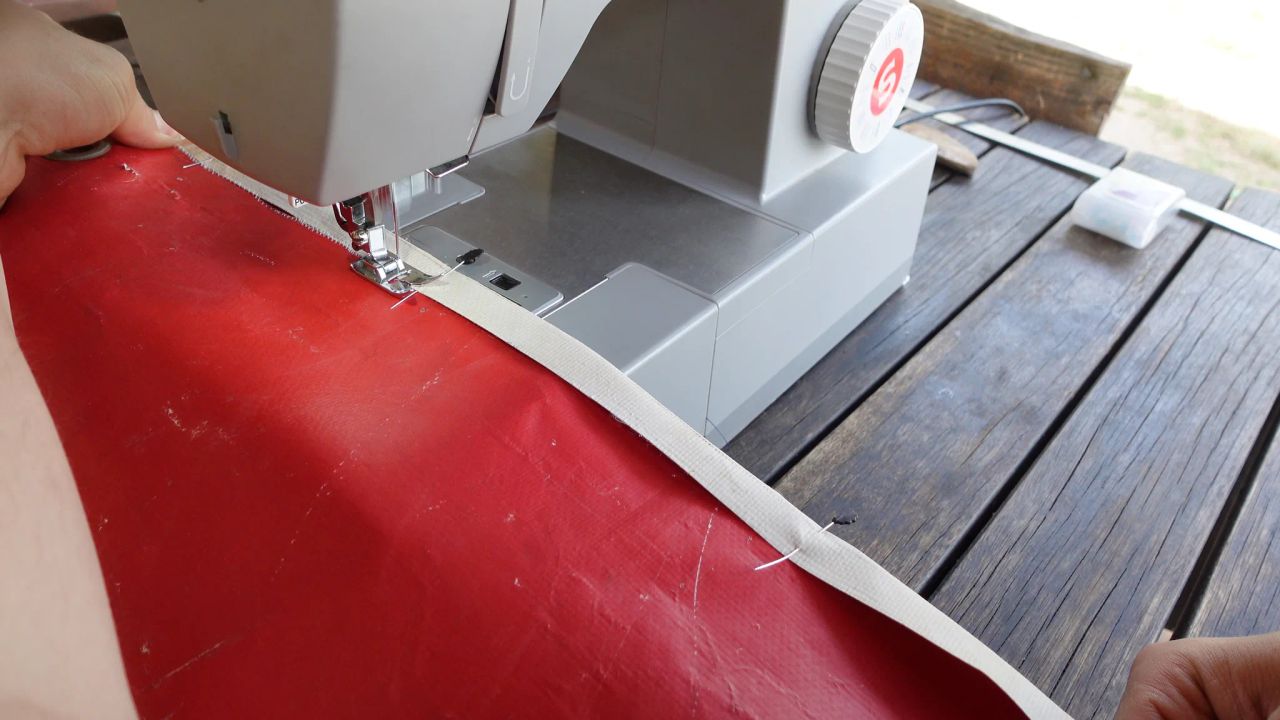
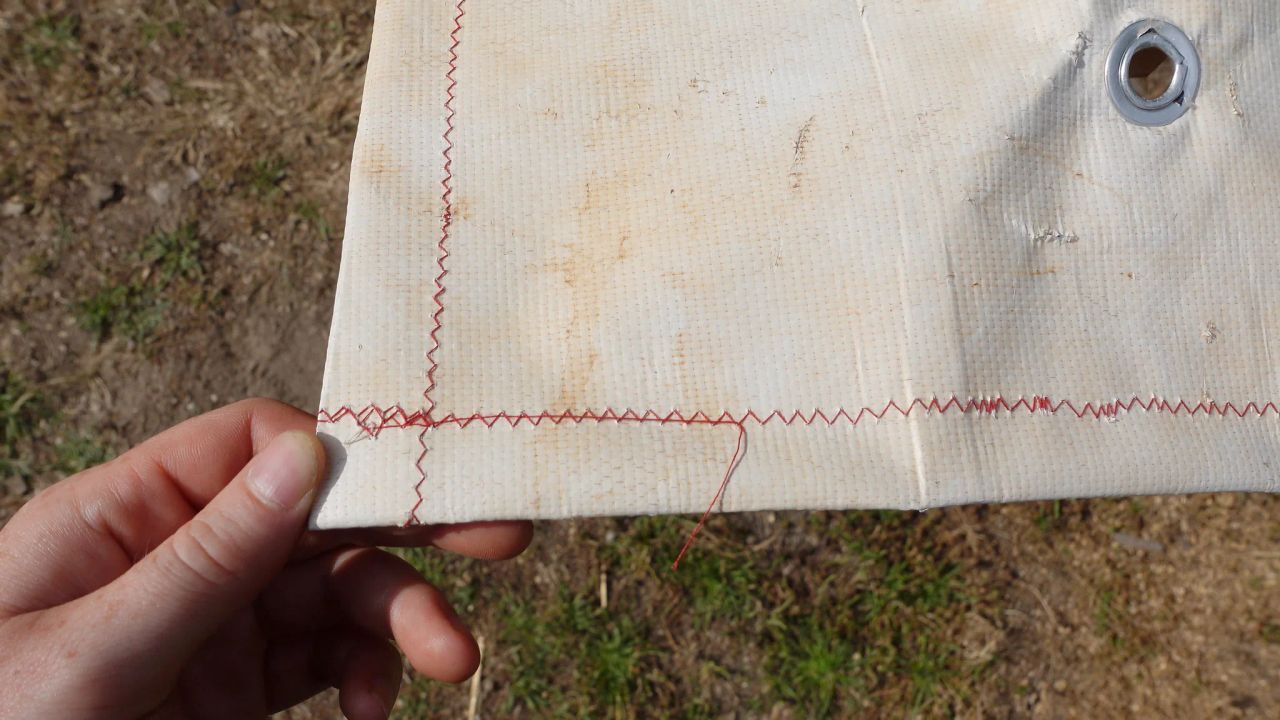
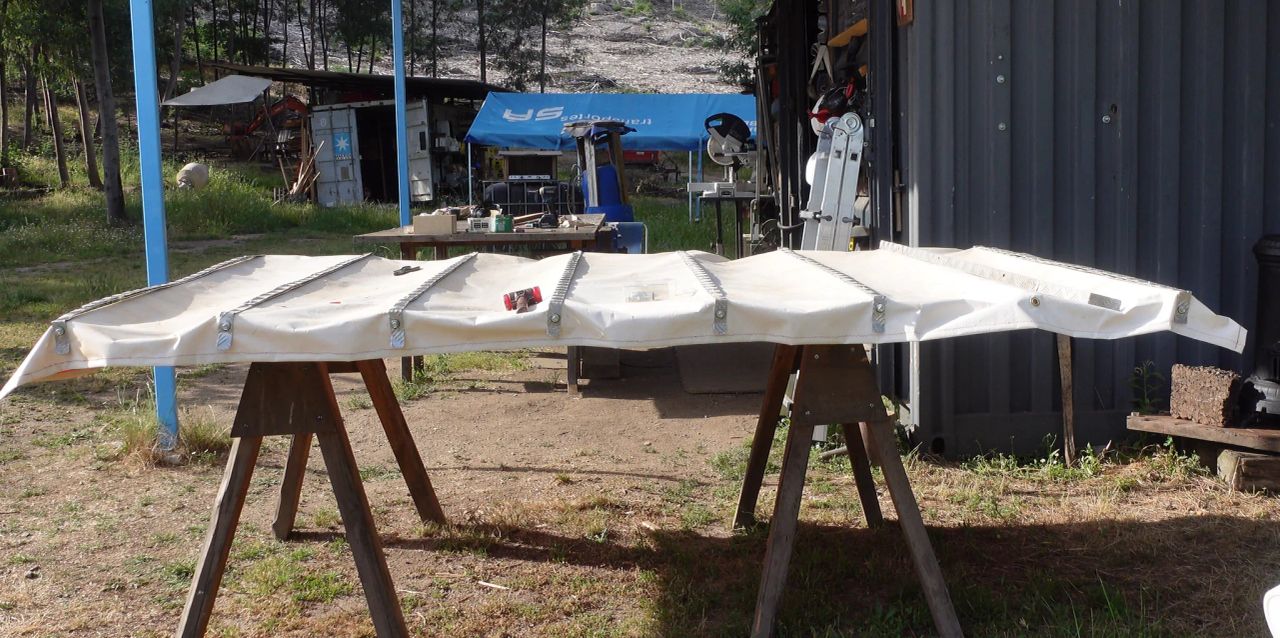
Further, the canopy would be exposed year-round to wind, rain, and sun, avoidig tarp movement and guiding the water down the canopy was essential. Since less movement means less friction, less wear, and a longer-lasting tarp structure. So early on, we came up with the idea of clamping the tarp down with large metal strips. by this the tarp is draped over the rafter, forming gutters that help direct water away from the trailer. Along the top edge, we added grommets to protect it from tearing where it is fastened to the front of the rafters.
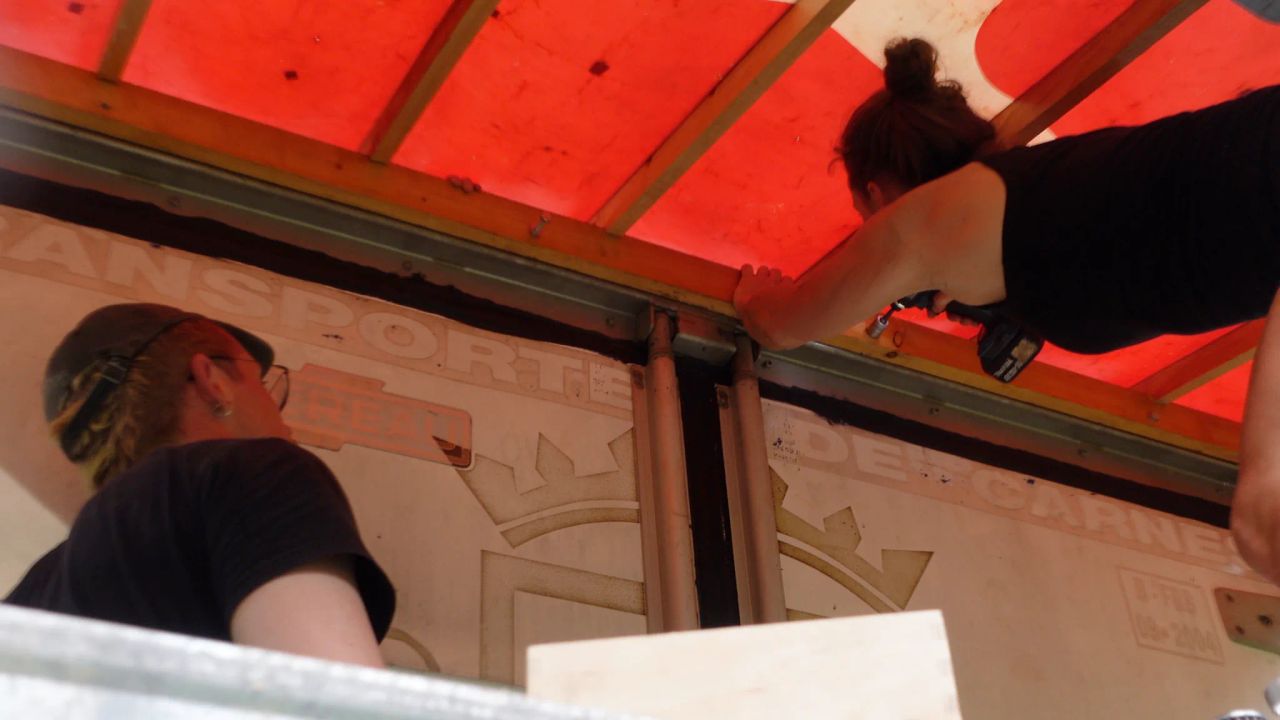
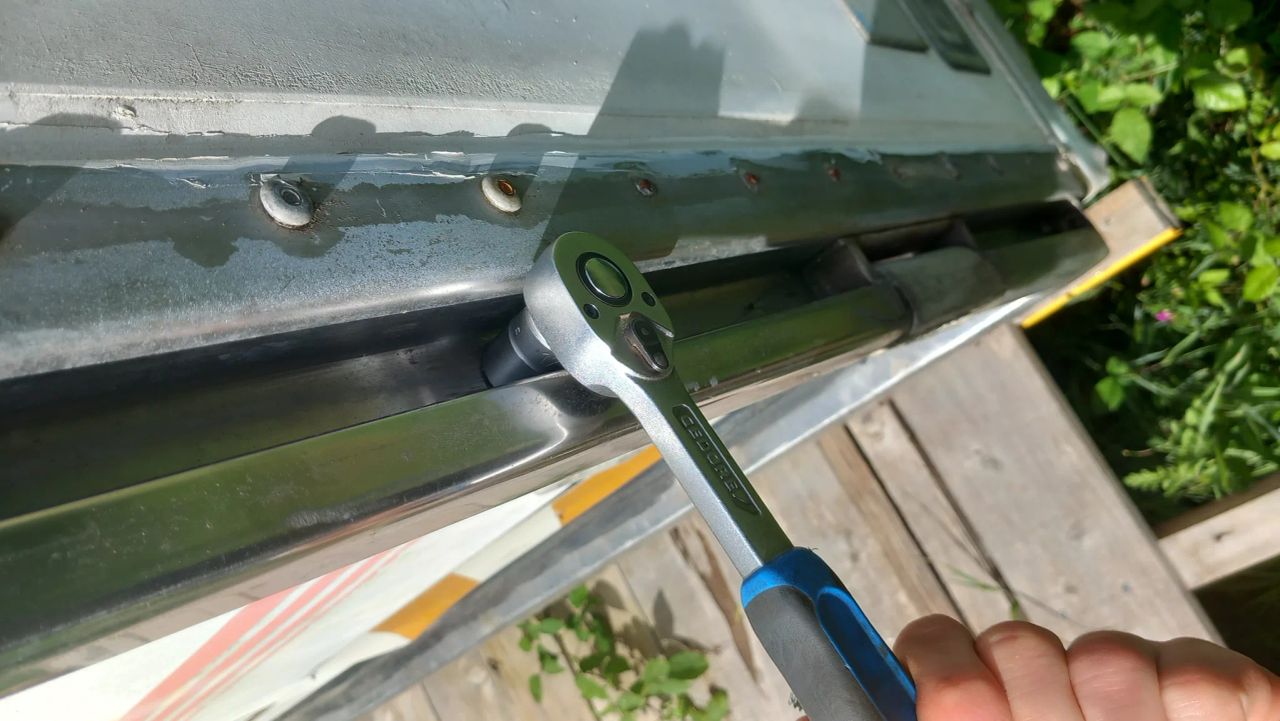
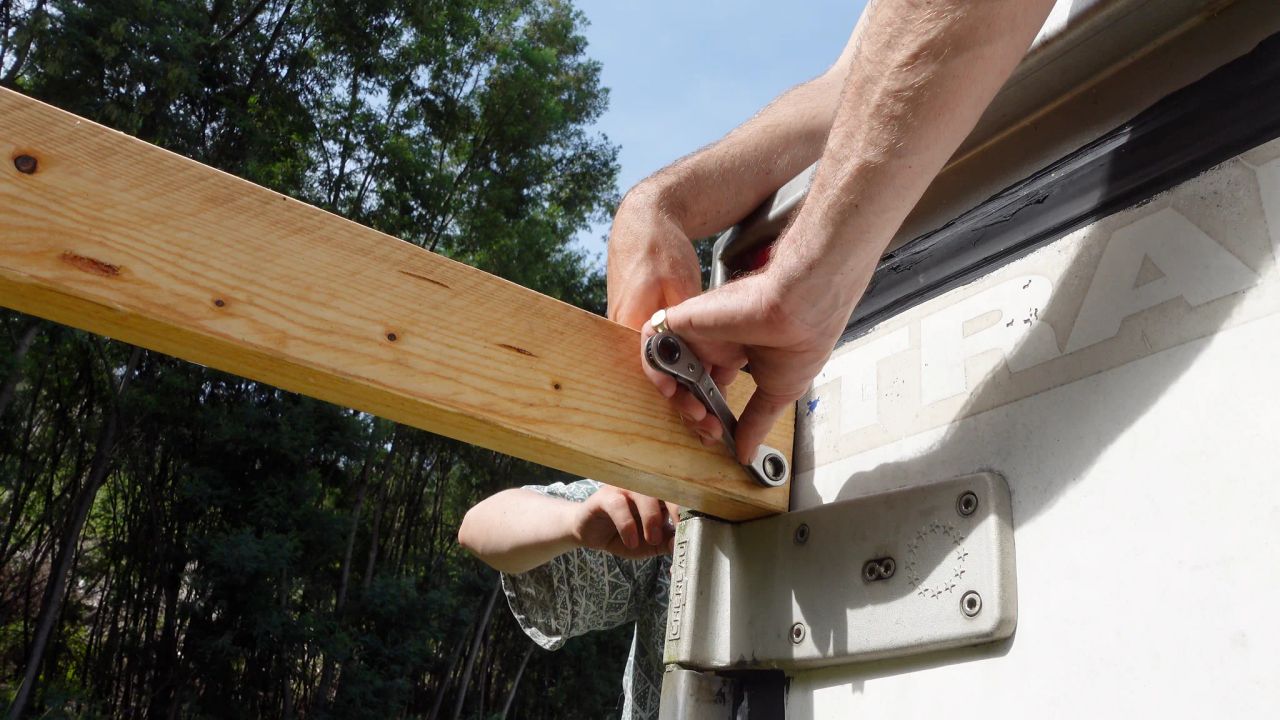
And last the canopy should feel like a integrated part of the trailer. So we kept the colors of the tarp light (like the trailer) to reduce heat absorption and followed the existing shapes of the trailer wherever possible. The bracing of the canopy rests on the edges of the previous aluminium door hinges and is bolted directly to the existing stainless-steel frame, making use of the structure, which was laready in place. The bracing itself was made from 7cm by 5cm beams and guides the force from weight and the wind of the tarp in a 45° beam back to the trailer.
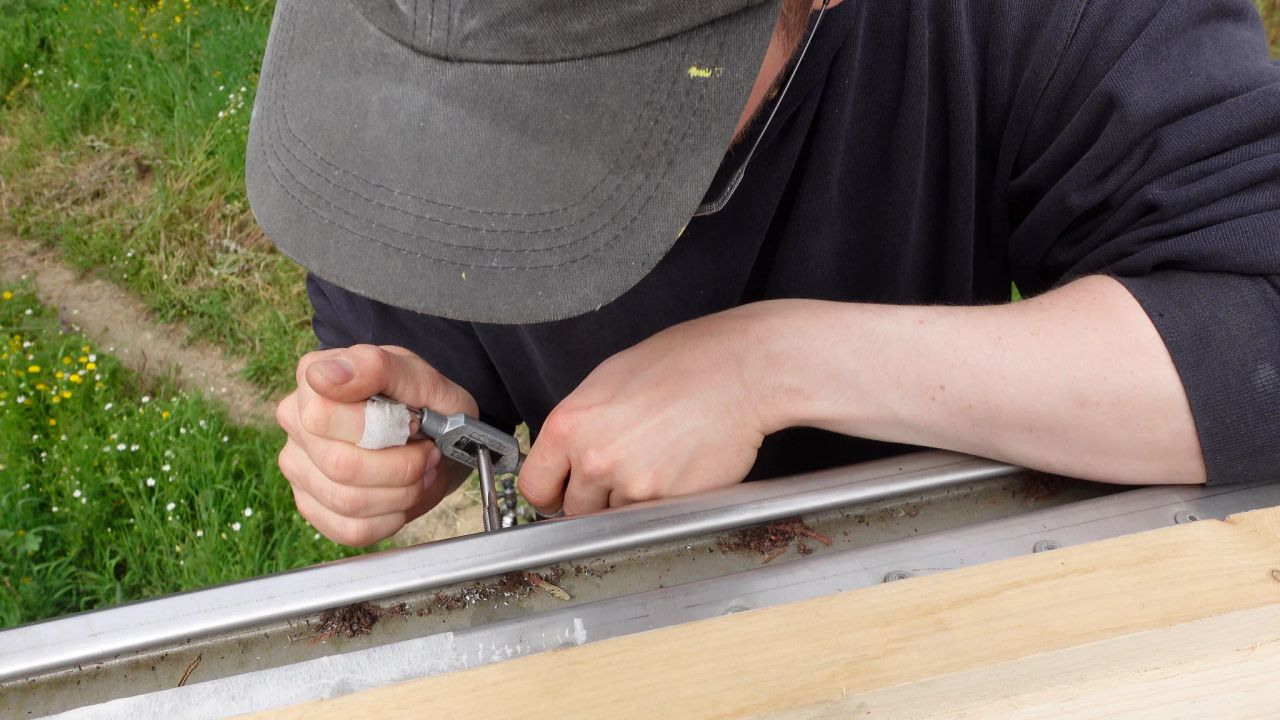
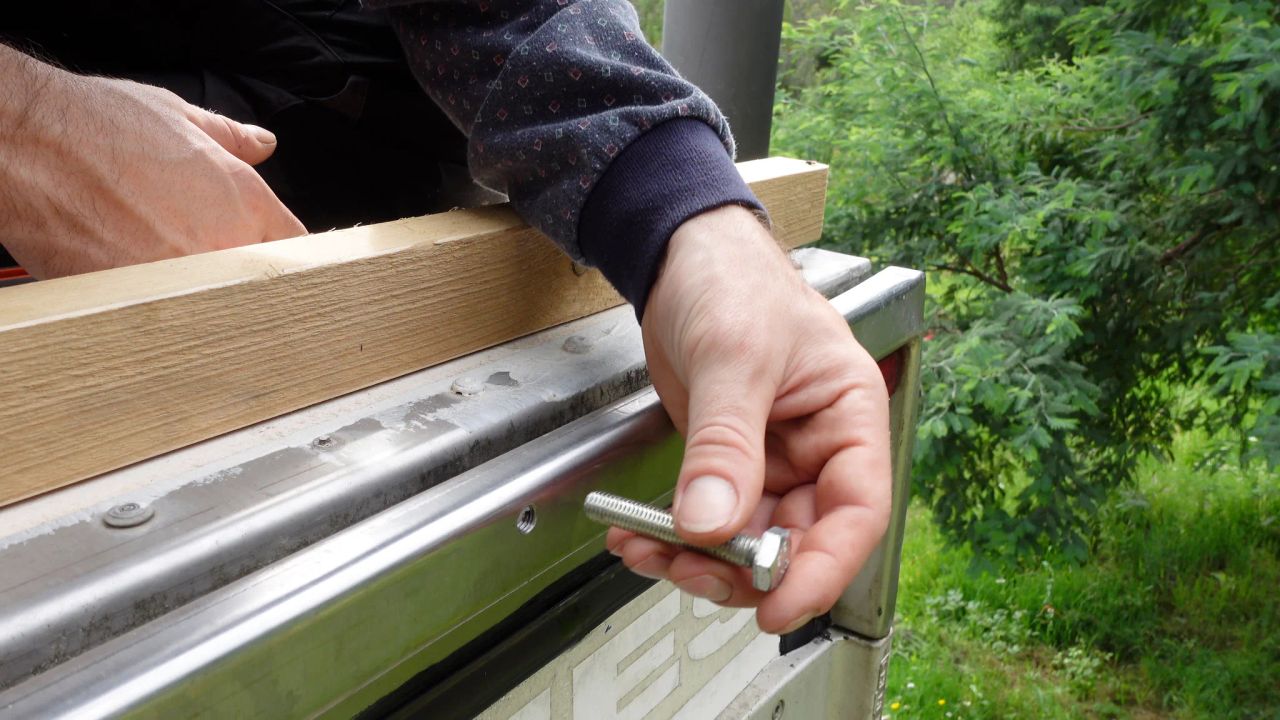
To connect the wood to the trailer, we drilled holes through the sides and the front and added M8 × 80 mm bolts secured with nuts that fit into the groove of the frame. The top beam of the canopy was added to the front, and since no tool could properly reach into the groove in this orientation, we tapped the holes and used M10 × 50 mm bolts.
There are a thousand ways to Rome, and without the mentioned constraints, one could have built a quite different canopy from quite different materials. The grommets stay a debatable option since the gasket screws already seal tightly against the metal strips, and the strips themselves act as giant washers.
16
Painting a Snowflake!❄️on the Top of the Fridgebox
Edited 3moPublished 4 months ago. Last edit 4 months ago
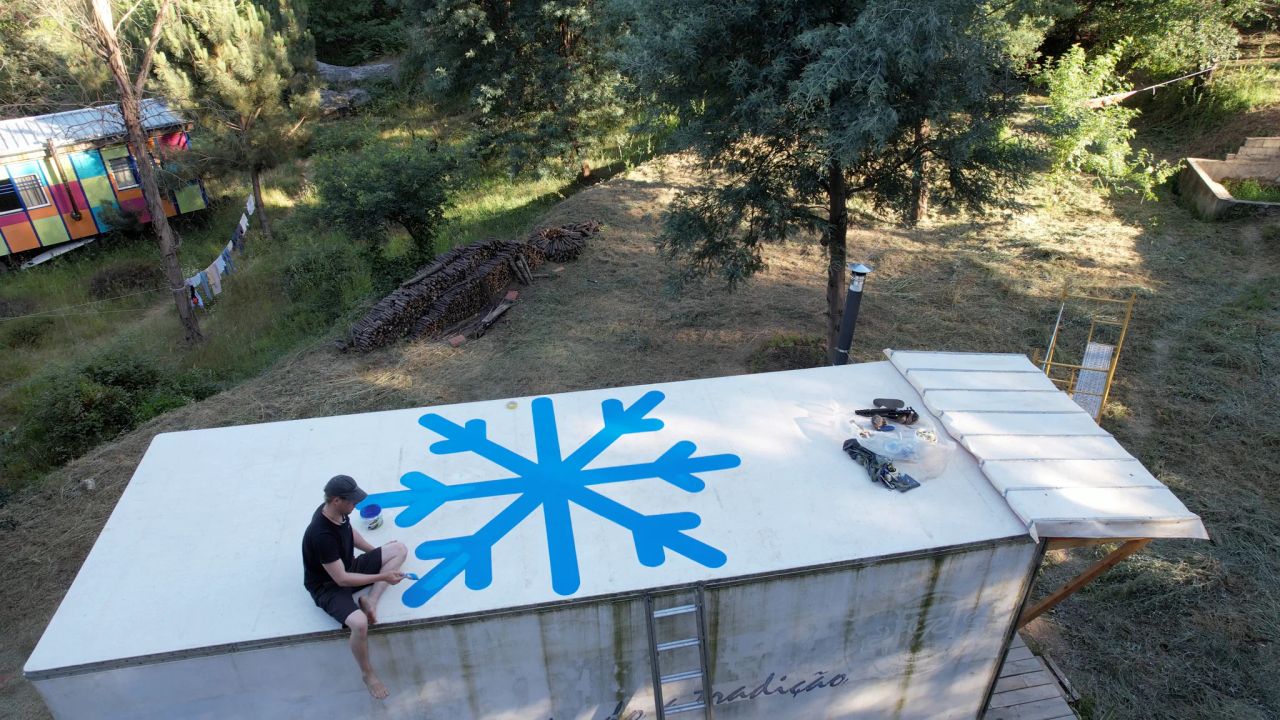
Sustainability is also about care. If we like an object, give it a name, a sign, a narrative, and know its history, we are more likely to take good care of it. As a result, it will last longer and continue to be useful for as long as we maintain and use it.
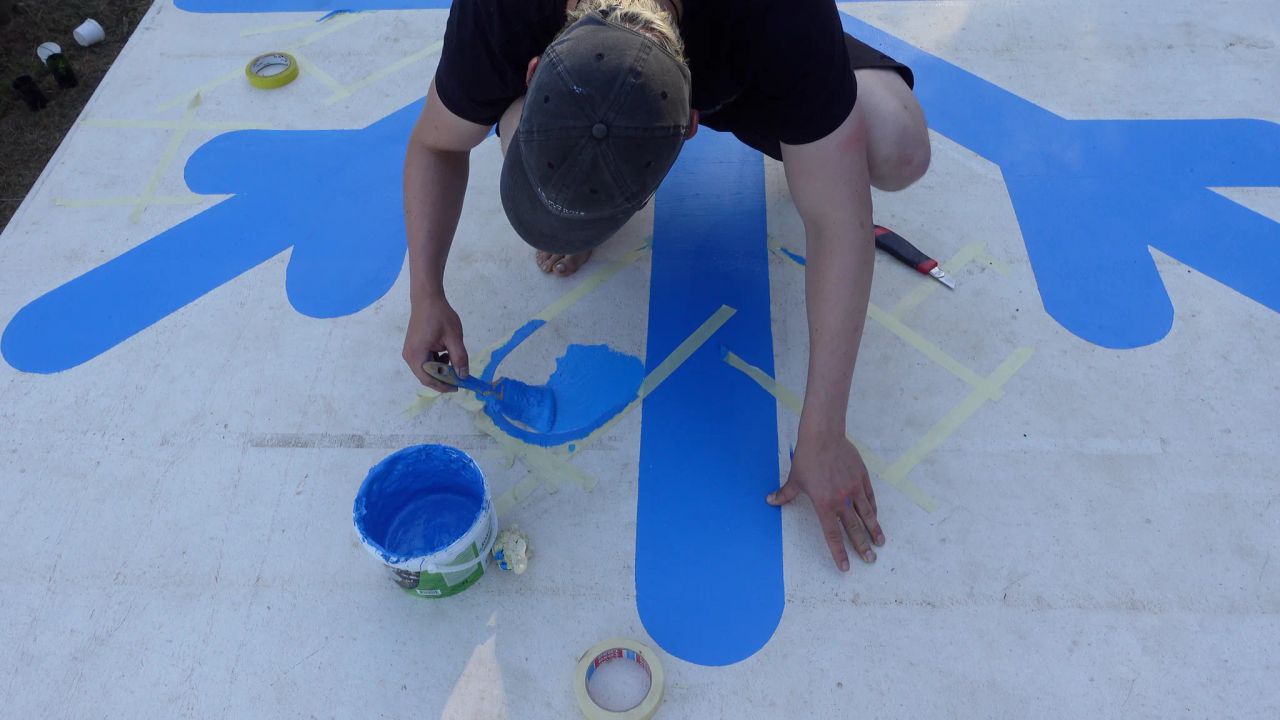
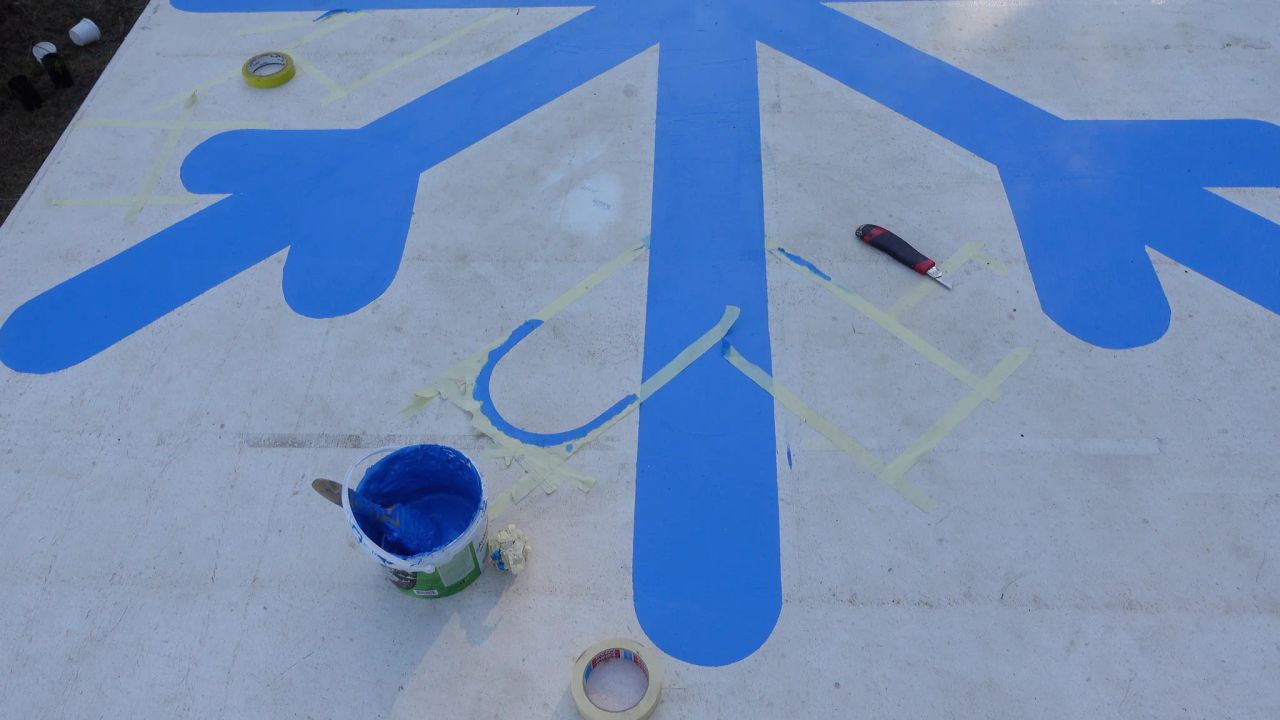
We wanted a painting on the fridge box that communicates to everyone who sees it: "I am not a regular tiny-house trailer. I used to be a fridge box. I show what is possible when materials are given a second life, I have a history. And you could build a similliar one wherever you find a fridge box like me."
Now, the painting can be seen by anyone passing by, but it also helps viewers on YouTube orient themselves on the land. It will also receive more visibility in the intro shots.
I really like the snowflake and how it brings the project full circle. It especially fits nicely into the shape of the trailer at the top.
The color used is a rubber paint similar to the one that was used to paint the roof white.
17
Final conclusions
Published 2moPublished 2 months ago
It is been a long journey with many people involved but we finally had finished this project.
It took a few years to finalize this research were we had learn a few things. The process had involved not just the building of this trailer but testing it and improving it. Overall we can say that:
- The trailer is good isolated and matches our Portuguese interior climate all year round with a woodfire heating in winter, and placing extra thick courtins in summer in front of the windows.
- It was great to strip out everything from the chassis and have a very simple metal frame to avoid headaches of old breaks and suspensions that we won´t use
- The placement of the windows is also great, the top window in the front works specially good in summer to avoid the heat. Placing the windows in one side was also a great choice giving the space more of a house feeling than a van place. Side note, it would still be nice to try to face the windows to the south in winter and to the north in summer to adapt better to the seasons.
- The most challenging things to work were the windows and door. We took a bit of an experimental approach for building them in and we had used old wooden windows. Making our own frames and embeding in the isolation. Windows stayed quite exposed and were not waterproof for a while. Same for the door, we choose a old wooden door that stayed very exposed for a while making it suffer and not being water proof. This 2 issues we solved by making a canopy over the door and some roofs over the windows.
- Another big challenge was the state of the trailer when we got it, outside layer of fiberglass was damaged in the roof and inside was acumulating dirt and humidity, leading us to a lot of work and challenges to rip off the rotten parts
Afterall it seems like a great base for a trailer house if keeping in mind the challenges above. It can save you time to build and most of construction materials, since it is already a solid isolated box in wheels