

Should we cut or debark the mimosa?
Started 2y. Edited 11mo.Started over 2 years ago. Last edit 11 months ago.



Landscape
In Progress
Landscape
More Information


%20--%3e%3csvg%20version='1.1'%20id='Layer_1'%20xmlns='http://www.w3.org/2000/svg'%20xmlns:xlink='http://www.w3.org/1999/xlink'%20x='0px'%20y='0px'%20viewBox='0%200%2064%2063'%20style='enable-background:new%200%200%2064%2063;'%20xml:space='preserve'%3e%3cstyle%20type='text/css'%3e%20.st0{fill:%23231F20;}%20%3c/style%3e%3cdesc%3eCreated%20with%20Sketch.%3c/desc%3e%3cg%20id='Page-1'%3e%3cg%20id='OA-Logo-Black-Background'%3e%3cpath%20id='Shape'%20class='st0'%20d='M14.1,30.1c-1.5-0.8-8.6-3.8-14.1-7.8c1.8-3.4,3.1-5.6,5-9.1c2.7,1.1,1.9,0.5,4.6,1.7%20c0.8,0.4,10.1,4.5,13.8,6.2c2.4,1.1,4.7,2.2,7,3.3L43,30.5l8.1,3.9c4,2,7.2,3.5,11.3,5.5c0.5,0.3-3.7,9.4-3.7,9.4%20c-1.7-0.6-3.9-1.8-5.5-2.5c-4.7-2.1-9-3.9-13.7-6c-4-1.8-6.7-2.9-10.8-4.5C25,34.9,17.1,31.6,14.1,30.1z'/%3e%3cpath%20id='Shape_1_'%20class='st0'%20d='M12.1,54.9c-0.8,0.6-1.6,1.2-2.5,1.6c-0.4-0.5-0.9-1-1.3-1.5c-0.3-1.2-2.3-4.9-2.7-6.2%20c-0.1-0.4-0.7-2.2-0.8-2.6c0,0,5-3.4,8.2-5.9c3.2-2.6,6.2-5,9.3-7.5c1.4-1.1,3.9-2.5,5.3-3.5c2.5-1.7,13-9.1,15.6-10.5%20c5.4-3.3,11.1-6.3,16.8-9c1.7,3.5,1.8,3,3.8,6.9c0,0-17.8,13.5-22.7,17.1c-3.8,2.8-7.5,5.7-11.3,8.5c-1.7,1.3-3.5,2.4-5.2,3.7'/%3e%3cpath%20id='Shape_2_'%20class='st0'%20d='M20.8,2.9l-0.2-0.8C25,0,31.2-0.3,31.4,0.2c0.4,1.1,0.9,2.2,1.2,3.4c1.4,4.4,2.7,8.7,4,13.1%20c0.4,1.4,2.8,10,2.9,10.5c0.5,2.8,1.2,5.6,1.6,8.4c0.8,4.7,1.4,8.6,2.3,13.3c0.6,3.1,1.3,6.3,2.3,11.3c0,0-5.8,1.4-7.5,1.8%20c-0.8,0.2-1.5,0.4-2.4,0.6c-0.3-1.1-0.2-1.2-0.5-2.1c-0.9-3.7-1.8-7.3-2.6-11c-1.5-6.4-3-12.9-4.4-19.3%20c-1.2-5.4-2.6-10.7-4.4-15.9c-1-3.1-1.8-6.3-2.7-9.5C21.1,3.8,21,3.8,20.8,2.9z'/%3e%3c/g%3e%3c/g%3e%3c/svg%3e)


1
What is the challenge with Mimosa?
Published 2y. Edited 1y.Published over 2 years ago. Last edit almost 2 years ago.

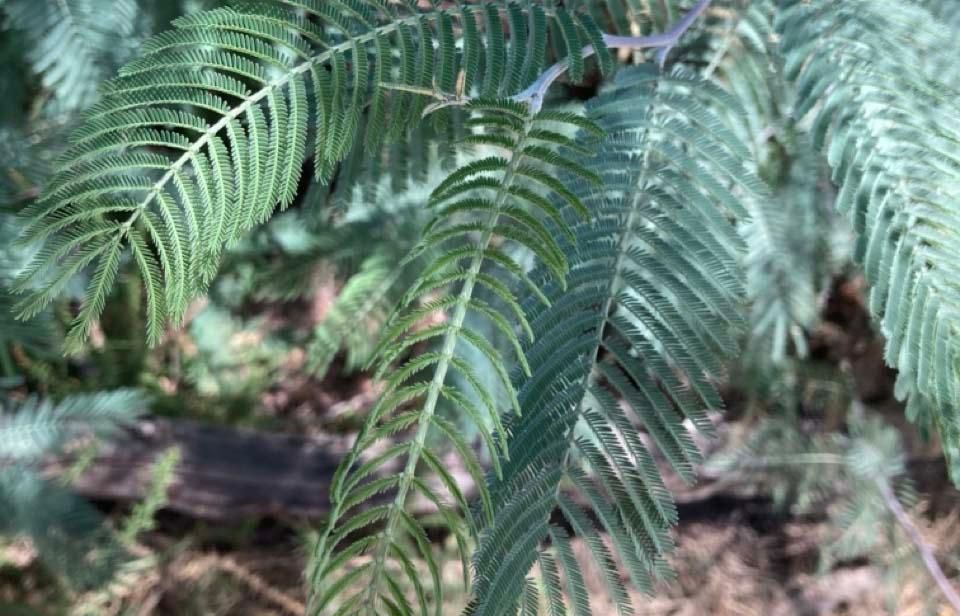
A big part of our land is covered by mimosas, a pioneer species that now has become one of the main fire hazards here. The mimosas, Acacia dealbata, are native to Australia. They are well adapted to fire, being one of the first species to colonise an area recently burned, which is what happened on our land.
Other characteristics of this species are:
🙁 Forming dense monospecies patches
🙁 Impairing the growth of native vegetation
🙁 Very flammable
🙁 Invasive
🙂 Good nitrogen fixers
🙂 Fast growing (good for wood harvesting)
🙂 Create shade (which is important for Basekamp life in the summer)
Intervention is necessary, both for fire safety and ecosystem recovery, but we still don’t know what is the best method. In this research module we will be testing debarking and cutting a half meter above the ground.
2
Introduction: cutting half a meter above the ground
Published 2y. Edited 1y.Published over 2 years ago. Last edit almost 2 years ago.
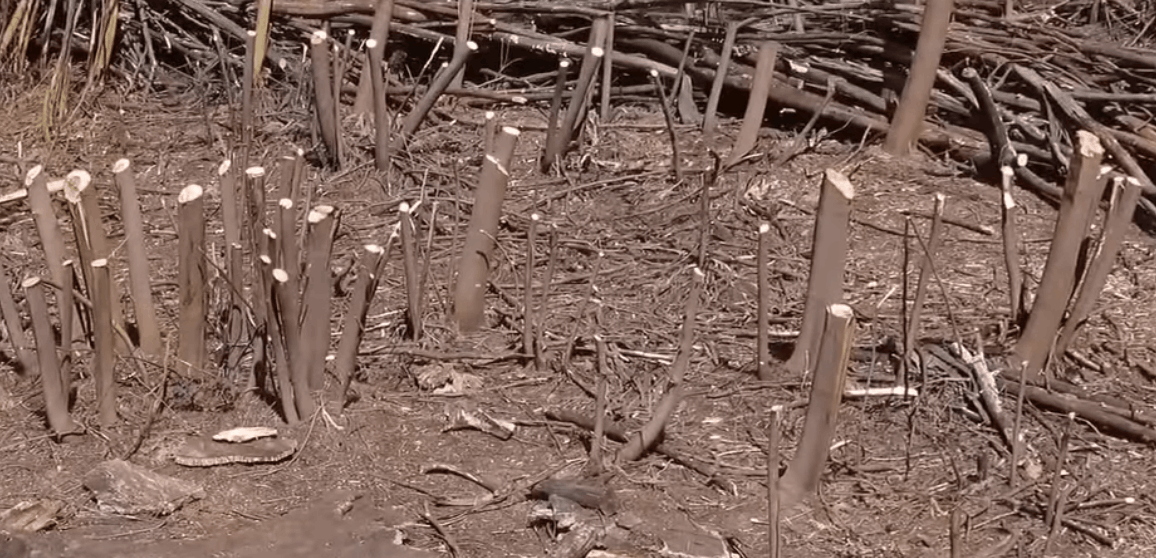
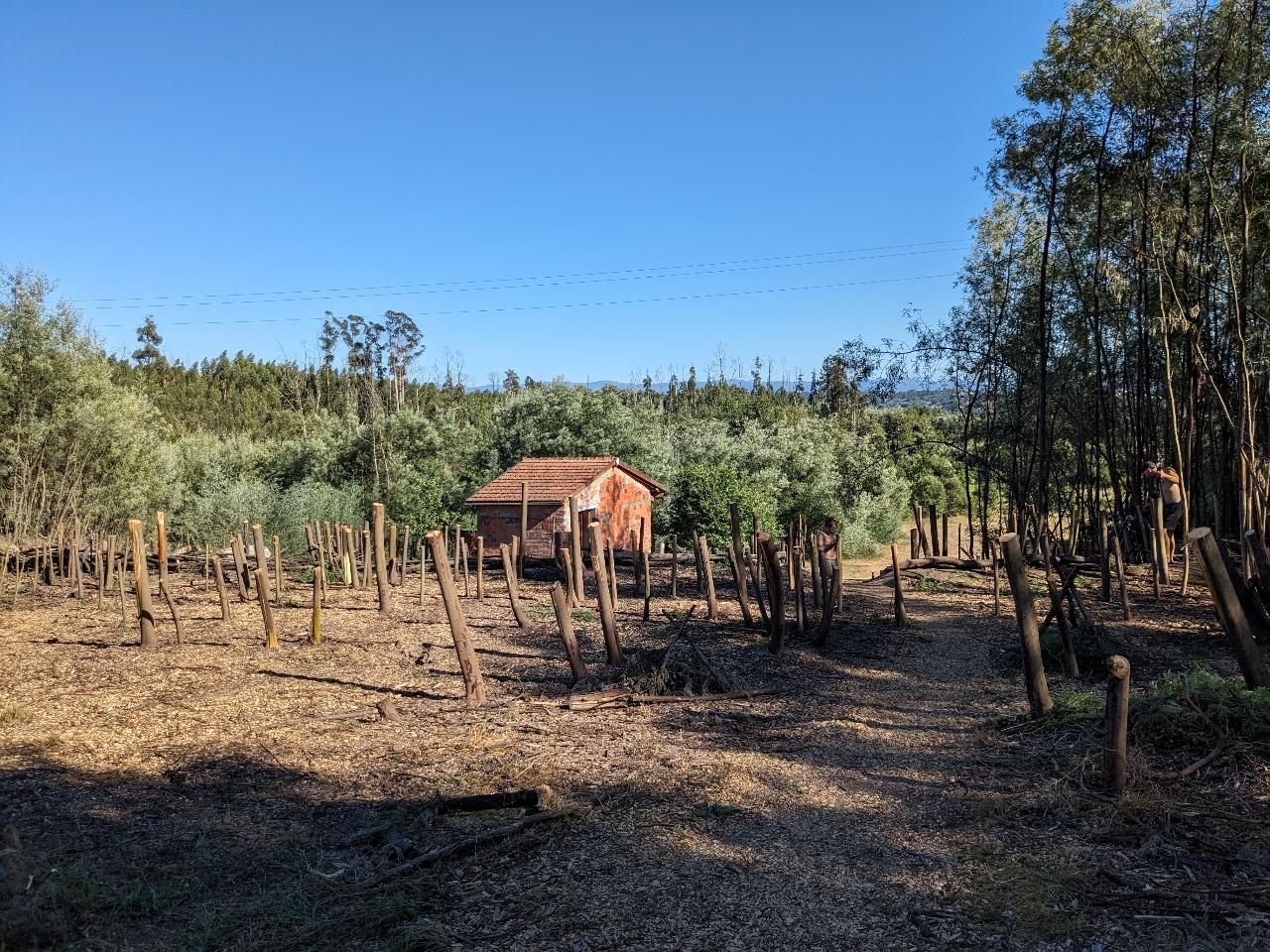
Using electric tools, we cut the mimosas, and we did it at about 50 cm to make it easier to remove the sproutings. We left the widest mimosas to provide some shade. Cutting was an easy and quick process, but there was a lot of organic matter to process. We separated the green tops from the trunks, cutting the green matter into sections to make them easier to handle.
We used most of the green tops for wood chips and spread them around the land. The remaining tops and trunks we gave to the neighbours because we still don’t have the capacity to process such big amounts.
📑 Cutting should require more maintenance regarding the sprouts that are expected to appear. Also, the soil will be more exposed to the sun. One advantage is that we can make wood chips and have wood for the oven.
3
Introduction: debarking
Published 2y. Edited 1y.Published over 2 years ago. Last edit almost 2 years ago.

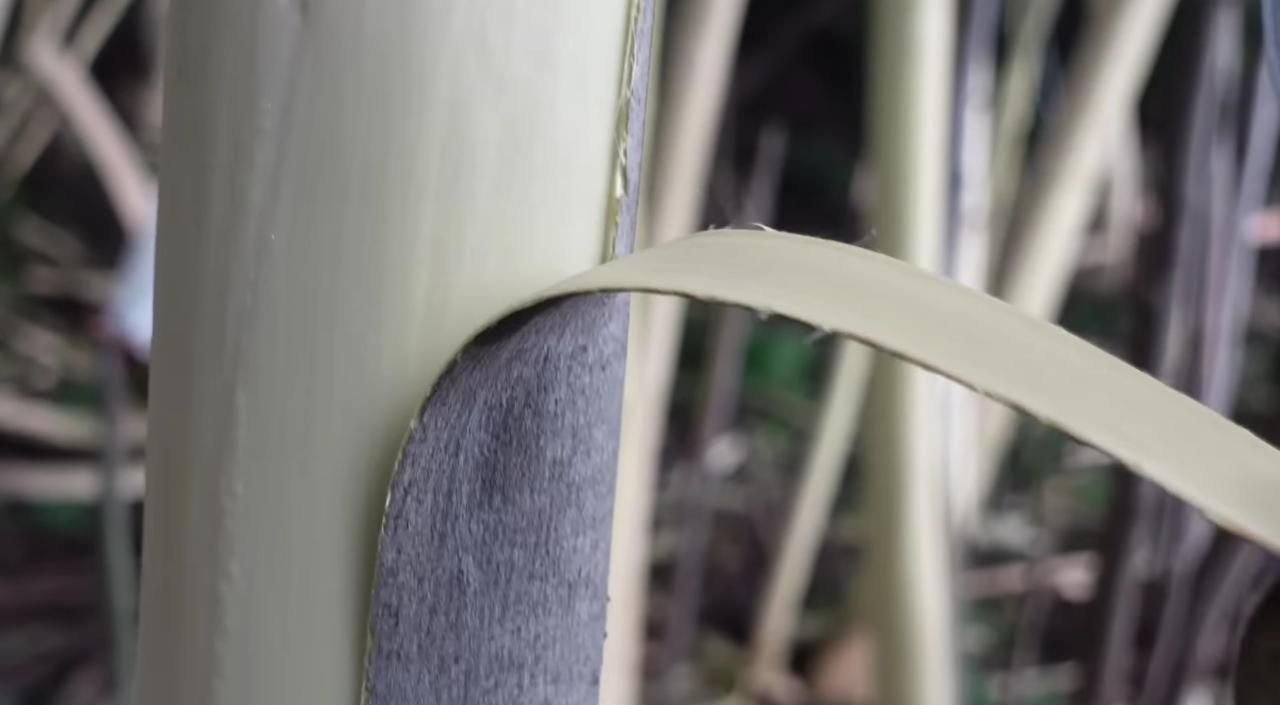
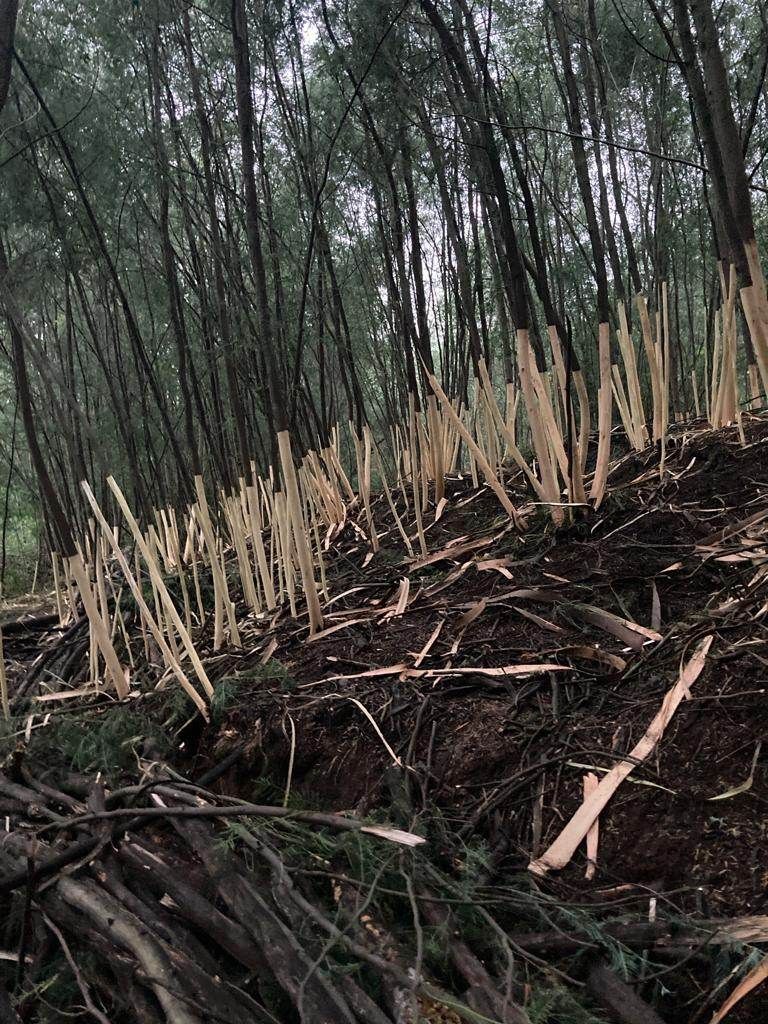
Using the tools we had available (clipper, knife, handsaw, machete) we made a cut
all around the mimosa trunk at about one and a half metres high and then peeled the bark to the ground.
There was a bit of a learning curve in the beginning, mainly for finding the right depth to make the incision on the bark. It was a slow and repetitive process, but luckily we had a team of about 5 people working together which made the progress more noticeable and the spirits high.
(Total trees = 525, Average working hours = 10 per person)
📑 Debarking should be an effective action, but it takes about two years for the tree to die and this allows us to keep shade for longer, but as they are drying they can become more fire-prone, and when dead, trees can become a risk to our infrastructure and vans.
4
Update 1: cutting half a metre above the ground
Published 2y. Edited 1y.Published over 2 years ago. Last edit almost 2 years ago.
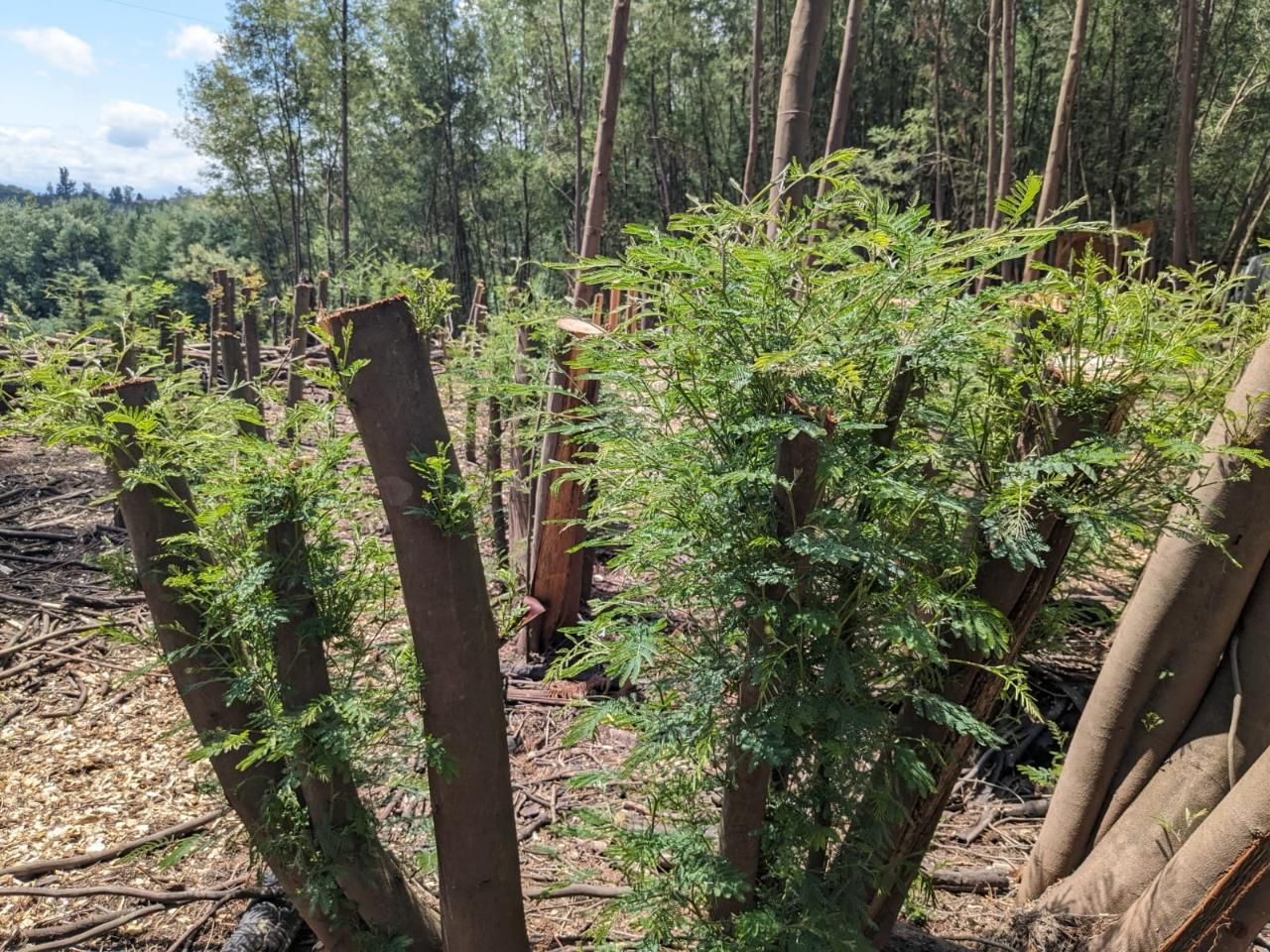
After two months we can already observe resprouting of the stumps with some even carrying small branches. This sprouting appeared earlier on the slim/younger trees.
In theory, the sprouts should be removed once a month and for a period of three years to ensure the trees die off. We decided to run an experiment to see how much effort it would take to remove the existing sprouts. With a team of ten working different amounts of time, it took a total of seven hours and fifty minutes to accomplish the task.
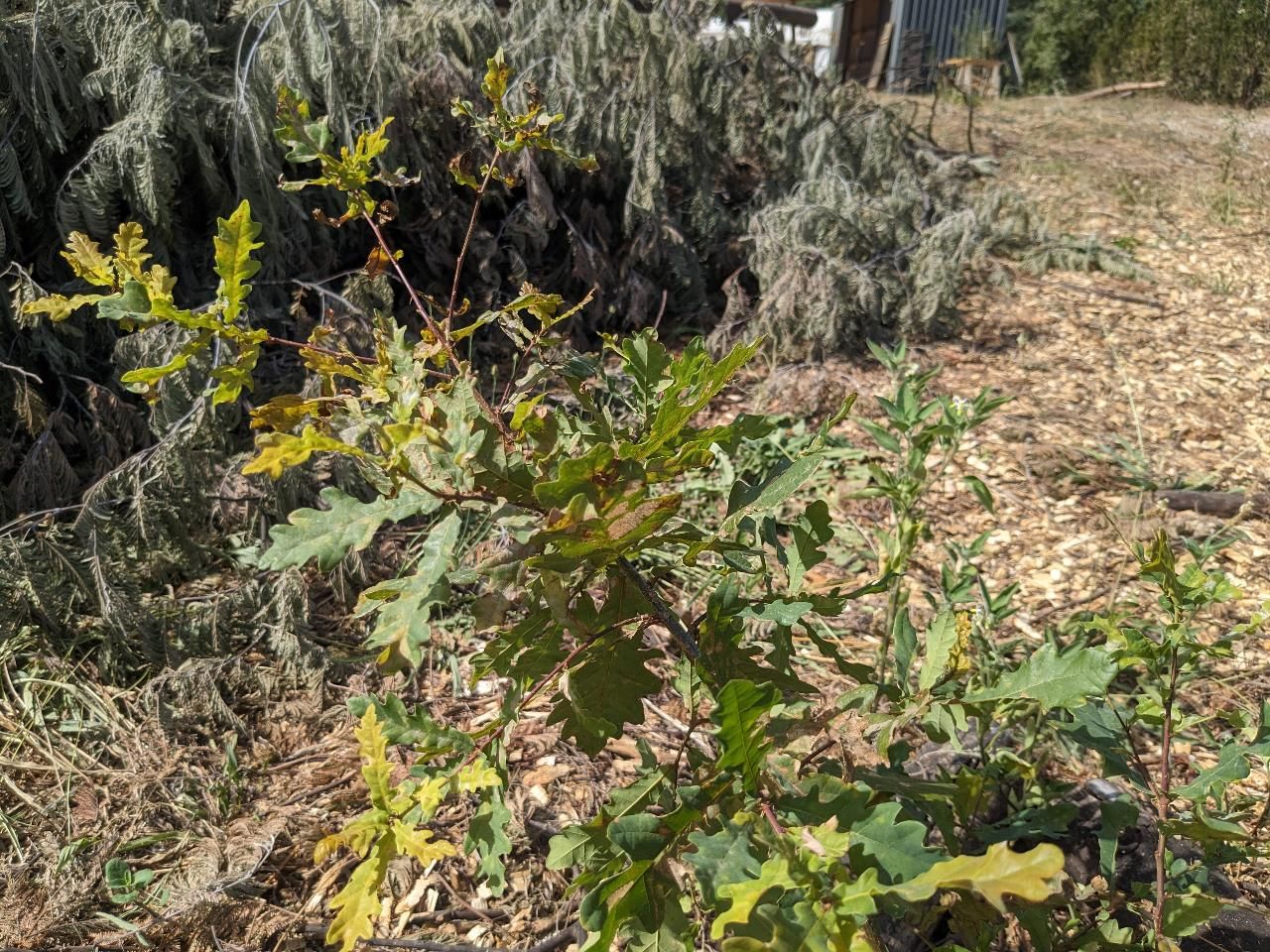
We also observed that without the mimosa shade, some of the nearby oaks seem to be sunburnt.
5
Update 1: debarking
Published 2y. Edited 1y.Published over 2 years ago. Last edit almost 2 years ago.
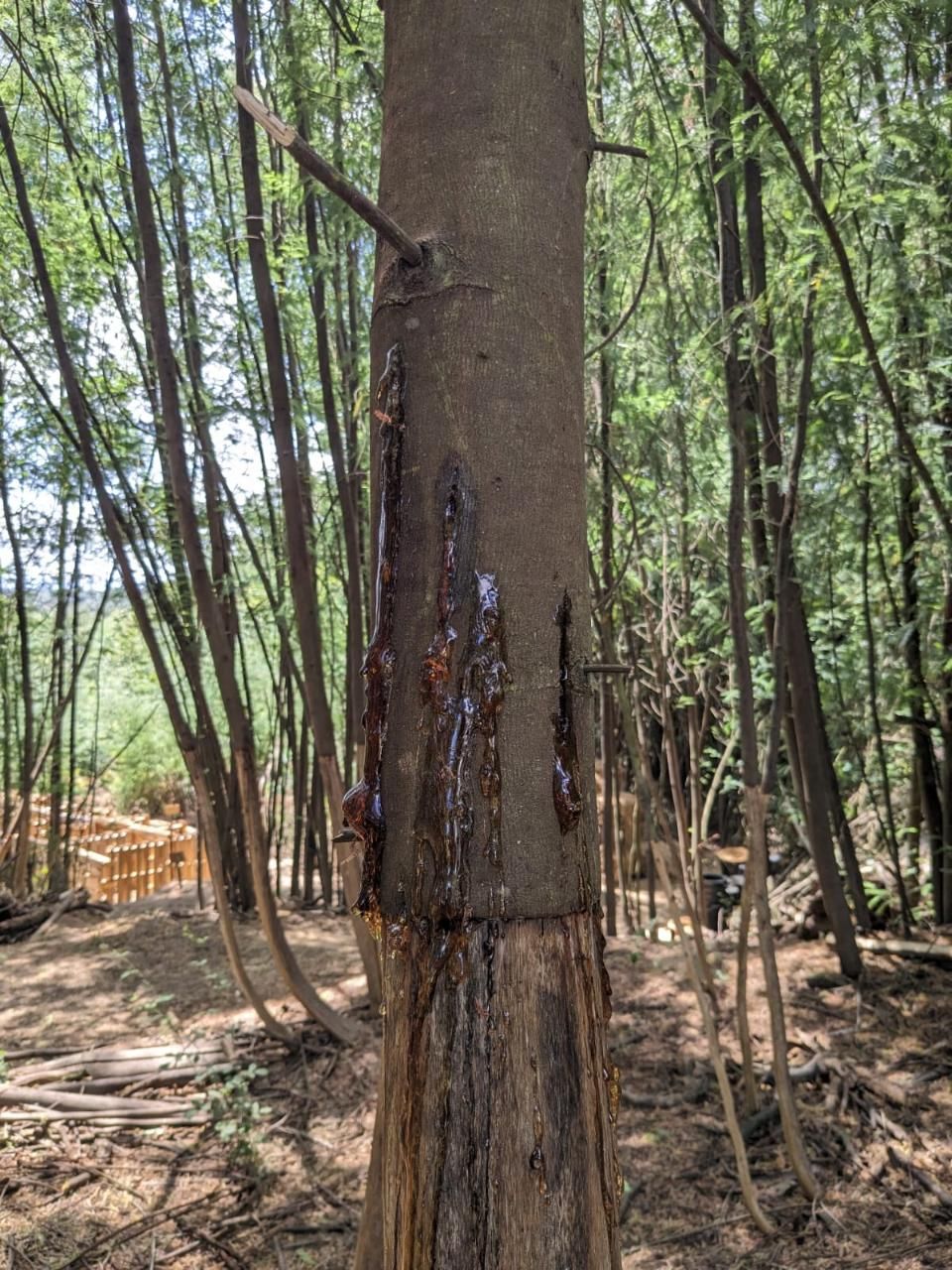
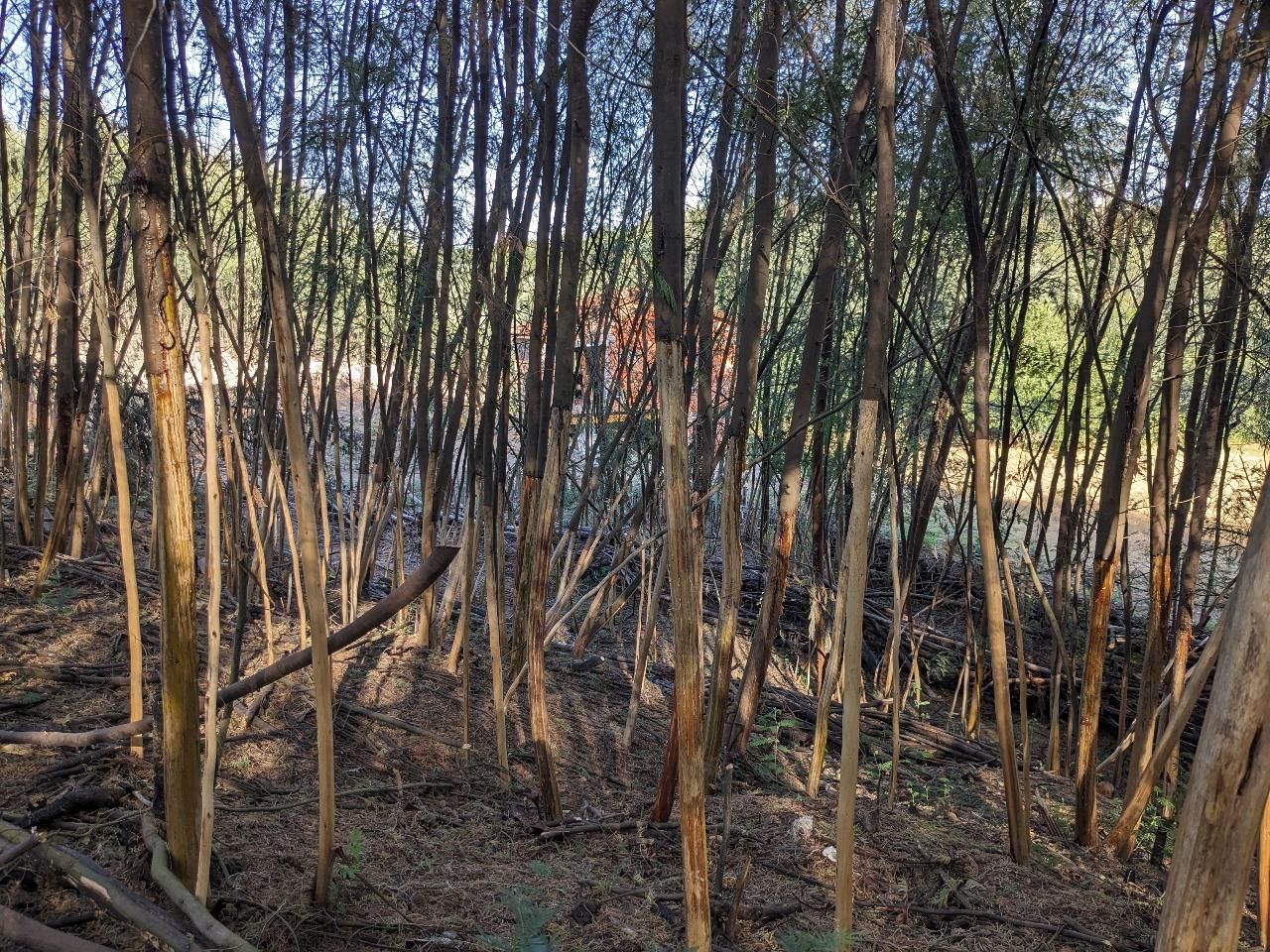
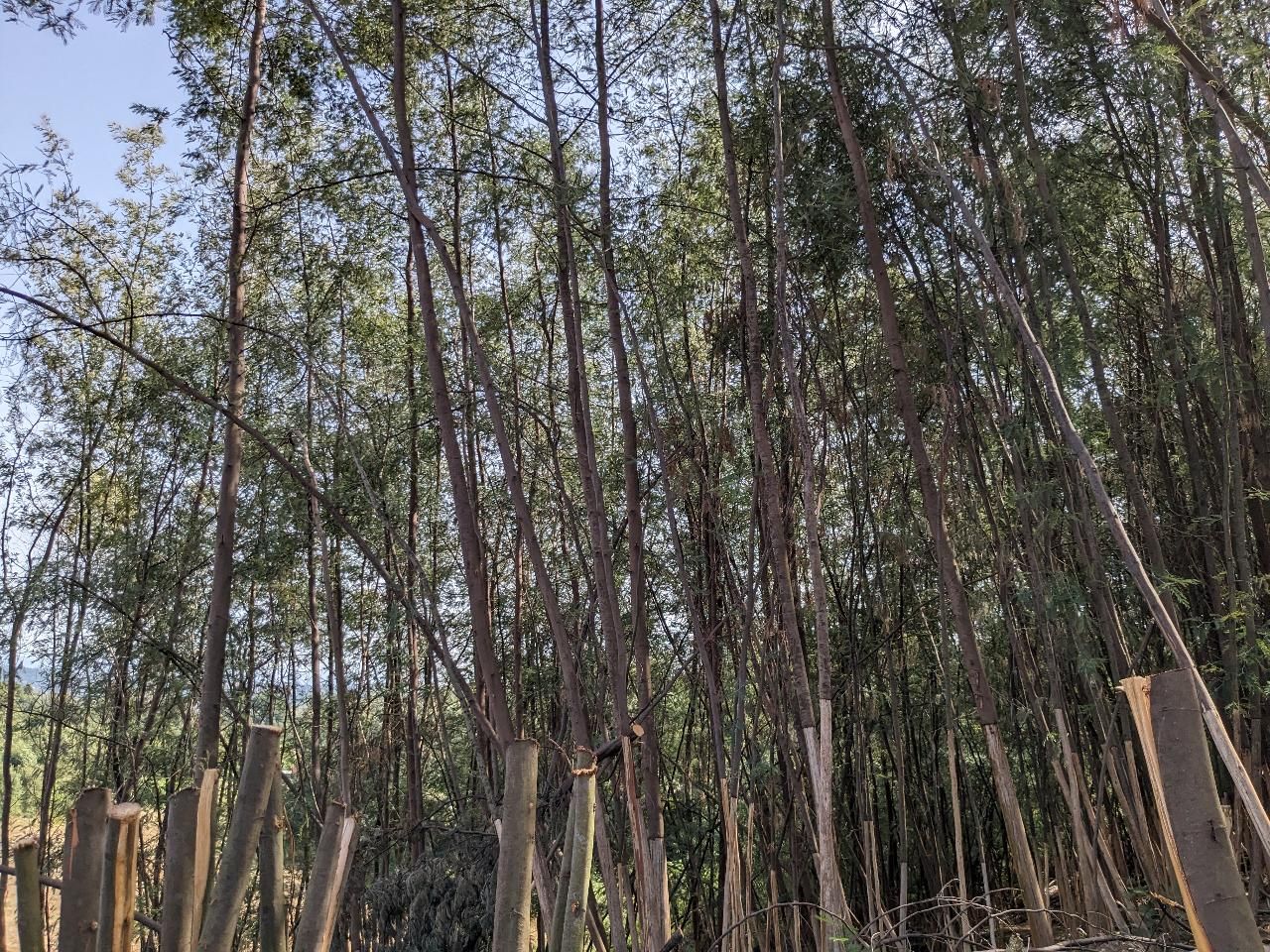
After a few days the trunks started to change colour, from a light bright yellow to a dry brownish yellow, and a lot of the mimosas started to release their sap. This process is still continuing even now two months later.
Some of the trees were also found to have new sprouts growing along their root systems.
No relevant changes happened at the canopy.
The oaks seem to continue to develop as previously.
6
Update 2: debarking
Published 2y. Edited 1y.Published over 2 years ago. Last edit almost 2 years ago.
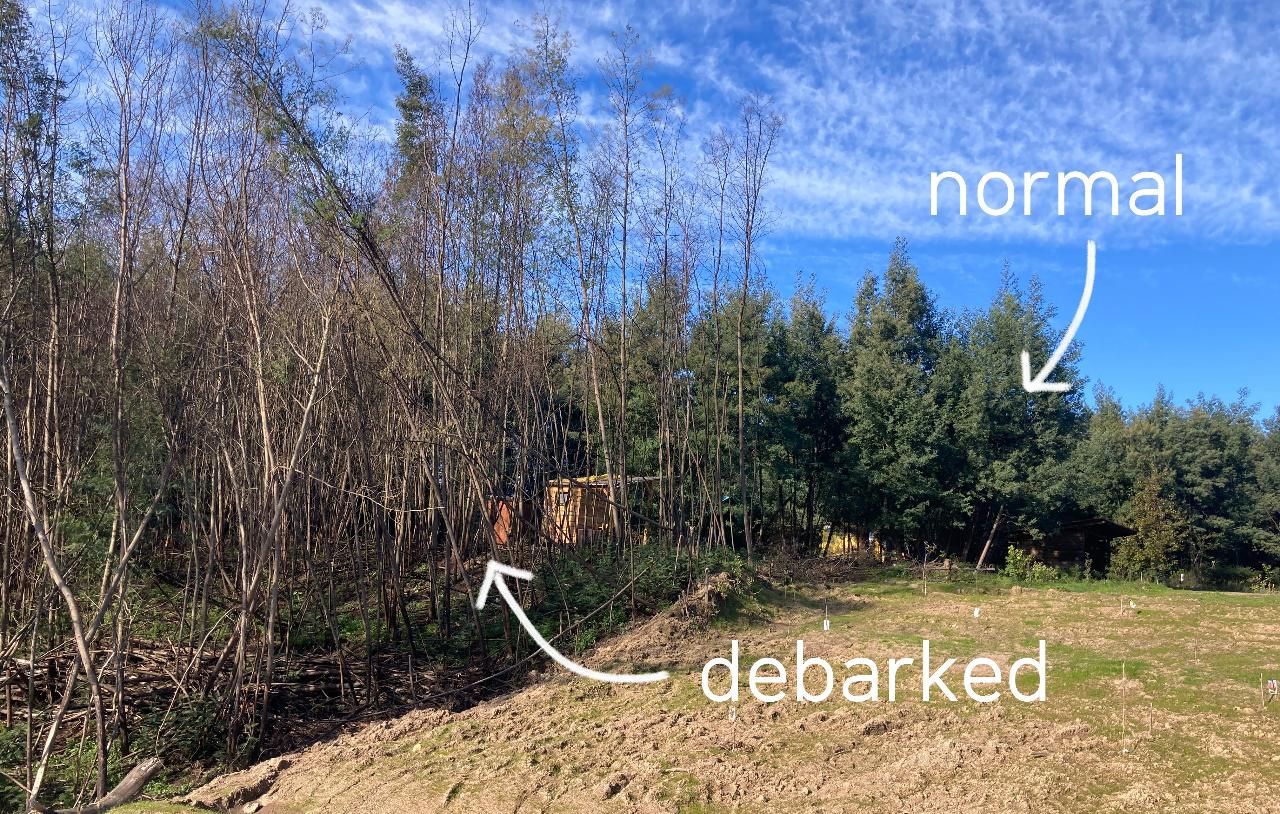
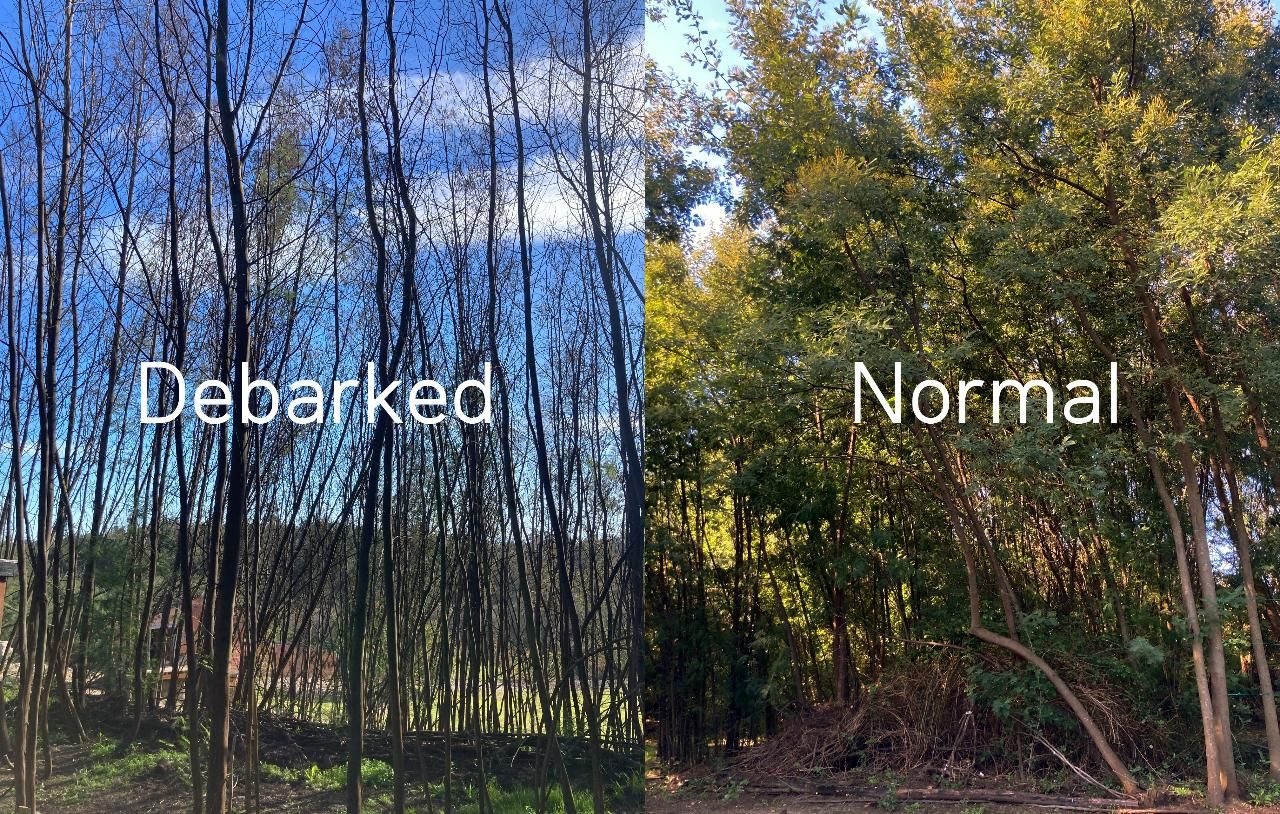
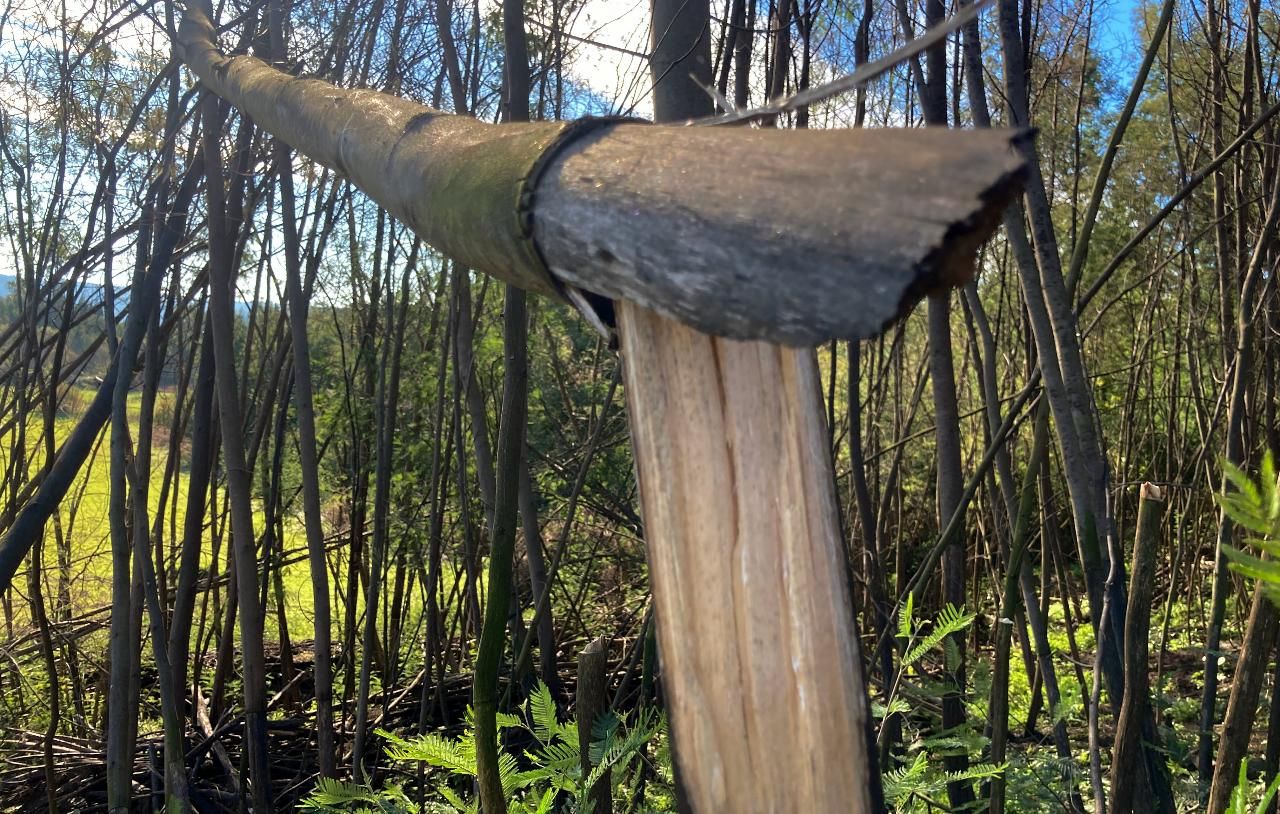
After a few months the difference between debarked and the normal mimosa's is quite visible. In the pictures below you can clearly see the debarked ones are suffering. Many are already breaking and snapping when its windy. Next step is to see if they would actually re-sprout underneath.
7
Update 3: debarking
Published 1y. Edited 1y.Published almost 2 years ago. Last edit over 1 year ago.

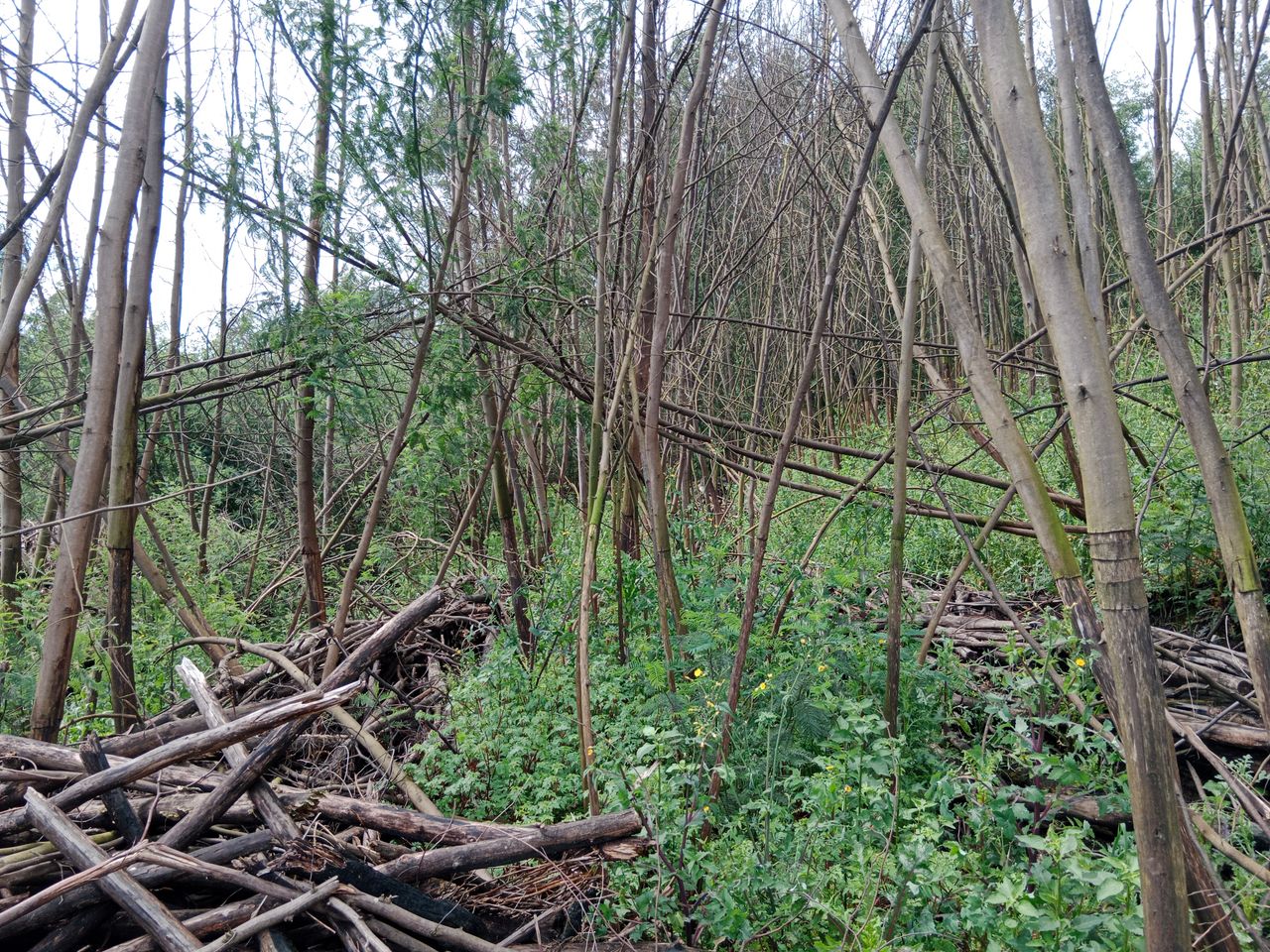
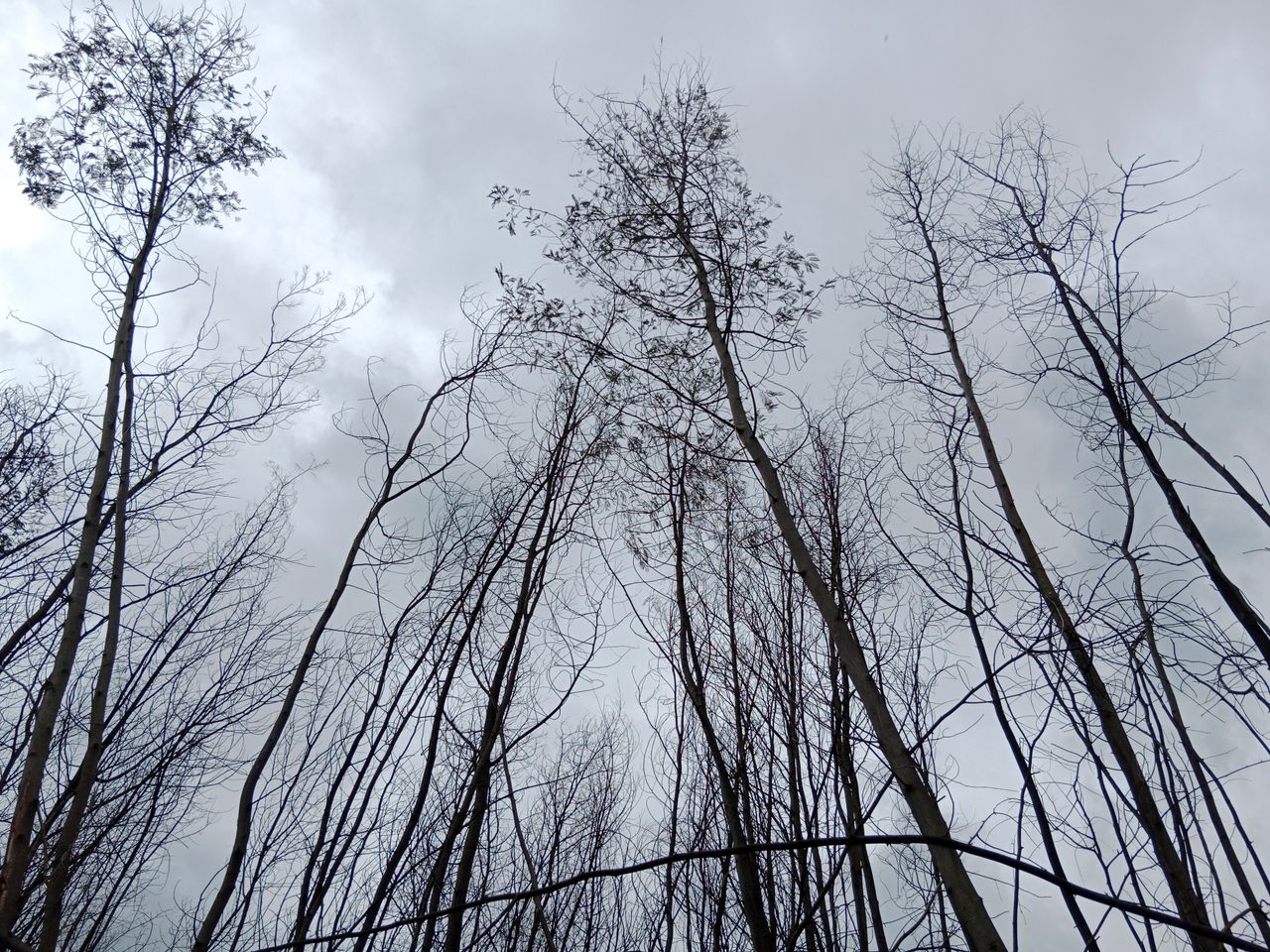
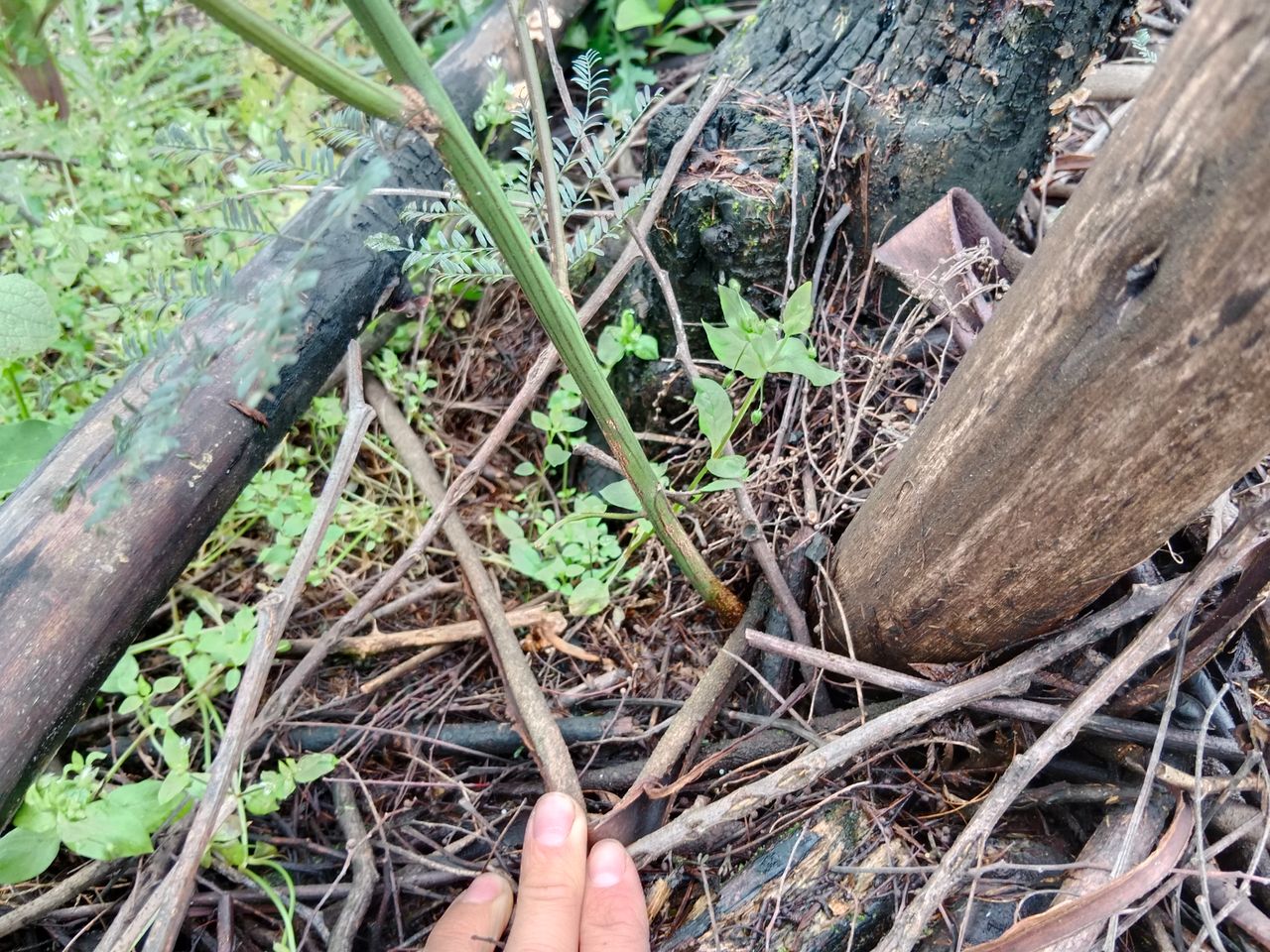
Over winter, some more debarked trees snapped and are now leaning on other trees. Now we need to go through and chop these trees down. We don't want them falling on people, and they're more of a fire hazard while they touch each other because they would lead fire straight from the ground to the tops of the trees. This means more maintenance for us...
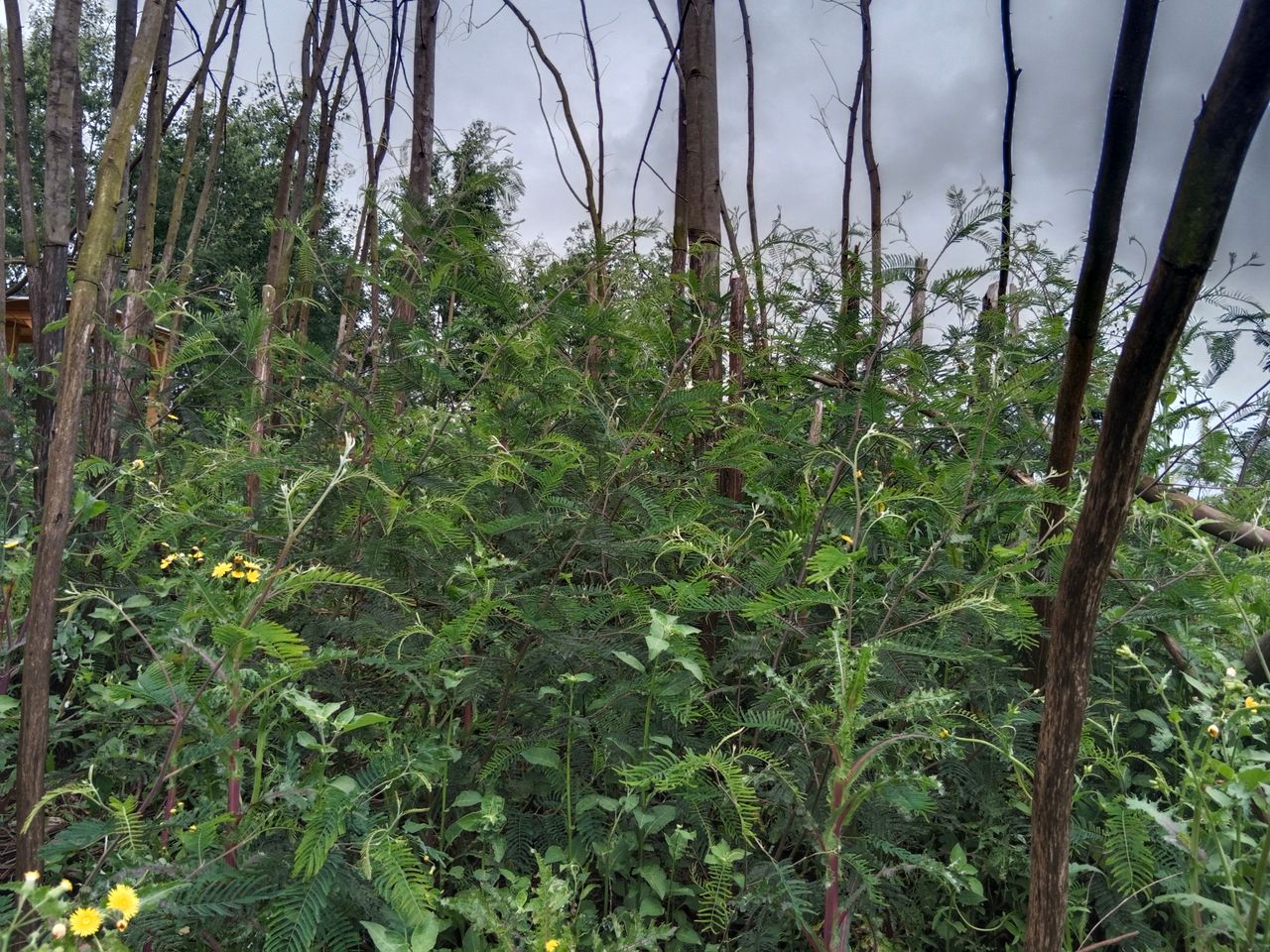
It's now spring, and there are unfortunately resprouts under the mimosas. Some are sprouting from the roots of dead trees, and others from seeds. Interestingly, where wood was left on the ground to rot, nothing has grown. Also, it's clear there are more new mimosas at the edges of the patch compared to further in the center.
So far, only one or two trees survived the debarking, so it was successful. It's clear that debarking is a very important tool; it's very effective at killing mimosas, but depending on the amount of maintenance it requires, it may not be worth our time. Lots learned... What should we do about the resprouts?
8
Update 2: cutting half a metre above the ground
Published 1y. Edited 1y.Published almost 2 years ago. Last edit over 1 year ago.
Six months later and we have decided to end this experiment. We used a digger to remove the stumps so we can repurpose the land for a new project. There are two main reasons why we changed our minds.
Firstly, dealing with the resprouts was very challenging. Handpicking them was a lot of work, and the stumps were too close together for the brush cutter to be effective. Secondly, it was very ugly, especially since it was in our living area at Basekamp. In the end we decided it was more important to have a nice living environment than to continue the experiment.
Our original plan for the land was always to turn it into a fruit tree area with swales, with the digger that goal happened much faster. You can check out Update #105 on YouTube to see the digger in action.
Moving on, what do you think we should do next?
%20--%3e%3csvg%20version='1.1'%20id='Layer_1'%20xmlns='http://www.w3.org/2000/svg'%20xmlns:xlink='http://www.w3.org/1999/xlink'%20x='0px'%20y='0px'%20viewBox='0%200%2064%2063'%20style='enable-background:new%200%200%2064%2063;'%20xml:space='preserve'%3e%3cstyle%20type='text/css'%3e%20.st0{fill:%2320B7EB;}%20.st1{fill:%23E9475A;}%20.st2{fill:%23FECE4E;}%20%3c/style%3e%3cdesc%3eCreated%20with%20Sketch.%3c/desc%3e%3cg%20id='Page-1'%3e%3cg%20id='OA-Logo-Black-Background'%3e%3cpath%20id='Shape'%20class='st0'%20d='M14.1,30.1c-1.5-0.8-8.6-3.8-14.1-7.8c1.8-3.4,3.1-5.6,5-9.1c2.7,1.1,1.9,0.5,4.6,1.7%20c0.8,0.4,10.1,4.5,13.8,6.2c2.4,1.1,4.7,2.2,7,3.3L43,30.5l8.1,3.9c4,2,7.2,3.5,11.3,5.5c0.5,0.3-3.7,9.4-3.7,9.4%20c-1.7-0.6-3.9-1.8-5.5-2.5c-4.7-2.1-9-3.9-13.7-6c-4-1.8-6.7-2.9-10.8-4.5C25,34.9,17.1,31.6,14.1,30.1z'/%3e%3cpath%20id='Shape_1_'%20class='st1'%20d='M12.1,54.9c-0.8,0.6-1.6,1.2-2.5,1.6c-0.4-0.5-0.9-1-1.3-1.5c-0.3-1.2-2.3-4.9-2.7-6.2%20c-0.1-0.4-0.7-2.2-0.8-2.6c0,0,5-3.4,8.2-5.9c3.2-2.6,6.2-5,9.3-7.5c1.4-1.1,3.9-2.5,5.3-3.5c2.5-1.7,13-9.1,15.6-10.5%20c5.4-3.3,11.1-6.3,16.8-9c1.7,3.5,1.8,3,3.8,6.9c0,0-17.8,13.5-22.7,17.1c-3.8,2.8-7.5,5.7-11.3,8.5c-1.7,1.3-3.5,2.4-5.2,3.7'/%3e%3cpath%20id='Shape_2_'%20class='st2'%20d='M20.8,2.9l-0.2-0.8C25,0,31.2-0.3,31.4,0.2c0.4,1.1,0.9,2.2,1.2,3.4c1.4,4.4,2.7,8.7,4,13.1%20c0.4,1.4,2.8,10,2.9,10.5c0.5,2.8,1.2,5.6,1.6,8.4c0.8,4.7,1.4,8.6,2.3,13.3c0.6,3.1,1.3,6.3,2.3,11.3c0,0-5.8,1.4-7.5,1.8%20c-0.8,0.2-1.5,0.4-2.4,0.6c-0.3-1.1-0.2-1.2-0.5-2.1c-0.9-3.7-1.8-7.3-2.6-11c-1.5-6.4-3-12.9-4.4-19.3%20c-1.2-5.4-2.6-10.7-4.4-15.9c-1-3.1-1.8-6.3-2.7-9.5C21.1,3.8,21,3.8,20.8,2.9z'/%3e%3c/g%3e%3c/g%3e%3c/svg%3e)