Can we make a roof from recycled aluminium cans?


ToolRecycled
More Information


%20--%3e%3csvg%20version='1.1'%20id='Layer_1'%20xmlns='http://www.w3.org/2000/svg'%20xmlns:xlink='http://www.w3.org/1999/xlink'%20x='0px'%20y='0px'%20viewBox='0%200%2064%2063'%20style='enable-background:new%200%200%2064%2063;'%20xml:space='preserve'%3e%3cstyle%20type='text/css'%3e%20.st0{fill:%23231F20;}%20%3c/style%3e%3cdesc%3eCreated%20with%20Sketch.%3c/desc%3e%3cg%20id='Page-1'%3e%3cg%20id='OA-Logo-Black-Background'%3e%3cpath%20id='Shape'%20class='st0'%20d='M14.1,30.1c-1.5-0.8-8.6-3.8-14.1-7.8c1.8-3.4,3.1-5.6,5-9.1c2.7,1.1,1.9,0.5,4.6,1.7%20c0.8,0.4,10.1,4.5,13.8,6.2c2.4,1.1,4.7,2.2,7,3.3L43,30.5l8.1,3.9c4,2,7.2,3.5,11.3,5.5c0.5,0.3-3.7,9.4-3.7,9.4%20c-1.7-0.6-3.9-1.8-5.5-2.5c-4.7-2.1-9-3.9-13.7-6c-4-1.8-6.7-2.9-10.8-4.5C25,34.9,17.1,31.6,14.1,30.1z'/%3e%3cpath%20id='Shape_1_'%20class='st0'%20d='M12.1,54.9c-0.8,0.6-1.6,1.2-2.5,1.6c-0.4-0.5-0.9-1-1.3-1.5c-0.3-1.2-2.3-4.9-2.7-6.2%20c-0.1-0.4-0.7-2.2-0.8-2.6c0,0,5-3.4,8.2-5.9c3.2-2.6,6.2-5,9.3-7.5c1.4-1.1,3.9-2.5,5.3-3.5c2.5-1.7,13-9.1,15.6-10.5%20c5.4-3.3,11.1-6.3,16.8-9c1.7,3.5,1.8,3,3.8,6.9c0,0-17.8,13.5-22.7,17.1c-3.8,2.8-7.5,5.7-11.3,8.5c-1.7,1.3-3.5,2.4-5.2,3.7'/%3e%3cpath%20id='Shape_2_'%20class='st0'%20d='M20.8,2.9l-0.2-0.8C25,0,31.2-0.3,31.4,0.2c0.4,1.1,0.9,2.2,1.2,3.4c1.4,4.4,2.7,8.7,4,13.1%20c0.4,1.4,2.8,10,2.9,10.5c0.5,2.8,1.2,5.6,1.6,8.4c0.8,4.7,1.4,8.6,2.3,13.3c0.6,3.1,1.3,6.3,2.3,11.3c0,0-5.8,1.4-7.5,1.8%20c-0.8,0.2-1.5,0.4-2.4,0.6c-0.3-1.1-0.2-1.2-0.5-2.1c-0.9-3.7-1.8-7.3-2.6-11c-1.5-6.4-3-12.9-4.4-19.3%20c-1.2-5.4-2.6-10.7-4.4-15.9c-1-3.1-1.8-6.3-2.7-9.5C21.1,3.8,21,3.8,20.8,2.9z'/%3e%3c/g%3e%3c/g%3e%3c/svg%3e)


1
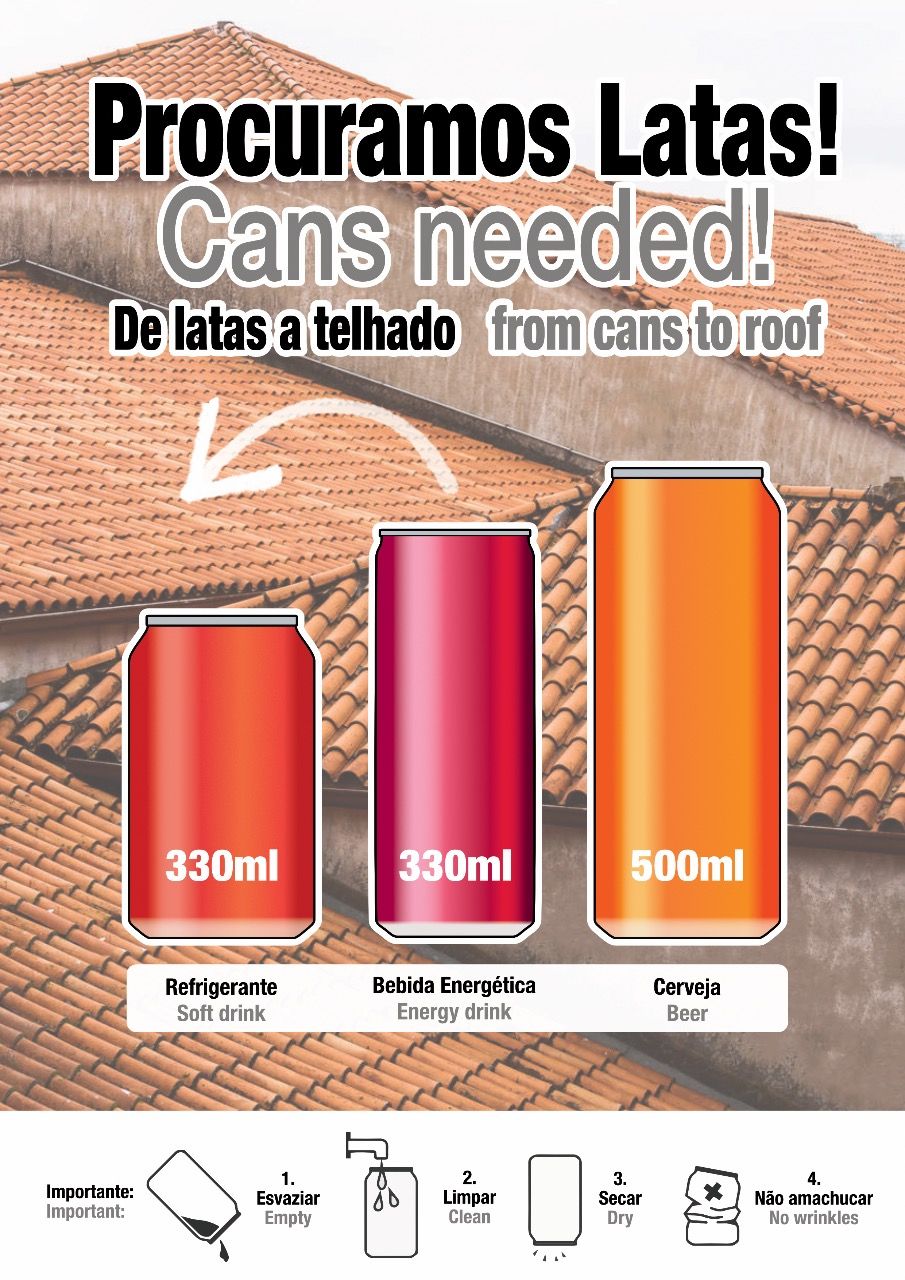
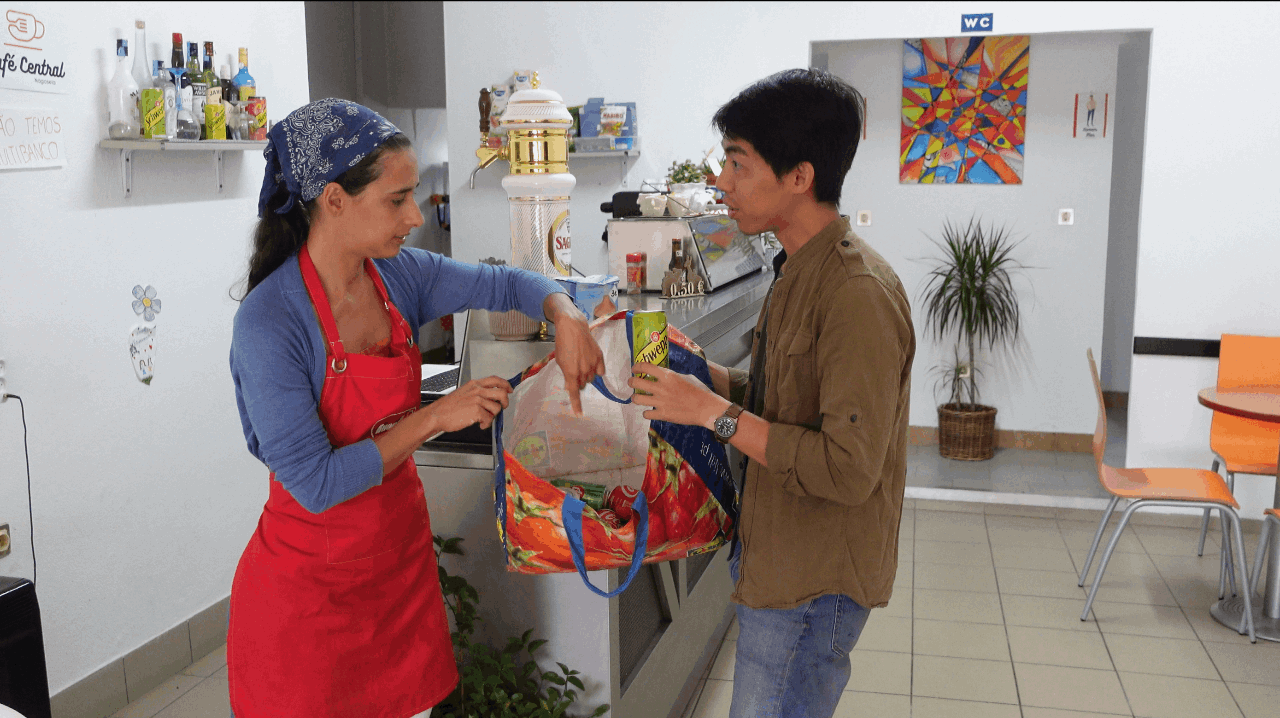
Collection of the cans
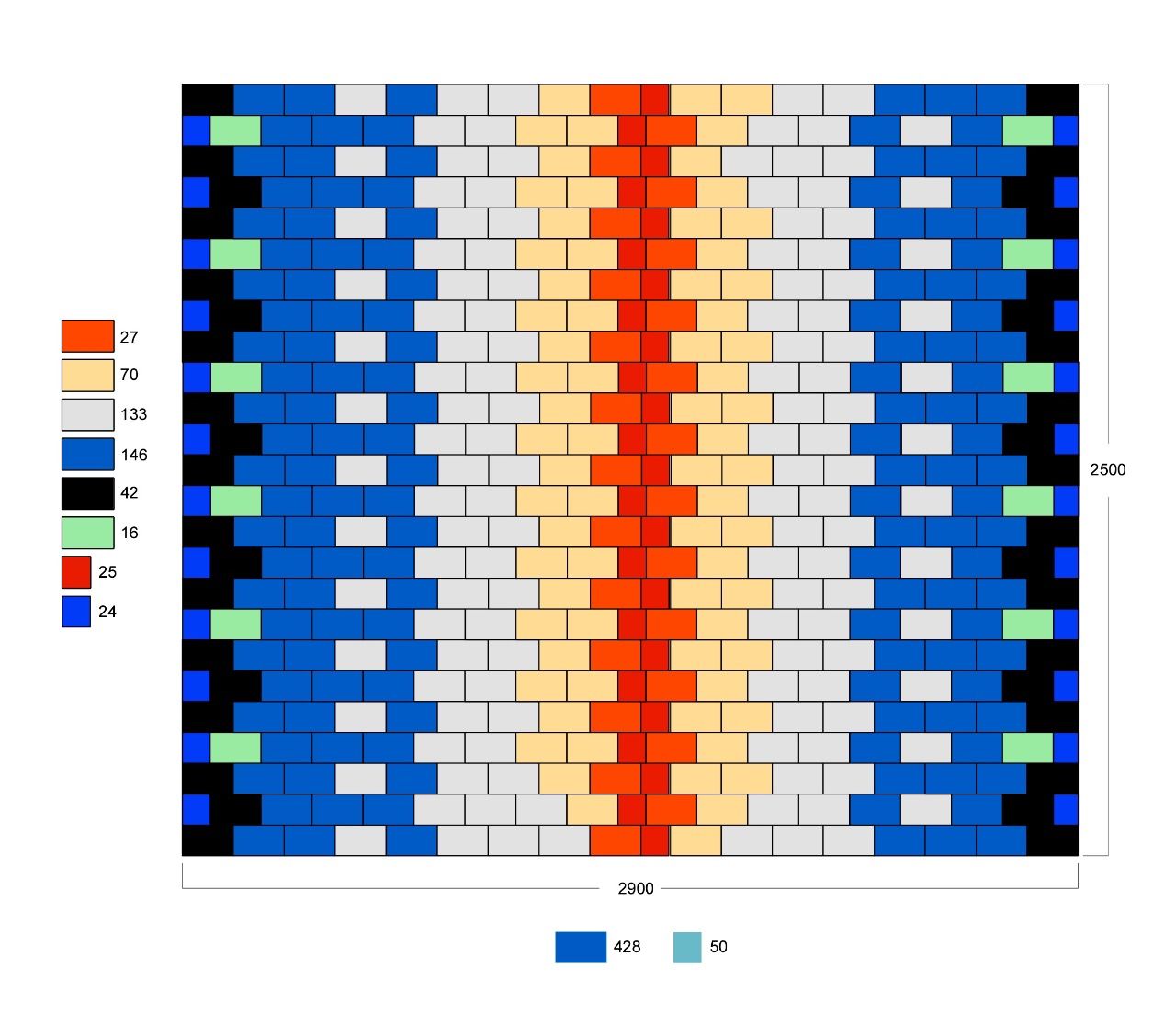
After counting, we will need more than 500pcs of cans to complete the roof size of (2.5x2.9m) 7.25sq/m, which is difficult to achieve by the consumption in the Kamp alone. So we made a poster to ask our neighbours to collect the cans with us.
2
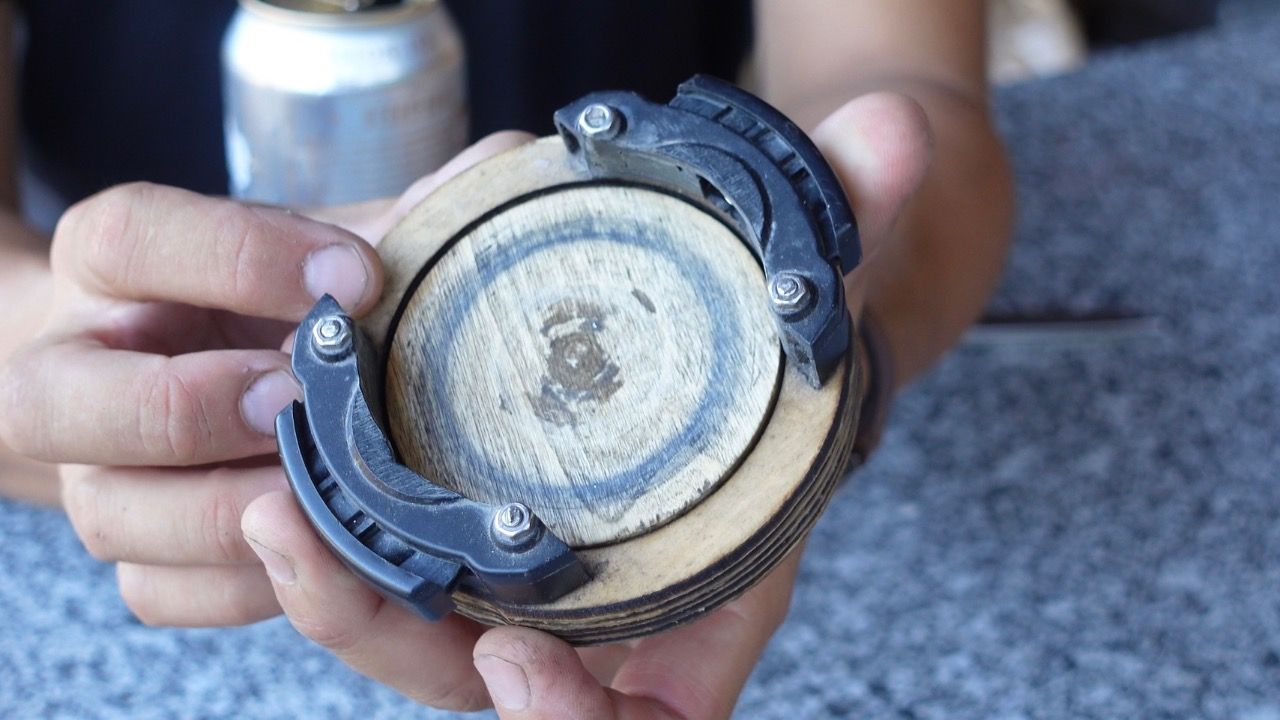
Tool for opening the cans
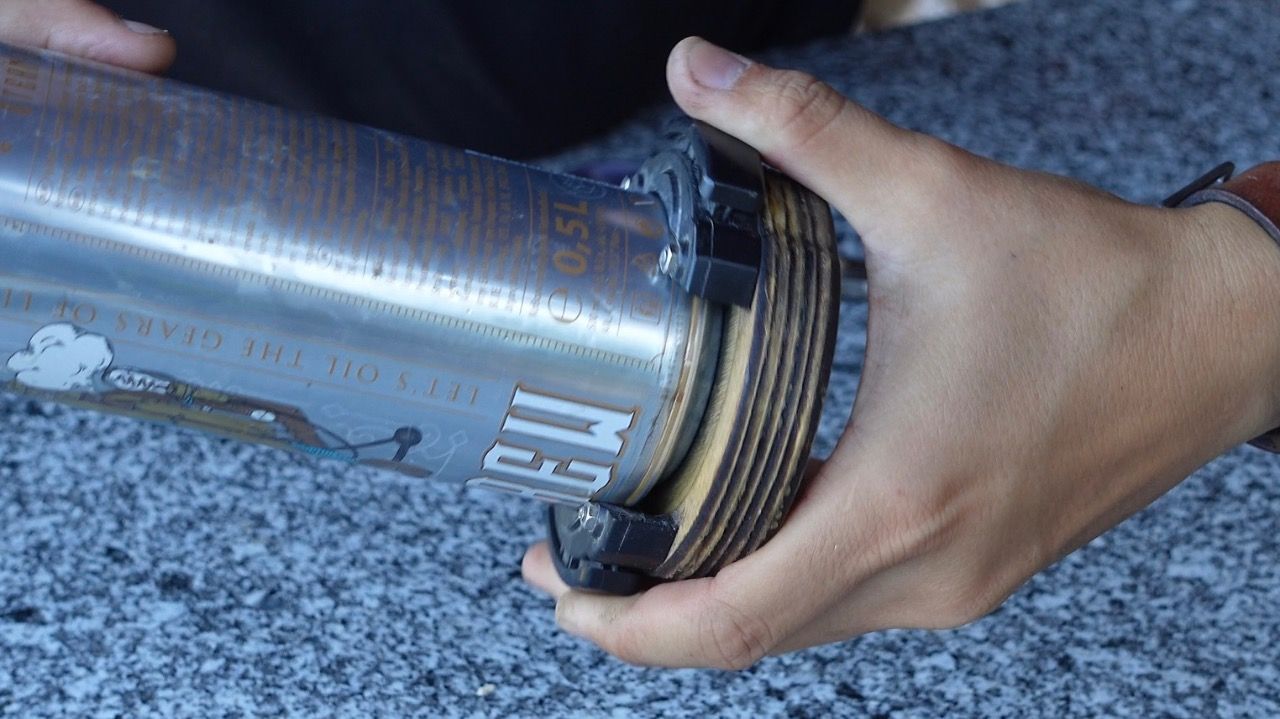
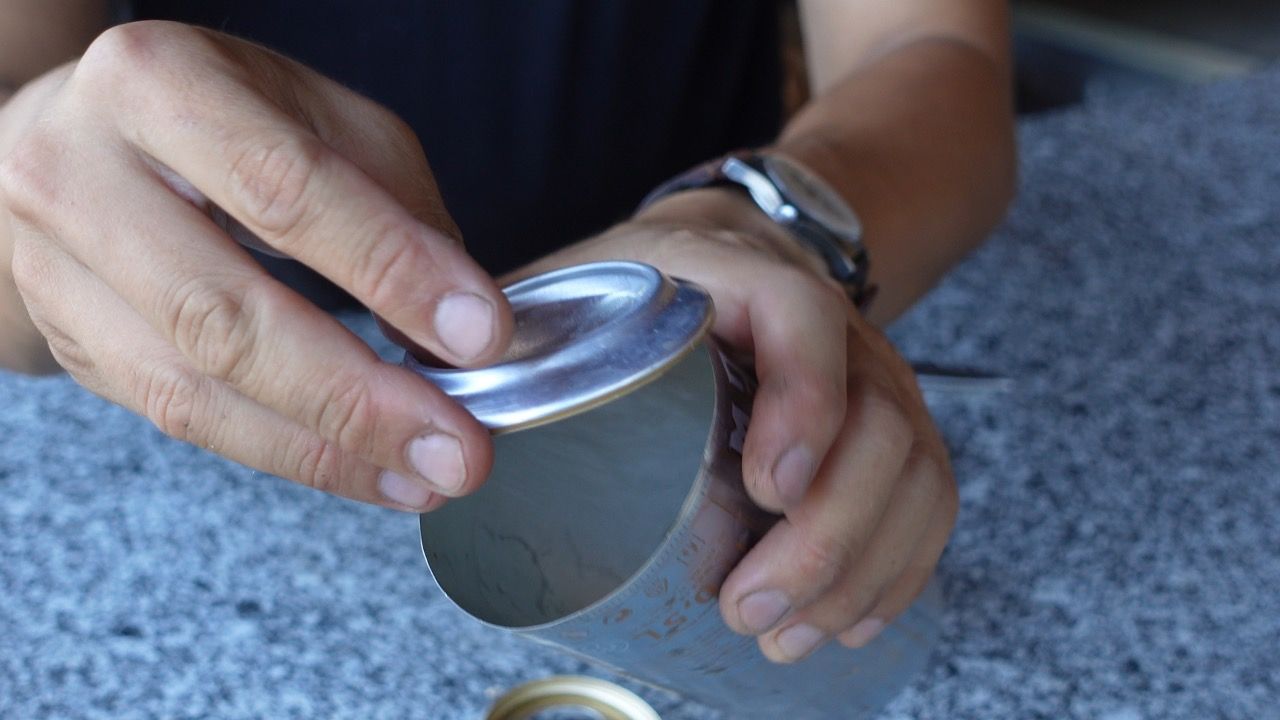
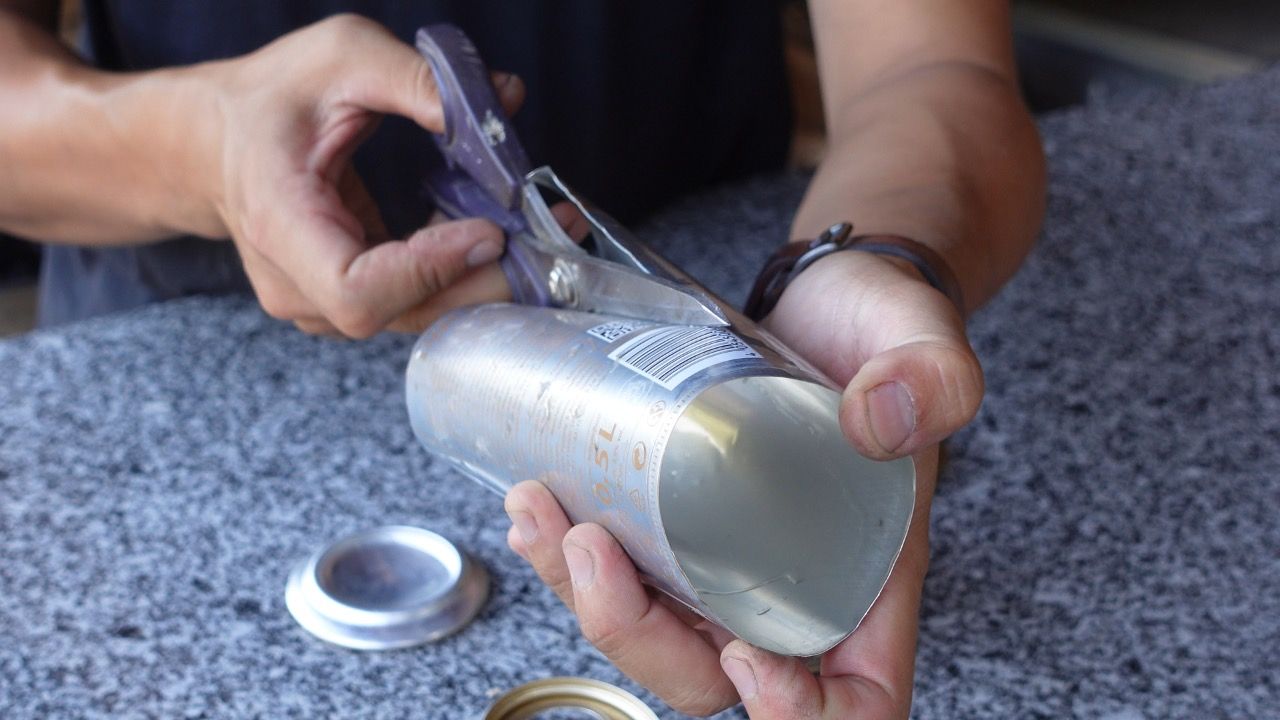
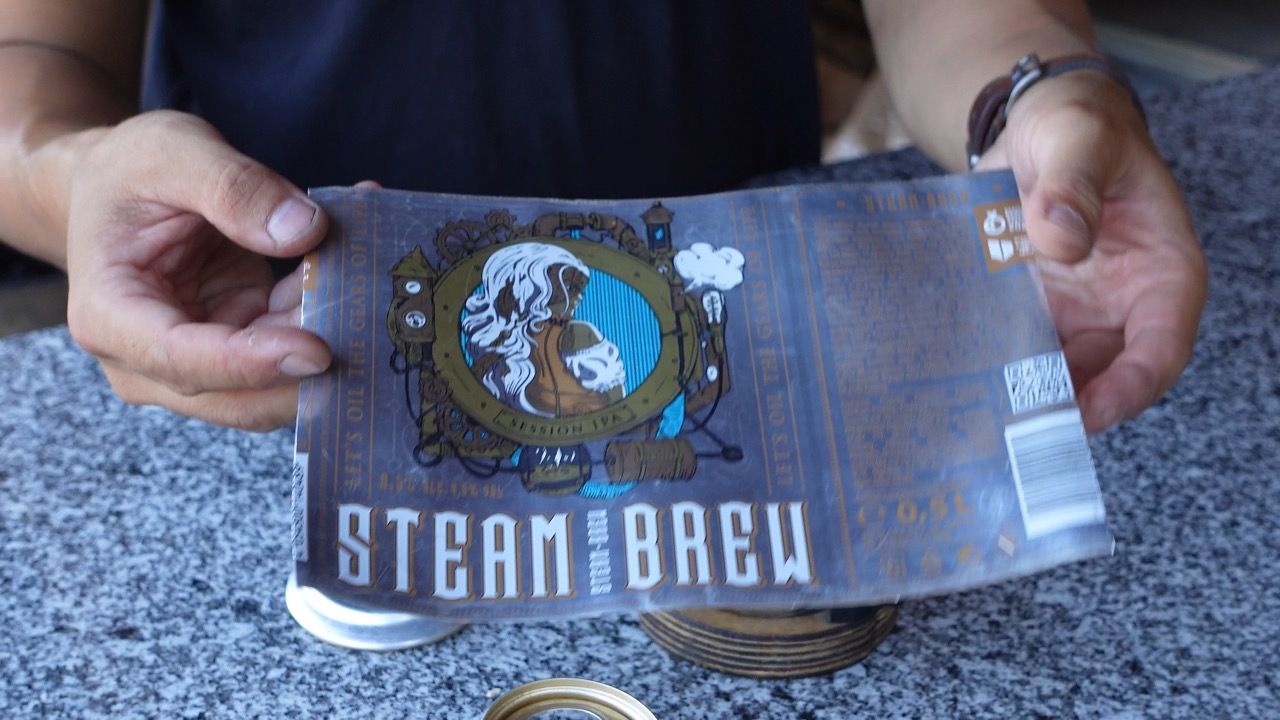
The tool for opening the side of the can is modified from a market bought soda can opener(link below), the wooden part is added to make the cutting diameter wider.
https://www.amazon.com/Opener-Manual-Safety-Camping-Openers/dp/B0BKQMST9V/ref=sr_1_24?crid=23C010V2OPLUJ&keywords=Soda+can+opener&qid=1693305451&sprefix=soda+can+opener%2Caps%2C248&sr=8-24
3
Designing the shape of the shingle
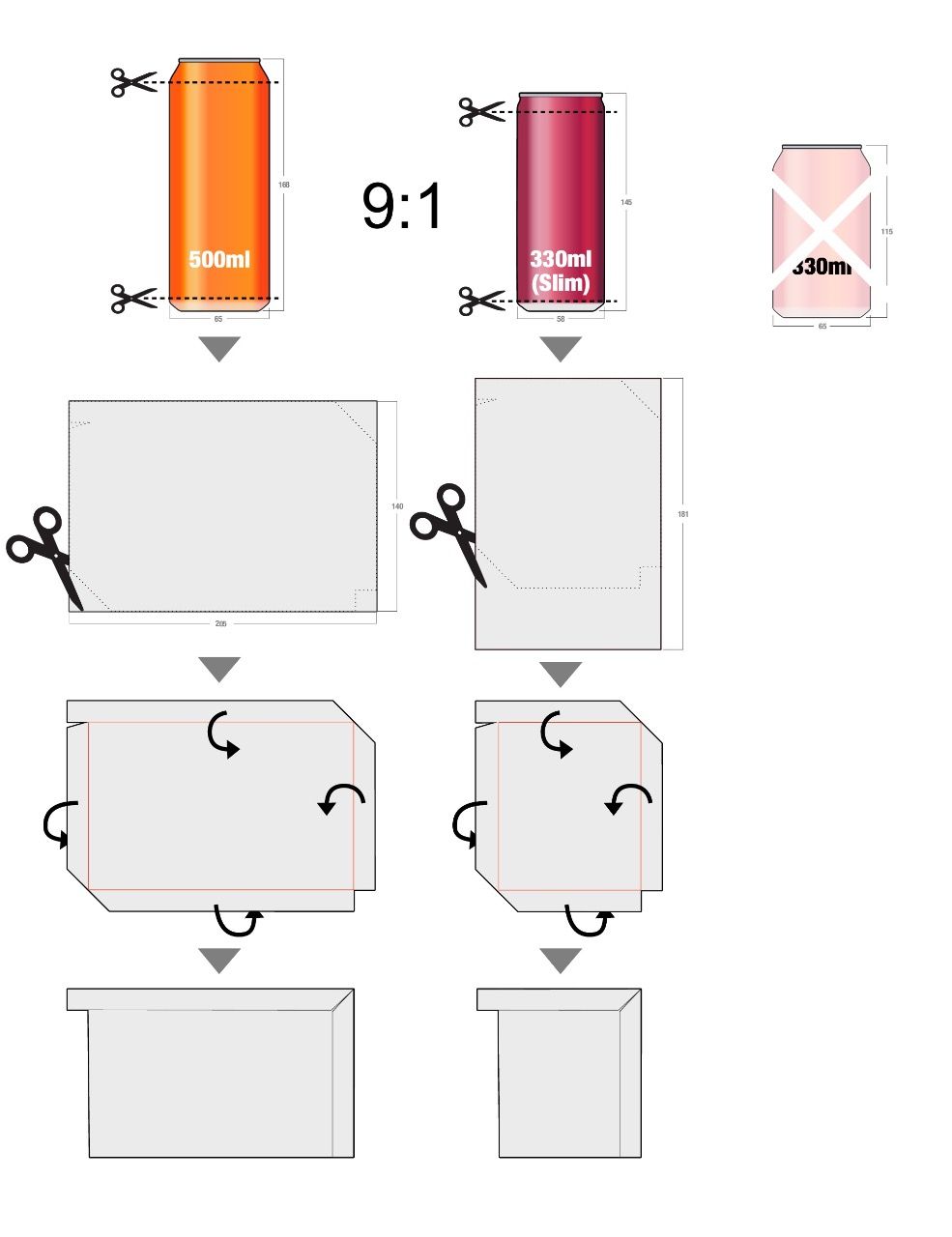
Out of the 3 most common sizes of the can in the market. 2 of them(500ml & 330 slim) seem to be quite popular among our neighbours. So we counted and measure the size that we will be using, then design the cut out. (Having 2 different sizes of shingles is not ideal because it creates unnecessary gaps and potential leakage spot, but we want to include most of the cans from different neighbours)
%20--%3e%3csvg%20version='1.1'%20id='Calque_1'%20xmlns='http://www.w3.org/2000/svg'%20xmlns:xlink='http://www.w3.org/1999/xlink'%20x='0px'%20y='0px'%20viewBox='0%200%2027.2%2027.8'%20style='enable-background:new%200%200%2027.2%2027.8;'%20xml:space='preserve'%3e%3ctitle%3eicon%20redirect%20new%3c/title%3e%3cg%3e%3cpath%20d='M27.2,26.5c-0.1-5-0.3-10-0.4-15c0-0.7-0.6-1.2-1.2-1.2s-1.2,0.6-1.2,1.2c0.1,4.6,0.3,9.1,0.4,13.7%20c-3.9-0.2-7.7-0.6-11.6-0.4c-3.3,0.2-6.7,0.5-10,0.4C2.8,19.5,2.7,13.7,2.5,8c2.9-0.1,5.8-0.8,8.6-0.7c1.6,0.1,1.6-2.4,0-2.5%20C7.8,4.6,4.5,5.7,1.2,5.5c-0.6,0-1,0.3-1.1,0.7C0,6.3,0,6.4,0,6.6c0,0,0,0.1,0,0.1c0,0,0,0,0,0.1c0.2,6.6,0.4,13.2,0.5,19.7%20c0,0.6,0.4,1.3,1.2,1.4c3.8,0.1,7.5-0.2,11.3-0.4c4.4-0.3,8.6,0.2,12.9,0.4c0.6,0,1-0.3,1.1-0.7C27.1,26.9,27.2,26.7,27.2,26.5z'/%3e%3cpath%20d='M12,12.6c-0.2,0.7,0.2,1.4,0.9,1.5c0.7,0.2,1.4-0.2,1.5-0.9v0c0.6-2.2,1.4-4.5,3.1-6c1.3-1.2,3-1.9,4.7-2.7%20c-0.4,1.3-0.8,2.6-1.4,3.8c-0.6,1.5,1.8,2.1,2.4,0.7c0.8-1.9,1.5-3.9,2-5.9c0-0.1,0-0.2,0-0.3c0.3-0.6,0.1-1.5-0.7-1.8%20C22.3,0.4,20,0,17.7,0c-0.7,0-1.2,0.6-1.2,1.2s0.6,1.2,1.2,1.2c0.9,0,1.7,0.1,2.6,0.2c-1.7,0.8-3.4,1.7-4.8,3%20C13.6,7.6,12.7,10.1,12,12.6z'/%3e%3c/g%3e%3c/svg%3e)
4
Prototyping
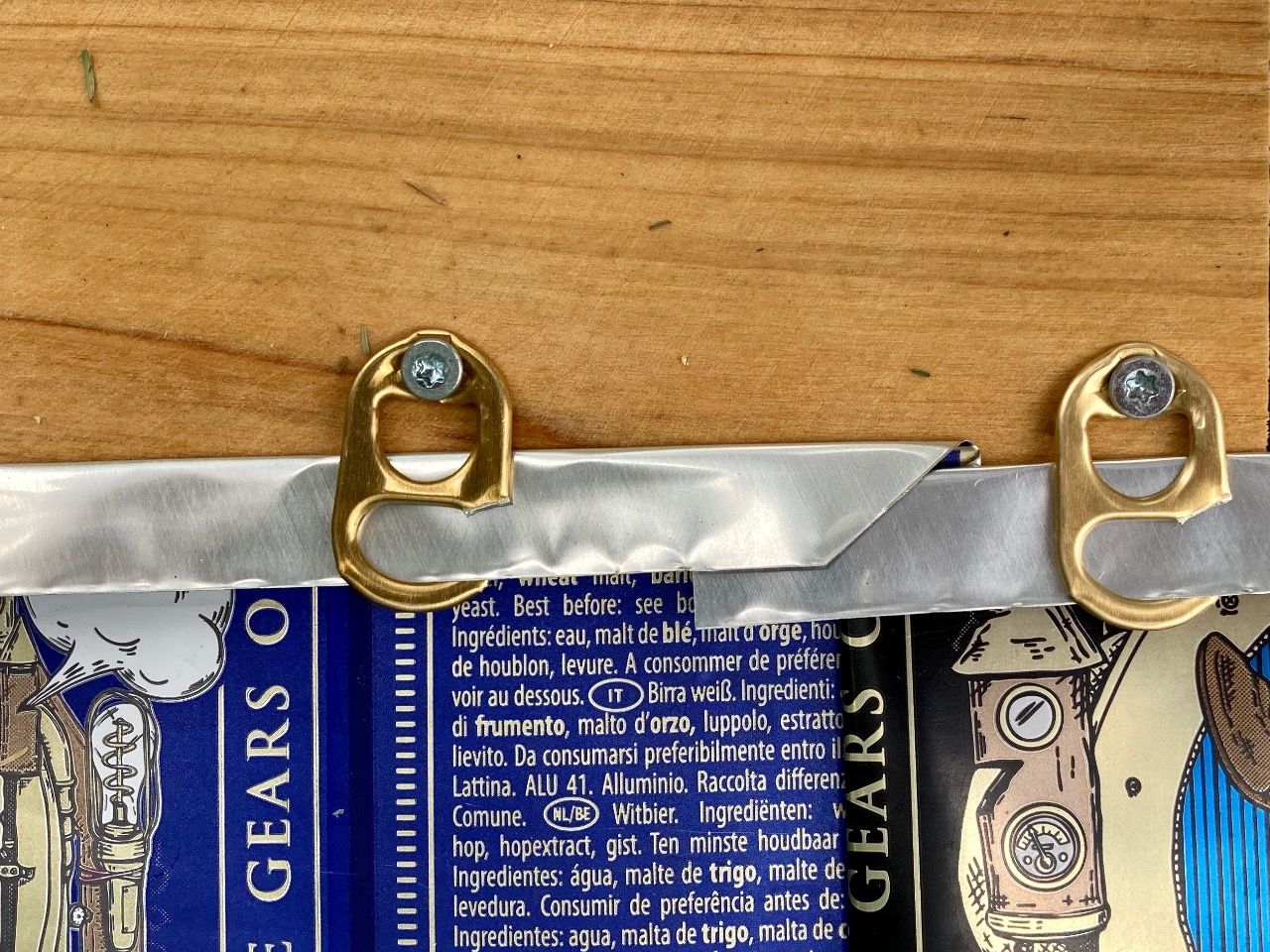
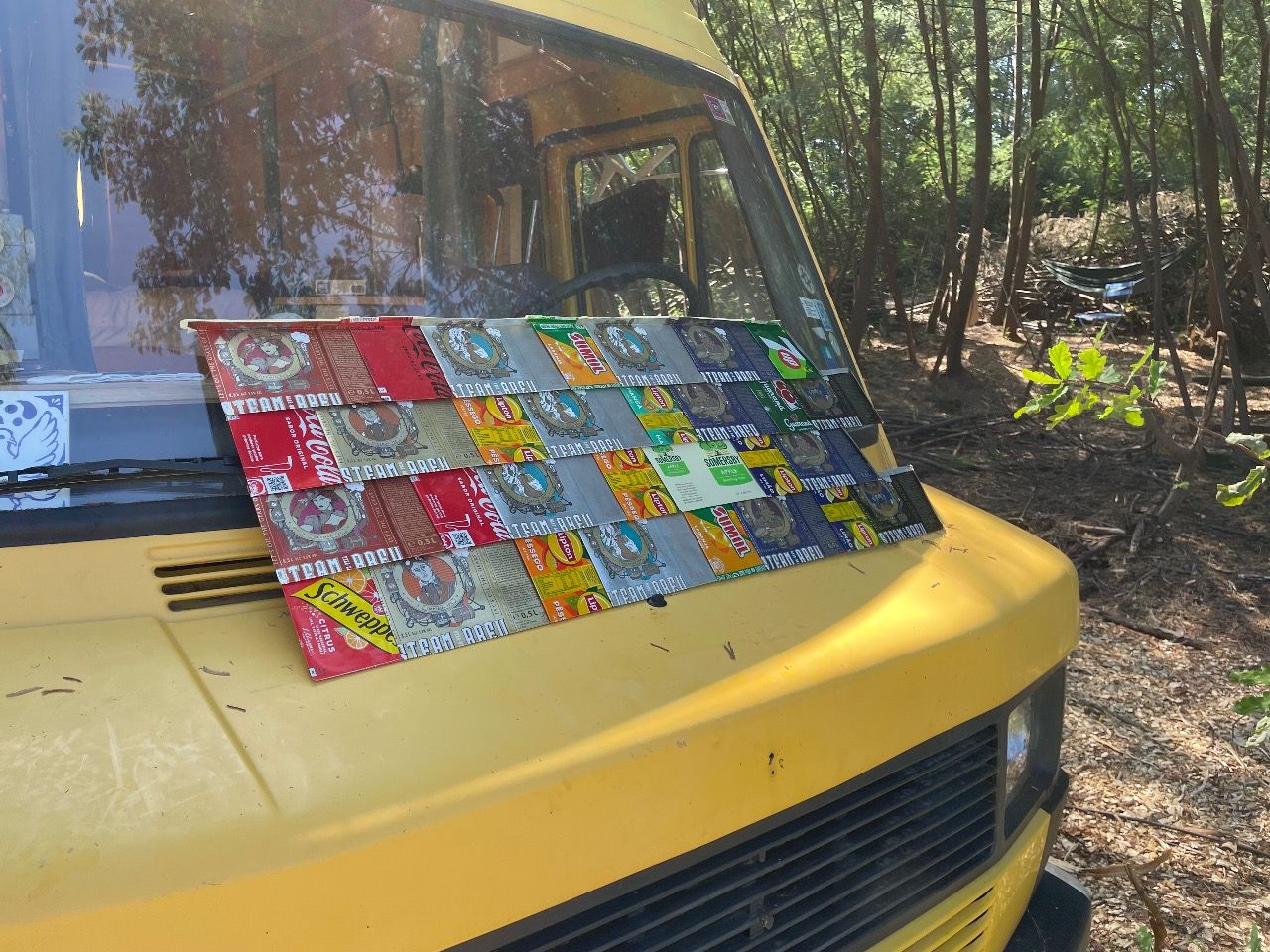
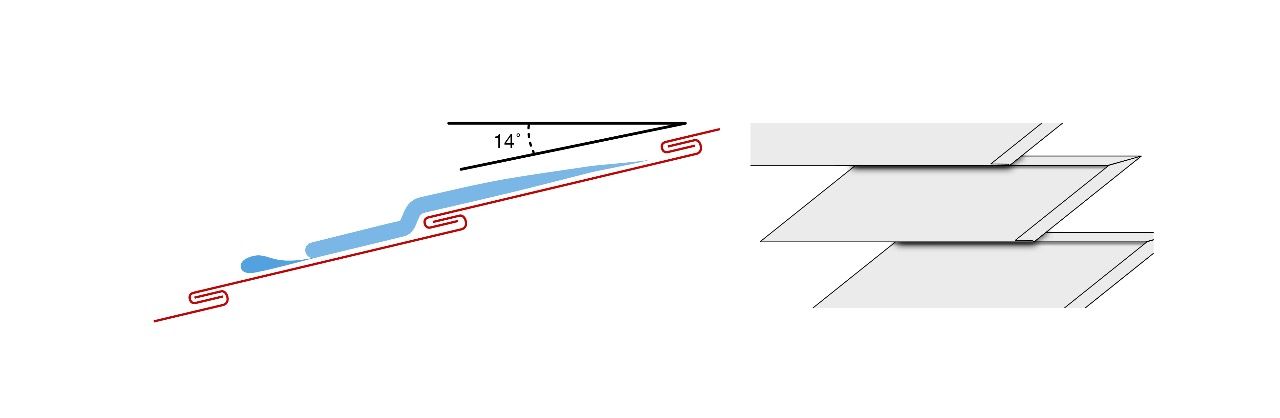
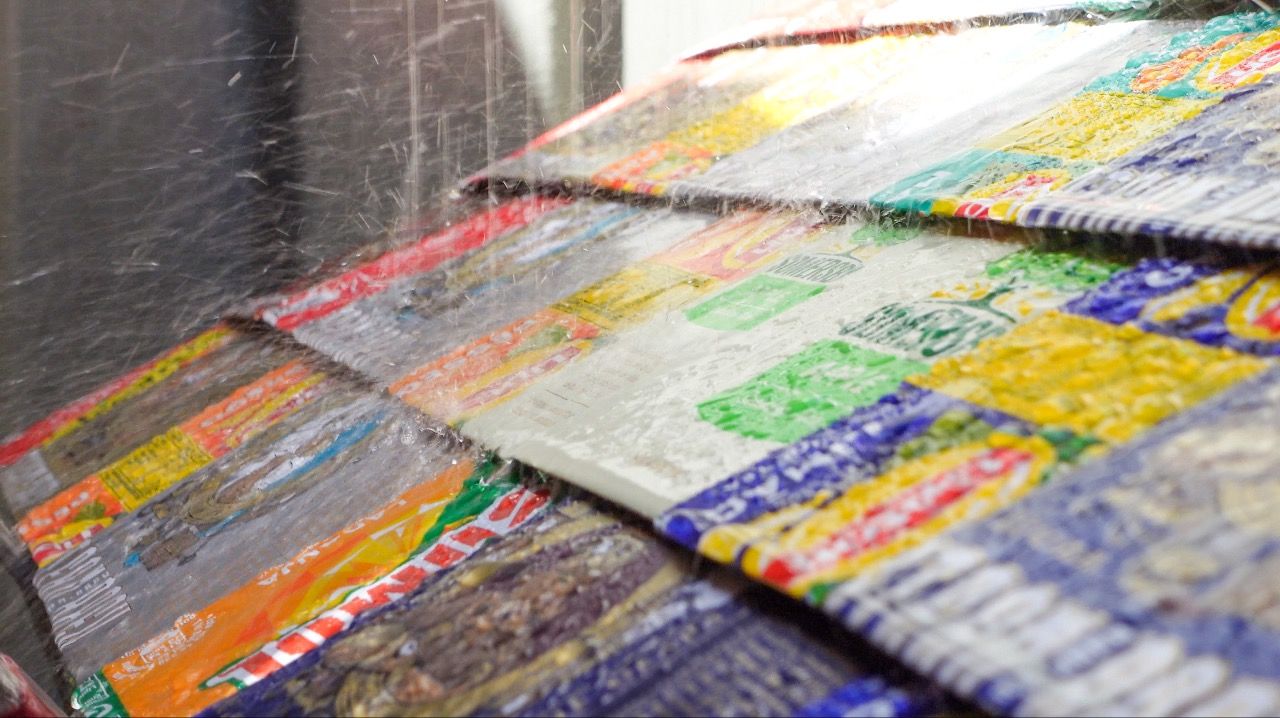
A small surface has been built to test the interlocking system, shingles are held in place by using the can to avoid drilling holes through the shingle. Rain flow were recreated under the shower.
5
Preparation
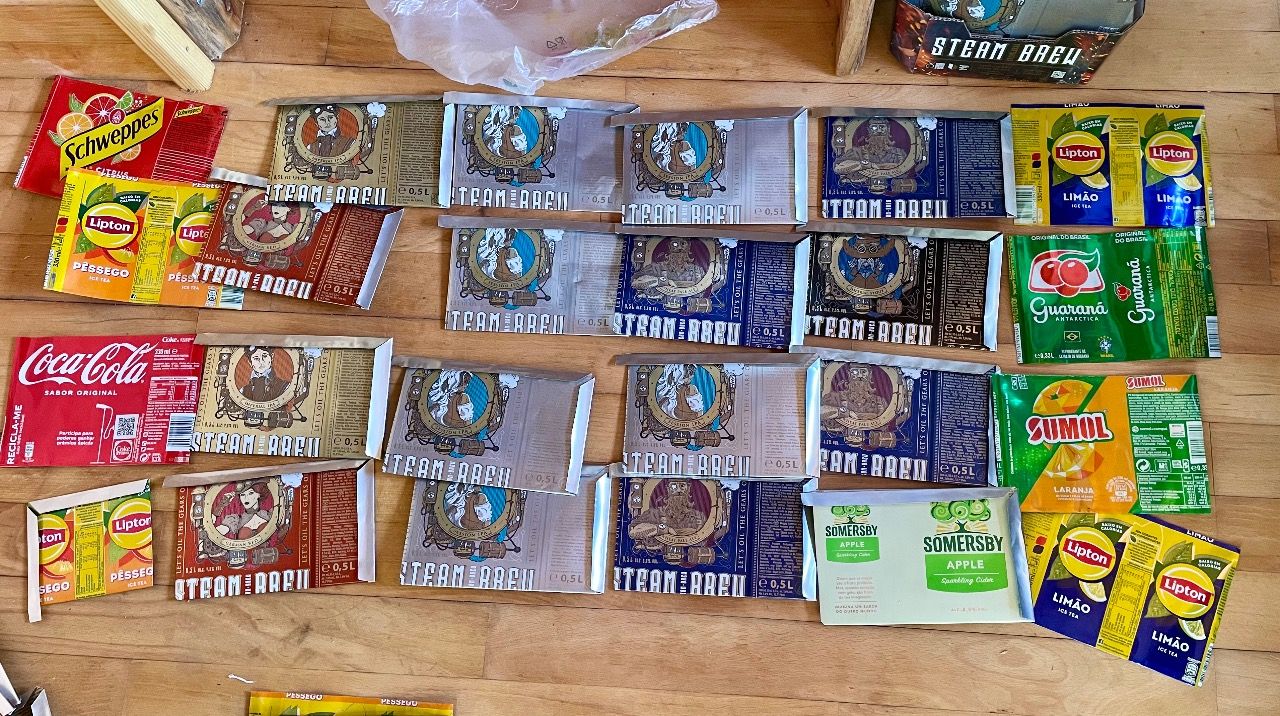
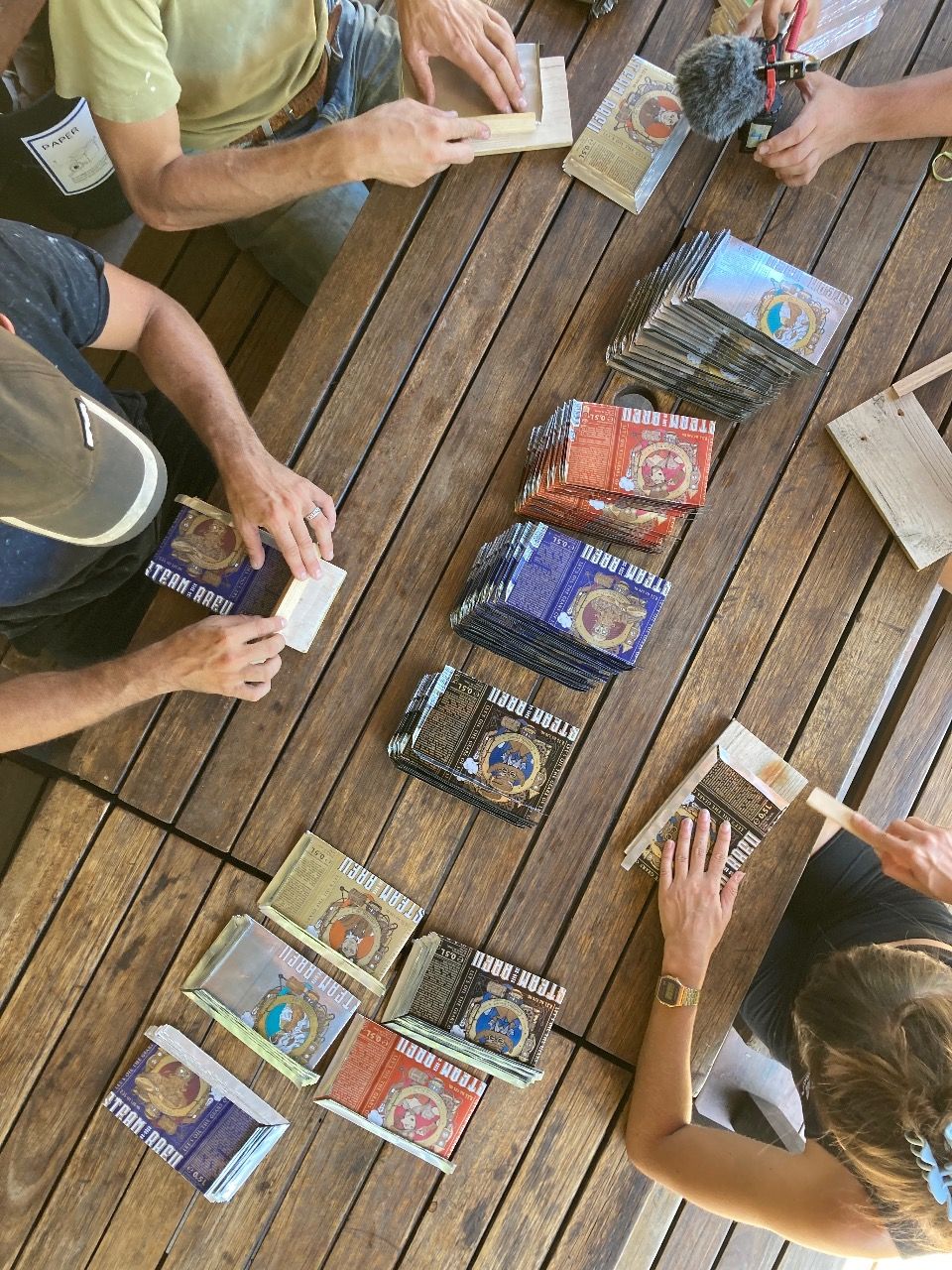
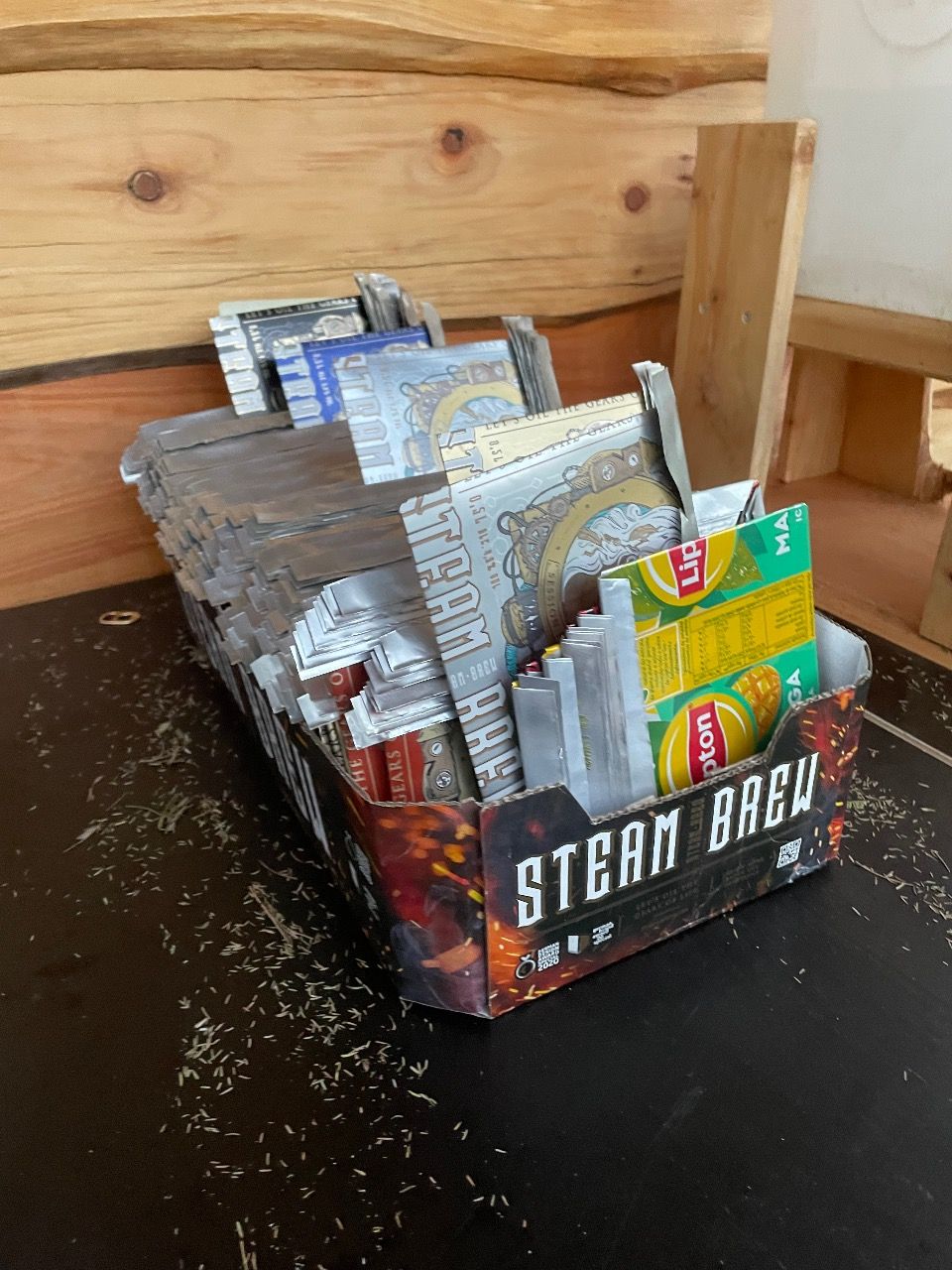
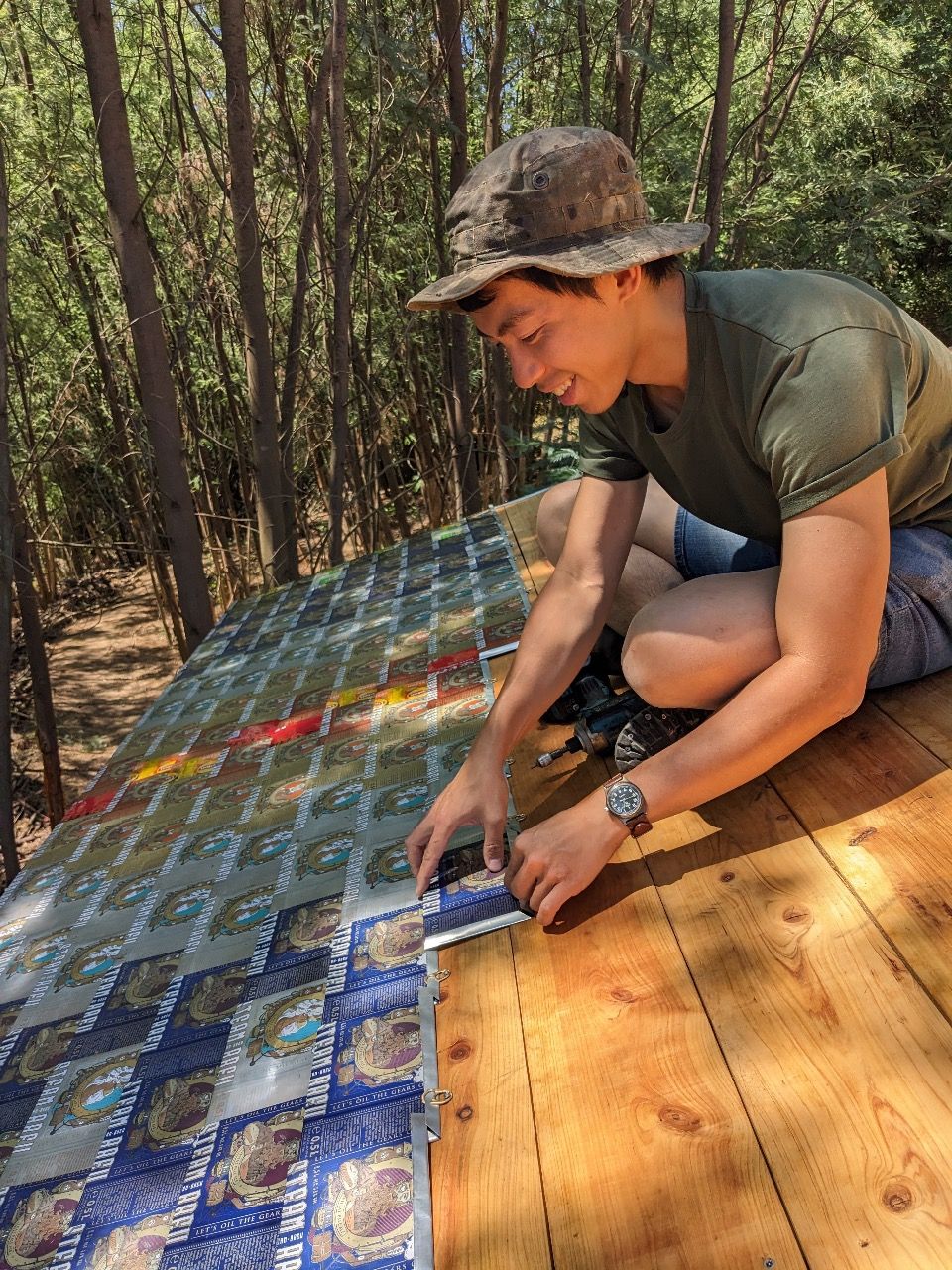
After more than a month of collecting, we finally have enough cans.
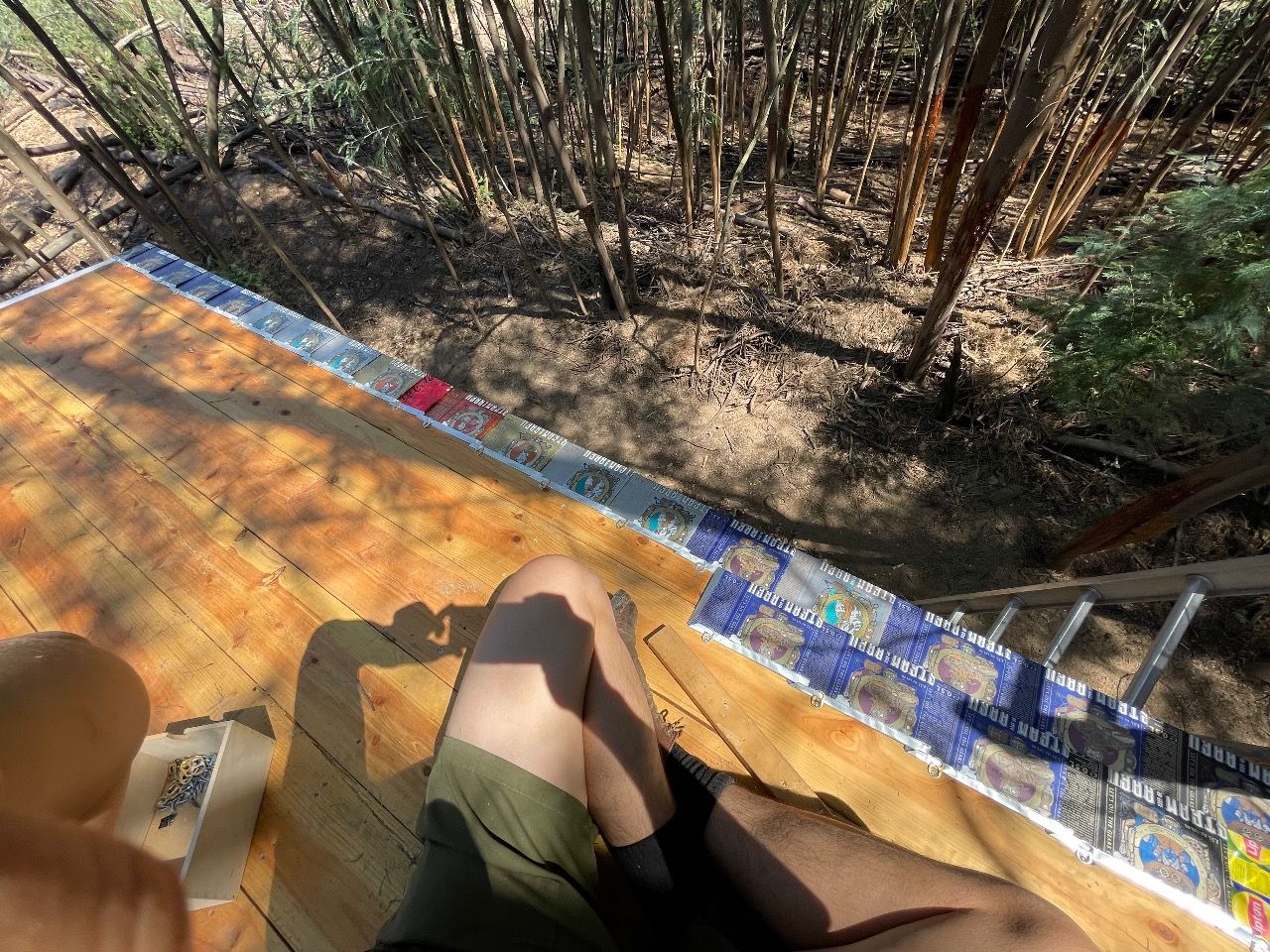
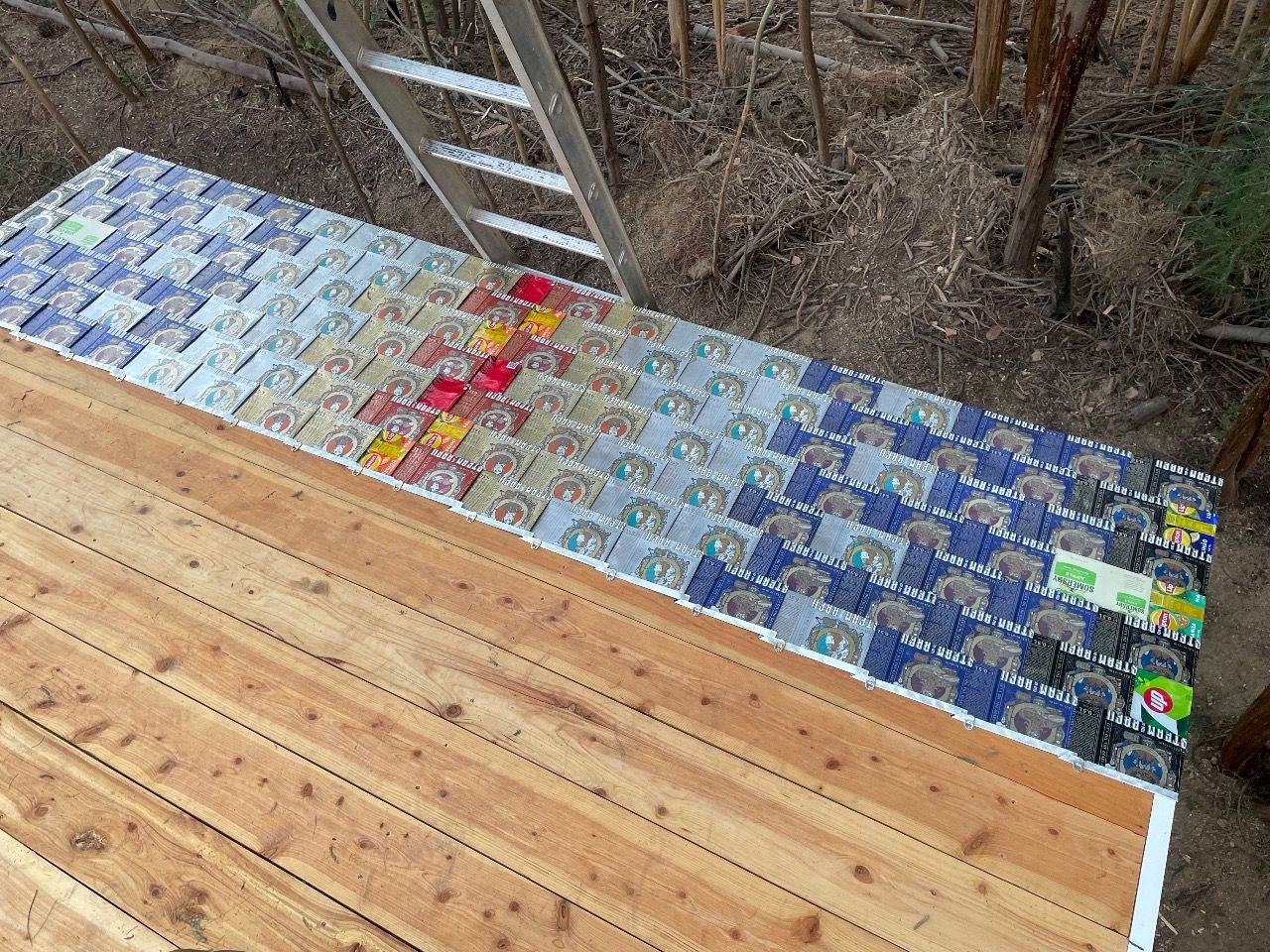
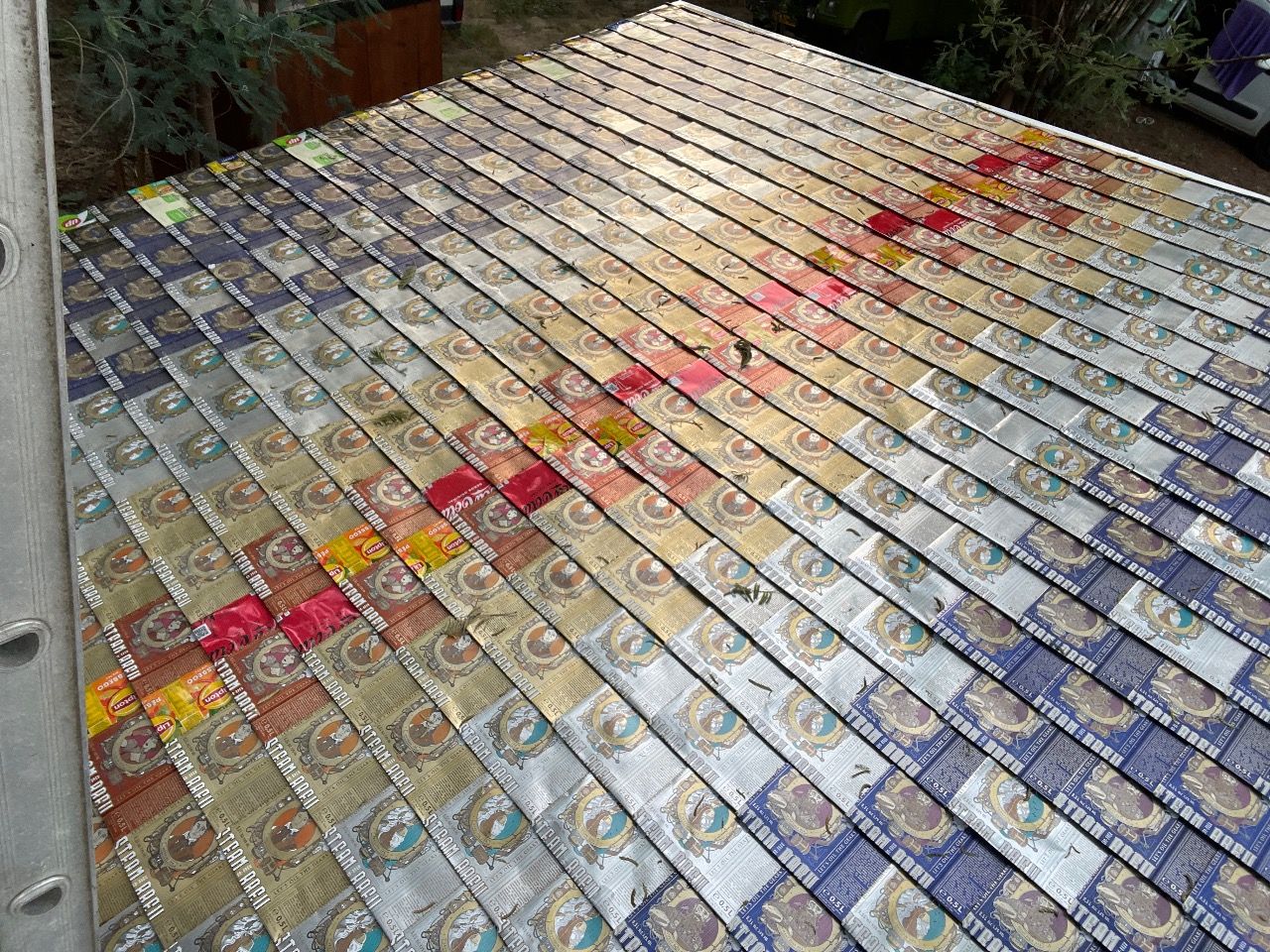
Based on the quantity and colours of the cans, we have decide to put them into a gradient pattern.
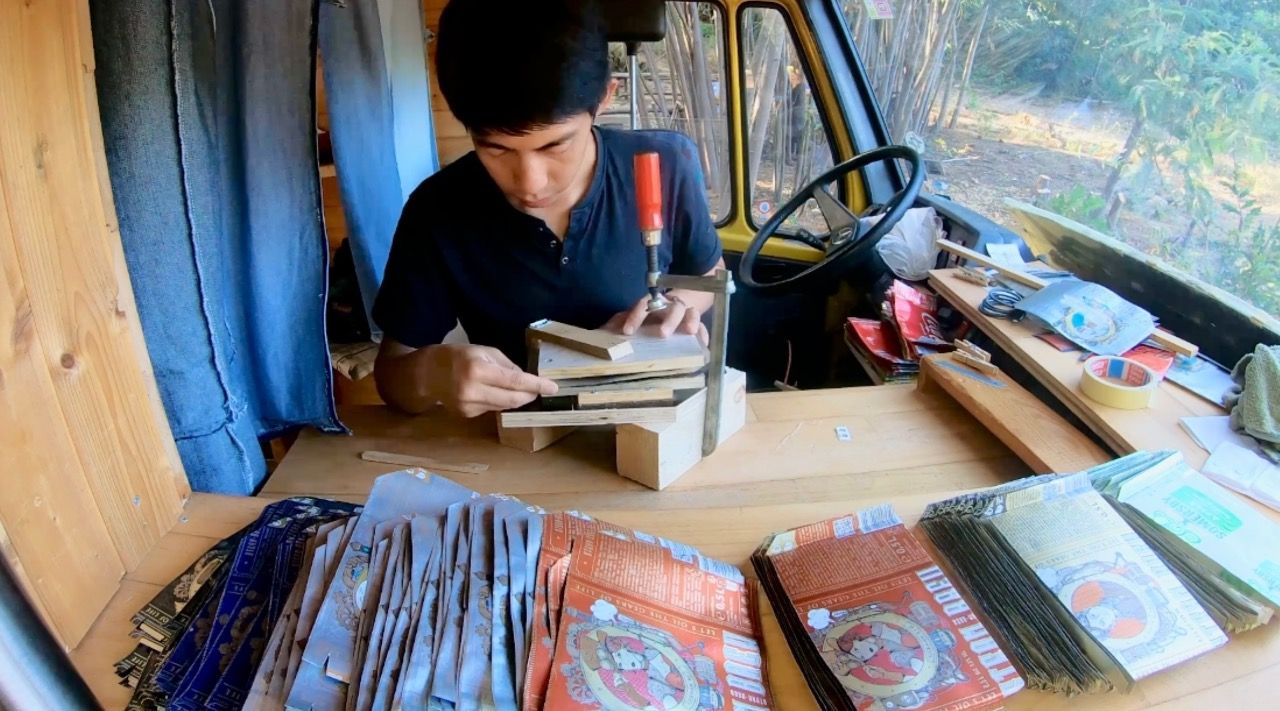
We have assembled a team to help doing the folding of the shingles.
6
7
How to replace tiles on can roof?
in case of damaged tile, hope this would be helpful 😉
8
Diagonal can roof tiles
a small roof has been build to try out to lay the tiles in a diagonal way.
9
Introducing the Can Slicer
The Can Slicer is a tool to slice open aluminium cans, turning them into flat sheets of metal for upcycling projects.
It allows the process of cutting to be more efficient, quick and easy.
Made of locally recycled HDPE with precious plastic machines from Fablab Tokwawan.
Available here: http://kevin-cheung.com/store/z87m4lktwkce2ahd8xy4vpod69yncf
3D drawing files also available for download.
The body can be 3d printed and the blade can be replaced by 10mm wide m3 spacer.
10
A quick and efficient way to die cut Aluminium sheet
This is the journey of searching for the right machine, fitting it into a suitcase, making the process to be mobile.
11
Can roof after 1.5 years
After experiencing some intense rain and typhoon in Hong Kong,
the tiles so far holding up quite well with no leakage.
Discolouration can be seen on the area under the most UV light,
especially the color red faded the most quickly.
Zero maintenance so far 💪🏻
12
Aluminium Can roof two years later


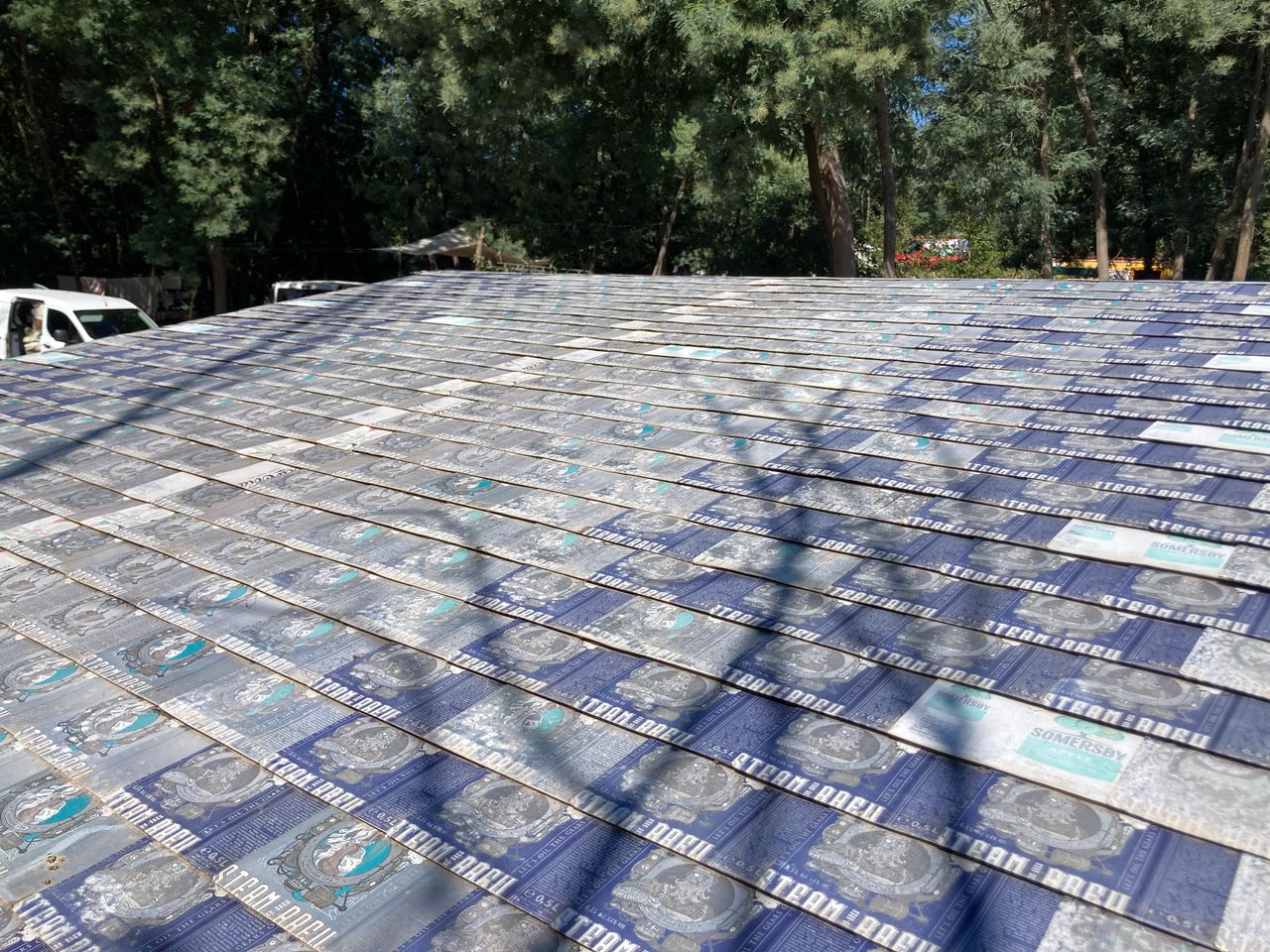
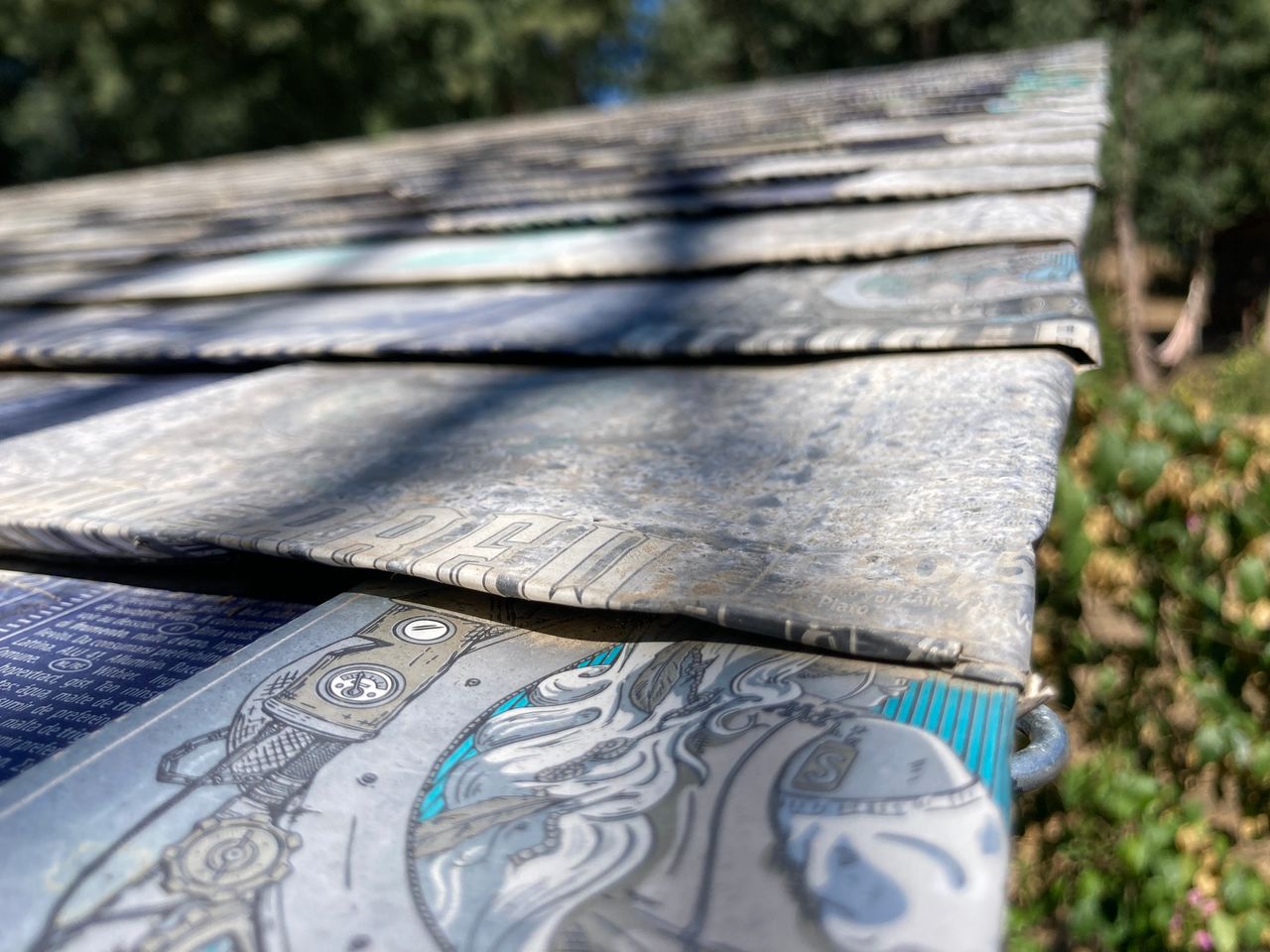
Here some pictures what the roof looks like 2 years later. All the shingles are pretty much in the same place and not much changed. A few trees fell on it so those that got hit are a bit more bended. The main difference is in the colors. Specially noticeable in the cocacola and lipton can. The whole roof looks a bit more greyish now
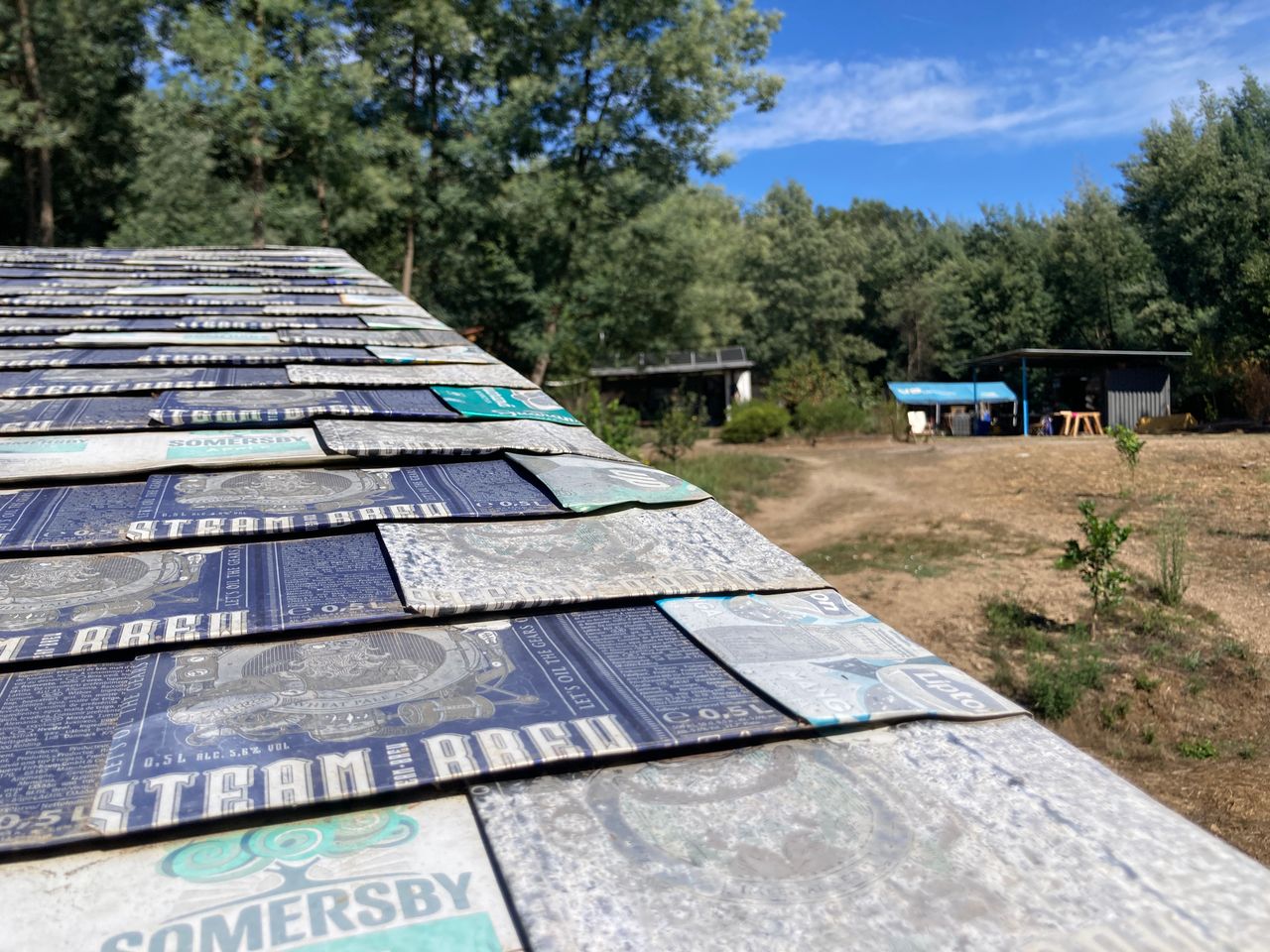
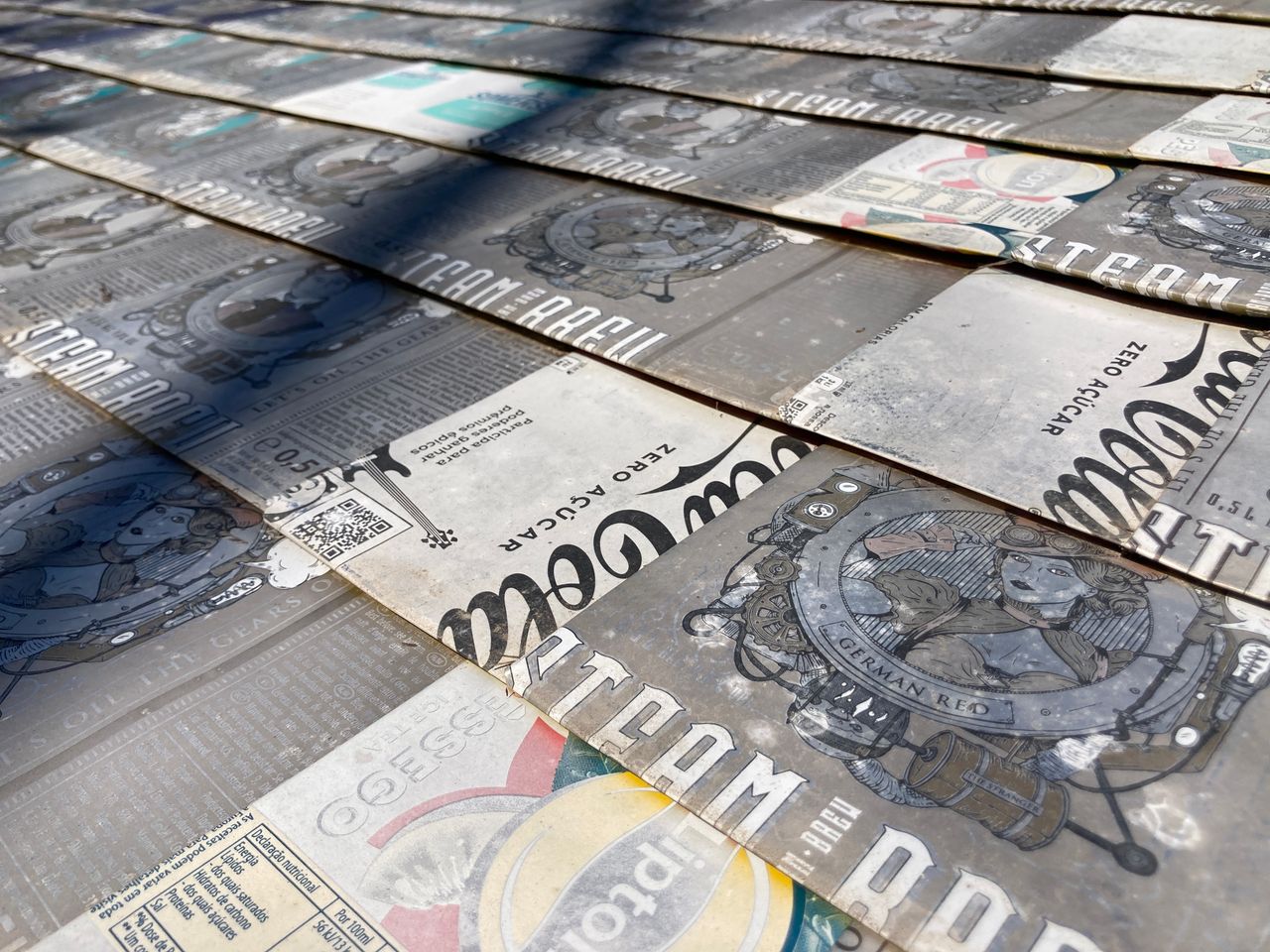
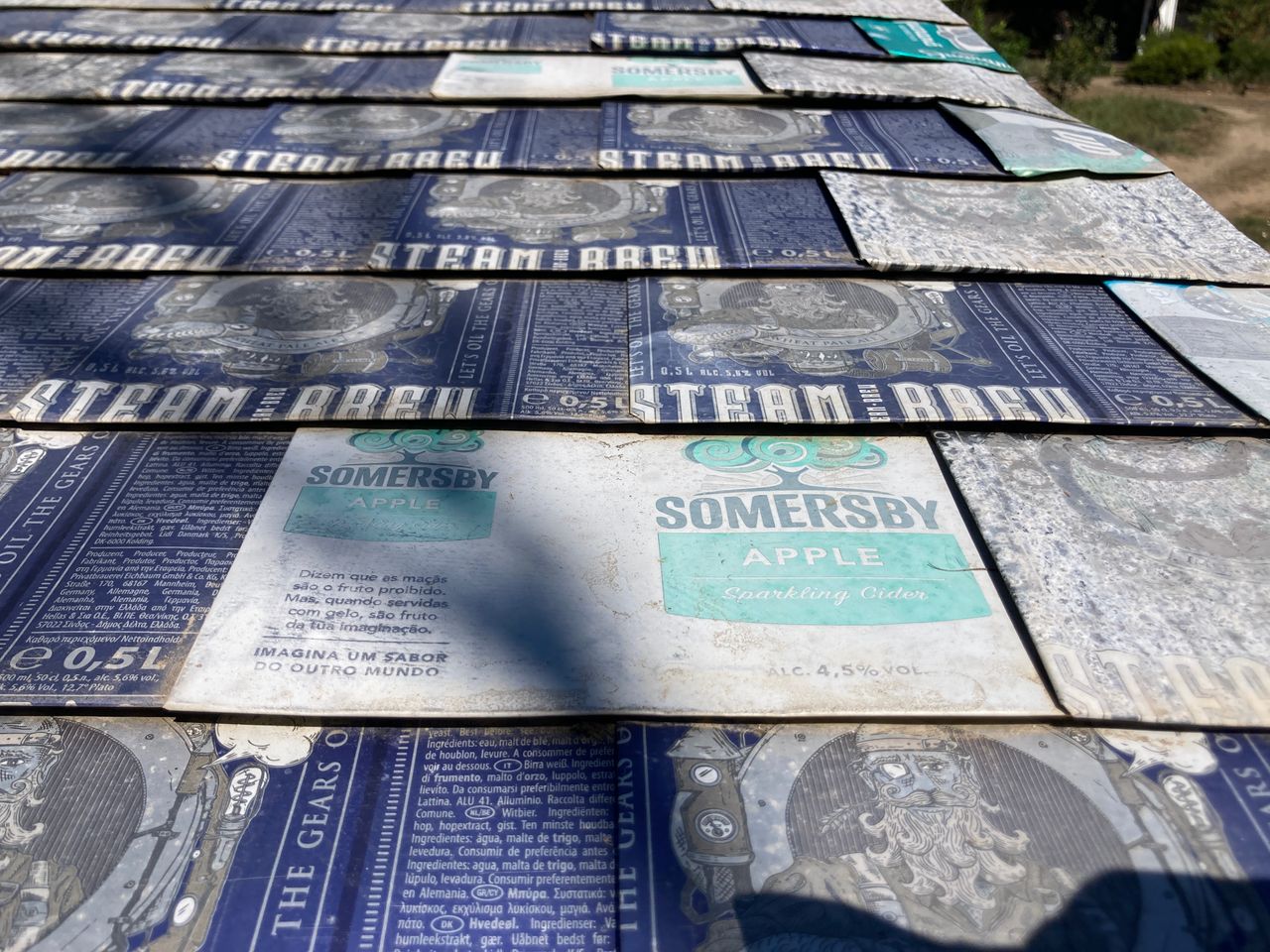
13
Can Slicer - about the blades
The Can Slicer has been a big success since its debut 1.5 years ago.
open sources files have over 3000+ download, 600+ pcs of precious plastic version has been shipped to over 30 countries, big thanks to makers’ love from all over the world.
The key components of the slicer has been the rolling blade which provides a smooth and efficient cut, turning a can into sheet in less than 30 seconds (with some practice). But sourcing the blade wasn’t straight forward since parts available at the hardware store in different parts of the world may vary. This update hopefully can make the process a bit easier.
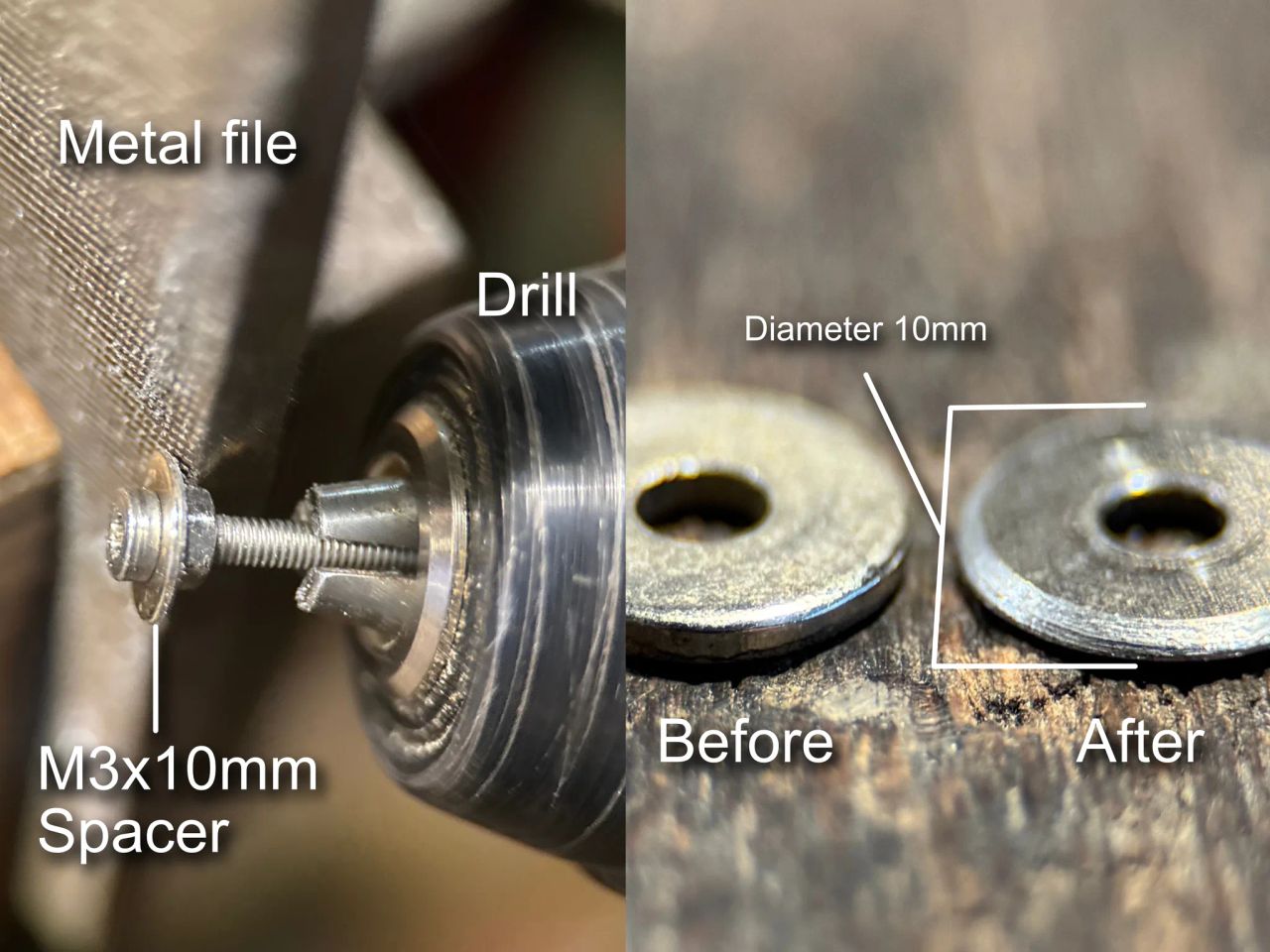
The recommended way to make 2 DIY rolling blades is to file down the edge of a M3x10mm space with a hand drill, metal file and a long M3 screw+nut. (see picture 1)
Some might find this process challenging especially for those with limited tools on hand,
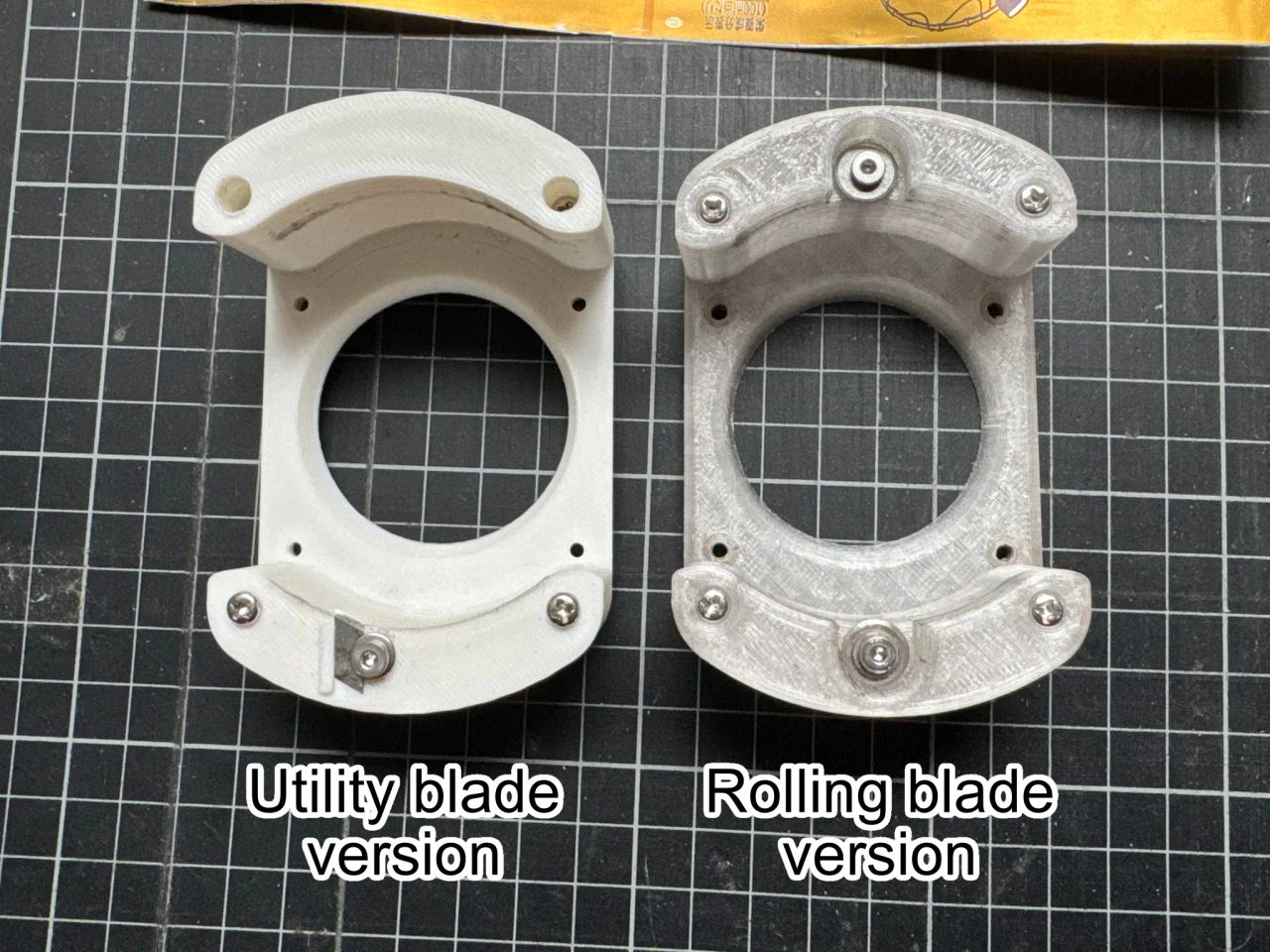
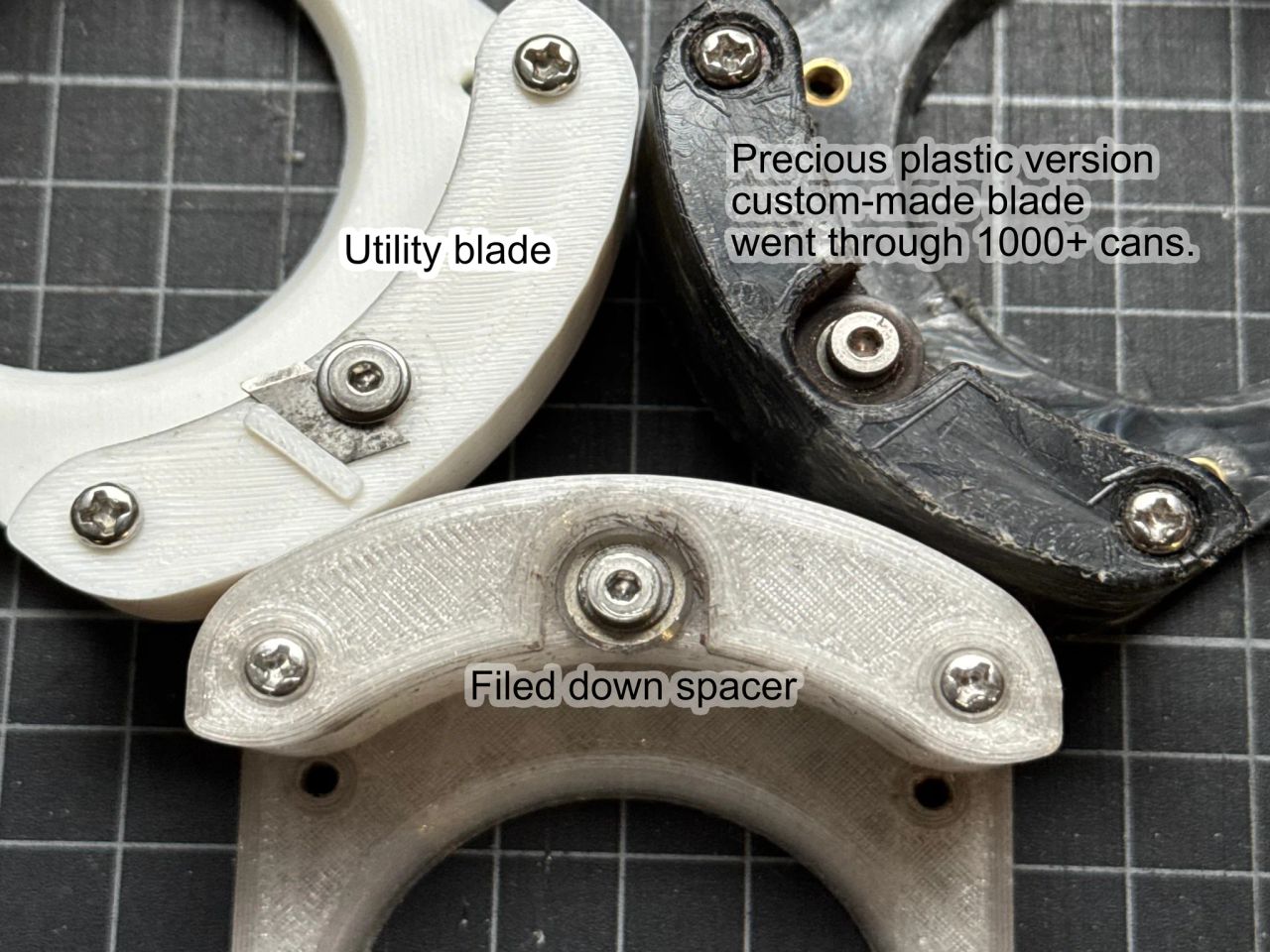
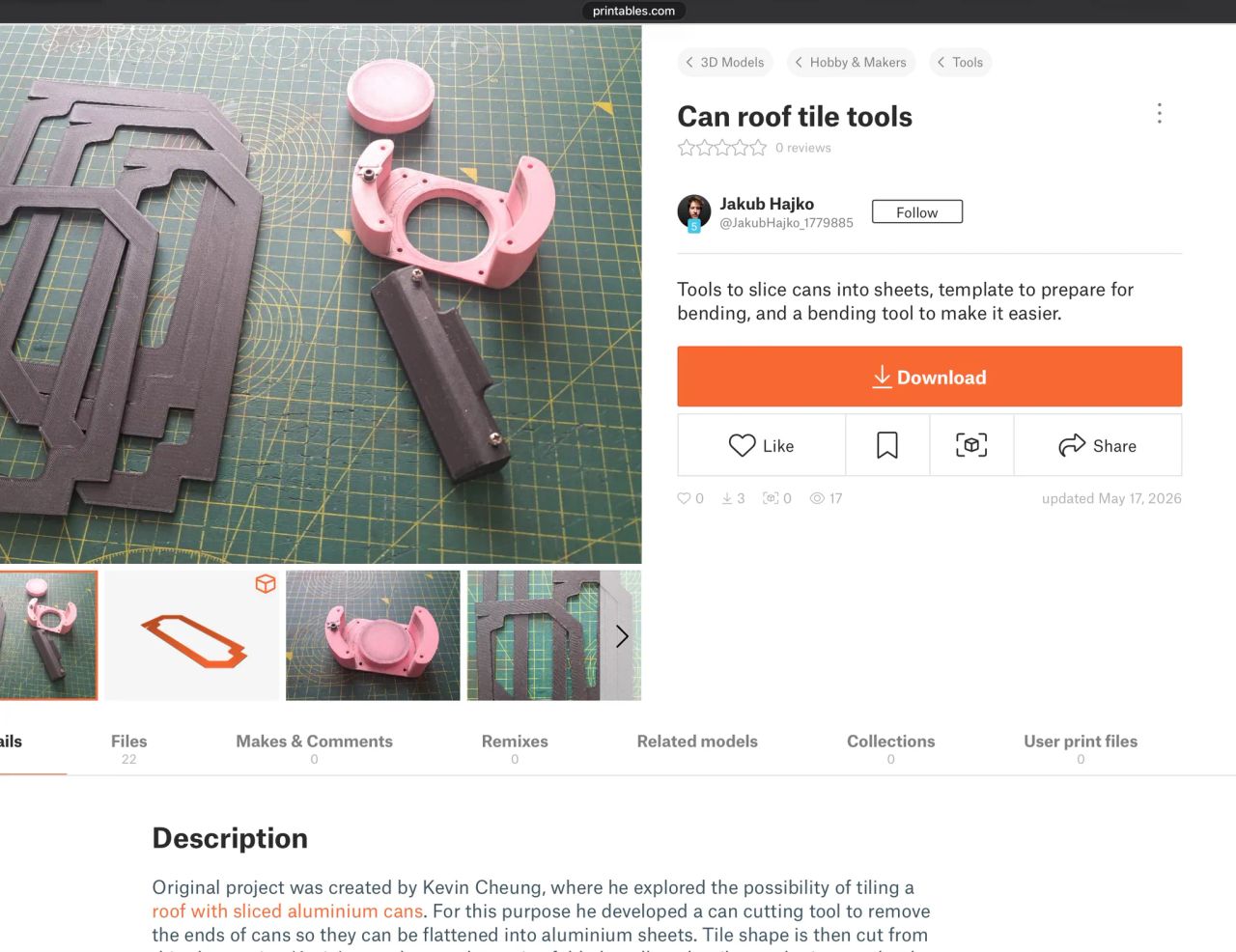
To solve that, maker Jakub Hajko has came up with an alternative version of Can Slicer uses widely available utility blade.
3D printing files can be downloaded via this link: https://www.printables.com/model/1724043-can-roof-tile-tools
(Big thanks to Jaku) (See picture 5)
The utility blade do certainly work and the blade is much easier to source,
but comparing to the rolling blade, the way the utility blade work is by dragging it
on the surface of the can, chipping away the aluminum bit by bit until it brake along the line.
So there will be more wearing on the blade in the process.
Do keep in mind:
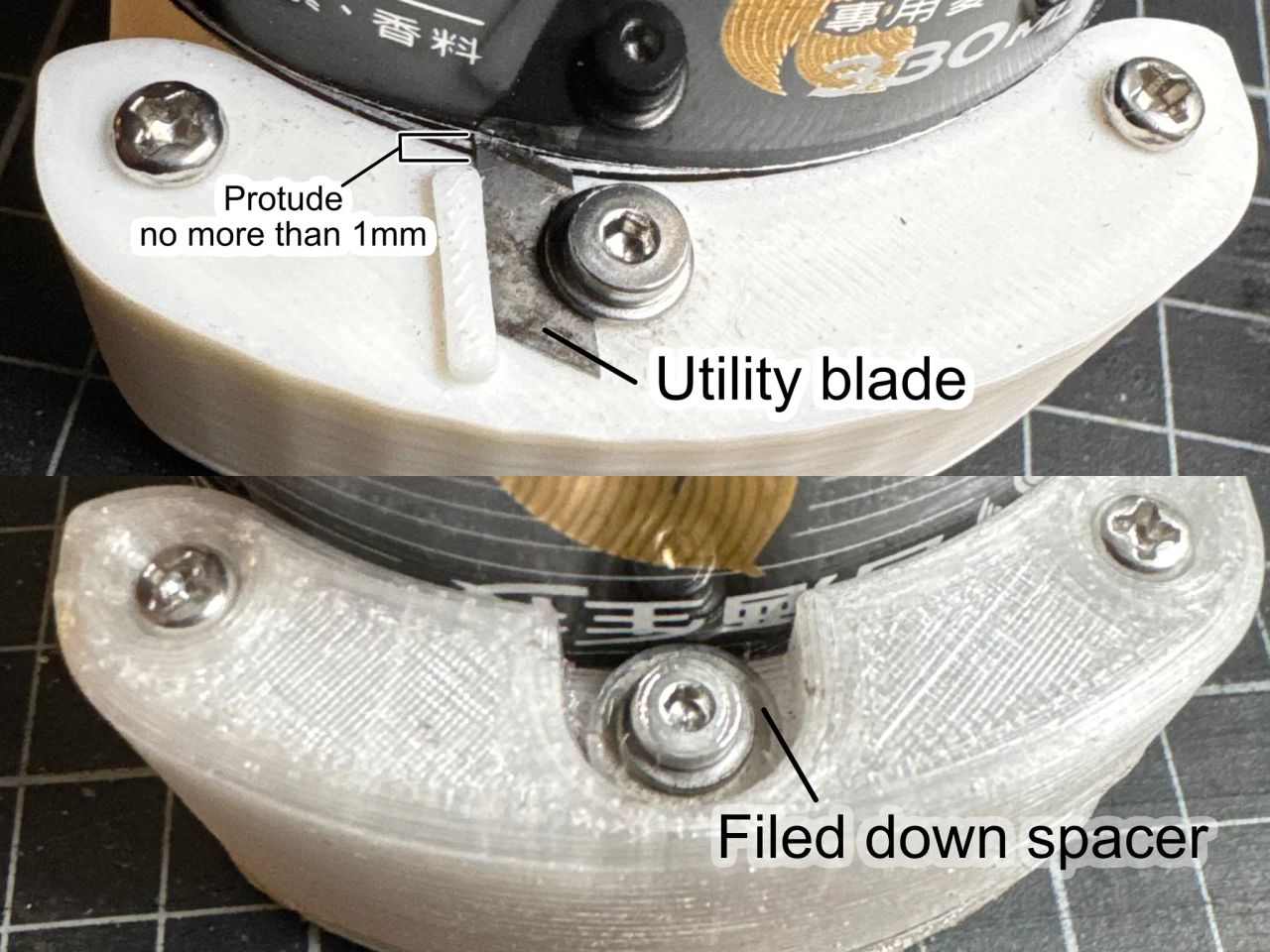
1. Carefully adjust the utility blade, make sure the blade doesn’t protrude more than 1mm (see picture 3).
Pressing the blade into the can will NOT work, it will only work if it touches lightly on the surface without any dent.
2. Change the utility blade regularly and turn the can only in ONE direction and slowly.
Enjoy and happy making!