Can we catch houseflies with simple, DIY fly traps?


More Information


%20--%3e%3csvg%20version='1.1'%20id='Layer_1'%20xmlns='http://www.w3.org/2000/svg'%20xmlns:xlink='http://www.w3.org/1999/xlink'%20x='0px'%20y='0px'%20viewBox='0%200%2064%2063'%20style='enable-background:new%200%200%2064%2063;'%20xml:space='preserve'%3e%3cstyle%20type='text/css'%3e%20.st0{fill:%23231F20;}%20%3c/style%3e%3cdesc%3eCreated%20with%20Sketch.%3c/desc%3e%3cg%20id='Page-1'%3e%3cg%20id='OA-Logo-Black-Background'%3e%3cpath%20id='Shape'%20class='st0'%20d='M14.1,30.1c-1.5-0.8-8.6-3.8-14.1-7.8c1.8-3.4,3.1-5.6,5-9.1c2.7,1.1,1.9,0.5,4.6,1.7%20c0.8,0.4,10.1,4.5,13.8,6.2c2.4,1.1,4.7,2.2,7,3.3L43,30.5l8.1,3.9c4,2,7.2,3.5,11.3,5.5c0.5,0.3-3.7,9.4-3.7,9.4%20c-1.7-0.6-3.9-1.8-5.5-2.5c-4.7-2.1-9-3.9-13.7-6c-4-1.8-6.7-2.9-10.8-4.5C25,34.9,17.1,31.6,14.1,30.1z'/%3e%3cpath%20id='Shape_1_'%20class='st0'%20d='M12.1,54.9c-0.8,0.6-1.6,1.2-2.5,1.6c-0.4-0.5-0.9-1-1.3-1.5c-0.3-1.2-2.3-4.9-2.7-6.2%20c-0.1-0.4-0.7-2.2-0.8-2.6c0,0,5-3.4,8.2-5.9c3.2-2.6,6.2-5,9.3-7.5c1.4-1.1,3.9-2.5,5.3-3.5c2.5-1.7,13-9.1,15.6-10.5%20c5.4-3.3,11.1-6.3,16.8-9c1.7,3.5,1.8,3,3.8,6.9c0,0-17.8,13.5-22.7,17.1c-3.8,2.8-7.5,5.7-11.3,8.5c-1.7,1.3-3.5,2.4-5.2,3.7'/%3e%3cpath%20id='Shape_2_'%20class='st0'%20d='M20.8,2.9l-0.2-0.8C25,0,31.2-0.3,31.4,0.2c0.4,1.1,0.9,2.2,1.2,3.4c1.4,4.4,2.7,8.7,4,13.1%20c0.4,1.4,2.8,10,2.9,10.5c0.5,2.8,1.2,5.6,1.6,8.4c0.8,4.7,1.4,8.6,2.3,13.3c0.6,3.1,1.3,6.3,2.3,11.3c0,0-5.8,1.4-7.5,1.8%20c-0.8,0.2-1.5,0.4-2.4,0.6c-0.3-1.1-0.2-1.2-0.5-2.1c-0.9-3.7-1.8-7.3-2.6-11c-1.5-6.4-3-12.9-4.4-19.3%20c-1.2-5.4-2.6-10.7-4.4-15.9c-1-3.1-1.8-6.3-2.7-9.5C21.1,3.8,21,3.8,20.8,2.9z'/%3e%3c/g%3e%3c/g%3e%3c/svg%3e)


1
Online + local research
There were several methods to our research.
One approach was talking to our neighbours. They recommended using old cooking oil which, for them, would be leftover from frying fish or meat. They have lived in the local region for many decades and swear by it.
Secondly, we looked at what has worked previously at Kamp - personal DIY attempts at trying to ease our fly problem before this research began. What we found so far is:
- A simple trap with water and rotting shrimp worked very effectively around BaseKamp
- The classic sugar water and vinegar / rotting fruit in an inverted-top plastic bottle did not work at all inside the fridgebox or kitchen container
- Our biodigester overflow liquid had previously been a hotspot for flies. Until recently it was an open bucket, but the entry point is now the size of a bottle top. This showed both hundreds of dead flies, and many larvae breeding. Maybe a good trap, but also a fertile breeding ground (plus a very intense smell!)
Finally, we spent some time looking for suggestions online. There are some ideas, but for many different species of fly and variations in climate. This makes us realise our somewhat unique circumstances and encourages us to try and test them out so we can see what works best for us here.
We filtered down results for natural, DIY traps to avoid suggestions for chemical pesticides and prebuilt containers. It was a struggle to find many ideas beyond the basic method of inverting a bottle and mixing something rotting in water, sometimes with dish soap.
There were however several interesting variations suggested which, combined with what we already know, we filtered down to five main approaches…
Useful links from our research:
https://pioneeringthesimplelife.org/2016/03/12/diy-fly-paper/
https://www.goodhousekeeping.com/home/craft-ideas/a32700598/best-homemade-fly-trap/
2
The five traps we will test
The five we will sample around BaseKamp will be:
1. Apple cider vinegar + rice syrup
2. Rotting fruit in water
3. Rotting meat/fish in water
4. Used cooking oil
5. Sticky strips - scrap paper dipped in rice syrup
We aim to make four of each trap, placing one of each in four different locations.
For the first three, we will alternate the structural methods between:
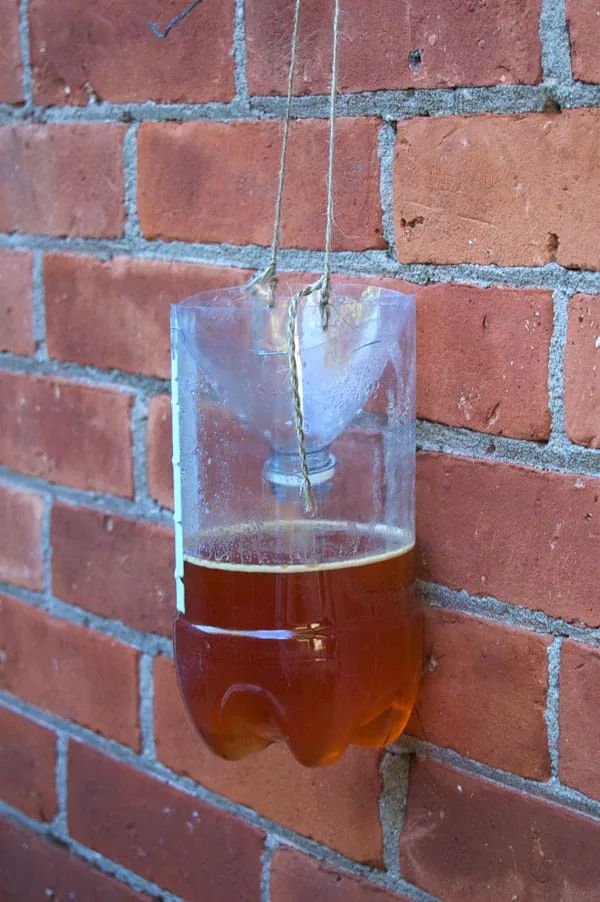
1. A plastic bottle sliced in half, with the top inverted downwards, and the liquid + items inside
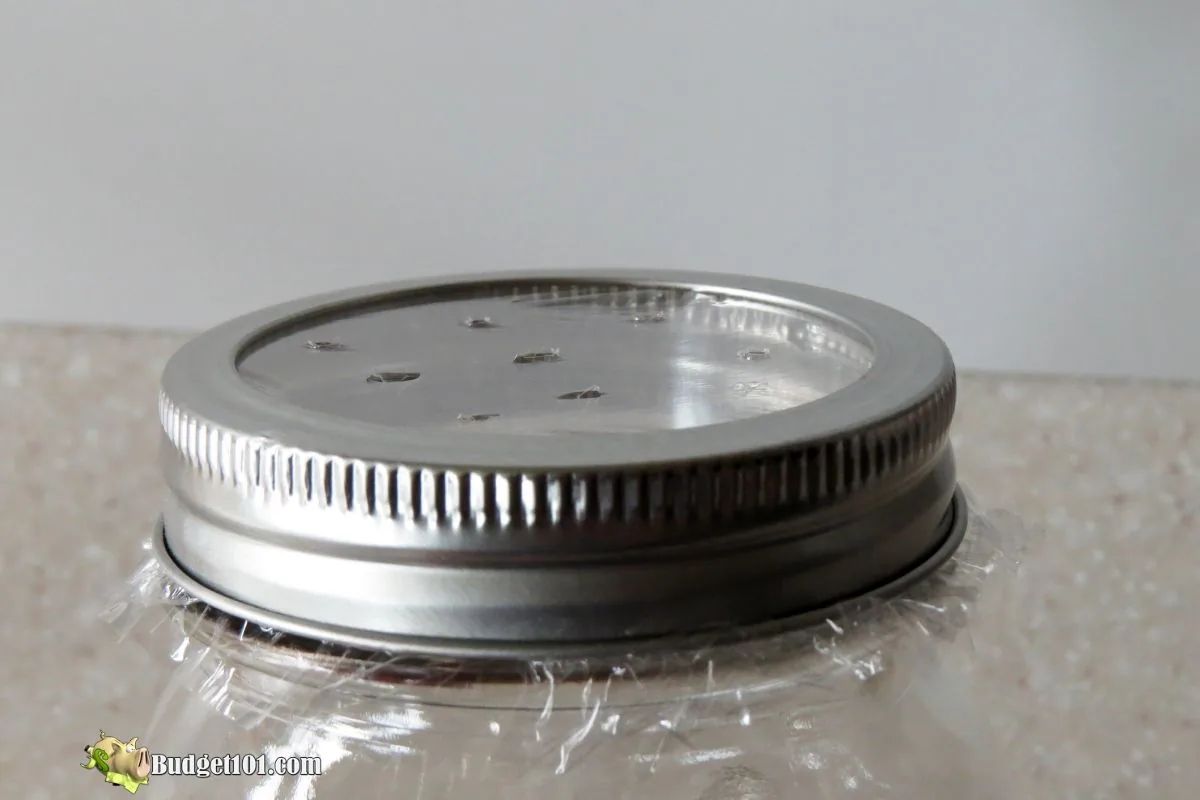
2. A glass jar with holes poked in the lid
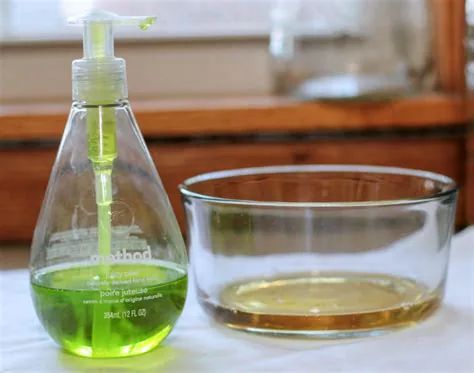
3. An open container with dish soap on the surface
The inverted bottle will provide one bigger point of entry - easier to attract and access. (This could also be done with a jar and a sheet of paper rolled into a cone.)
The jars will have several, smaller holes - harder for the flies to escape, yet still big enough for houseflies to enter
The open container should attract most from smell, and we are curious to see if the dish soap is enough to prevent them flying away without any physical barrier
For the used cooking oil, this will just be in an open container by itself. Our understanding is that the stickiness of the oil is enough to incapacitate the flies without any need for a physical structure
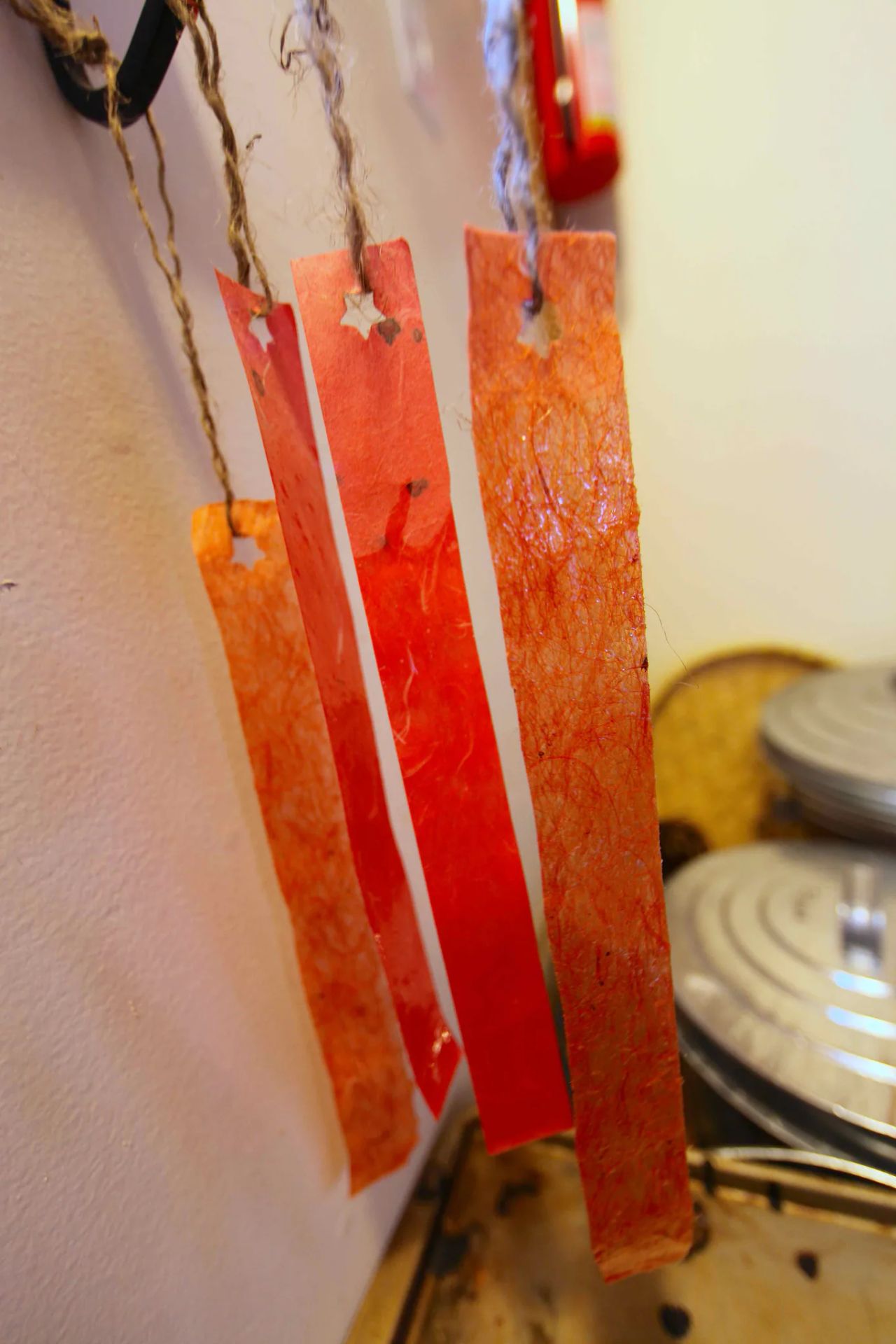
The sticky strips are a different approach altogether. The plan is to boil a mixture of rice syrup, sugar, and water until sticky, and coat several strips of paper in the mixture. Hopefully the residue is sweet enough to attract the flies and sticky enough to trap them on the paper permanently. We aim to use rice syrup rather than purchasing honey for these traps as it is in line with the ethos of the project. The rotting meat and leftover cooking oil we will only use if it is a waste product going to landfill.
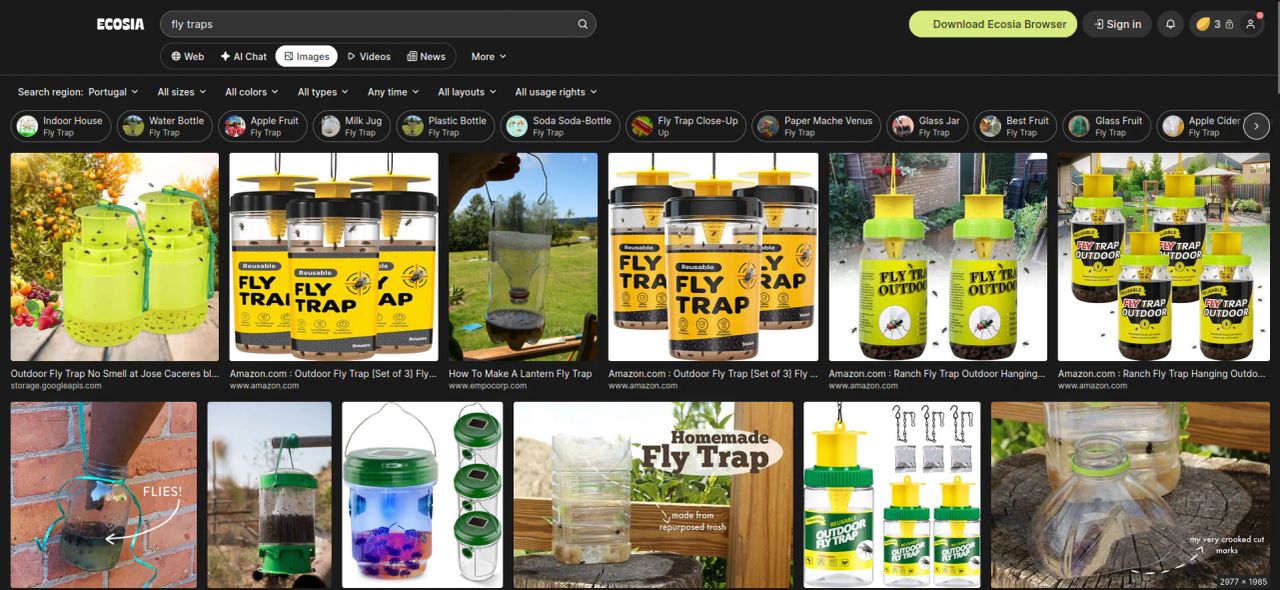
Images below are from the internet, used for inspiration
3
Making the traps
Sourcing our materials for the traps wasn't too difficult. The materials used were either already on-site or we reached out to our neighbours for them.
For each of the five traps, the process was:
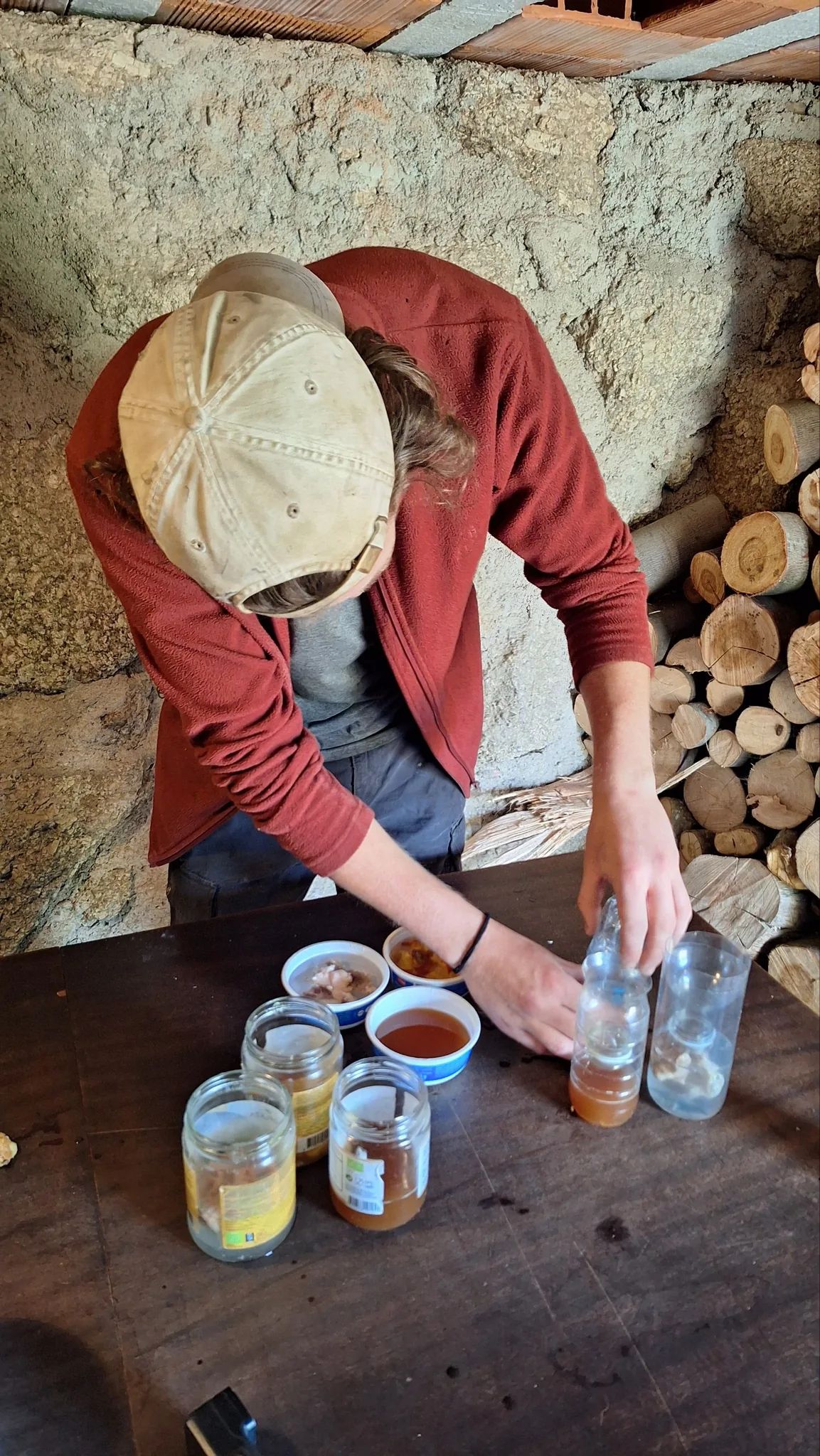
1) Inverted bottle: 1x plastic drink bottle, the top cut of with a sharp knife, the bottle cap removed, the bottom half of the bottle filled with the trap contents, and the top half placed inside so that it acts as a funnel downwards
2) Jar with holes: 1x glass jar with a metal lid, 5 holes hammered into the lid using a large nail, equally spaced out, and the trap contents put inside the jar with the lid sealed afterwards
3) Container w/ dish soap: 1x plastic tub (in our case an empty mascarpone container from the recycling), the trap contents filled into the container, and a drop of dish soap put on the surface
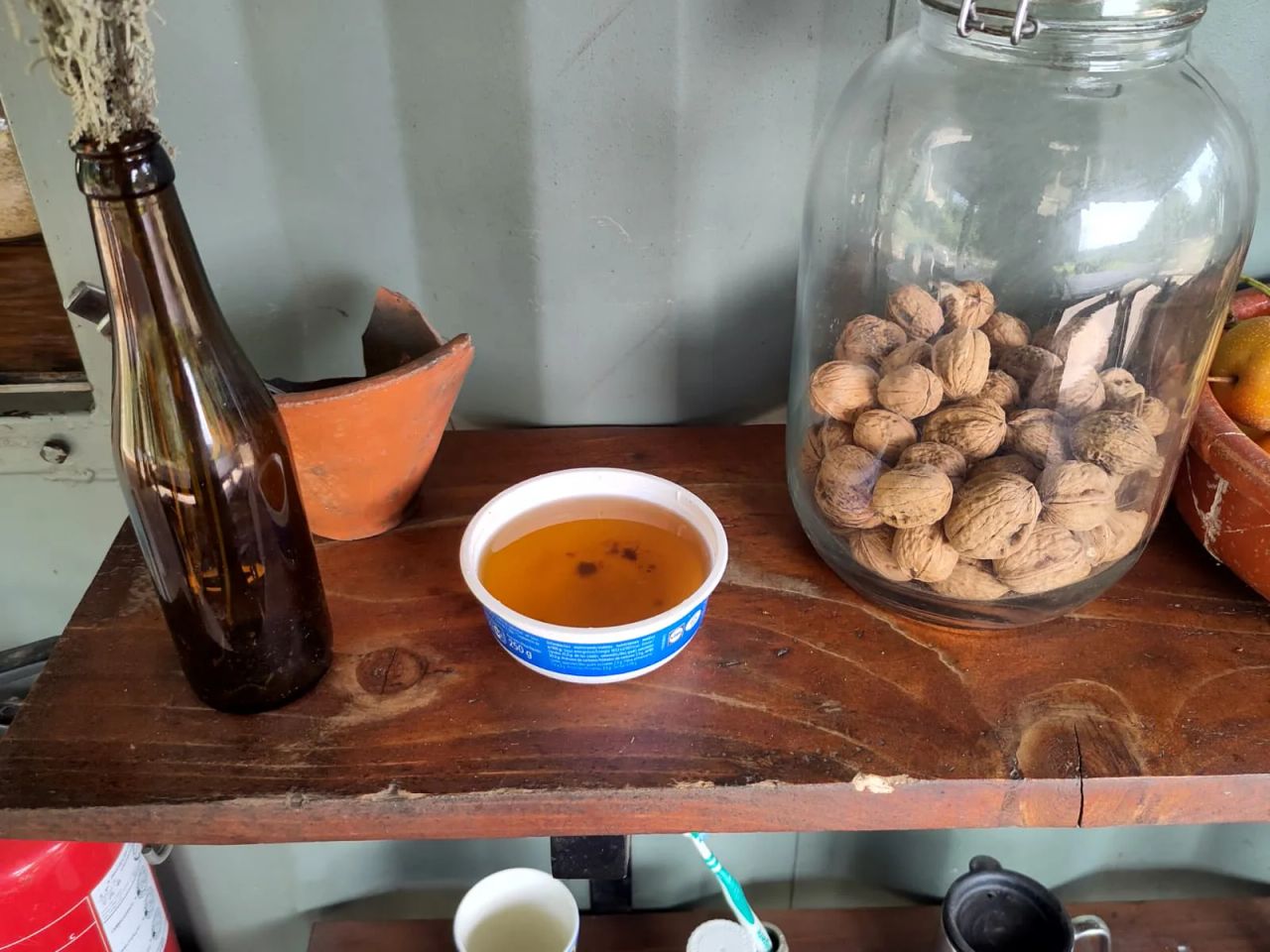
4) Container w/ cooking oil: 1x plastic tub (same as previous), filled with the used cooking oil we sourced from a local restaurant who had used it for deep frying meat and vegetables and planned to dispose of it.
5) Sticky traps: 1x strip of scrap paper ~10cm x 30cm, (we tried both writing paper and receipt papers to see if it made a difference), with a hole through the top of each strip, and two of these tied together with string, to make a loop big enough to hang somewhere. The strips were coated in a sticky residue consisting of rice syrup, sugar, and water, at a ratio of 2:2:1, and boiled on the stove until sticky. Once coated by smearing them in the pot, the strips were hung up to dry before being installed
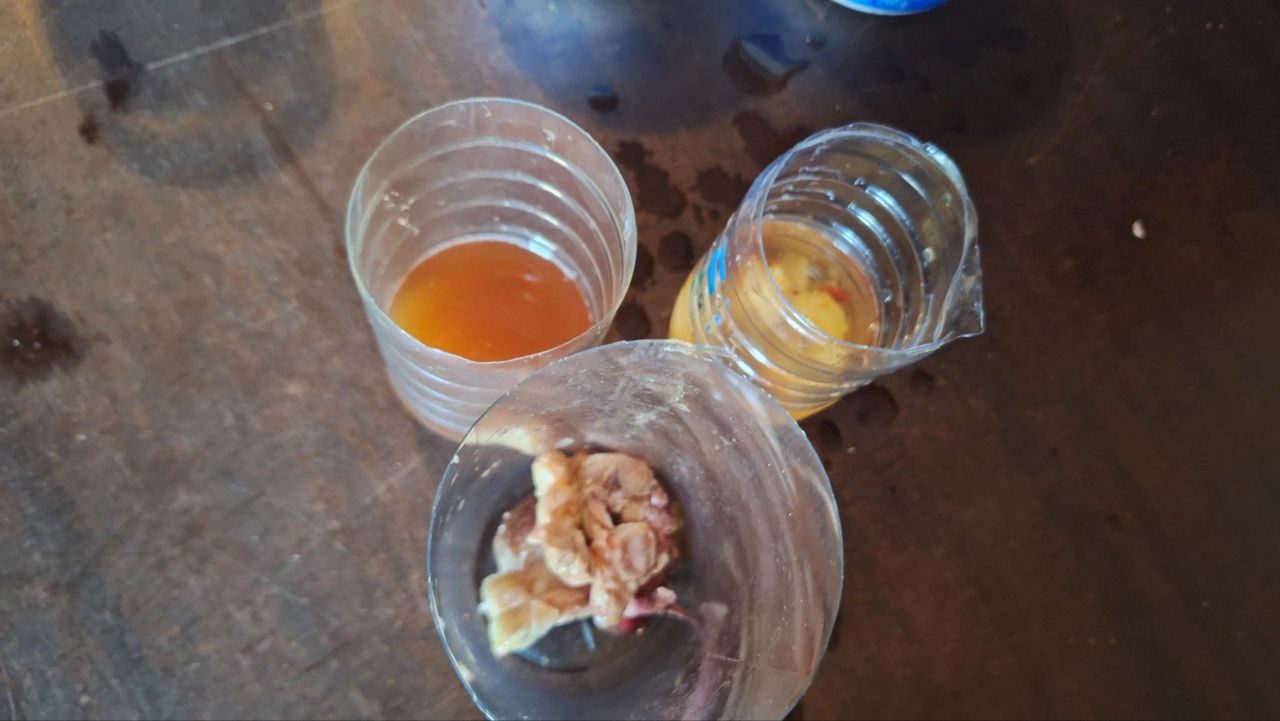
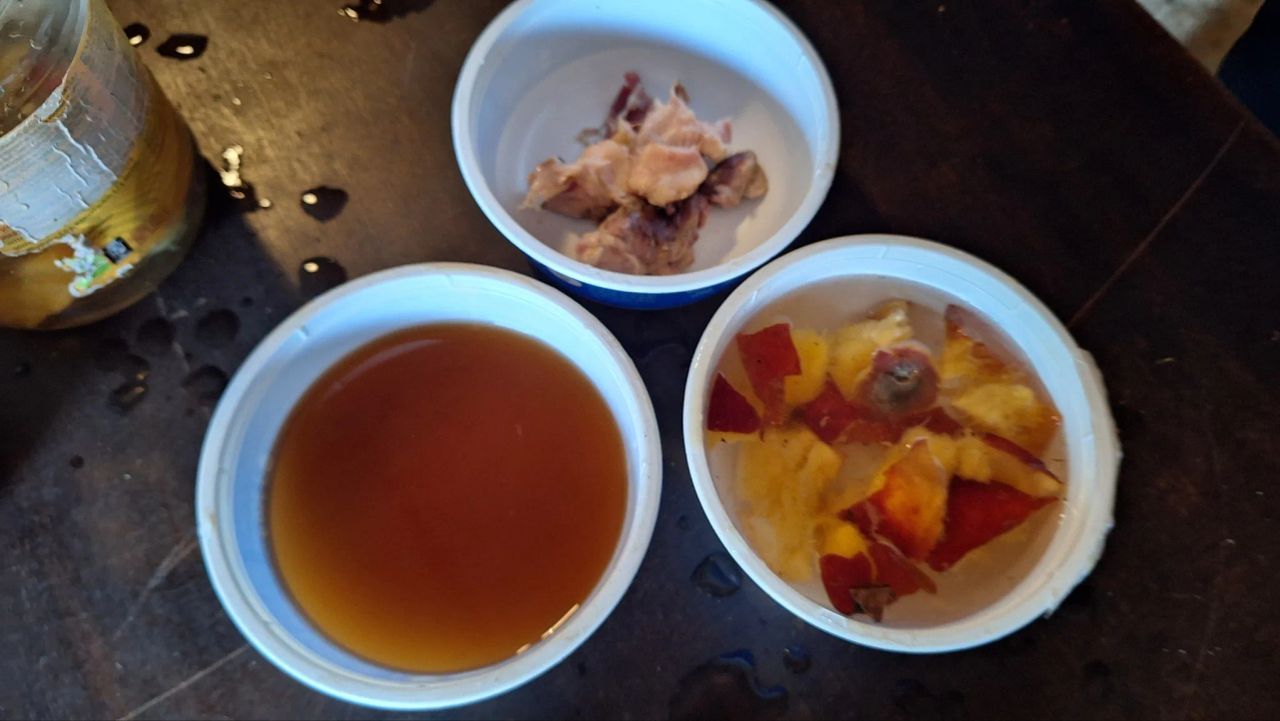
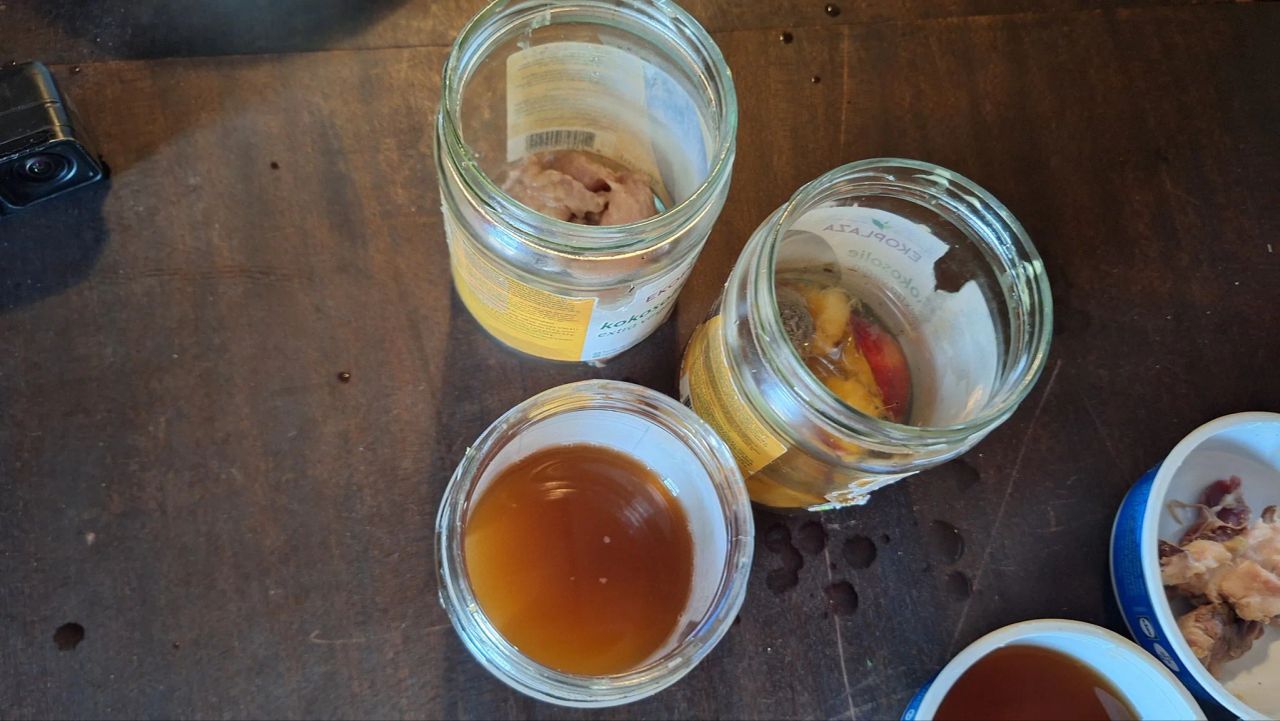
The contents for the first three traps were as follows:
A) ~100ml apple cider vinegar, bought from our local supplier, mixed with a tablespoon of rice syrup
B) 1x mouldy fruit (nectarine in our case), cut into pieces and covered with water
C) ~100g scrap meat (pork from a local restaurant’s bin in our case) left to rot for several days, teared into smaller pieces, and covered with water
In total, we made 15 traps - 3 of each, and the process took approximately 3 hours.
4
Location of 3 trap test sets
We decided to install one of each of these traps in three different locations - those with the highest reported presence of flies:
- Our kitchen
- Our toilet
- Our office
Each is marked respectively with a yellow X in the image below to show where they are on our land relative to one another.

5
Update after 1 hour
After 1 hour of the traps being set in the locations, we checked in to see how the traps were holding up and if any flies had been caught
Notes:
- The sticky traps did not appear to have set properly. Maybe the mixture needed to boil for a while longer, as they were still dripping and we could notice flies landing on the surface and flying away again.
- There was a faint smell from the apple cider vinegar traps but the smells had settled greatly and were not as unpleasant as when making the traps
- It was a relatively windy day, causing the sticky traps in the kitchen to stick together. Despite the weather there were still hundreds of flies in each location
Fly count:
Kitchen
- Vinegar w/ rice syrup (bottle): 0
- Rotting fruit (open w/ soap): 0
- Rotting meat (jar): 1
- Cooking oil: 0
- Sticky strips: 0
Toilet
- Vinegar w/ rice syrup (jar): 0
- Rotting fruit (bottle): 0
- Rotting meat (open w/ soap): 1
- Cooking oil: 0
- Sticky strips: 0
Office
- Vinegar w/ rice syrup (open w/ soap): 0
- Rotting fruit (jar): 0
- Rotting meat (bottle): 0
- Cooking oil: 0
- Sticky strips: 0
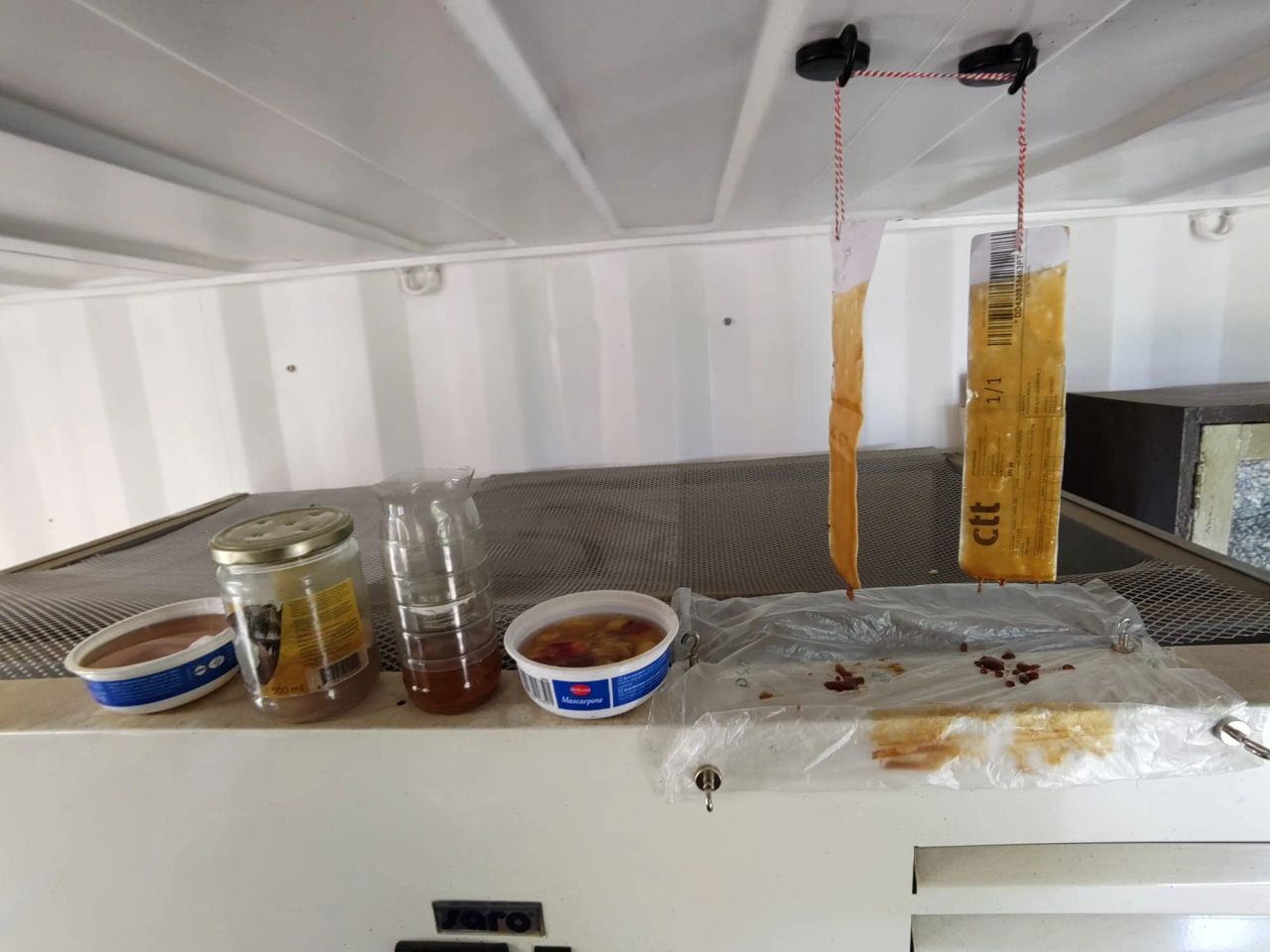
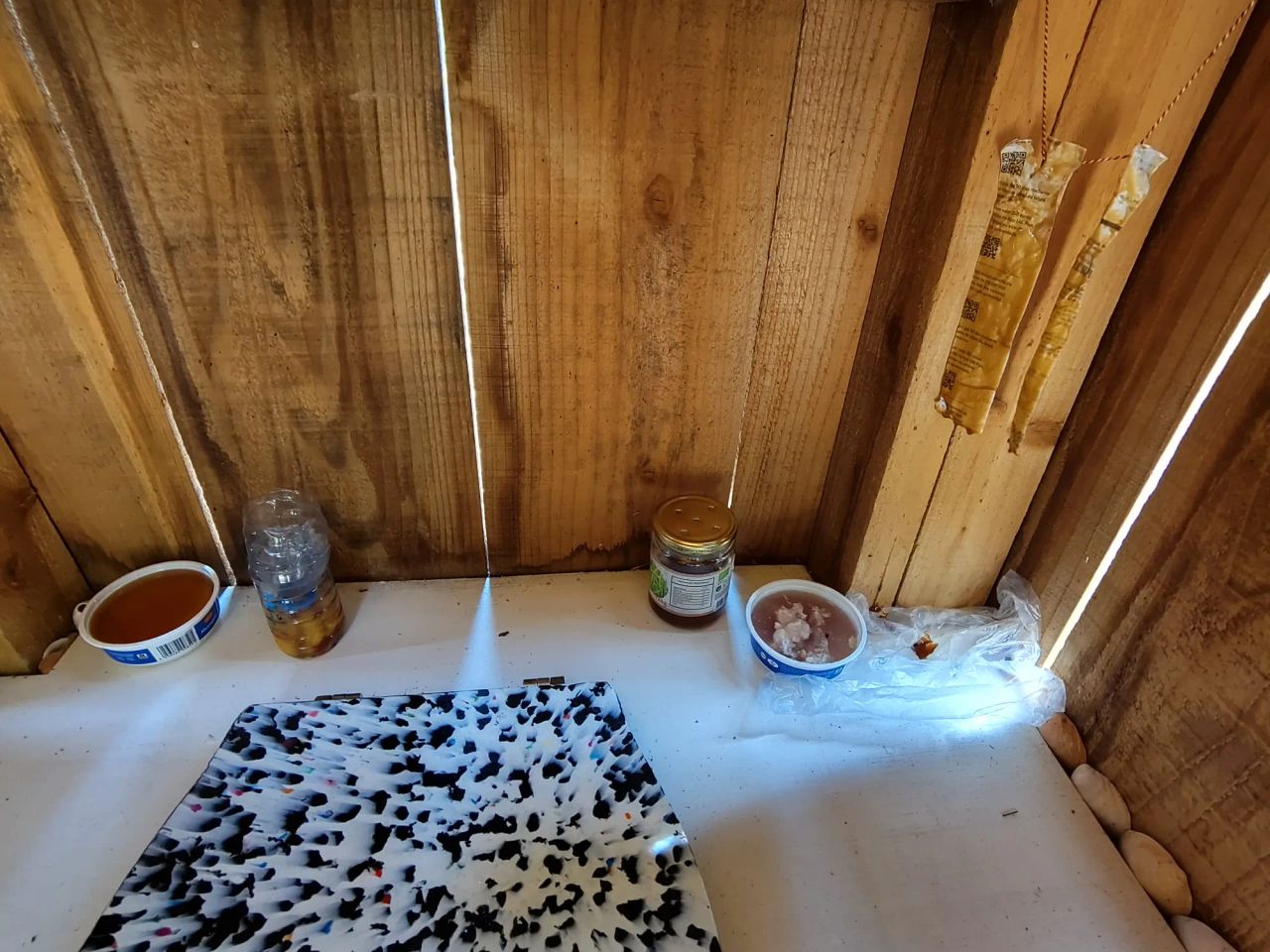
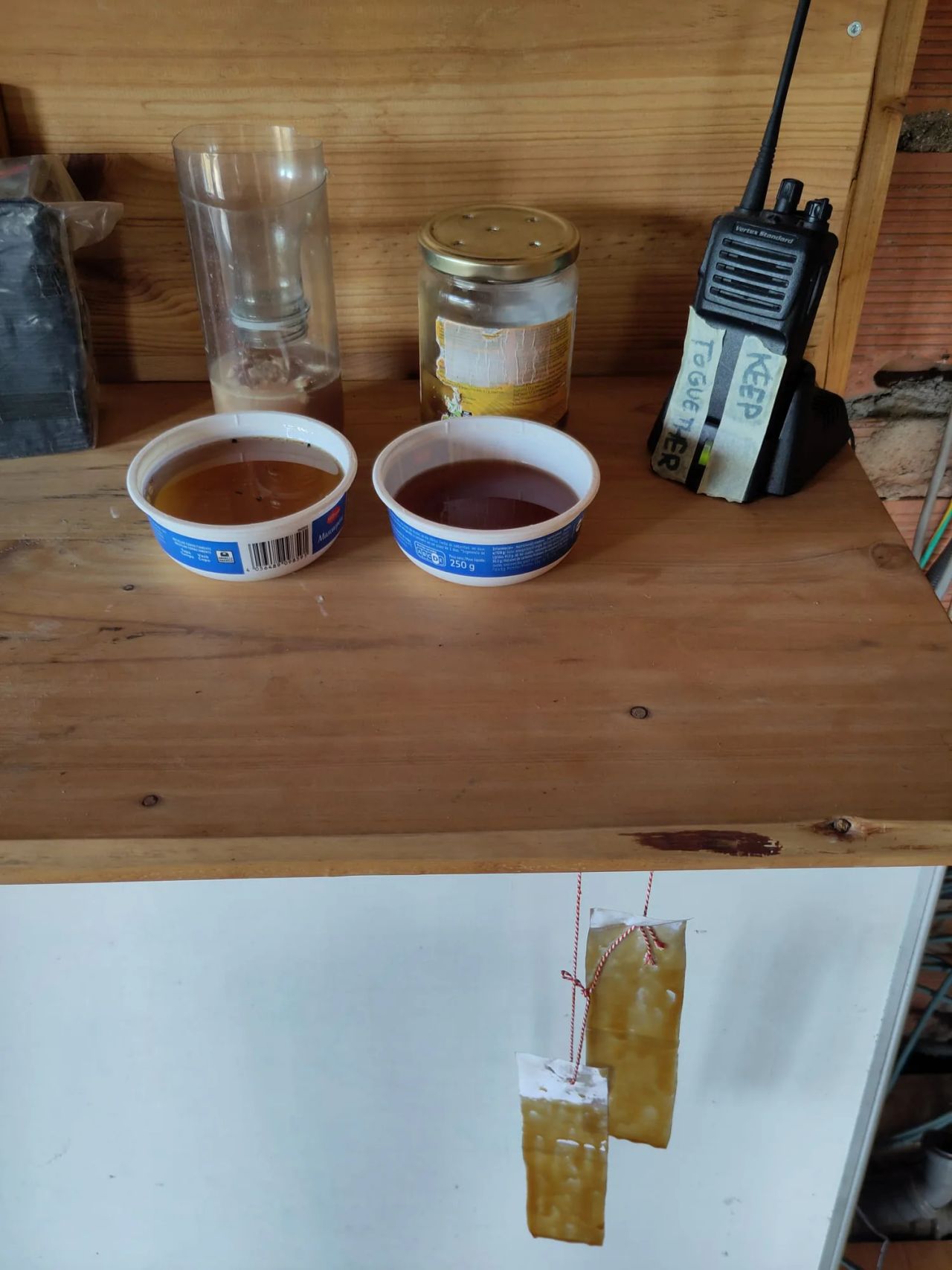
6
Update after 1 day
Notes:
- The sticky traps had dripped so much that the paper was relatively clear of any residue. Definitely not boiled enough to the sticky texture which is required of these.
- The wind continued in the kitchen, causing the sticky traps to blow off their hooks many times. The sticky traps in the other two locations also stuck together multiple times.
- The smell of the traps in the office was strong enough to cause those using the space to remove several, as they mentioned it was more difficult working with the smell of the traps than with the presence of the flies. These were the open container with vinegar, rice syrup, and dish soap, and the inverted bottle with rotting meat.
- There was a complaint about the smell of the open container with rotting meat, water, and dish soap in the toilet
- The weather changed to rain (not typical for late June in Portugal). The fly populations remain high however with many flying around the fly traps, without going for the bait. Particularly in the kitchen, there were hundreds circulating around the space and the cooked food, many of which were swatted after observing their lack of interest in the traps.
- A clear winner streaked ahead with the open container of used cooking oil in the kitchen containing 9 dead flies.
- No flies were caught in the office traps including those which were moved outside (where there are still significant numbers of flies)
Fly count:
Kitchen
- Vinegar w/ rice syrup (bottle): 0
- Rotting fruit (open w/ soap): 1
- Rotting meat (jar): 3
- Cooking oil: 9
- Sticky strips: 0
Toilet
- Vinegar w/ rice syrup (jar): 0
- Rotting fruit (bottle): 0
- Rotting meat (open w/ soap): 3
- Cooking oil: 1
- Sticky strips: 0
Office
- Vinegar w/ rice syrup (open w/ soap): 0
- Rotting fruit (jar): 0
- Rotting meat (bottle): 0
- Cooking oil: 0
- Sticky strips: 0
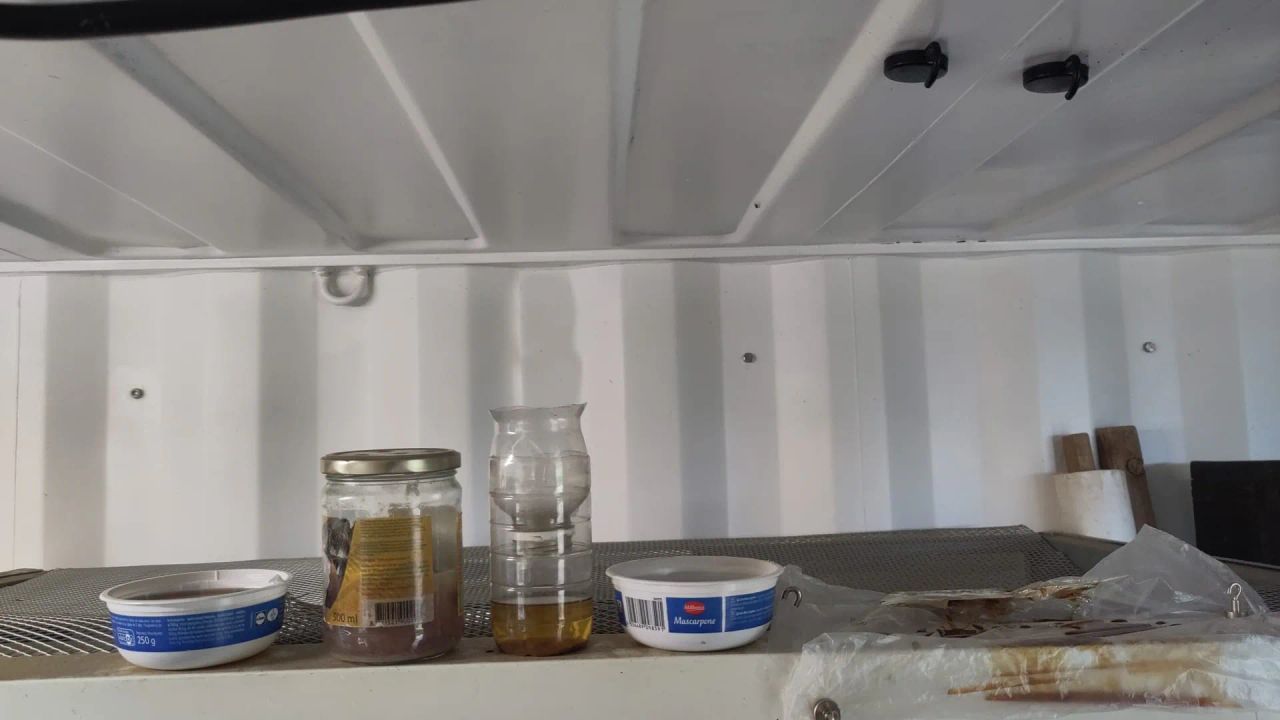
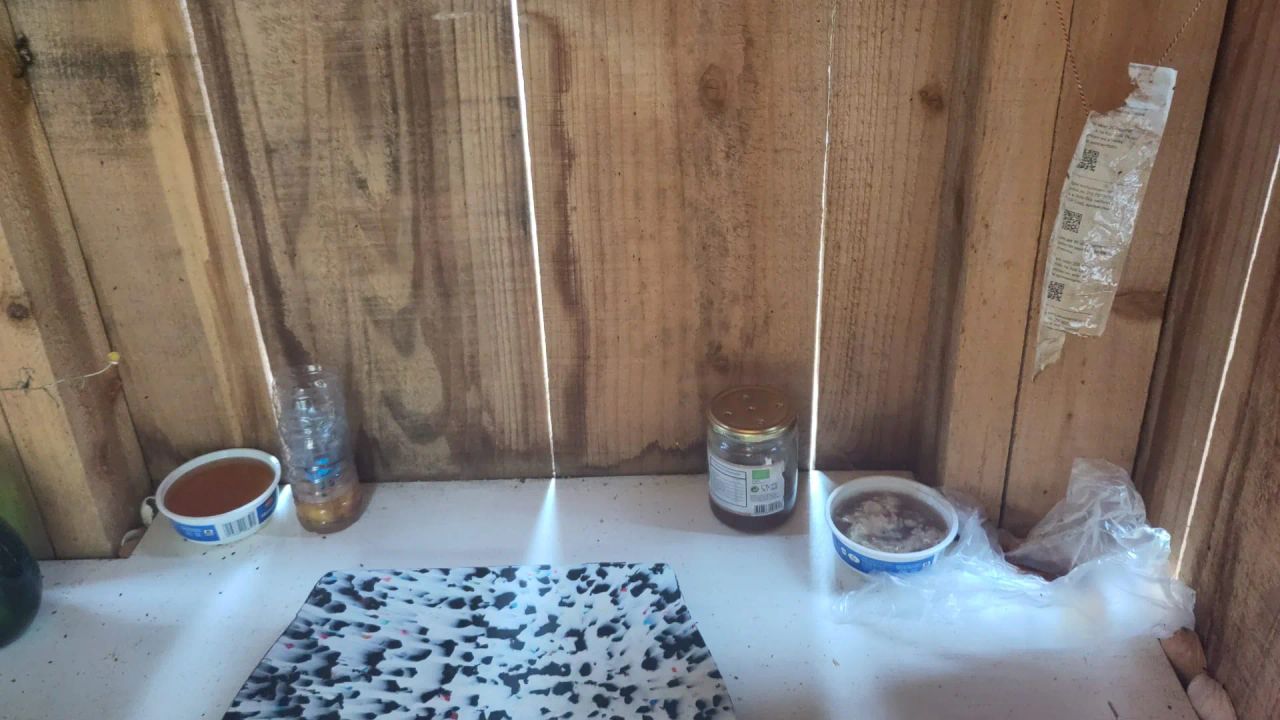
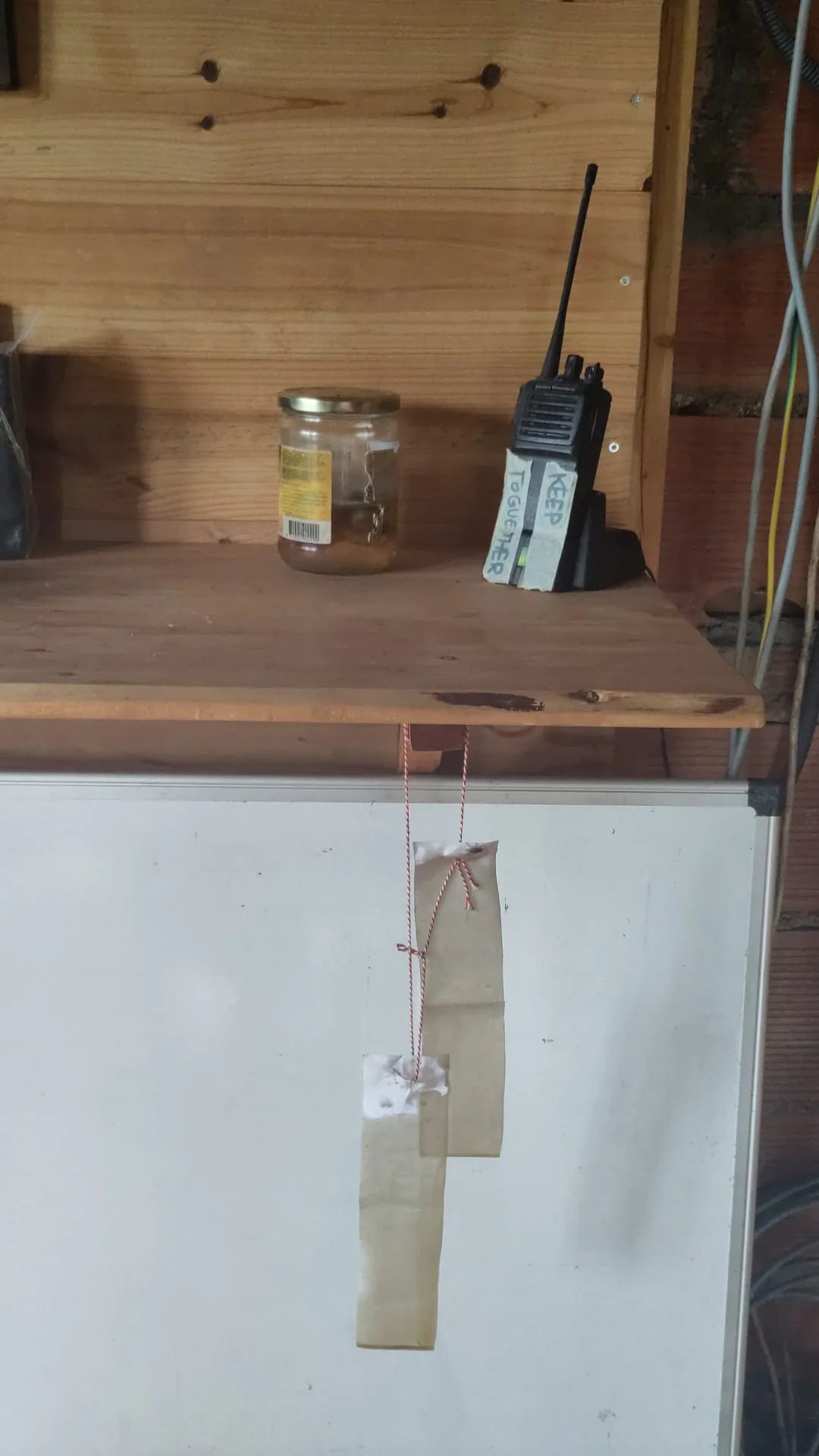
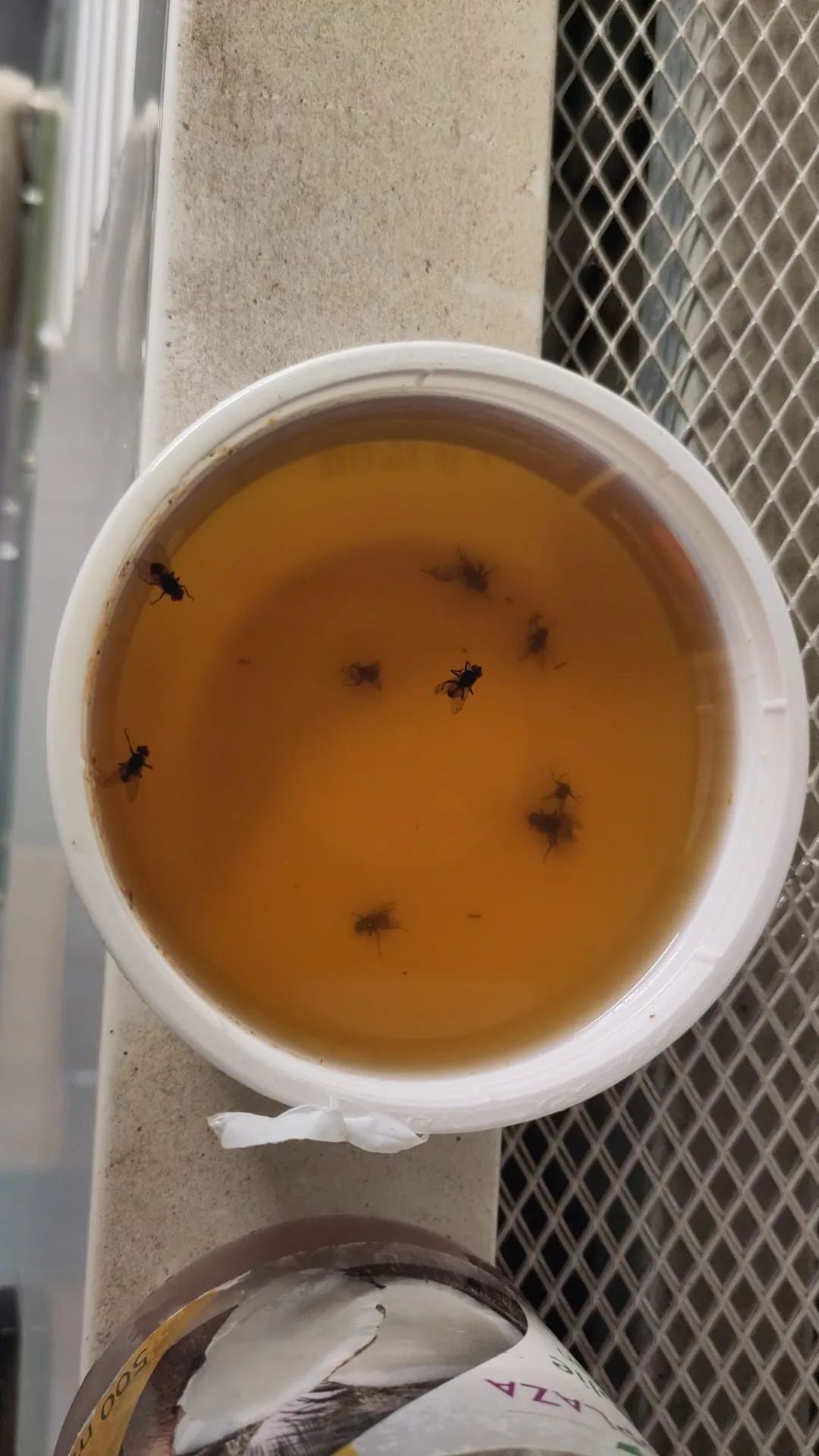
7
Update after 3 days
Notes:
- We removed the sticky traps as they had not worked. The paper was clear of most residue, although seemed to attract many flies, which would then fly away upon tapping the paper
- The traps which we moved to outside the office began to have more success, whereas the remaining jar of rotting fruit in water continued to be unsuccessful.
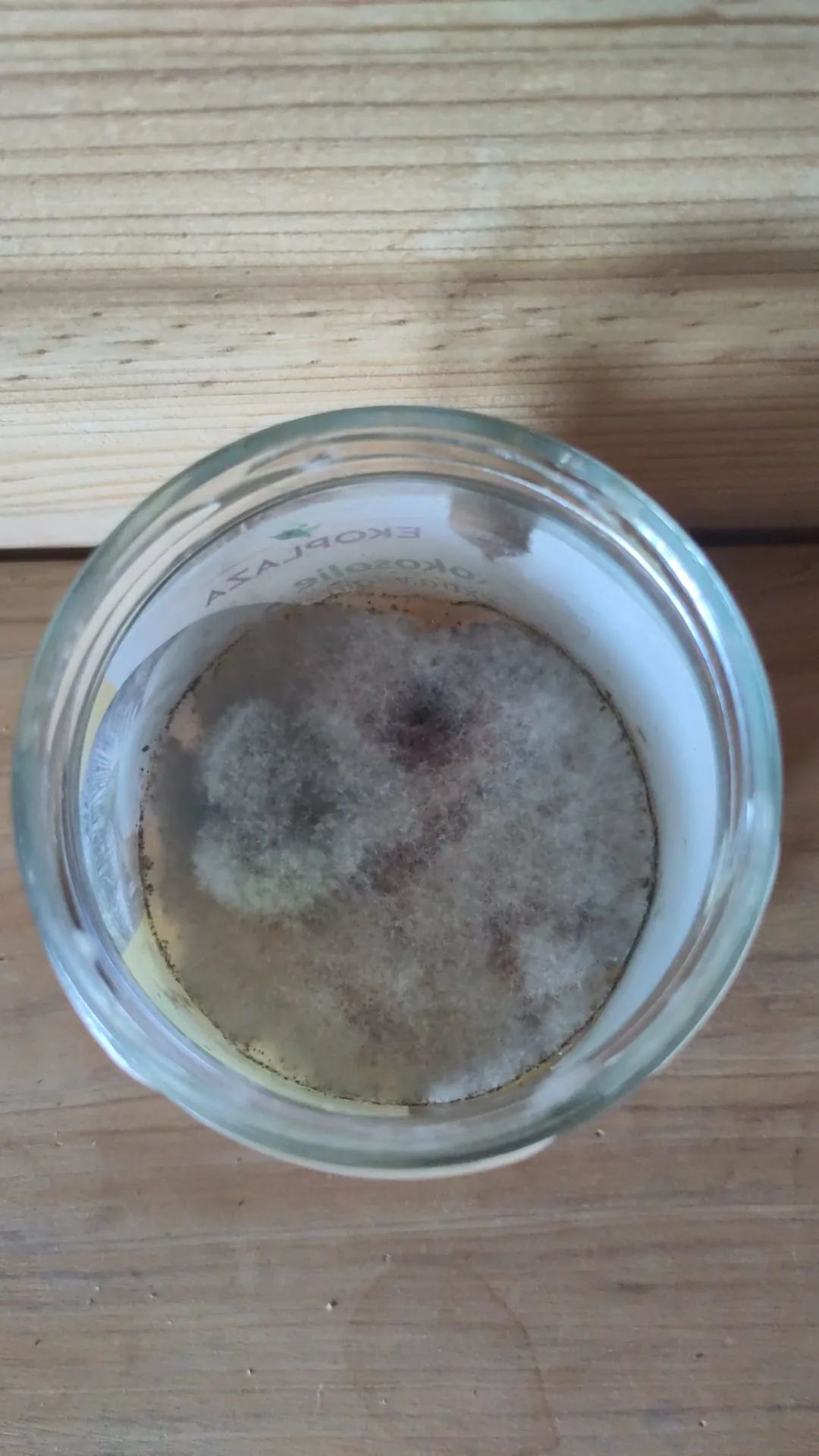
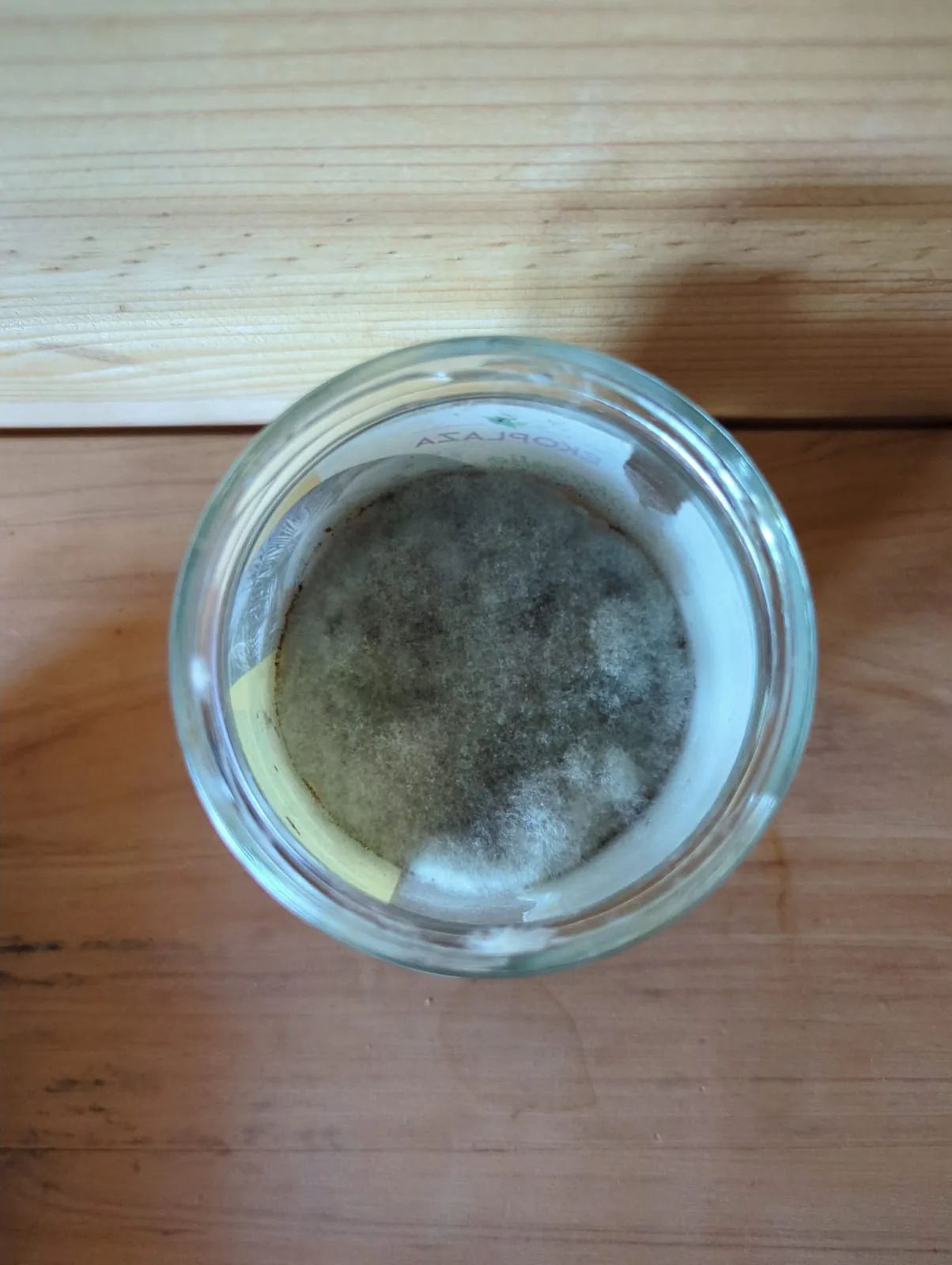
- All traps containing the rotting fruit in water appear to have floated to the surface and formed a thick layer of fluffy mould
- There was a second complaint about the smell of the rotting meat in the toilet
- The weather continued to be rainy and mild (~24 degrees - 10 degrees cooler than usual). The fly populations seemed quieter than usual for this reason, although still very present in the kitchen
- The best trap by far continues to be the open container of used cooking oil in the kitchen, now containing 22 dead flies!
Fly count:
Kitchen
- Vinegar w/ rice syrup (bottle): 4
- Rotting fruit (open w/ soap): 1
- Rotting meat (jar): 3
- Cooking oil: 22
- Sticky strips: 0
Toilet
- Vinegar w/ rice syrup (jar): 0
- Rotting fruit (bottle): 0
- Rotting meat (open w/ soap): 2
- Cooking oil: 3
- Sticky strips: 0
Office
- Vinegar w/ rice syrup (open w/ soap): 4
- Rotting fruit (jar): 0
- Rotting meat (bottle): 2
- Cooking oil: 3
- Sticky strips: 0
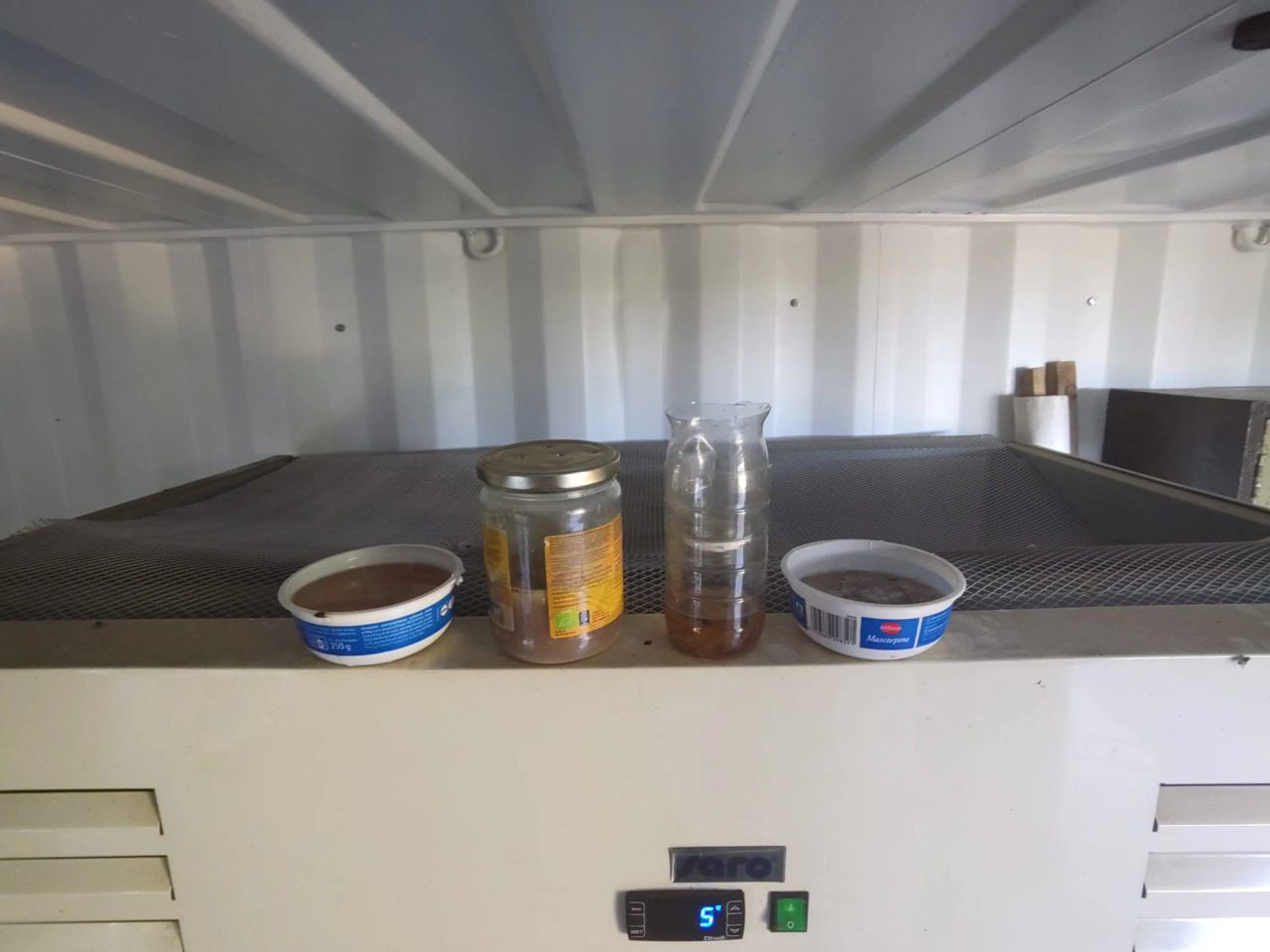
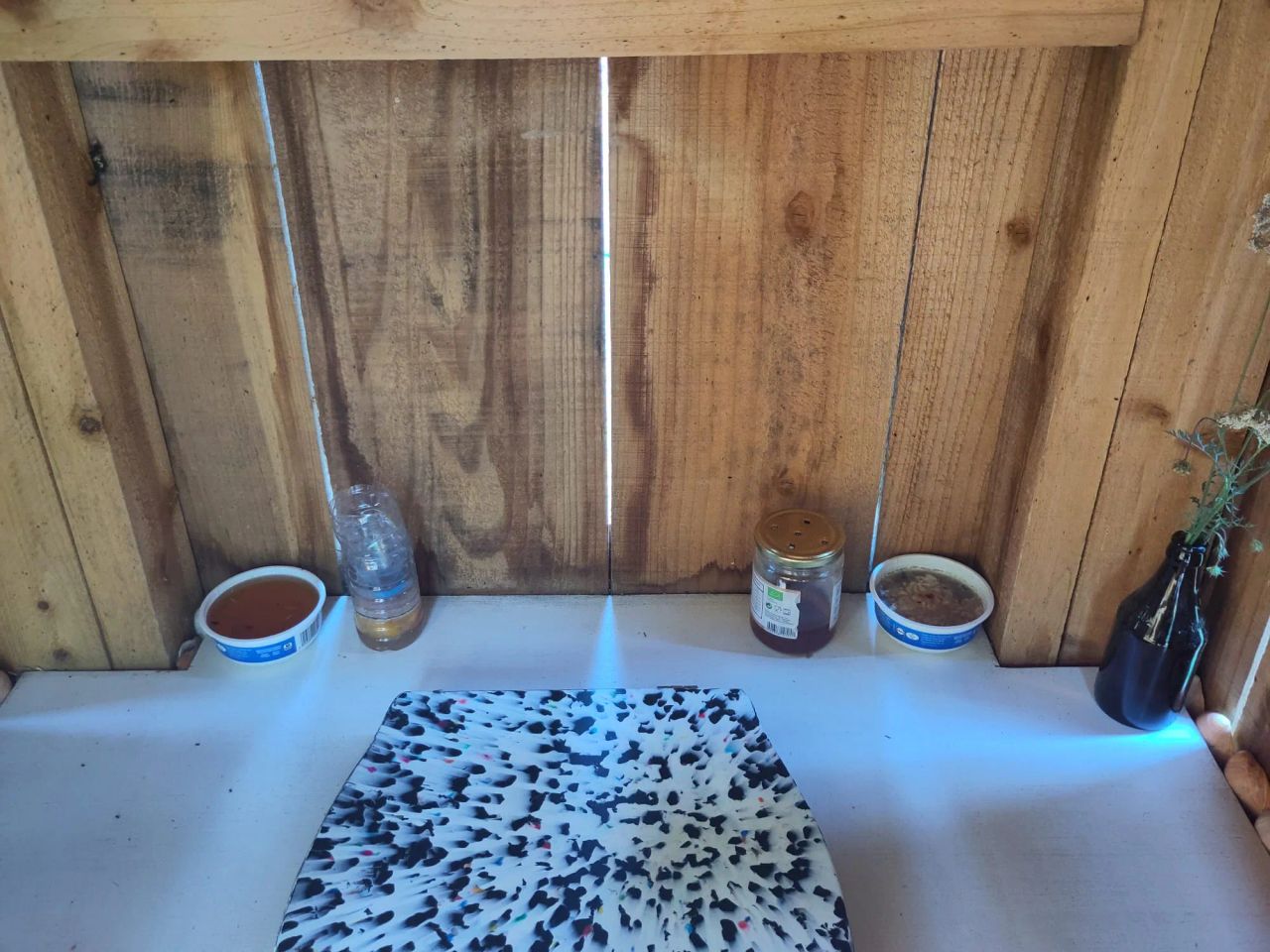
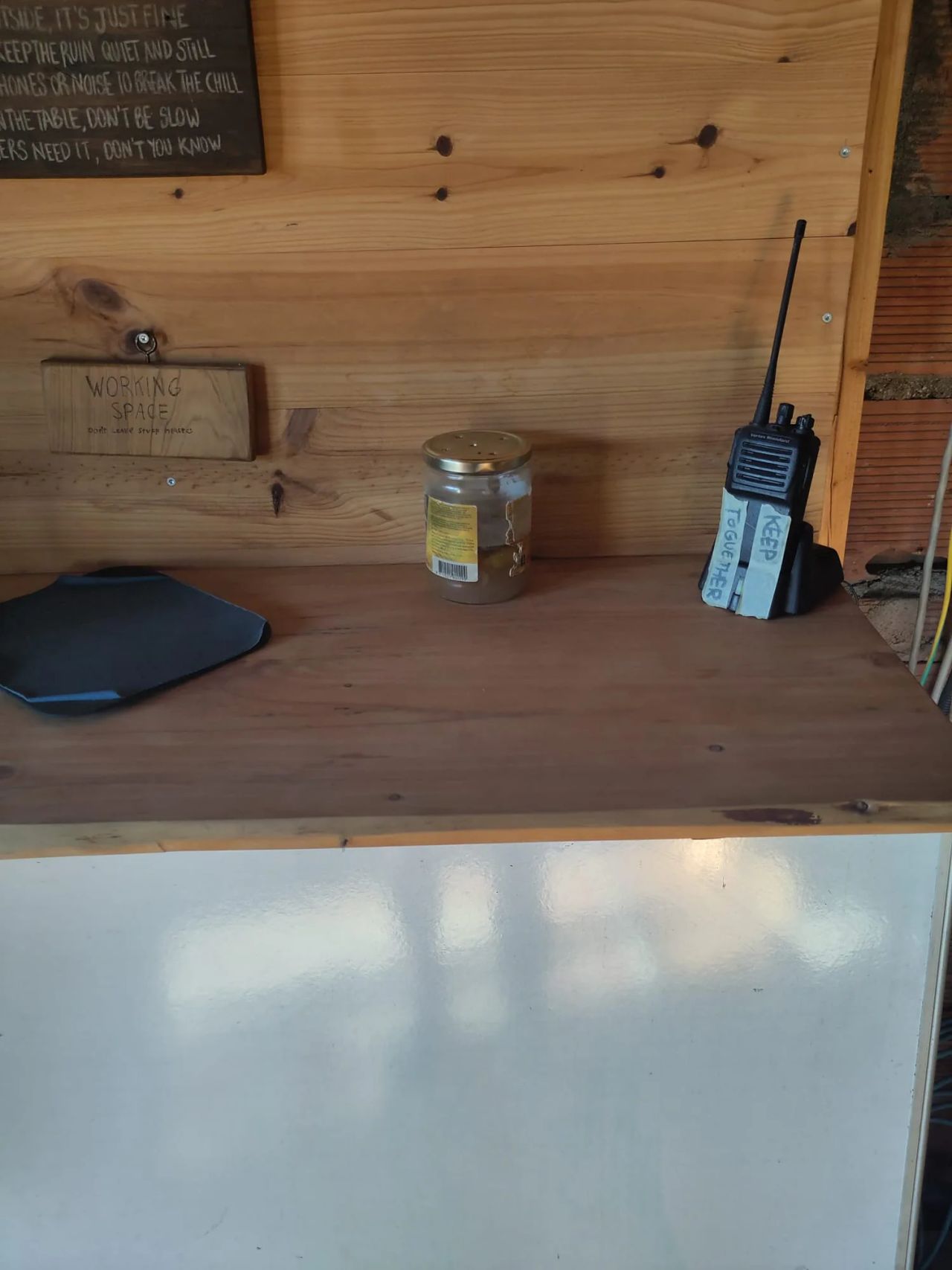
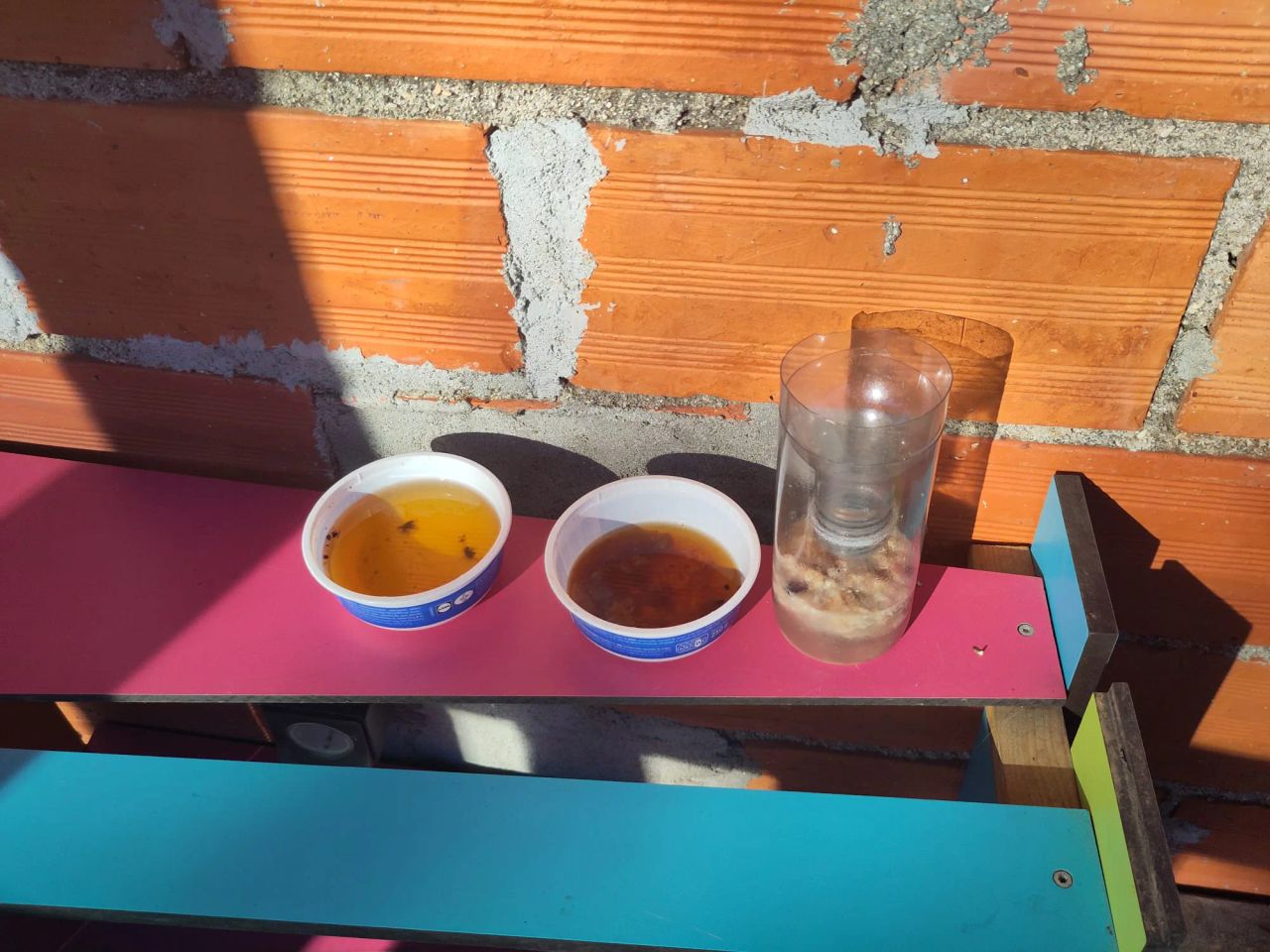
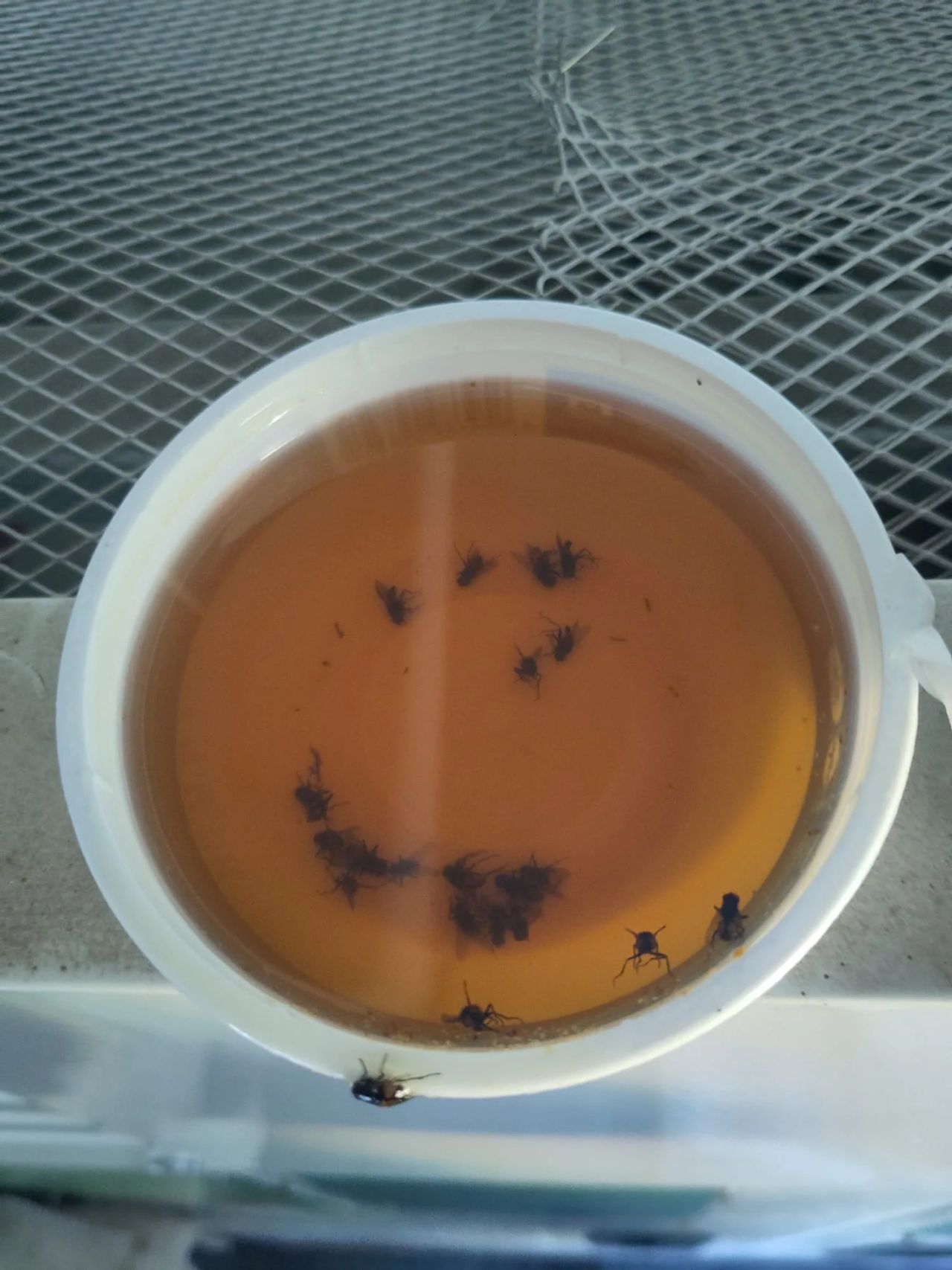
8
Update after 7 days
Notes:
- In the past week, we noticed many fewer flies than in the previous weeks. This may have been down to the changes in weather (although the past few days have been hot and dry, albeit some wind), or better practice in closing doors etc.
- The office and toilet had fewer flies, but so did our other structures and the other toilet without any traps. The kitchen continued having many flies, and this seems represented in the numbers - 11 flies caught around the office (all outside), 11 flies caught inside the toilet, while 46 flies were caught inside the kitchen across 3 small traps
- Our strongest trap continued once again to be the open container of used cooking oil - in the kitchen and toilet - now containing a total of 43 dead flies!
- The rotting fruit in water stored in the open container with dish soap on top of the kitchen fridge appears to have completely dried up, even after a refill 4 days ago. Maybe the fridge acts a bit as a dehumidifier...
- Both the open container of apple cider vinegar with rice syrup and the cooking oil also dried up significantly when stored outside the office over 6 days.
Fly count:
Kitchen
- Vinegar w/ rice syrup (bottle): 7
- Rotting fruit (open w/ soap): 1
- Rotting meat (jar): 8
- Cooking oil: 31
- Sticky strips: 0
Toilet
- Vinegar w/ rice syrup (jar): 1
- Rotting fruit (bottle): 0
- Rotting meat (open w/ soap): 2
- Cooking oil: 10
- Sticky strips: 0
Office
- Vinegar w/ rice syrup (open w/ soap): 4
- Rotting fruit (jar): 0
- Rotting meat (bottle): 5
- Cooking oil: 3
- Sticky strips: 0
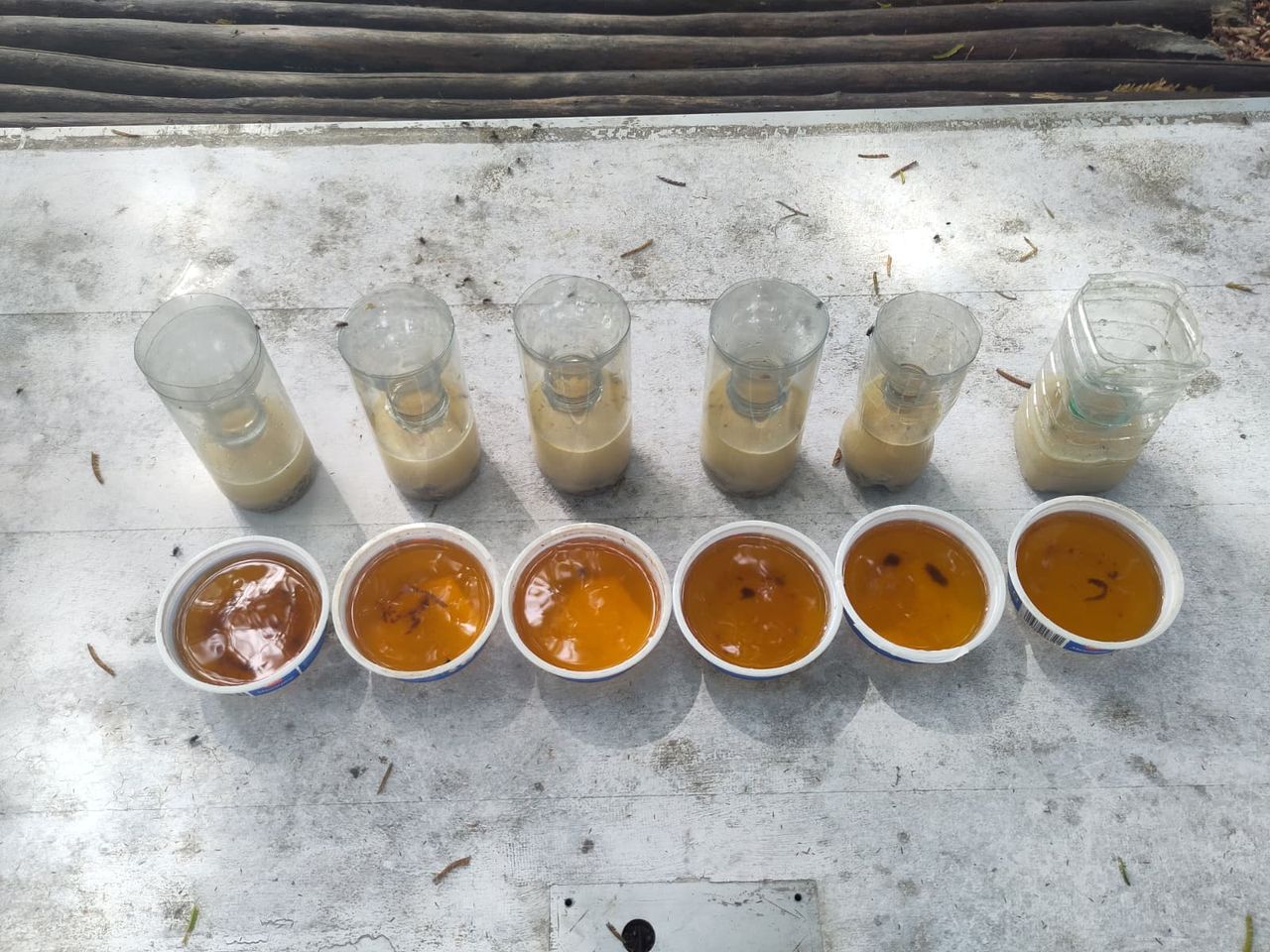
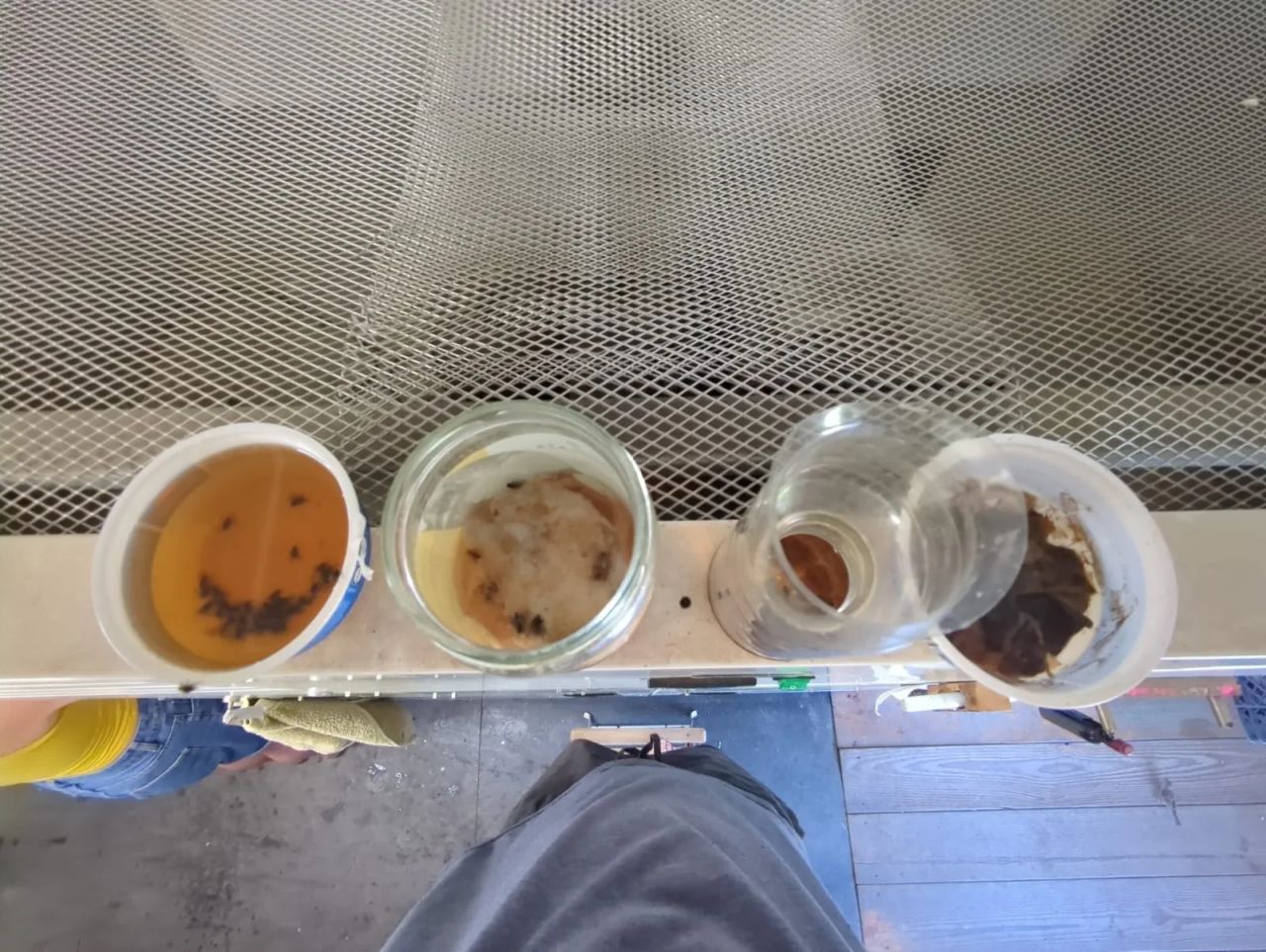
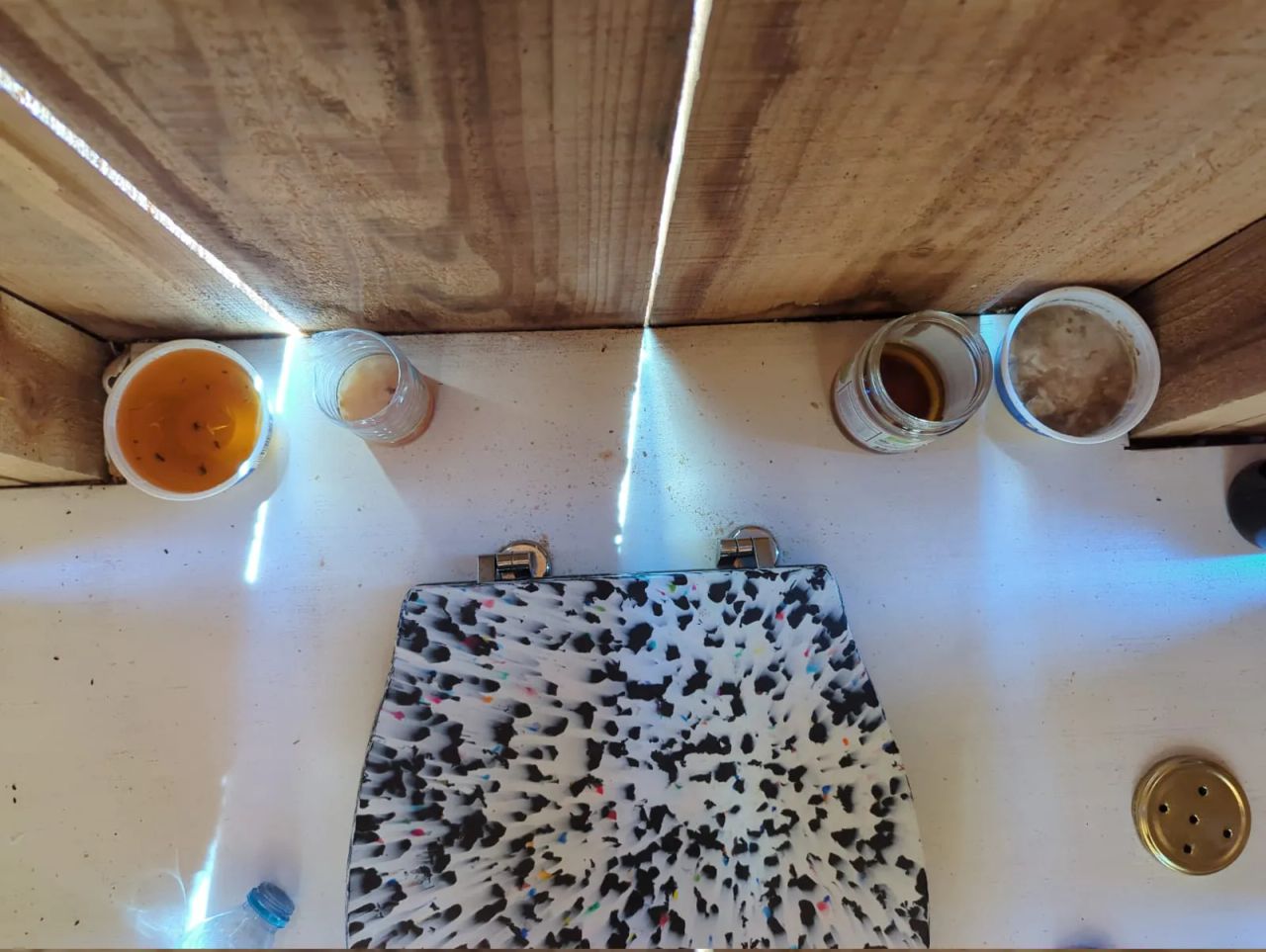
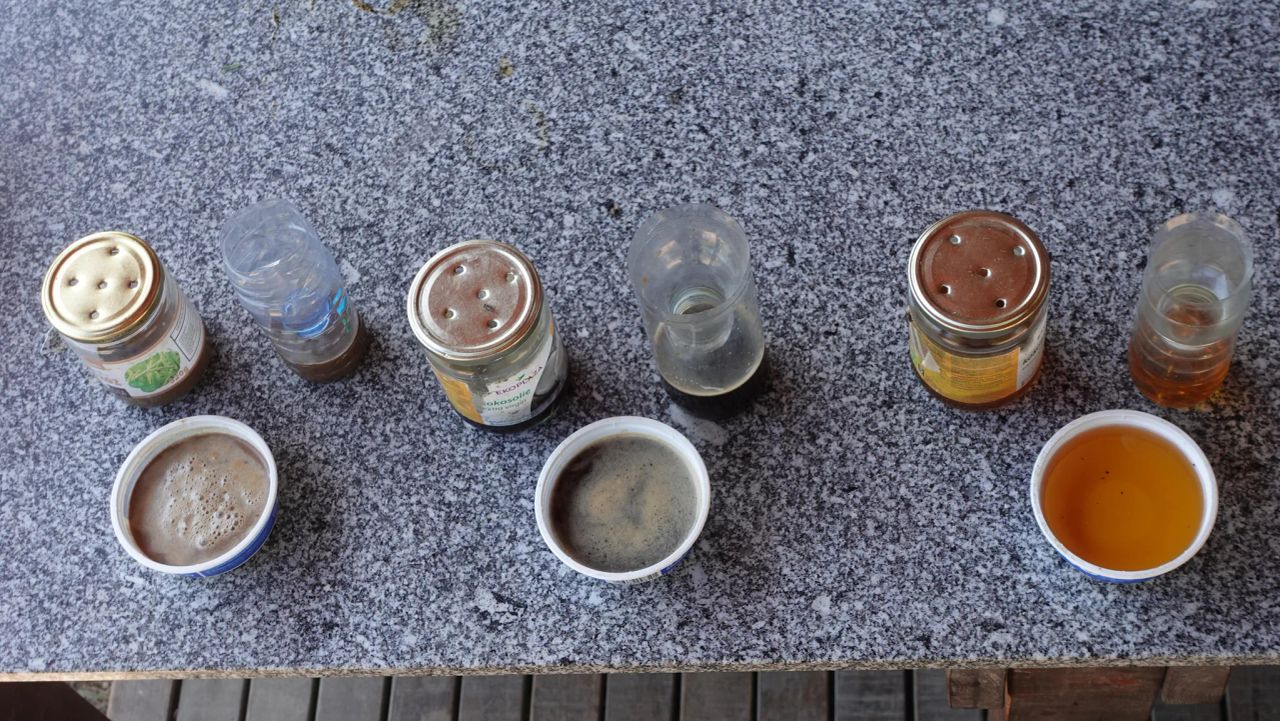
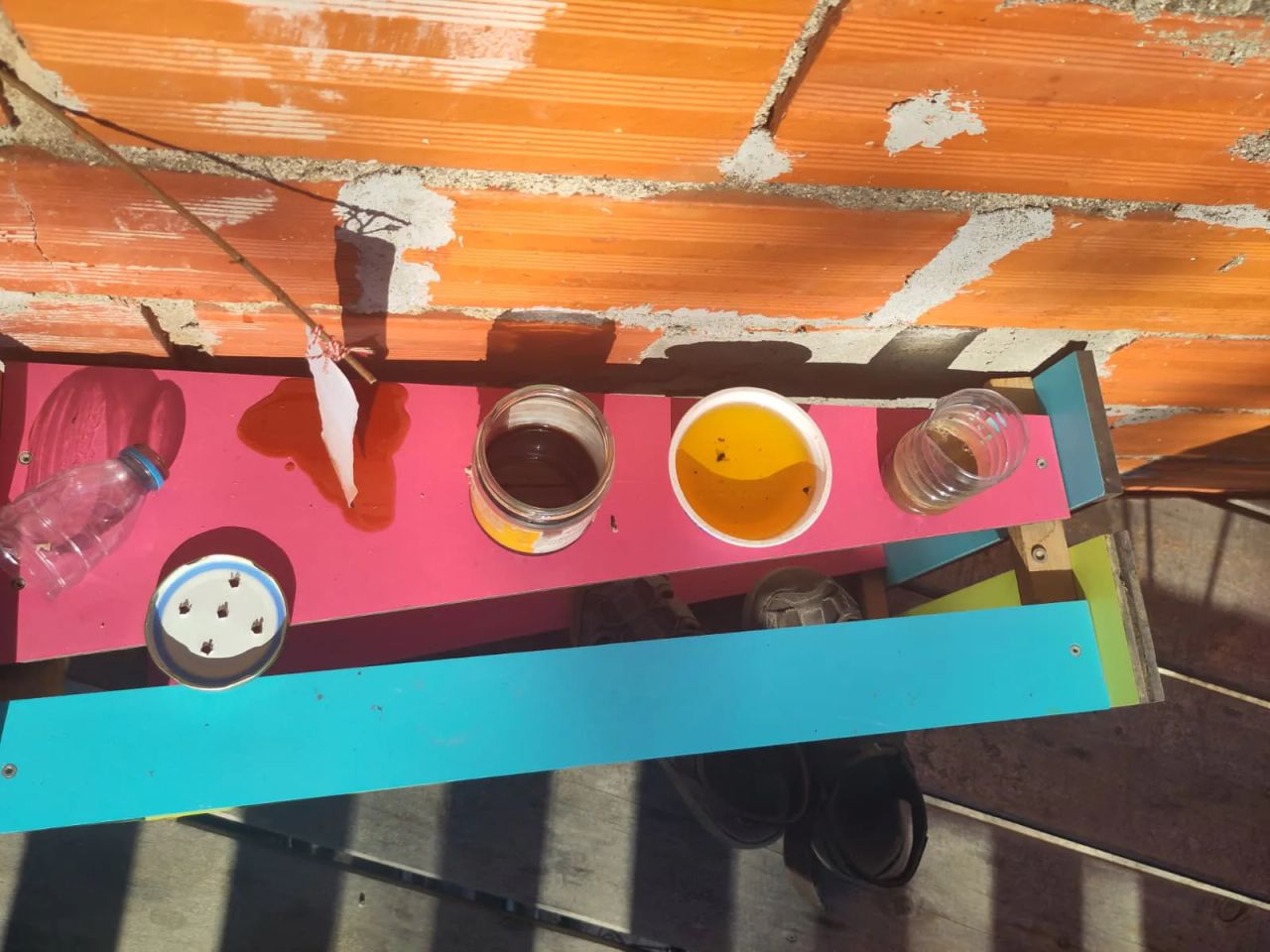
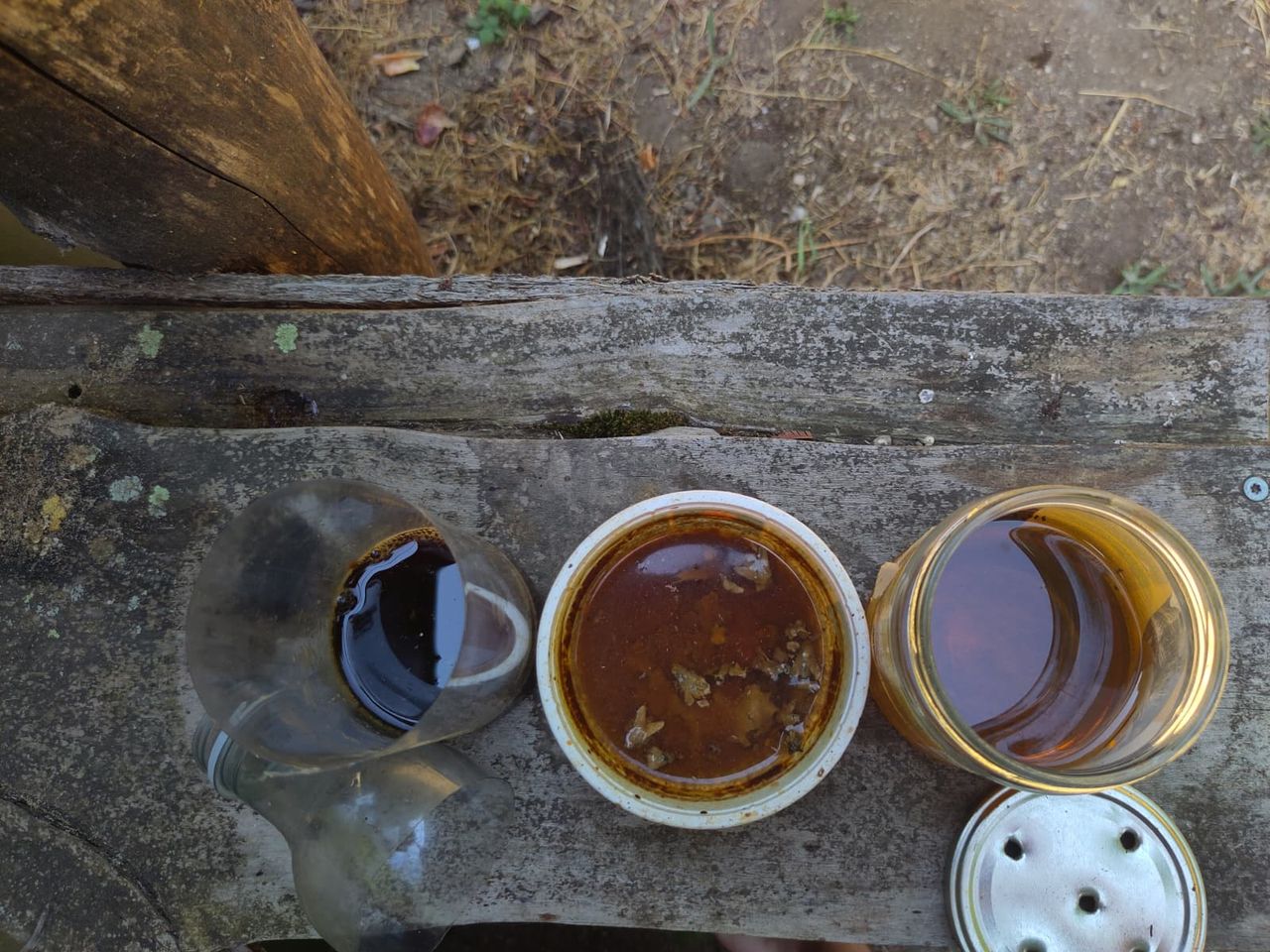
*The containers in the photos below had their tops removed for a better image, but were replaced afterwards
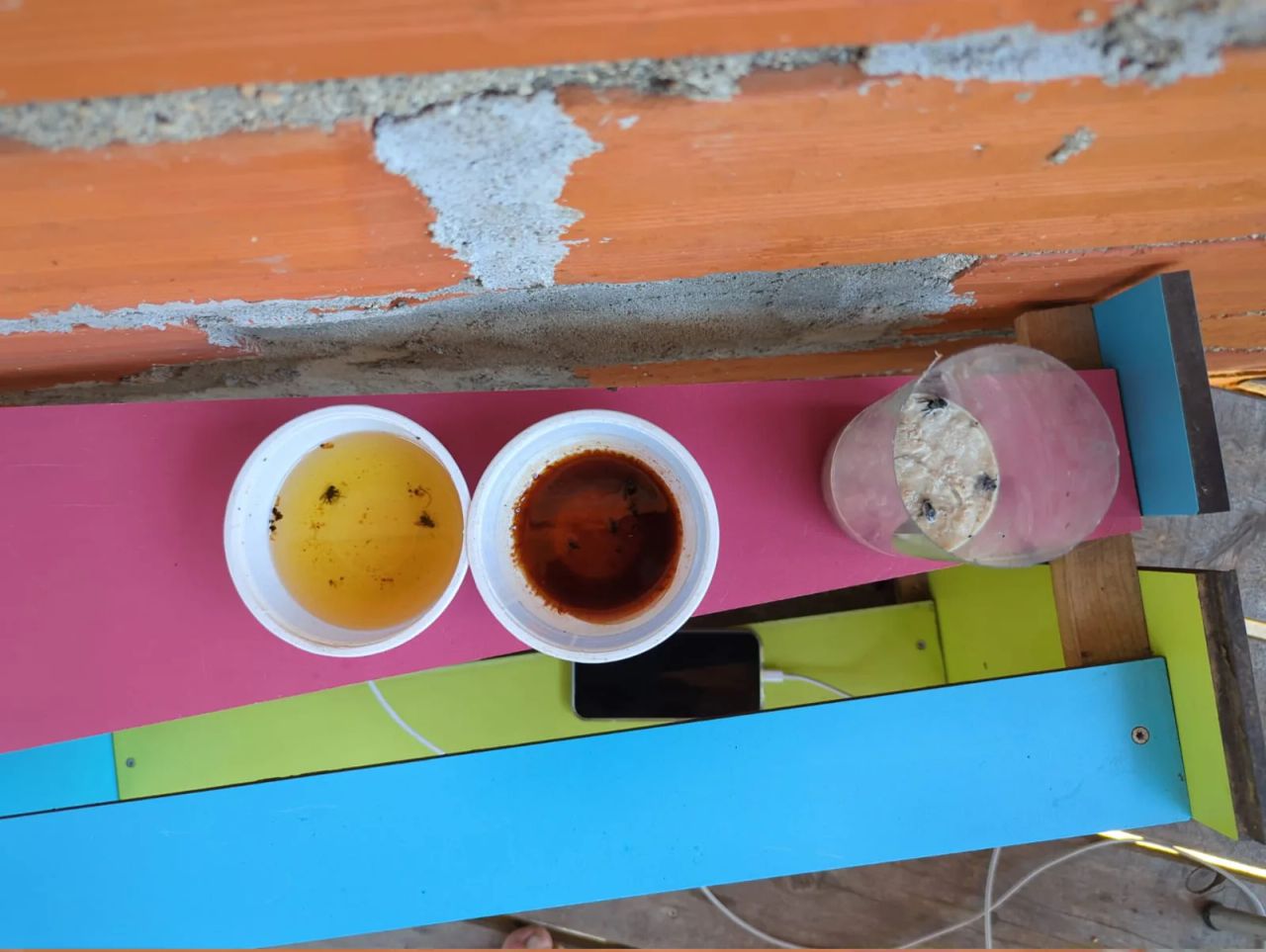
9
FInal update: 12 days
Our final numbers are in. Some of the traps didn’t make it, while others continued to fill up.
Most popular (overall):
1. 43 flies - Cooking oil (kitchen)
2. 15 flies - Rotting meat (jar) (kitchen)
3. 9 flies - Vinegar w/ rice syrup (bottle) (kitchen)
4. 6 flies - Rotting meat (bottle) (office)
5. 5 flies - Cooking oil (toilet & office)
Clearly, the kitchen had an overall higher attraction for flies, as the same trap of used cooking oil was almost nine times less effective in the toilet and office. This was reflected in our own experiences seeing flies around kamp.
If we count totals for each attribute of the traps - location, substance, method - we get the following results:
Kitchen: 67
Office: 15
Toilet: 12
Cooking oil: 53
Rotting meat: 25
Vinegar w/ rice syrup: 16
Rotting fruit: 0
Sticky strips: 0
Jar with holes: 18
Inverted bottle: 17
Open with dish soap: 8
Comments:
- It was apparent from early on that our sticky traps did not work. This was due to under-boiling the syrup, causing it to drip and allowing flies to leave the trap with ease. We would be curious how the sticky strips could perform if done under the proper conditions
- The rotting fruit also had zero success. We chose mouldy fruit to aid the rotting process, however each container developed a thick layer of mould, blocking the flies from their bait. The toilet trap had the least mould, but ended up attracting many smaller flies, rather than the housefly species we were counting.
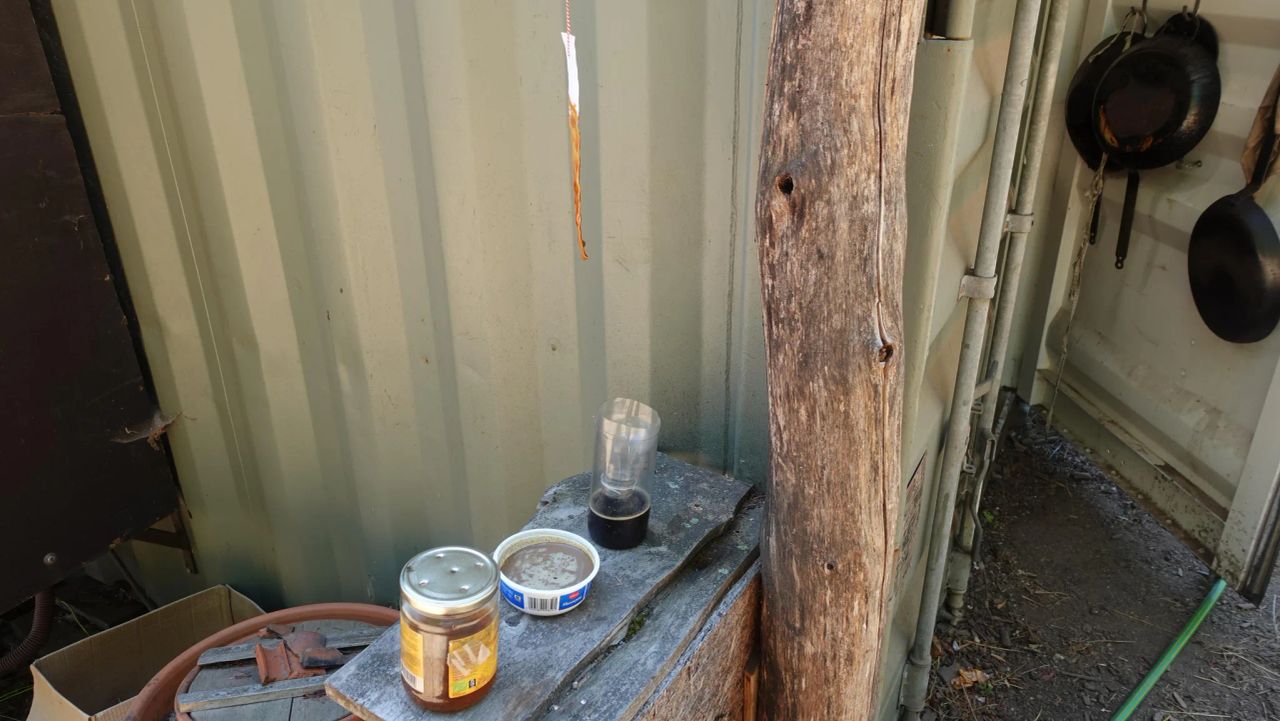
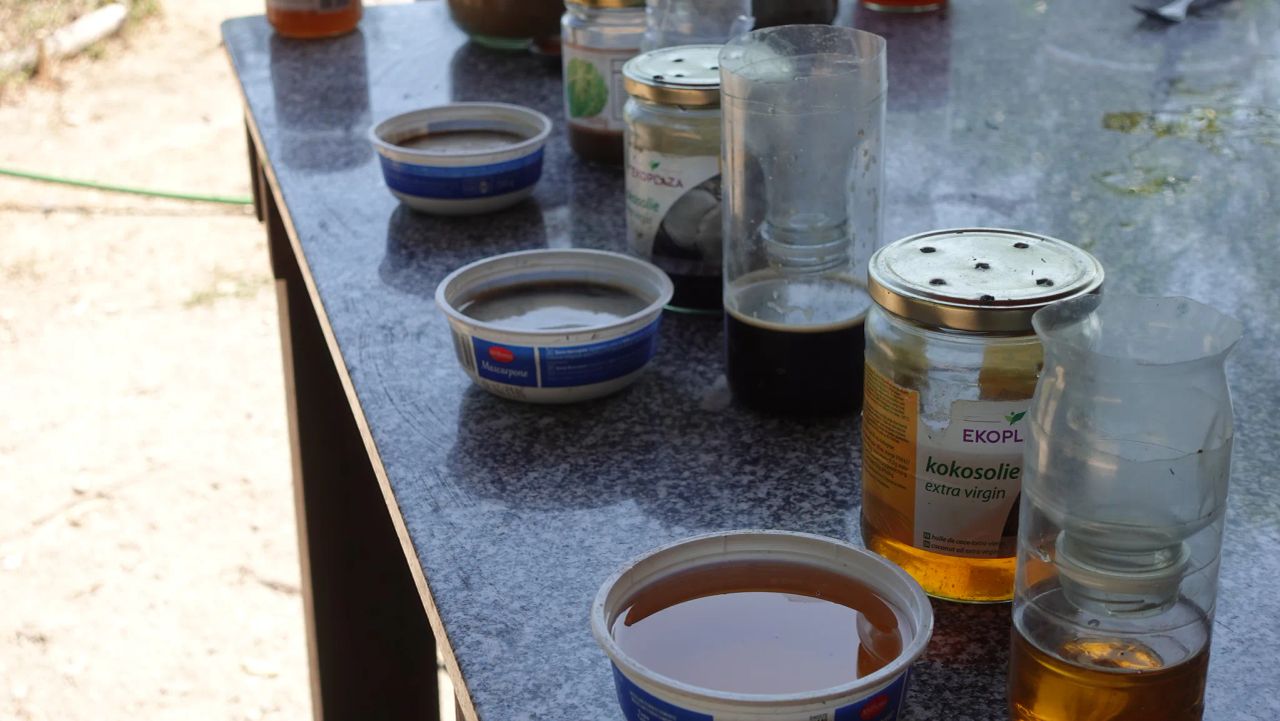
- Although one fly was caught in the kitchen’s fruit trap early on, this dried out considerably with the heat of the fridge it was sitting on top of. There was a similar issue with the traps left in the sun outside the office (picture 3) and the open container of meat in the toilet, which we refilled.
- The method of capture didn’t appear to make much difference between the bottle and jar, however the open containers with dish soap did have the downside of drying up more and spreading their smell, without attracting (or trapping) many more flies.
- The used cooking oil seemed to be our clear leader here, especially in the kitchen.
- While the rotting meat had the second highest success, we would be curious how other meats or fishes may affect this result, as we believe the type used here was most likely pork meat
- The apple cider vinegar with rice syrup appeared to catch most of its flies in the later stages of the experiment when the vinegar had evaporated more, leaving a sweeter, stickier residue. This suggests more potential success for the sticky traps if done well…
Final fly count:
Kitchen
- Vinegar w/ rice syrup (bottle): 9
- Rotting fruit (open w/ soap): 0
- Rotting meat (jar): 15
- Cooking oil: 43
- Sticky strips: 0
Toilet
- Vinegar w/ rice syrup (jar): 3
- Rotting fruit (bottle): 0
- Rotting meat (open w/ soap): 4
- Cooking oil: 5
- Sticky strips: 0
Office
- Vinegar w/ rice syrup (open w/ soap): 4
- Rotting fruit (jar): 0
- Rotting meat (bottle): 6
- Cooking oil: 5
- Sticky strips: 0
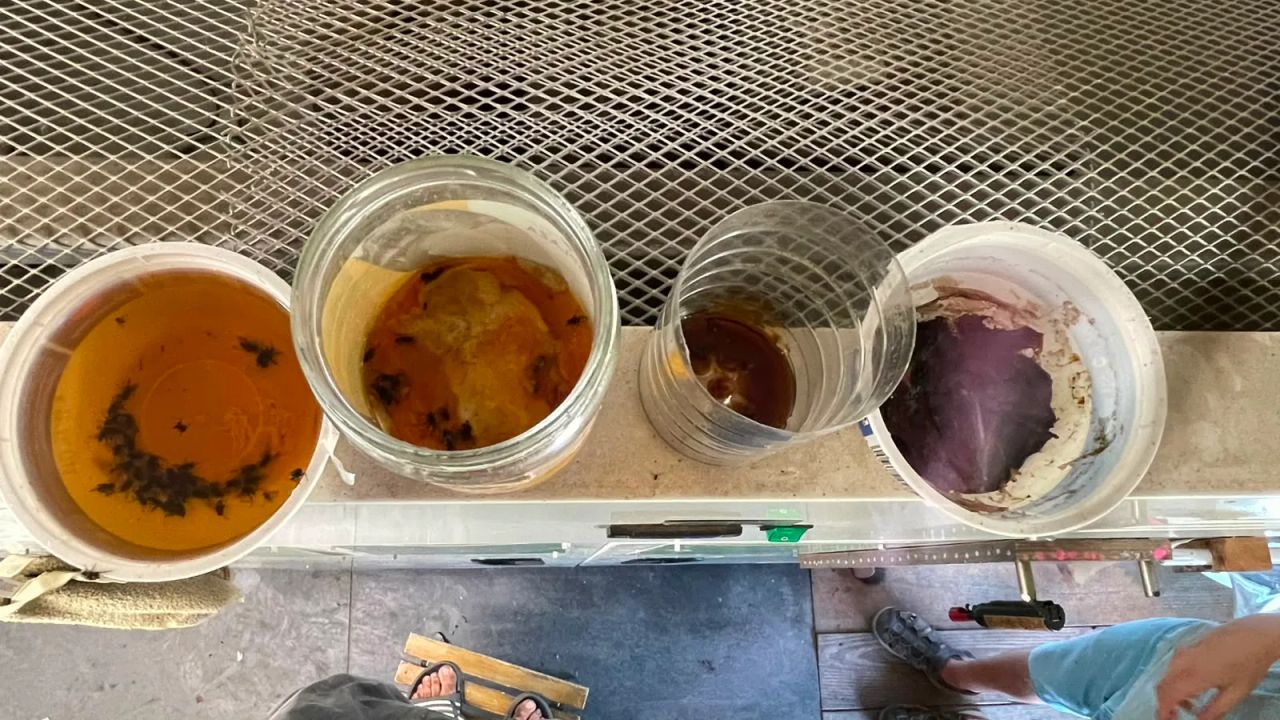
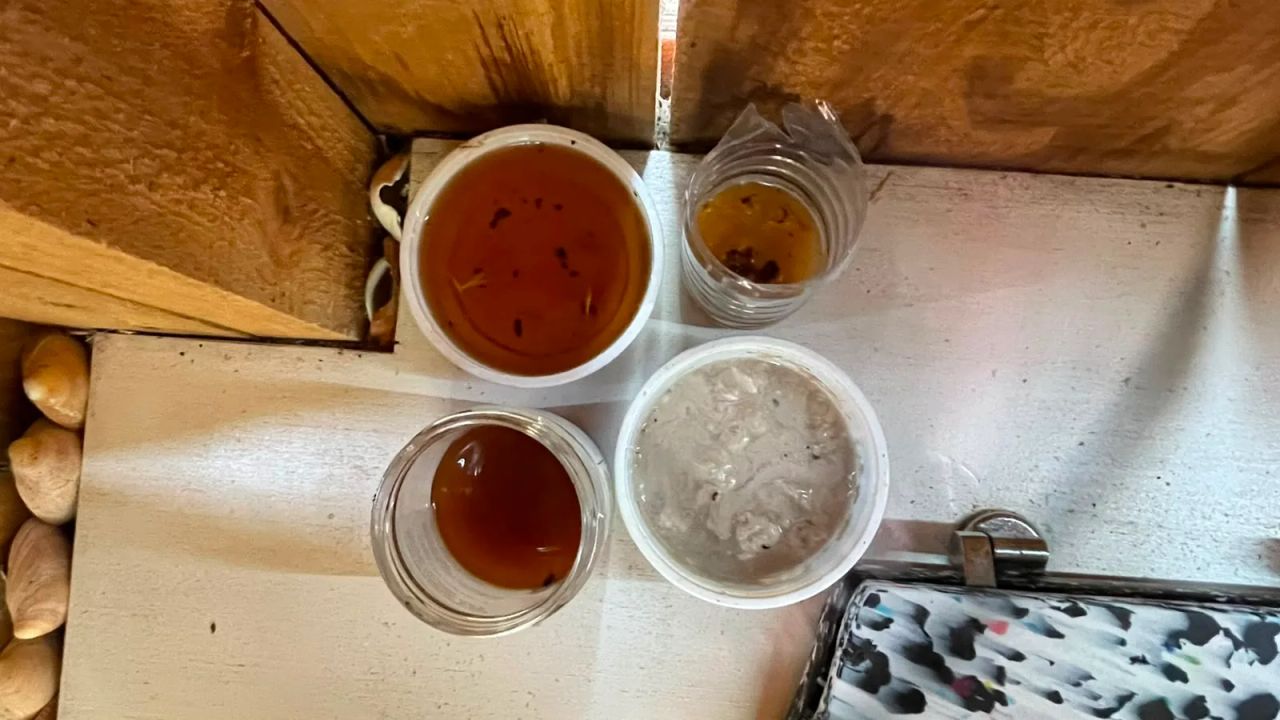
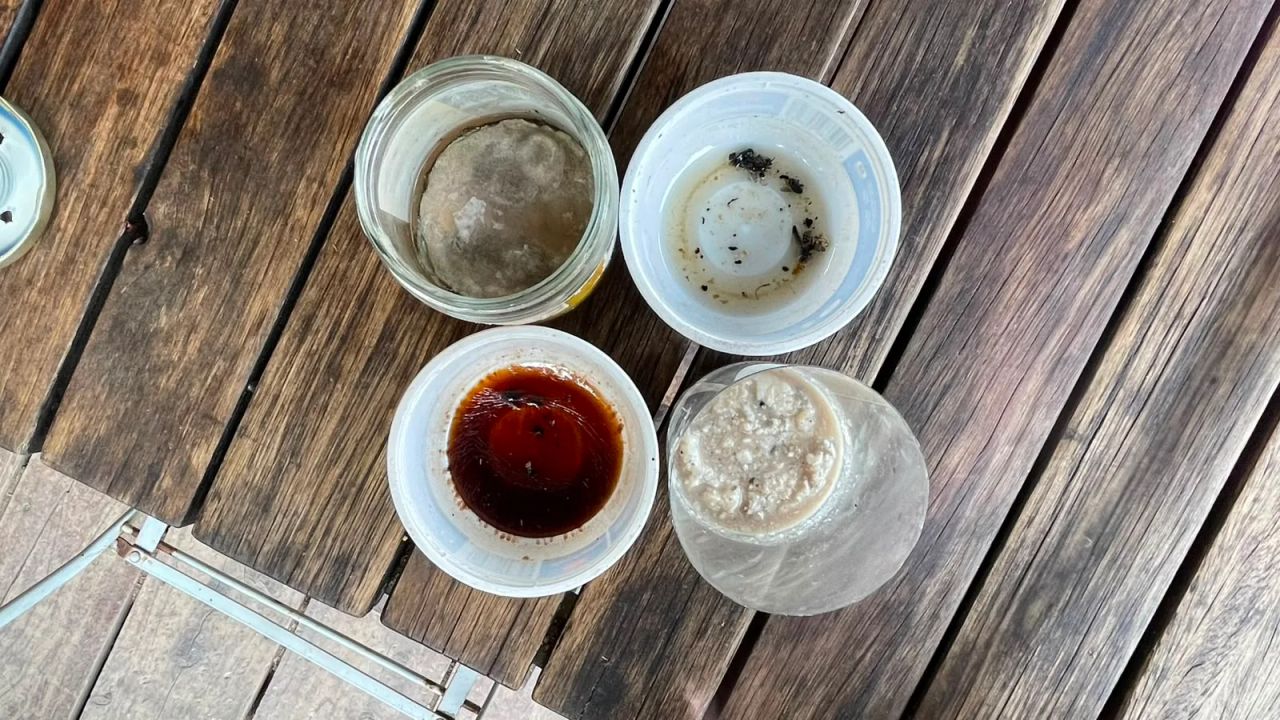
10
Testing a Second Set of Traps
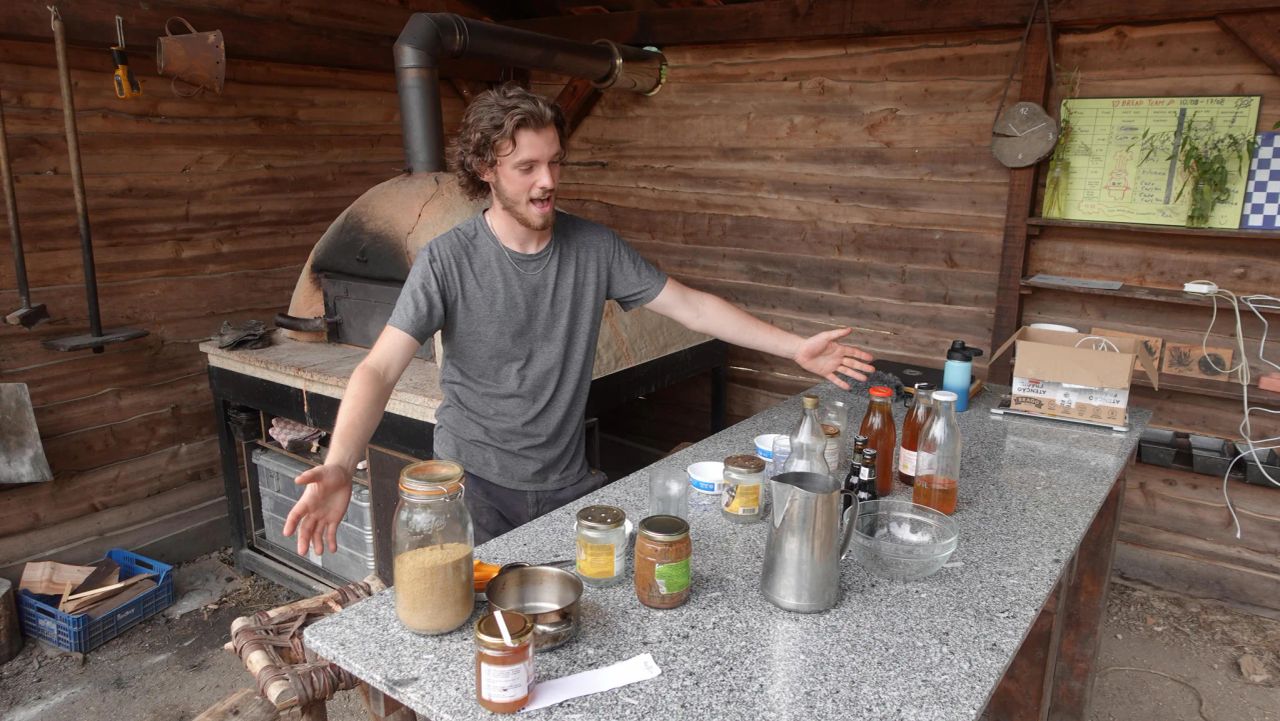
Since we concluded our tests on the different types of traps around Kamp, we have been reflecting on what worked well, what didn’t, and exploring other effective strategies.
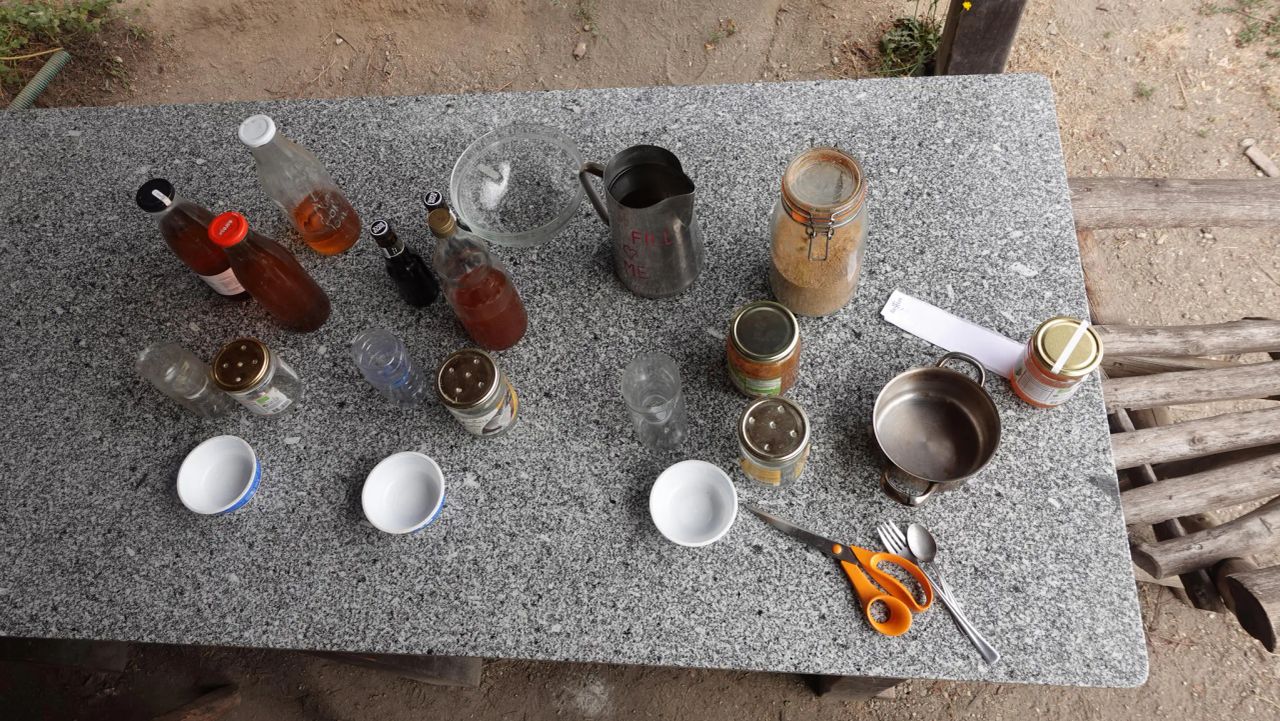
We decided to try another round of experiments before implementing on a larger scale, as we believed there were still some alternatives which hadn’t been put to the test yet. We decided on four more traps to test:
First, we felt the sticky traps had not been created with the proper consistency, and wanted to try a stickier mix - still 2:2:1 ratio of rice syrup, sugar, and water all boiled together, exactly the same as before, but heated a bit longer. This was done effectively, and hardened much quicker meaning less drips, but could now potentially be too solid to allow the flies to stick. Let’s see… We also made only one strip per spot, rather than two, as they often stuck together and this was much simpler.
For the other three, we wanted to try the bottles and jars again, as there was no clear winner. The open container with soap seemed much less ineffective, mainly due to quicker dehydration. The soap didn’t seem to play any role in the few successes that did occur either. The plan is to include this as a third option again, without the soap, and keep a close eye on the hydration levels.
The three substances for each trap included:
1) Beer trap - 1 bottle of stout/dark beer, 1 tablespoon of sugar, and ½ cup of apple cider vinegar - a recipe from our friend Anselmo who swears by its effectiveness in the Italian mountains.
2) Fish trap - our second-most effective substance previously was the raw meat scraps, sourced from a local restaurant. While they didn’t have fish scraps, we searched around many other local spots until we found a friendly cafe who were happy to share their scraps. From there, we put them in each container, covered with some water - very stinky! We have high hopes for this one as somebody else from Kamp in their spare time made an inverted bottle with rotting shrimp trap, and caught hundreds in only a week!
3) Used cooking oil - our most successful trap by far previously, but only done with an open container each time. We wanted to put to the test whether an inverted bottle or jar with holes would prove more effective. The original restaurant we sourced from were more than happy to lend us several more bottles of their used oil from cooking potatoes, vegetables, and meat.
In total, we made 12 traps - 3 of each, and the process took approximately 1.5 hours, after sourcing materials
We decided to install one of each of these traps in the same three locations as last time. The main issue we faced was the smell of the fish traps, meaning each of them were placed just outside their original spots - Kitchen, Office, and Toilet - so that people could continue to enjoy being in these spaces
We will observe and record in the same manner as last time to be able to compare all results at the end.
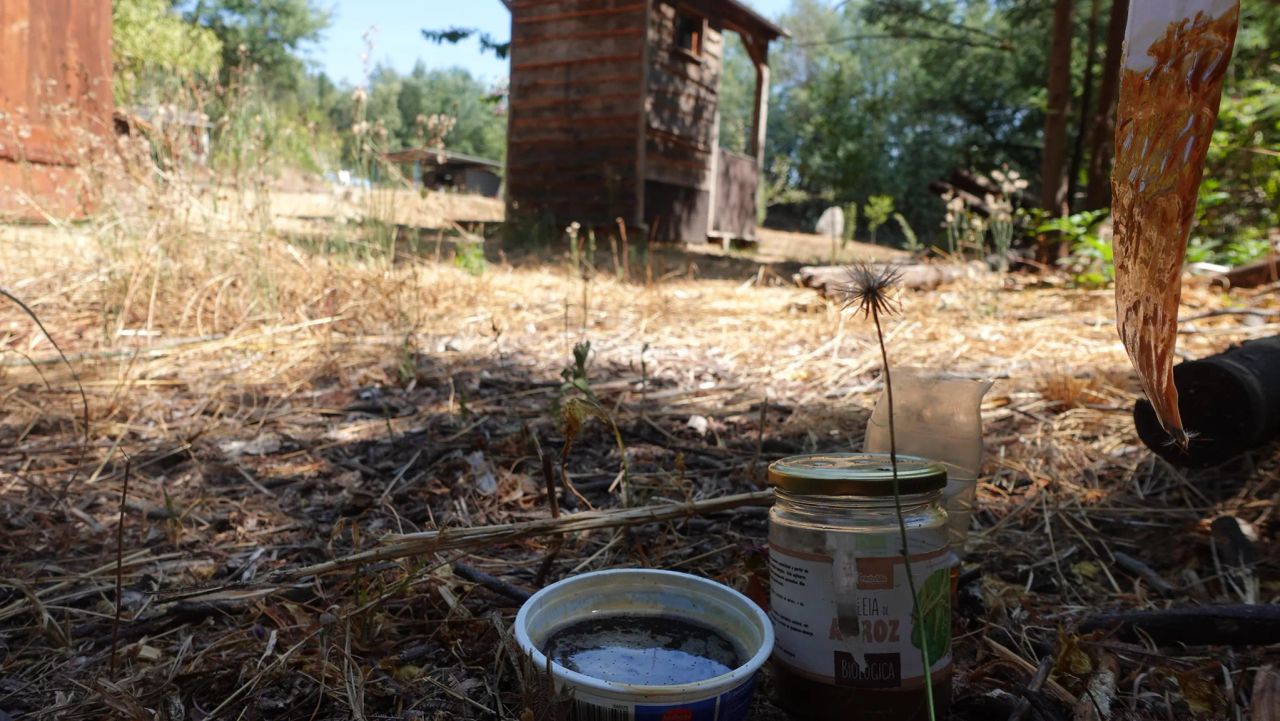
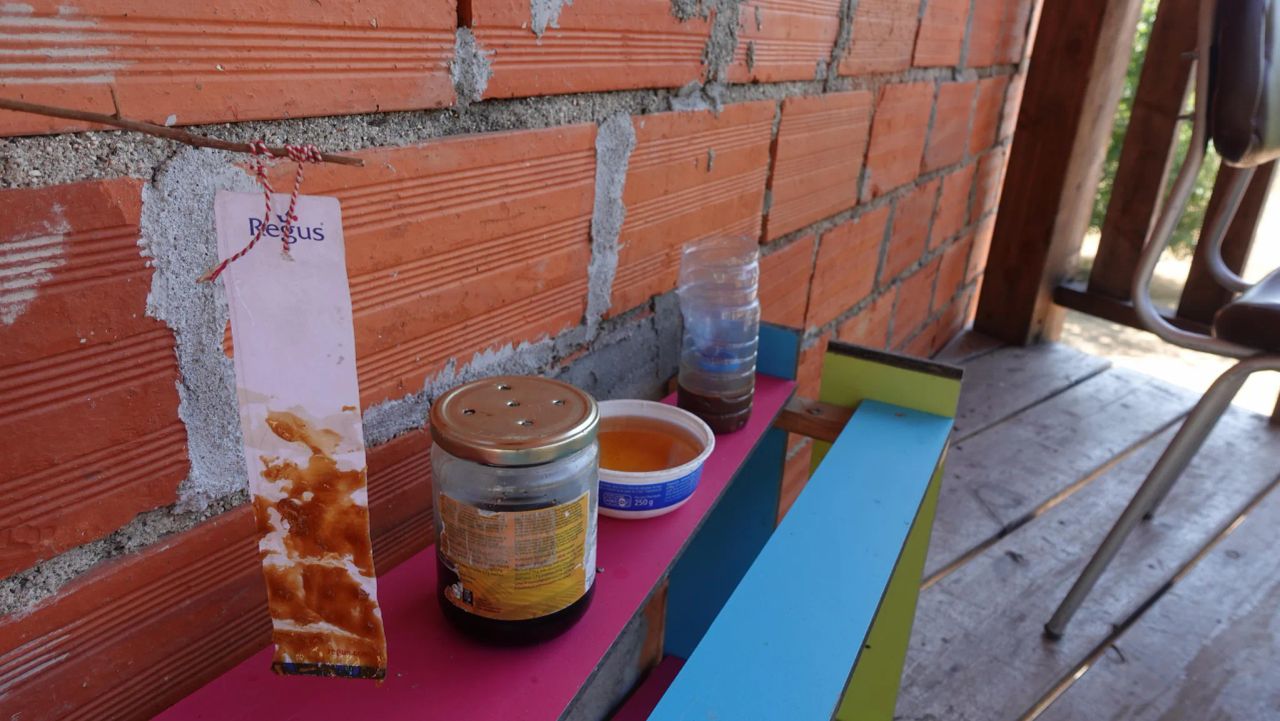
11
Update after 1 hour
Notes:
- At the moment there are many flies in kamp, similar to when the previous tests were completed. Most around the kitchen, with a few around the toilets and office, but not many.
- The traps smell pungent (especially the fish) and many flies were swarming around the traps, but they dont appear to have entered them yet
- Our most successful so far - the only one to have caught flies (2!) in the first hour - is the open container of fish scraps in water behind the kitchen
Fly count:
Kitchen
- Sticky strips: 0
- Cooking oil (jar): 0
- Fish (open): 2
- Beer (bottle): 0
Toilet
- Sticky strips: 0
- Cooking oil (bottle): 0
- Fish (jar): 0
- Beer (open): 0
Office
- Sticky strips: 0
- Cooking oil (open): 0
- Fish (bottle): 0
- Beer (jar): 0
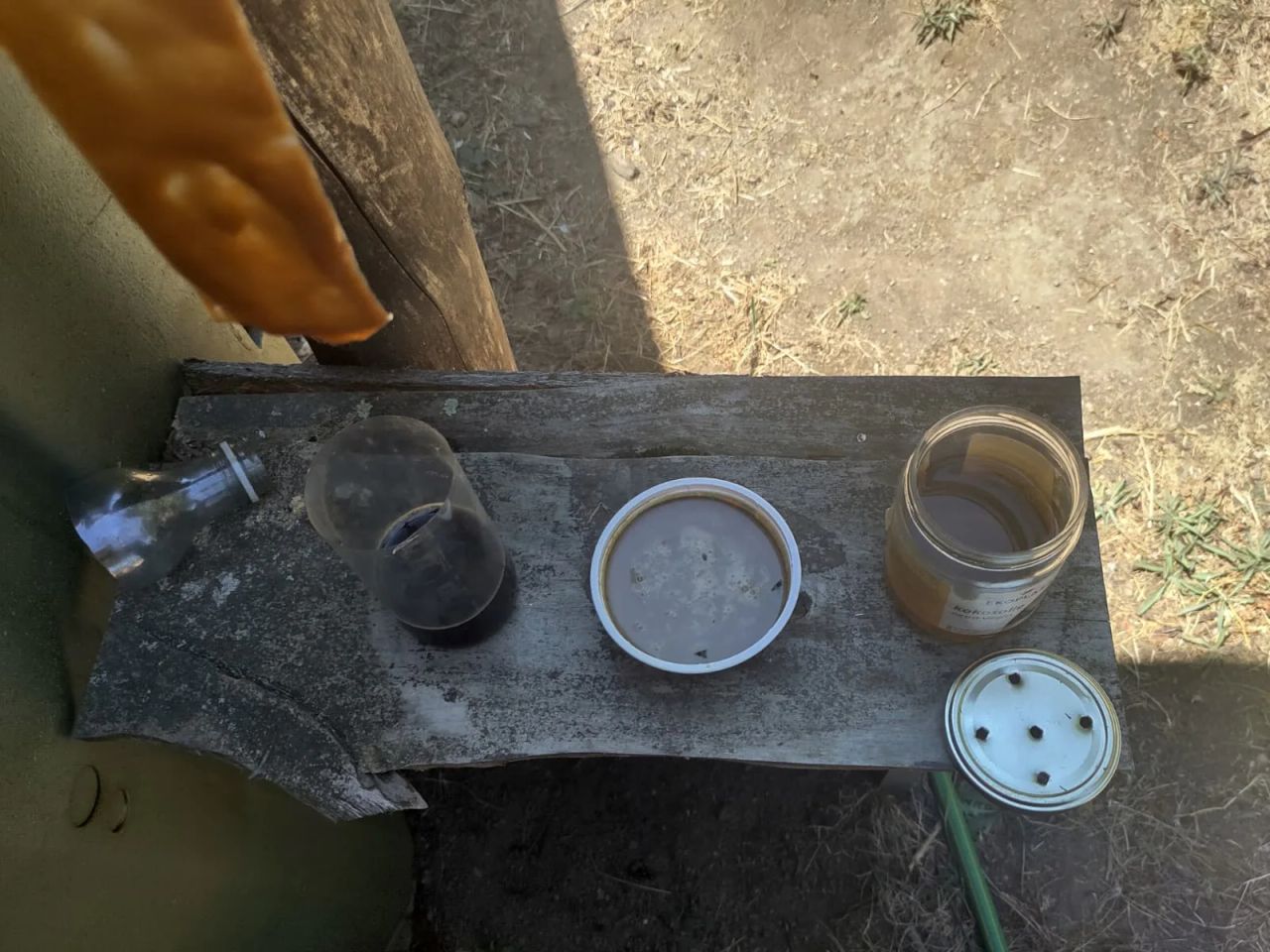
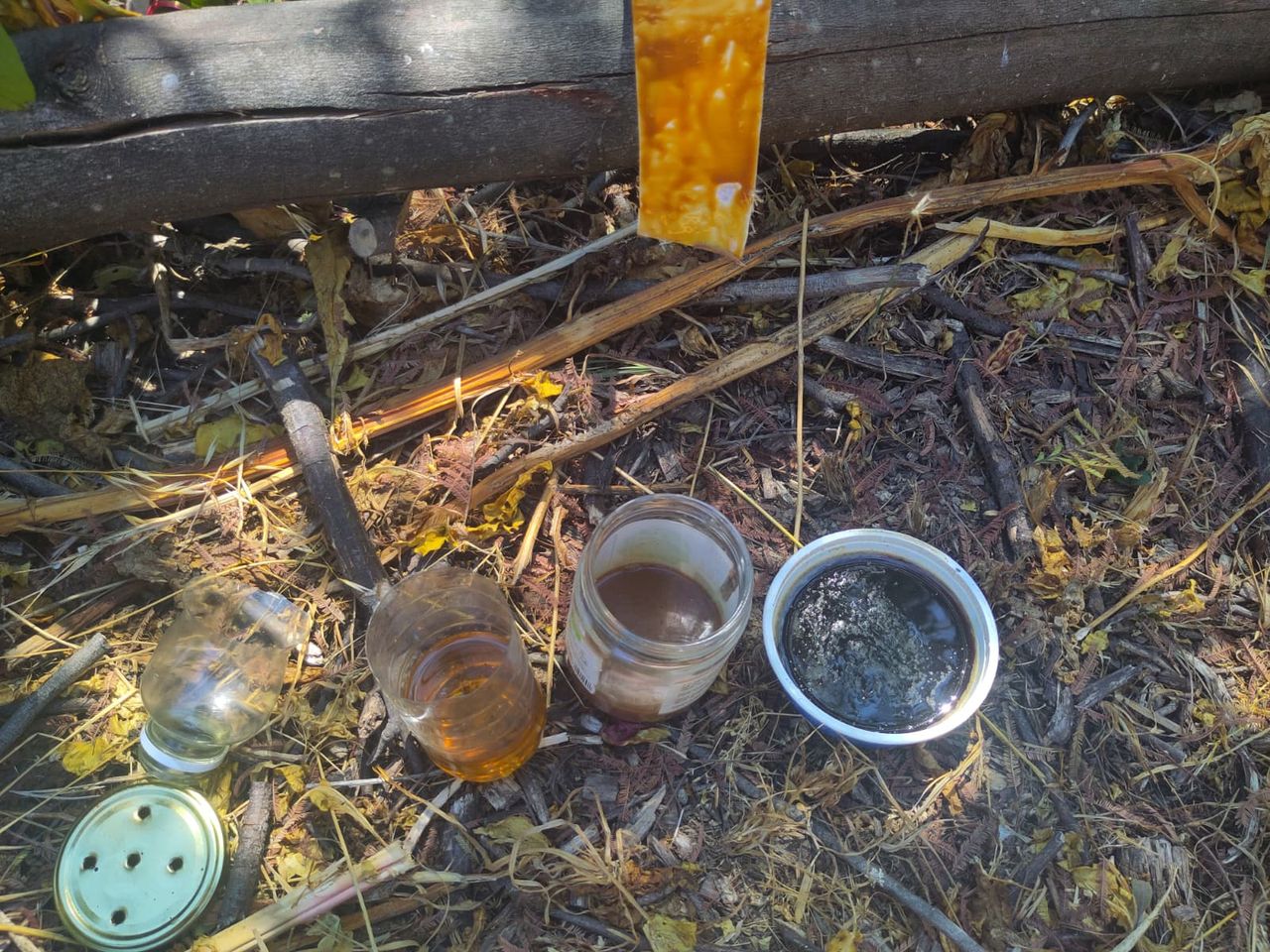
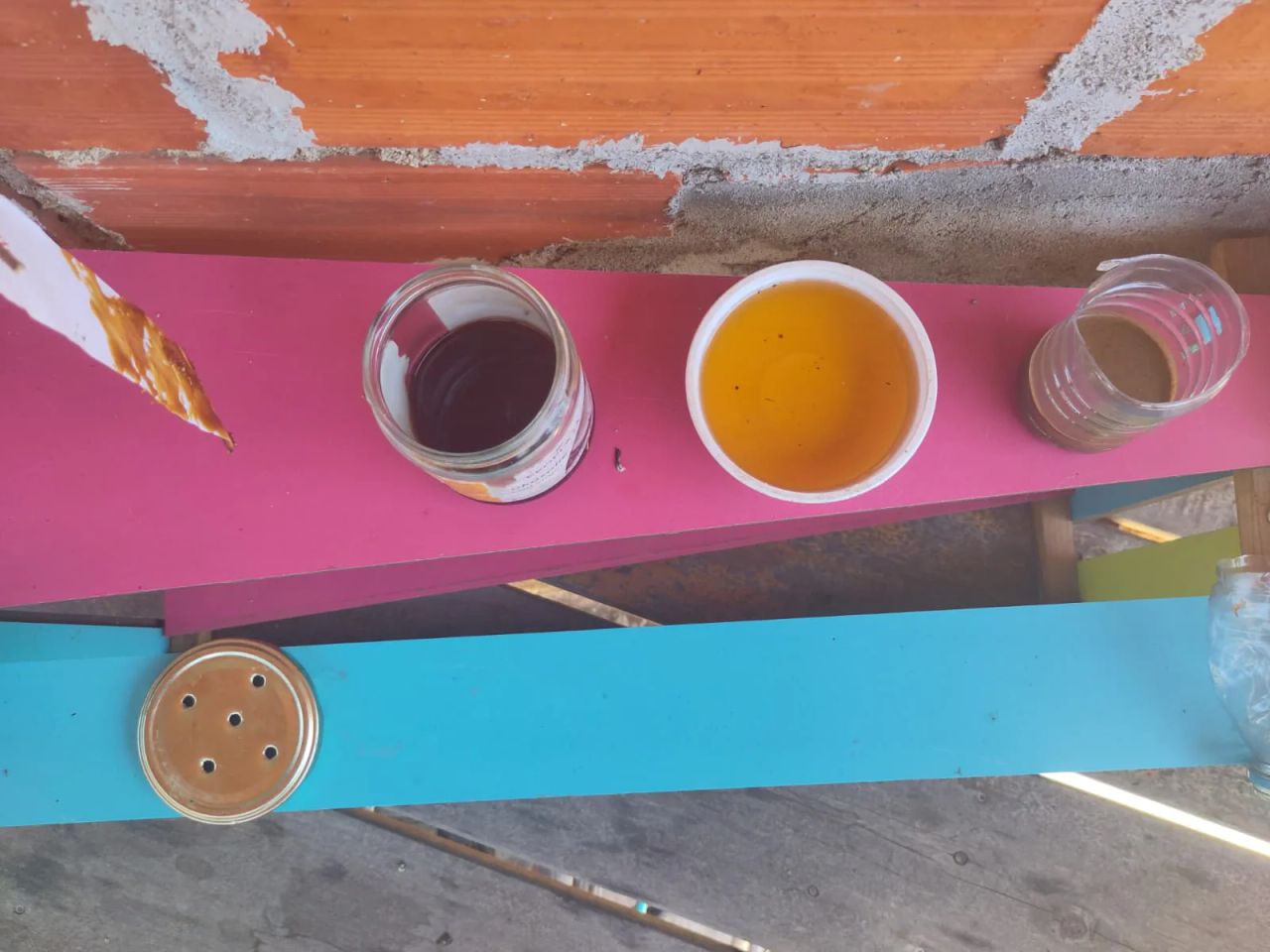
12
Update after 1 day
Notes:
- Yesterday, when they were made, the sticky strips seemed too hard and would snap under tension. Overnight, however, they ended up going the opposite way. All the strips have lost most if not all of their sticky residue, which has liquified and dripped off. Flies do seem to be attracted to the sugary syrup on the ground, but are not ending up trapped in it. Only a few ants appear to have climbed onto the trap at the kitchen and remain stuck to it
- There have been a few brief periods of wind, it was a mild but humid night, and two sunny, warm afternoons
- The area behind the kitchen where the traps are has many flies swarming around, attracted by the traps, but they do not appear to be going for the baits
Fly count:
Kitchen
- Sticky strips: 0 (but 5 ants)
- Cooking oil (jar): 0
- Fish (open): 5
- Beer (bottle): 0 (but 1 wasp)
Toilet
- Sticky strips: 0
- Cooking oil (bottle): 0
- Fish (jar): 7
- Beer (open): 3
Office
- Sticky strips: 0
- Cooking oil (open): 2
- Fish (bottle): 0
- Beer (jar): 0
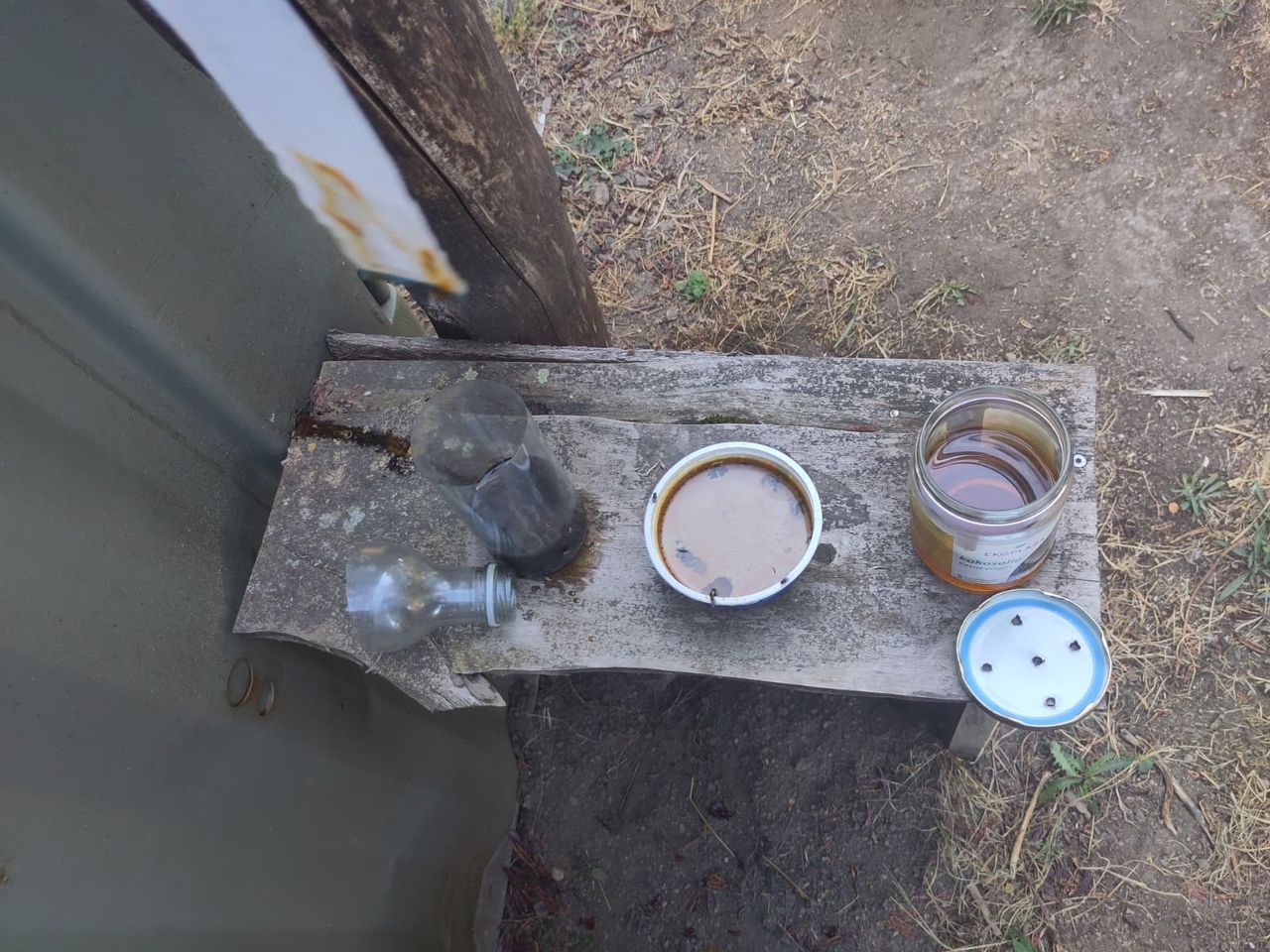
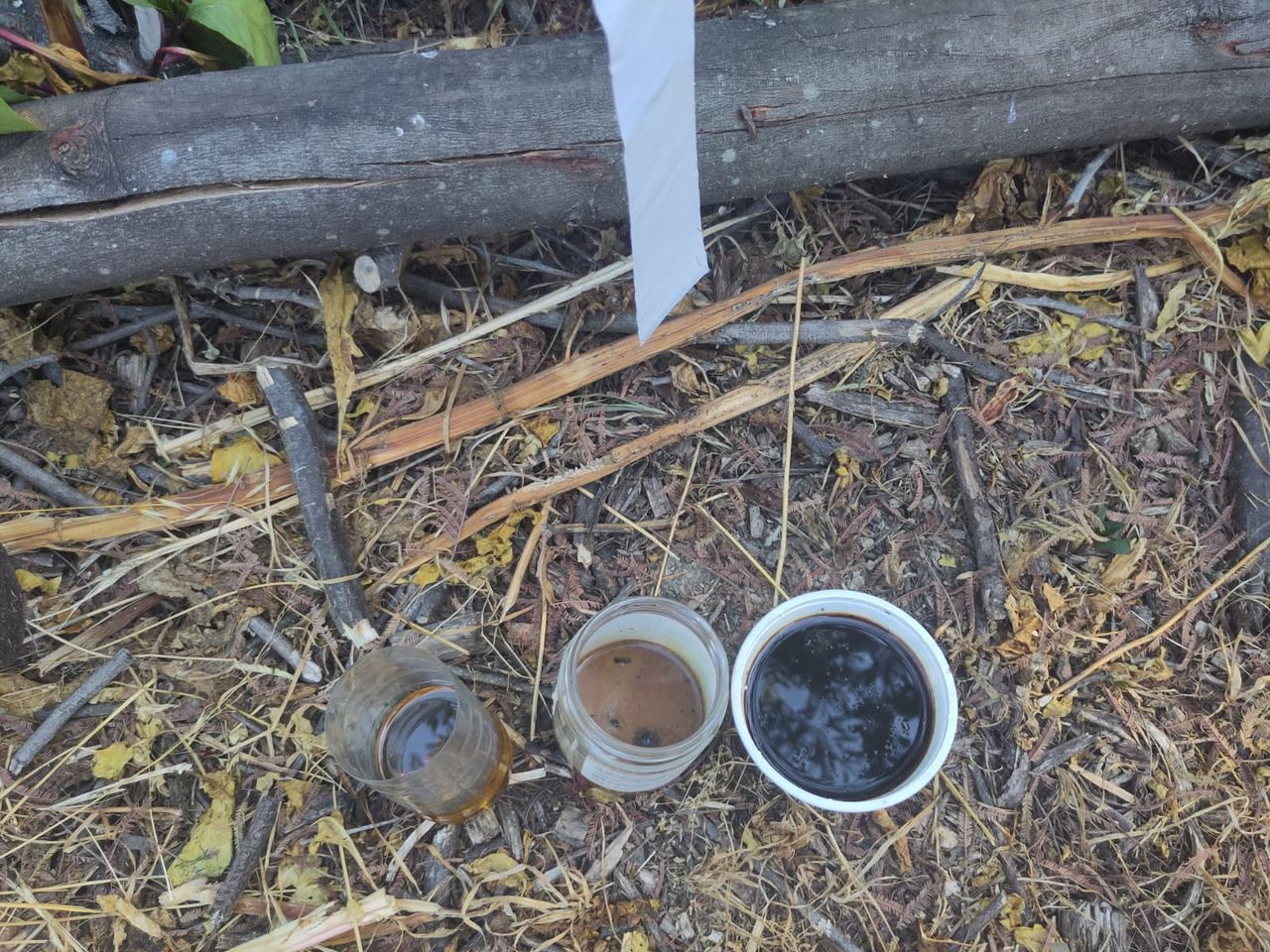
13
Update after 7 days
Notes:
- There were not many changes after 3 days, so we decided to wait a longer interval before checking in this time, and will compare the results accordingly
- All of the traps had begun to dry out, especially the open ones, so each was topped up with some extra water or oil to keep them effective
- The weather has been especially hot this past week with several afternoons over 40 degrees
- While the open container of fish scraps and water behind the kitchen only caught 4 houseflies, there were also 4 larger flies trapped which haven’t been trapped before. These were the kind which bite and although less common, are equally a difficulty in Kamp
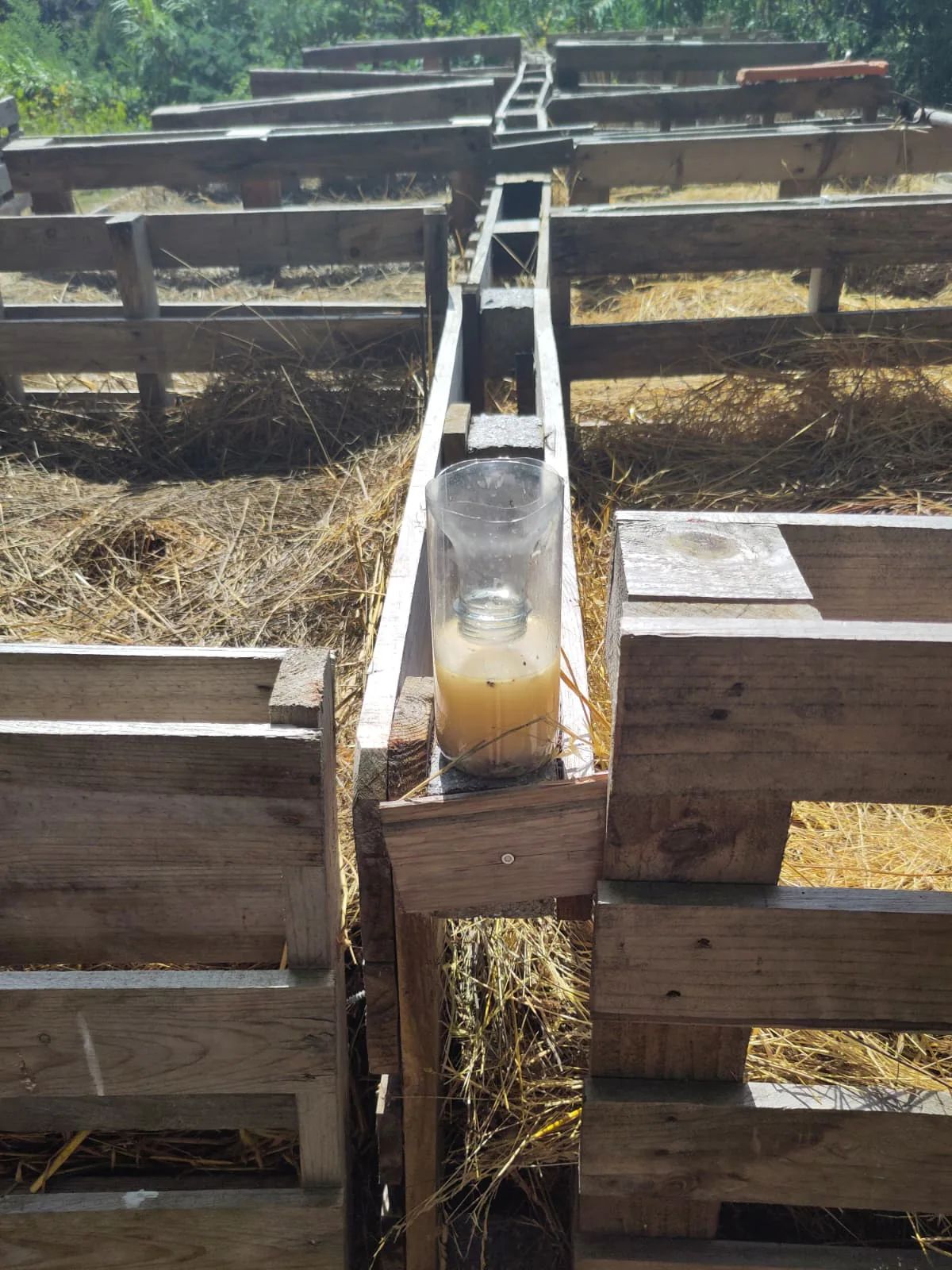
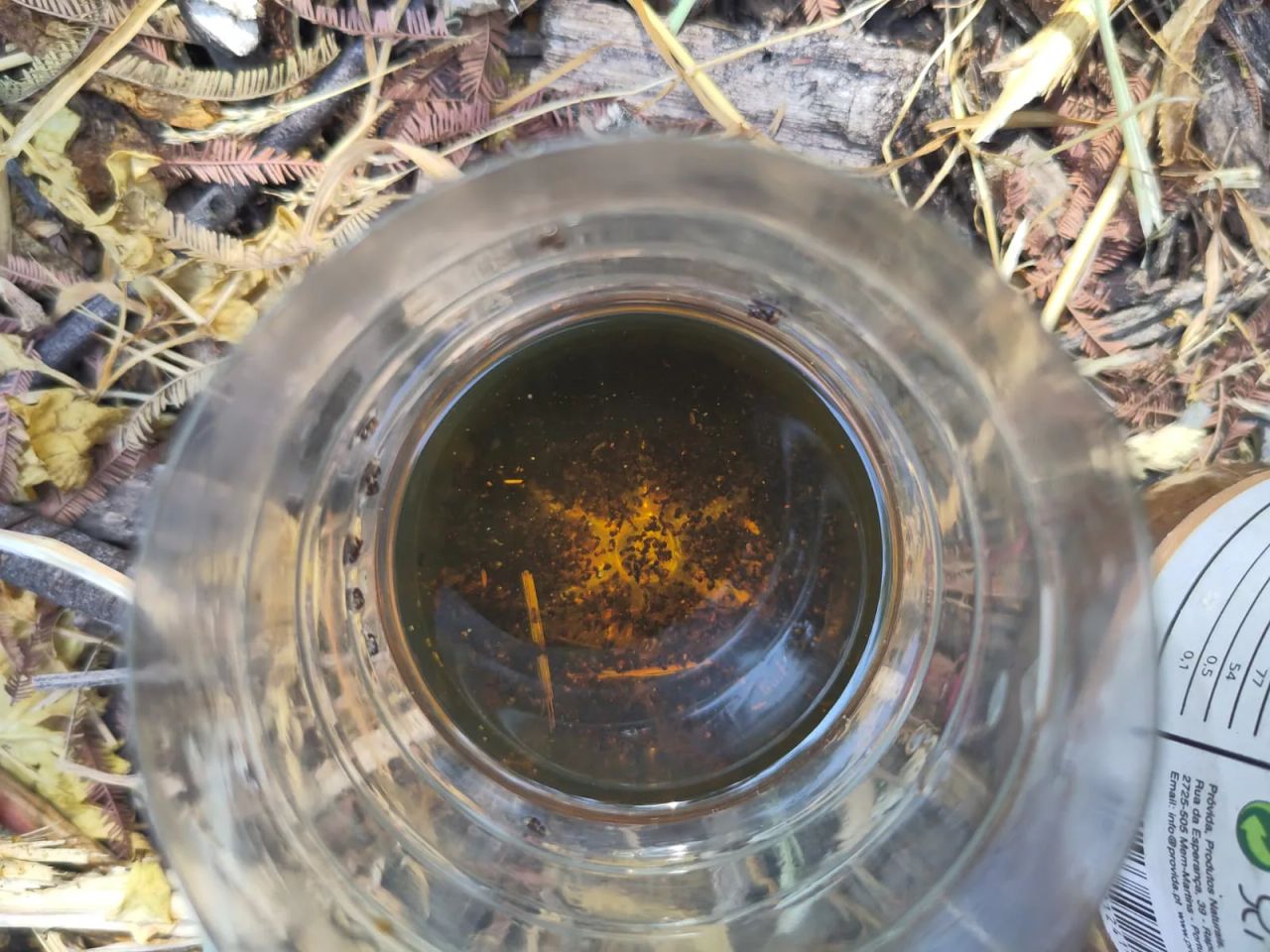
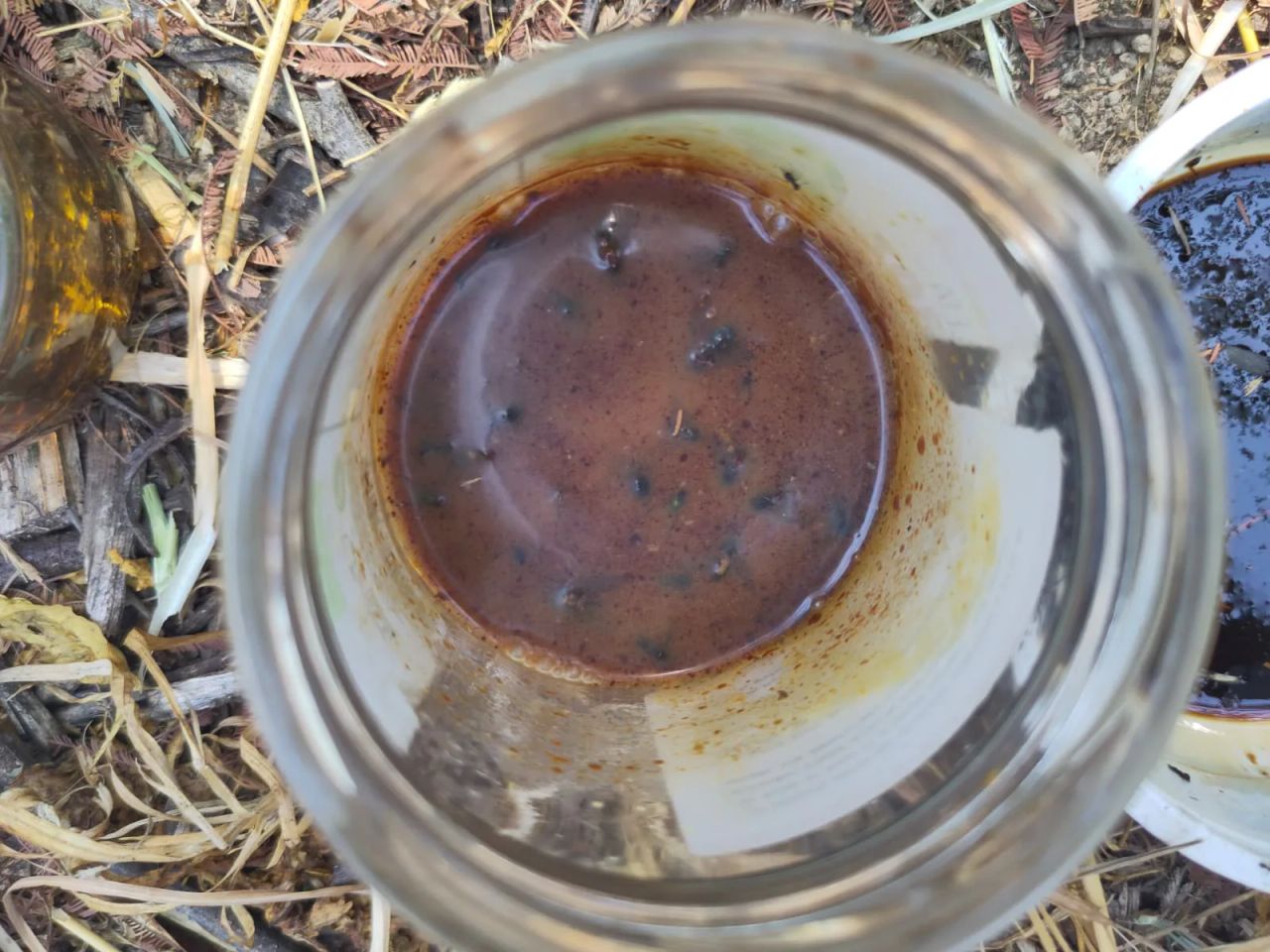
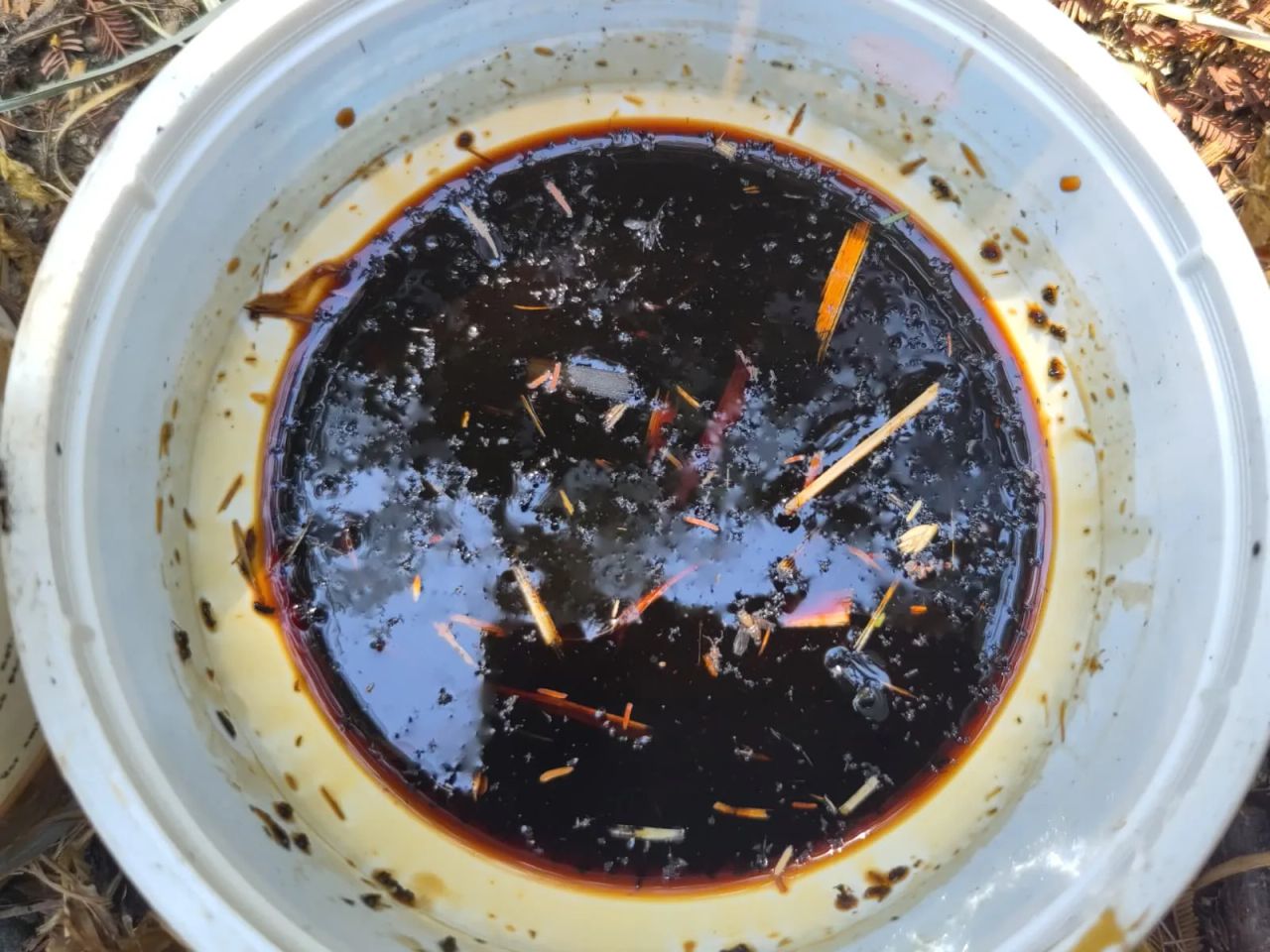
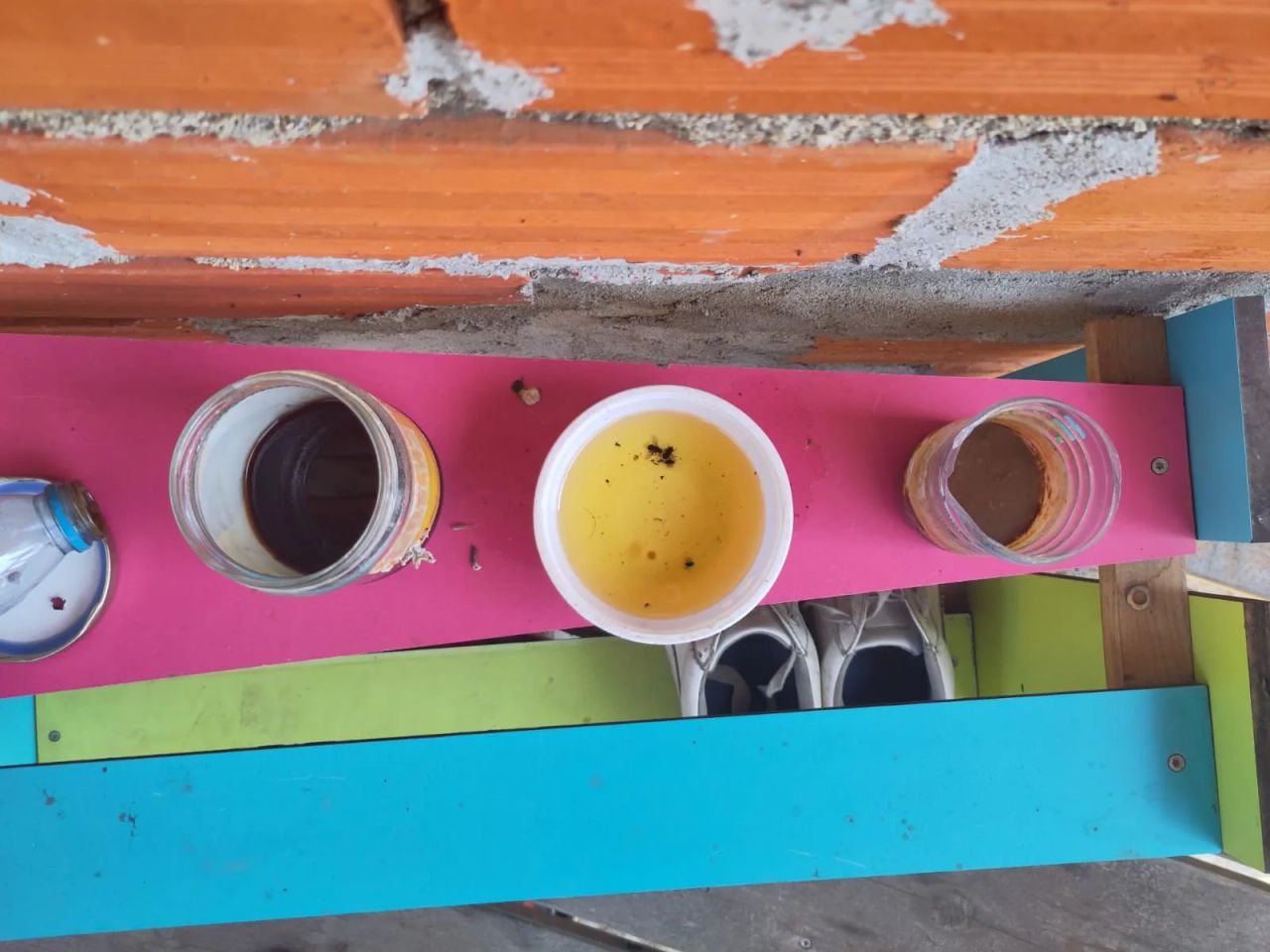
- The three close-ups are of the traps behind the toilet. In the bottle of cooking oil, there were hundreds of ants that drowned inside, but no flies. They also show the most successful trap - the fish scrap jar - and the drying out of the beer traps
- With each of the beer traps, the liquid is too dark to properly count the fly numbers. We will count them when drained at the end of the research
- There were comments about the reduced presence of flies in all three locations, despite the increased hot weather which would typically increase their presence
Fly count:
Kitchen
- Cooking oil (jar): 0
- Fish (open): 4 [+4]
- Beer (bottle): 0
Toilet
- Cooking oil (bottle): 0
- Fish (jar): 18
- Beer (open): 3
Office
- Cooking oil (open): 4
- Fish (bottle): 0
- Beer (jar): 0
14
Final update: 12 days
For our second round of tests, we now have the final numbers:
Most popular (overall):
1. 31 flies – Fish scraps (jar) (toilet)
2. 29 flies – Fish scraps (open) (kitchen)
3. 15 flies – Beer + vinegar (bottle) (kitchen)
4. 6 flies – Beer + vinegar (jar) (office)
5. 4 flies – Cooking oil (open) (office)
If we count totals for each attribute of the traps - location, substance, and method - we get the following results:
Kitchen: 44
Toilet: 34 – plus hundreds of ants
Office: 11
Fish scraps w/ water: 61
Beer + vinegar + sugar: 24
Cooking oil: 4
Sticky strips: 0
Jar with holes: 37
Open container: 36
Inverted bottle: 16
Comments:
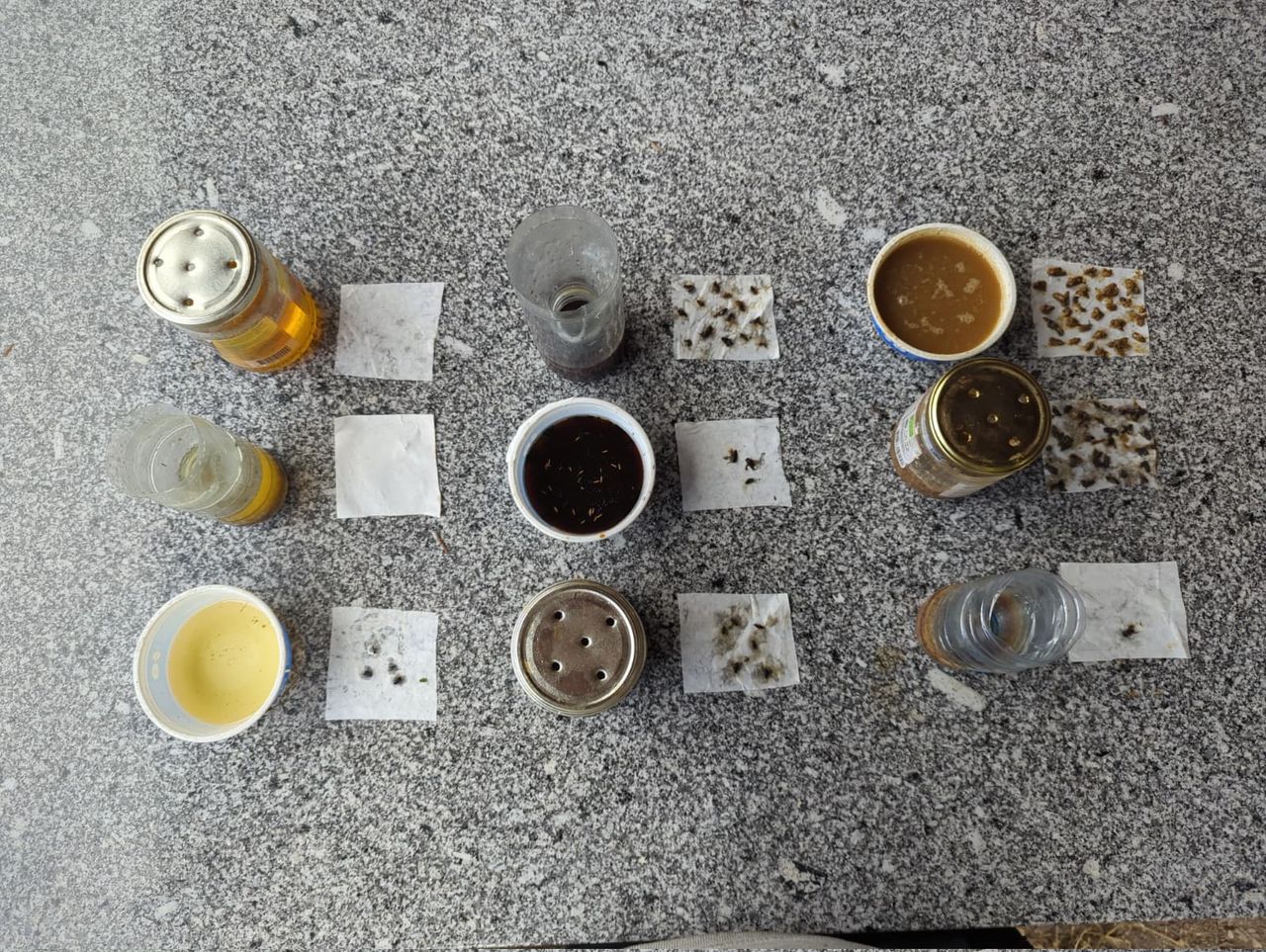
- Once again, the sticky traps did not work. This time, the substance (sugar, syrup, and water) was boiled until much sticker, and when it dried, was rock solid and able to snap. We feared it would have the opposite problem to before when it dripped, however this version also changed to liquid overnight. It appears this type of trap, or at least this particular recipe for the sticky substance, is not a suitable DIY fly trap
- The kitchen continues to have the highest number of flies trapped, which reflects the reality of where we see the most flies. Despite these traps, we continued to have a high number of flies inside the kitchen. With the smells of food, they did not seem to be aware of the traps we had placed outside…
- The traps outside the toilet had a much higher success rate than before. It could be that the traps being closer to the poop palace attract more than when inside the toilets themselves. This year we have seen far less flies inside the toilets than previously, as we are using more sawdust to fully cover our contents.
- While the fish scraps were the most successful substance, they had the downside of being too smelly to place inside our preferred locations. In an ideal world, these would have been inside the kitchen where we imagine many more would have been caught.
- The weather changed from very warm to wet and windy in the last few days
- While the cooking oil was less effective this time round, it seems the method - open container - makes a difference. Otherwise, it would be the fact that it was at the office, but that seems unlikely given the low-catch rate there.
Final fly count:
Kitchen
- Cooking oil (jar): 0
- Fish (open): 29
- Beer (bottle): 15
Toilet
- Cooking oil (bottle): 0 – plus hundreds of ants
- Fish (jar): 31
- Beer (open): 3 – plus hundreds of ants
Office
- Cooking oil (open): 4
- Fish (bottle): 1
- Beer (jar): 6
15
What we’ve learnt so far + your input here
After both rounds of experiments it’s become much more clear what would be an effective (and an ineffective) trap in Kamp.
If we rule out what hasn’t worked so well, we are left with the following leads for building our main traps for the future:
1. The most attractive substance was fish scraps, with either an open or closed container proving to be effective.
2. Our second-most effective would be the used cooking oil, particularly in an open container, such as the used mascarpone tubs.
3. The fish scraps have a strong odor and need to be placed outside of main living/working structures, but they remain effective there.
4. The cooking oil has a much weaker odor, meaning it could be placed inside the kitchen, where it proved much more effective than outside or than the other eligible traps.
5. While the rotting meat traps caught a considerable number of flies, it also had a strong odor without catching as many as the fish traps
6. The beer and vinegar traps also caught a considerable number of flies, but had a strong odor, didn't catch as many flies, and required purchasing new materials rather than reusing waste items. That being said, we will keep them in mind as future options.
7. The kitchen is a key location for trapping our flies. There are many additional spots immediately nearby that would be useful to put several additional traps, including further afield such as where we compost our humanure.
8. Sourcing the fish scraps took a lot of time and energy. Approximately 8 different trips out of Kamp to visit 5 different cafes/restaurants, and in the end, not getting much fish in return. The cooking oil is easily and reliably sourced
9. Of course, we have tried other methods of killing flies, such as using fly swatters. To kill the 183 flies we caught over the 24 days, would take us approximately 1-2 hours of swatting in the kitchen (although we have not tried and tested this). This comparison gives perspective to how much effort we put into these traps, compared to the results.
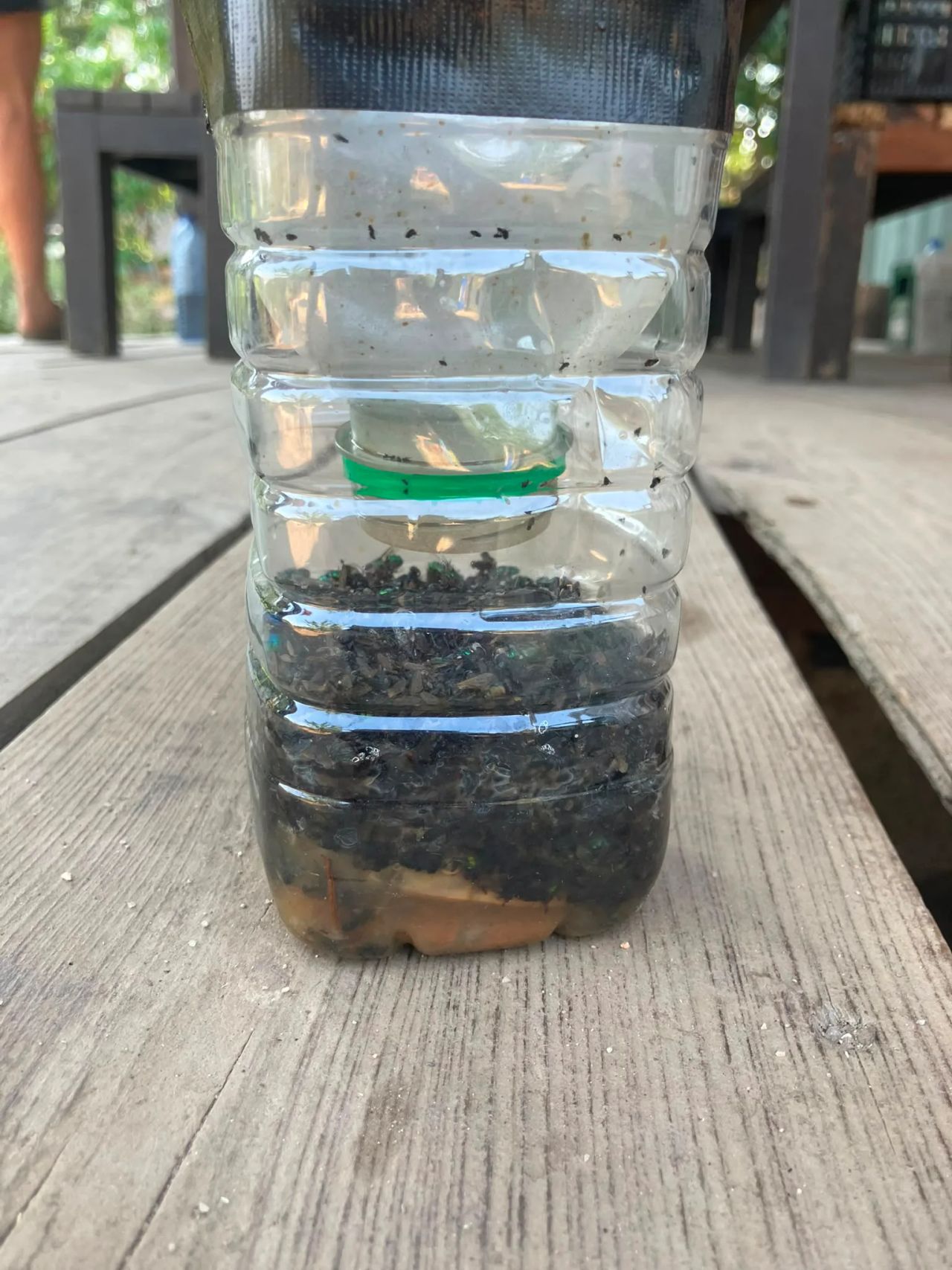
10. There was an unofficial trap made during this summer at Kamp, with 2 frozen shrimp from the supermarket put inside an inverted-top bottle with water. It caught many hundreds of flies in only 1 week (see photo). This feels like the only effective example we have seen so far, but feel conflicted with the ethics of purchasing new meat products at the supermarket being our solution to the fly problem…
If we were to make a final set of traps all over Kamp, we imagine the next step might look like this:
Placing open containers of the used cooking oil in many common spaces around Kamp, with more jars of fish scraps and water in other key locations that are less intimately used.
*** Besides our research and direct experience with the fly traps, we would love to hear if you have any experience with creating fly traps for houseflies, have any ideas for how/what to implement in Kamp, or see anything in our test results that we might have missed. Thanks in advance! ***
16
Larger implementation of most effective traps
As the fly situation only appears to get worse without traps in Kamp, we decided to go ahead with implementing the two most effective traps - cooking oil and fish scraps.
For the oil, we were able to continue sourcing the leftover cooking oil from our local restaurant and decided to continue using the open containers (empty mascarpone tubs in our case) as this was a clear winner.
For the fish, we haven’t developed a reliable way of sourcing these scraps. Although we were successful with a small amount from a local cafe, we will continue to communicate with local food spots to see if anyone has a reliable source of fish scraps they are happy to share. In the meantime, we had a big meal with our local neighbours where there were many fish and chicken scraps leftover. We asked to take these home with us and mixed them in water to create our mixture this time. In the future, if we are unable to source any scraps, we will consider purchasing individual shrimp from the supermarket as these are highly effective and the issue of comfort remains an important one in Kamp.
We made 6 of each trap. The cooking oil was placed in more communal areas where people gather a lot [2x kitchen, kitchen deck, pizza hut, office, granite ruin]. The fish traps were placed slightly further afield in areas where smell is not so much a problem [2x basekamp spots, herb garden, compost bins, poop palace, behind the kitchen]
We will keep an eye on these traps to see how effective they perform this time round. There will not be routine check-ins or detailed counting, however we will assess after 2 weeks and decide how to move forward from there. We imagine these traps will need to be refreshed every 2-4 weeks throughout the season, therefore many iterations are still to come.
If you continue to have any suggestions for ways we can create more effective fly traps in the meantime, we would love to hear!